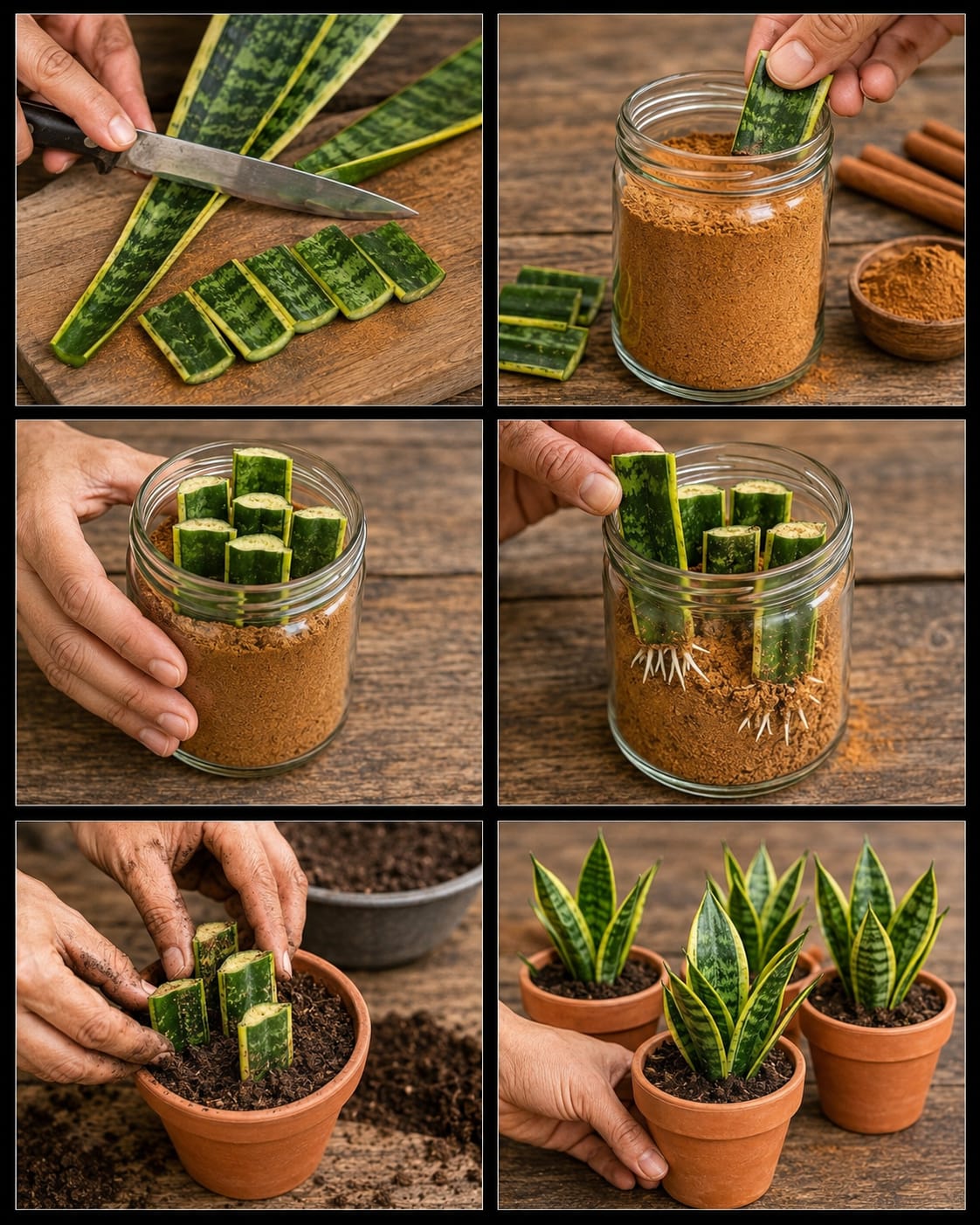
Snake plants are some of the easiest, boldest, and most stylish houseplants to grow indoors. Their upright sword-like leaves, dark green patterns, and yellow-edged varieties make them perfect for modern homes, sunny windowsills, office corners, plant shelves, and minimalist indoor decor. They are strong, forgiving, drought-tolerant, and excellent for beginners, but one of the most exciting things about snake plants is how easily they can be multiplied from leaf cuttings.
One natural propagation trick many plant lovers enjoy is using cinnamon powder on snake plant cuttings. Cinnamon is often used in plant-care routines as a dry powder for freshly cut plant pieces. It can help keep the cut surface dry and clean while the cutting calluses before rooting. When used properly, it can be a helpful part of a propagation routine. When used too heavily, however, it can dry tissue too much, cake around the cutting, or create unnecessary buildup.
The best way to use cinnamon with snake plant cuttings is simple: cut healthy leaves into sections, let the cut ends dry, dust lightly with cinnamon, then plant the cuttings in a loose, fast-draining soil mix. With patience, warmth, and careful watering, the cuttings can form roots and eventually produce new snake plant pups.
Why Snake Plants Are Perfect for Propagation
Snake plants are ideal for propagation because their thick leaves store water and energy. Even a small leaf section can survive long enough to grow roots when placed in the right conditions. This makes snake plant propagation a fun and affordable way to create new plants from one mature mother plant.
Instead of buying several new pots, you can cut one healthy leaf into multiple sections and grow several young plants over time. It is a slow process, but very rewarding. A single leaf can eventually become a small collection of new snake plants for windowsills, shelves, desks, and gifts.
Snake plant cuttings do not root overnight. They often take weeks or months to show strong root growth, and the baby pups may take even longer to appear. The secret is patience and keeping the cuttings dry enough to avoid rot.
What Cinnamon Does for Snake Plant Cuttings
Cinnamon powder is commonly used by home gardeners as a dry dusting powder on cut plant surfaces. It is not a fertilizer and it does not magically create roots, but it can help keep the cut end dry while the plant tissue seals itself.
For snake plant cuttings, cinnamon is best used as a light dusting after cutting. The powder should touch the cut surface, but it should not be packed thickly around the leaf. A thin layer is enough.
The most important step is still callusing. Snake plant cuttings should be allowed to dry before planting. If a fresh wet cutting is pushed directly into soil, it is more likely to rot.
Choosing the Best Leaf for Propagation
Start with a healthy snake plant leaf. Choose a leaf that is firm, mature, and free from rot, mushy spots, or disease. Avoid leaves that are yellowing, collapsing, or damaged at the base.
A good propagation leaf should be:
- Firm and upright
- Free from soft spots
- Healthy in color
- Not too young or thin
- Long enough to cut into sections
- From a plant with healthy roots
The healthier the leaf, the better the chance of successful rooting. Weak or stressed leaves may rot before producing roots.
Tools You Need
Before starting, gather everything you need. Clean tools help reduce the chance of rot or infection.
- A sharp clean knife or scissors
- Cinnamon powder
- Paper towel or dry tray
- Small pots or propagation trays
- Fast-draining soil mix
- Plant labels
- Watering can or spray bottle
Clean the blade before cutting. You can wipe it with rubbing alcohol or wash it with hot soapy water and dry it well. A clean cut heals better than a crushed or dirty cut.
How to Cut Snake Plant Leaves
Lay the leaf on a clean surface. Cut it into sections about 2 to 3 inches long. Each section should have a top and bottom. This is very important because snake plant cuttings must be planted in the same direction they were growing.
If you plant a section upside down, it will usually not root properly. To avoid confusion, cut the bottom end flat and the top end at a slight angle, or mark the bottom with a small pencil dot.
Keep the sections organized. Direction matters.
Why Callusing Is Important
After cutting, snake plant sections need time to dry. This process is called callusing. The cut surface becomes sealed and less likely to rot when planted.
Place the cuttings on a dry paper towel or tray in a shaded, airy location. Let them sit for 2 to 5 days. In humid climates, they may need longer. In dry climates, they may callus faster.
The cut end should feel dry before planting. Do not plant a wet, fresh, juicy cutting directly into soil.
How to Use Cinnamon Powder
Once the cut ends are slightly dry, dip or dust the bottom end with a small amount of cinnamon powder. You only need a thin coating.
Do not bury the entire cutting in cinnamon. Do not pack cinnamon around the leaf like soil. Too much powder can hold uneven moisture and may dry the tissue too aggressively.
A light dusting on the cut surface is enough.
The Best Soil for Snake Plant Cuttings
Snake plant cuttings need a loose, fast-draining mix. Heavy potting soil holds too much moisture and can cause rot.
A good propagation mix may include:
- Cactus or succulent soil
- Perlite
- Pumice
- Coarse sand
- Small bark chips
The soil should drain quickly and feel airy. If the mix stays wet for many days, it is too heavy for snake plant cuttings.
Choosing the Right Pot
Use small pots with drainage holes. A small pot is better than a large one because it dries faster and reduces the risk of soggy soil.
Terracotta pots are excellent for snake plant propagation because they allow moisture to evaporate through the sides. Plastic pots can work too, but watering must be more careful.
Never use a pot without drainage for fresh snake plant cuttings.
How to Plant the Cuttings
Make a small hole in the soil with your finger, pencil, or stick. Insert the bottom end of the cutting about 1 inch into the soil. Firm the mix gently around the cutting so it stands upright.
Do not plant too deeply. Deep planting can increase the risk of rot. The cutting only needs enough contact with the soil to stay stable and form roots.
If you are planting several cuttings in one pot, leave space between them for airflow.
Should You Water Immediately?
After planting, wait a day or two before watering if the cuttings are freshly prepared. This gives the cut ends more time to settle.
When you do water, water lightly. The goal is to slightly moisten the soil, not soak it. Snake plant cuttings without roots cannot drink much water yet, so wet soil can become dangerous.
After the first light watering, let the soil dry before watering again.
How Often to Water Snake Plant Cuttings
Water sparingly. Snake plant cuttings root best when the soil is lightly moist at times but never soggy. A good rule is to water only when the mix has dried well.
Depending on your climate and pot size, this may mean watering every 1 to 3 weeks. Always check the soil instead of following a strict calendar.
If the cutting becomes mushy, the soil is likely too wet.
Best Light for Rooting Cuttings
Place snake plant cuttings in bright indirect light. Avoid harsh direct sun while they are rooting. Strong sun can dry or scorch cuttings before they develop roots.
A bright windowsill with filtered light, a shaded porch, or a warm indoor plant shelf can work well.
Low light slows rooting, but harsh sun can stress the cuttings. Bright indirect light is the safest balance.
Warmth Helps Rooting
Snake plants root better in warm conditions. Cold rooms slow the process and increase the risk of rot because soil stays wet longer.
Keep cuttings in a warm location away from cold drafts, open winter windows, and air-conditioning vents.
Warmth, light, and dry periods are the foundation of successful propagation.
How Long Snake Plant Cuttings Take to Root
Snake plant cuttings are slow. Roots may begin forming after several weeks, but visible new pups can take several months. Sometimes it takes 3 to 6 months or longer before a new shoot appears.
Do not give up too early. As long as the cutting is firm and not rotting, it may still be alive and working quietly below the soil.
Patience is part of snake plant propagation.
How to Check for Roots
After several weeks, you can gently tug the cutting. If it resists slightly, roots may be forming. Do not pull hard. Young roots are delicate and can break easily.
Another sign of success is that the cutting remains firm and upright. New pups are the clearest sign, but they may appear much later.
Avoid digging up the cutting repeatedly. Disturbing it slows progress.
What Happens to Variegated Snake Plant Cuttings?
This is important for yellow-edged snake plants. Leaf cuttings from variegated snake plants often produce pups that revert to solid green. The yellow edge may not carry through from leaf cuttings.
If you want to preserve the exact yellow-edged variety, division is usually better. Division means separating pups or rhizomes from the mother plant with roots attached.
Leaf cuttings are still fun and useful, but the new plants may not look identical to the parent.
Propagation by Division
Division is the fastest and most reliable way to multiply snake plants. If your mature plant has several pups, remove it from the pot and gently separate a pup with roots attached.
Plant the separated pup in its own small pot with succulent soil. Water lightly and keep it in bright indirect light while it settles.
Division produces a new plant that already has roots, so it grows faster than leaf cuttings.
Signs of Rot in Cuttings
Rot is the biggest risk during snake plant propagation. Watch for:
- Mushy cuttings
- Blackened base
- Bad smell
- Collapsing tissue
- Soil staying wet too long
- Soft translucent sections
If a cutting rots, remove it immediately so it does not affect nearby cuttings. Review watering and soil drainage before trying again.
How to Prevent Rot
To prevent rot, always let cuttings callus before planting. Use fast-draining soil, small pots, drainage holes, and careful watering.
Do not place fresh cuttings in sealed humid containers. Snake plants are succulents and do not need the same high humidity setup as tropical cuttings.
Dry air and airflow are safer than wet stagnant conditions.
Should You Use Rooting Hormone?
Rooting hormone is optional. Some growers use it to encourage rooting, but snake plants can root without it.
If using rooting hormone, use only a light coating on the bottom cut end. Do not combine too much cinnamon and rooting hormone. Too many powders can cake around the cut.
For a simple natural routine, cinnamon alone as a dry dusting is enough.
Continue to Page 2
Continue to page 2 for more details about this article and the key points many readers miss on the first page.