Can Cinnamon Replace Good Care?
No. Cinnamon cannot replace the basics. If the soil is too wet, the pot has no drainage, or the cutting was planted fresh without callusing, cinnamon will not save it.
The most important propagation rules are dry cut ends, airy soil, bright indirect light, warmth, and patience.
Cinnamon is only a small supporting step.
When to Move Rooted Cuttings
Once a cutting has roots and begins producing pups, wait until the baby plant is strong before repotting. If you move it too soon, you may damage young roots.
When the pup has several leaves and the roots feel established, transplant carefully into a small pot with succulent mix.
Do not move young plants into oversized containers.
How to Care for Young Snake Plants
Young snake plants need the same care as mature ones, but with slightly more attention. Keep them in bright indirect light and water only when the soil dries.
Because young roots are smaller, avoid long droughts at first. However, do not keep the soil wet. Light moisture followed by drying is best.
As the plant grows stronger, it will become more drought-tolerant.
Feeding Young Snake Plants
Do not fertilize fresh cuttings before they root. Once a young plant is established and growing, you can feed lightly during spring and summer.
Use a diluted cactus or succulent fertilizer at half strength once every 6 to 8 weeks during active growth.
Too much fertilizer can burn young roots, so keep feeding gentle.
Best Decor Ideas for New Snake Plants
Snake plant cuttings are perfect for small decorative pots. Once rooted, they look beautiful in terracotta, matte white ceramic, black planters, concrete-style pots, or woven basket covers.
Small snake plants can decorate desks, shelves, bathroom windowsills, bedside tables, kitchen counters, and office corners.
Group several young snake plants together for a clean modern display.
Styling Mature Snake Plants Indoors
Mature snake plants are strong architectural decor pieces. Their upright leaves add height and structure to a room.
Place a large snake plant in a floor pot beside a sofa, in an entryway, near a bright window, or next to a bookshelf. The vertical shape contrasts beautifully with trailing plants like pothos or string of hearts.
Snake plants work well in minimalist, bohemian, rustic, modern, and tropical interior styles.
Common Propagation Mistakes
Avoid these mistakes:
- Planting cuttings upside down
- Skipping the callusing step
- Using heavy wet soil
- Watering too often
- Using pots without drainage
- Placing cuttings in harsh sun
- Checking roots too often
- Expecting pups immediately
- Using too much cinnamon powder
Simple, dry, and patient propagation works best.
A Simple Snake Plant Propagation Routine
Follow this easy routine for better success:
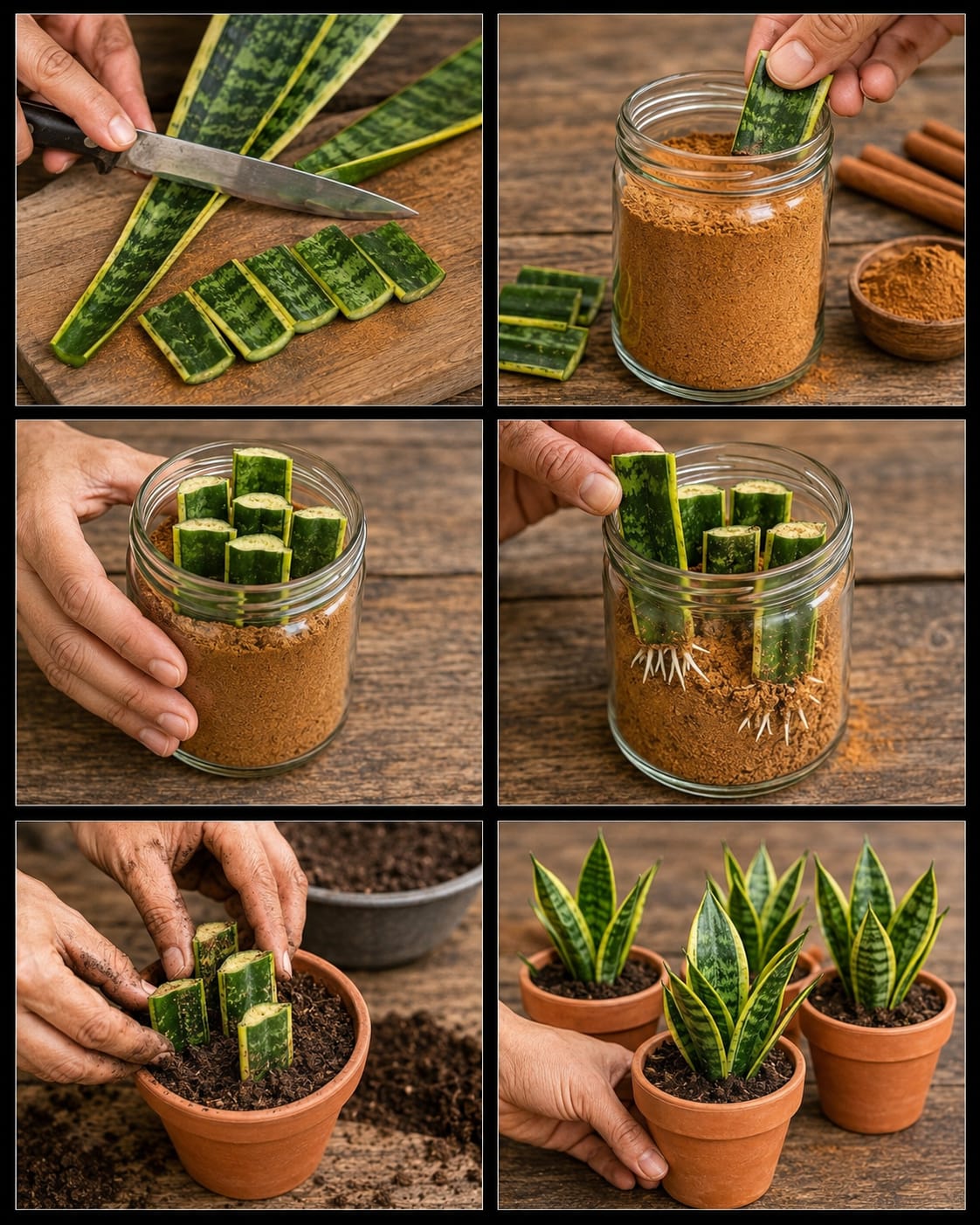
- Choose a healthy leaf
- Cut into sections
- Keep the bottom direction marked
- Let cut ends dry and callus
- Dust lightly with cinnamon
- Plant in fast-draining soil
- Keep in bright indirect light
- Water sparingly
- Wait patiently for roots and pups
This routine gives cuttings the best chance to root without rotting.
Final Thoughts
The cinnamon snake plant propagation trick is a simple natural method that can support healthy cuttings when used correctly. A light dusting of cinnamon on dry callused cut ends may help keep the cutting surface clean and dry, but it is not a magic rooting solution.
The real keys to success are healthy leaves, correct cutting direction, proper callusing, fast-draining soil, drainage holes, bright indirect light, warmth, and careful watering. Snake plant propagation is slow, but it is also rewarding.
With patience and gentle care, small leaf sections can grow roots, produce pups, and become beautiful new snake plants for your home, office, balcony, or plant shelf.