Styling With Other Plants
Kalanchoe pairs well with succulents, jade plants, snake plants, echeveria, aloe, and small cacti. These plants have similar dry-friendly care needs.
Avoid planting kalanchoe in the same pot as moisture-loving plants like peace lilies or ferns. Their watering needs are different.
Group plants by care needs to keep them healthier.
Common Mistakes With the Dark Liquid Trick
Avoid these mistakes:
- Using strong, undiluted liquid
- Applying it to wet soil
- Using sugary or sticky mixtures
- Feeding every week
- Using it on a rotting plant
- Letting runoff sit in the saucer
- Ignoring bright light needs
- Using dense soil
- Misting the plant often
The safest routine is light, clean, and occasional.
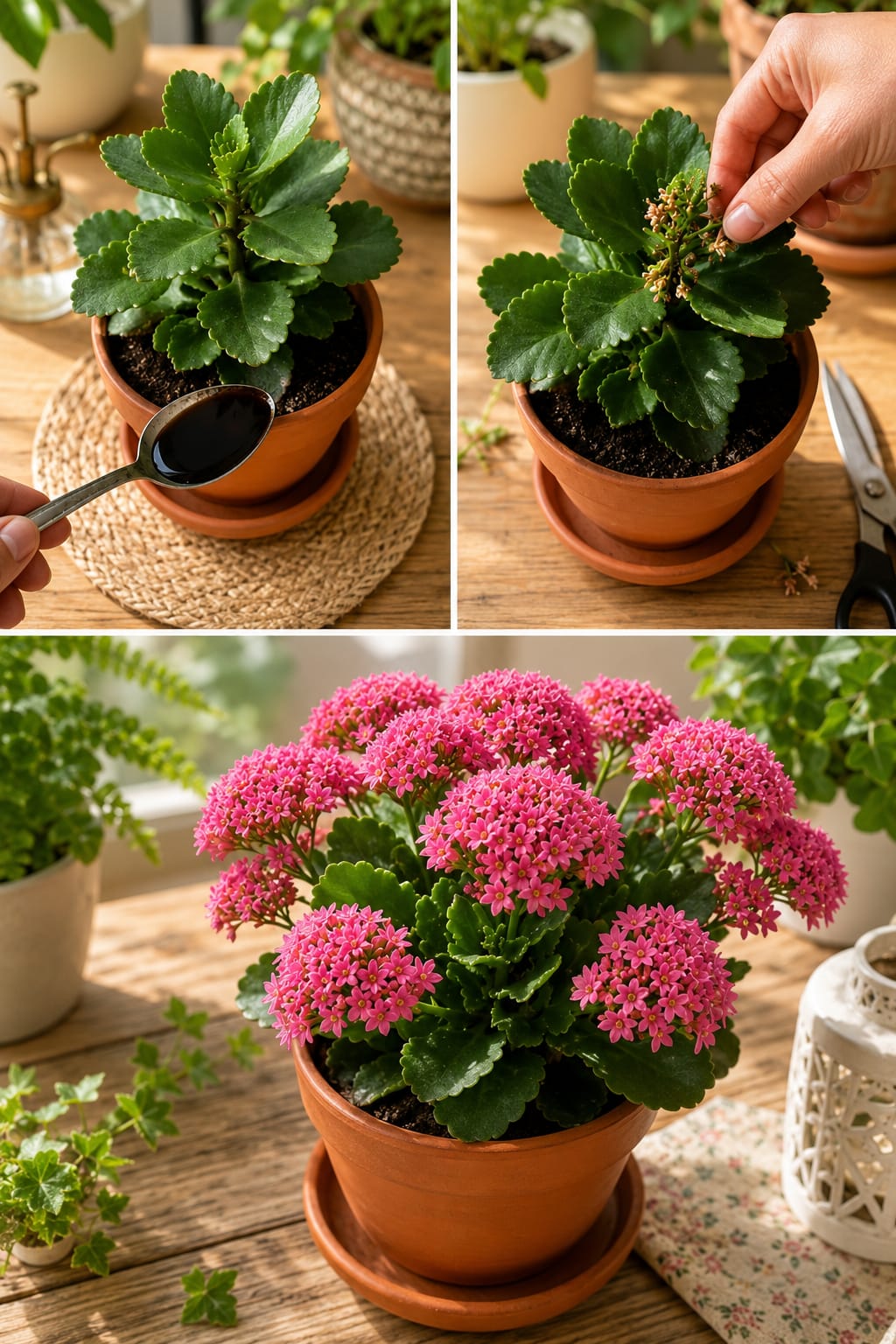
A Simple Kalanchoe Dark Liquid Routine
Use this balanced routine:
- Keep the plant in bright light.
- Use fast-draining succulent soil.
- Water only when the soil is dry.
- Use a pot with drainage holes.
- Apply a very diluted dark plant tonic once every 6 to 8 weeks during active growth.
- Use plain water most of the time.
- Stop the tonic if mold, gnats, or yellow leaves appear.
- Deadhead old blooms.
- Provide long dark nights to encourage reblooming.
This routine supports healthy growth without overwhelming the roots.
Final Thoughts
The gentle dark liquid trick for kalanchoe can be useful only when it is mild, diluted, and used rarely. A weak worm casting tea, compost tea, or diluted organic fertilizer may support growth during the active season, but it should never replace proper succulent care.
The real foundation of a blooming kalanchoe is bright light, dry-friendly watering, fast-draining soil, drainage holes, gentle feeding, and a short-day bloom routine. Too much liquid, too much fertilizer, or too much moisture can quickly harm the plant.
Use the dark liquid as a small optional support, not as the main secret. With balanced care, your kalanchoe can grow fuller leaves, stay compact, and reward you with bright clusters of flowers that bring color and joy to your indoor space.