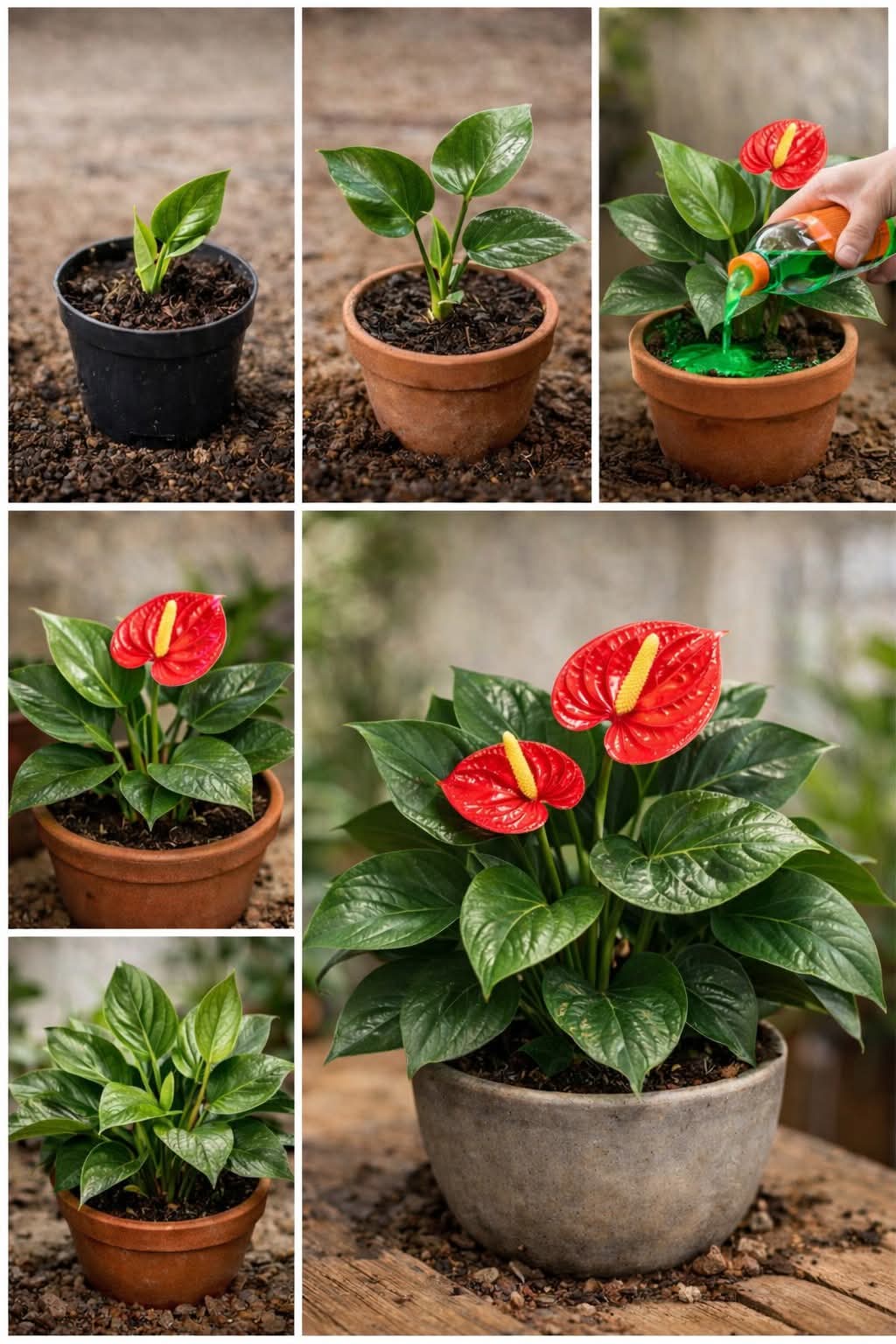
Anthuriums are among the most striking flowering houseplants you can grow indoors. Their glossy heart-shaped leaves, bold red spathes, and upright yellow spadices make them look elegant, tropical, and decorative in any space. A healthy anthurium can brighten a windowsill, soften a living room corner, dress up a patio table, or become the main focal point in a plant shelf display.
One simple care idea that many plant lovers enjoy is using a gentle green liquid tonic to support anthurium growth. This kind of routine is often shown as a colorful liquid being added to the soil, but the real value is not the color. The important part is whether the liquid is safe, diluted, and suitable for the plant. Anthuriums are tropical plants with sensitive roots, so any liquid feeding routine must be gentle. Too much fertilizer, too much moisture, or the wrong homemade mixture can harm the roots instead of helping the plant.
The best green liquid trick for anthuriums is a weak, balanced, plant-safe solution used only during active growth. It can be a diluted liquid houseplant fertilizer, a mild seaweed solution, or a very weak natural plant tonic. It should never be thick, sticky, sugary, or strongly concentrated. When used correctly, this routine can support glossy leaves, steady root growth, and better flowering over time.
Why Anthuriums Need Gentle Care
Anthuriums are tropical plants. They naturally grow in warm, humid environments where their roots receive both moisture and air. Many anthuriums are epiphytic or semi-epiphytic, meaning their roots are adapted to loose, airy organic material rather than heavy compact soil.
This is why anthuriums dislike dense wet potting mix. Their roots need oxygen. If the soil stays soggy, the roots can rot. Once the roots struggle, the leaves may yellow, the plant may stop blooming, and new growth may become weak.
A gentle green liquid can help only when the root zone is already healthy. It cannot fix poor drainage, low light, or overwatering. The plant must first have the right growing conditions.
What Is the Green Liquid Trick?
The green liquid trick usually means watering an anthurium with a diluted plant tonic or fertilizer solution. The liquid may look green because of seaweed extract, liquid plant food dye, algae-based fertilizer, or a natural botanical solution.
The color is not what makes the plant grow. The nutrients and plant-safe compounds are what matter. A green liquid should be treated as a mild supplement, not a miracle bloom booster.
Used correctly, it may support:
- Stronger root activity
- Healthier leaf growth
- Better plant color
- More consistent blooming
- Reduced stress during active growth
- A fuller tropical appearance
Used incorrectly, it can cause root burn, salt buildup, sour soil, fungus gnats, or yellow leaves.
The Safest Green Liquid Options
For anthuriums, the safest green liquid options are plant-safe products or mild natural mixtures. Avoid random household liquids.
Good options include:
- Diluted balanced liquid houseplant fertilizer
- Diluted orchid fertilizer
- Weak seaweed extract
- Very mild compost tea
- Filtered water with a tiny amount of plant-safe tonic
Anthuriums often respond well to diluted orchid fertilizer because orchid fertilizers are usually designed for plants with airy root systems. Always dilute more than the label suggests if the plant is indoors or growing in a small pot.
What Not to Use
Do not pour random green household liquids into an anthurium pot. Some liquids can look harmless but damage roots or attract pests.
Avoid:
- Food coloring mixtures
- Dish soap water
- Cleaning liquids
- Sugary drinks
- Undiluted fertilizer
- Thick vegetable juice
- Fermented kitchen liquids
- Salted cooking water
- Milk-based mixtures
- Oily liquids
Anthurium roots are sensitive. Clean, diluted, plant-safe liquids are always better than experimental mixtures.
How Often to Use a Green Liquid Tonic
Use a gentle green liquid tonic only during active growth, usually spring and summer. A safe schedule is once every 4 to 6 weeks. Use plain water between feeding days.
Do not use it every time you water. Indoor pots do not flush naturally like outdoor soil. Repeated feeding can build up salts and stress the roots.
During fall and winter, reduce feeding or stop completely if the plant is not actively growing. Anthuriums need less nutrition when growth slows.
How to Mix It Safely
A weak solution is best. For most liquid fertilizers, use one-quarter to one-half of the recommended label strength. If using seaweed extract, use only a few drops in a full watering can unless the label says otherwise.
The liquid should look pale and watery, not dark and thick. Strong color often means strong concentration, and strong concentration can burn roots.
Always mix the liquid fully before applying it to the soil. Never pour concentrated product directly into the pot.
When to Apply It
Apply the green liquid only when the anthurium is already ready for watering. The soil should be slightly dry on top, not wet. Adding liquid to already wet soil can cause waterlogging.
Water slowly around the root zone until a little liquid drains from the bottom. Then empty the saucer. Do not let the pot sit in the solution.
If the plant is dry and stressed, water lightly with plain water first, then resume feeding another time. Fertilizer on very dry roots can cause stress.
Why Drainage Is Essential
Anthuriums need pots with drainage holes. This is especially important when using any liquid feeding routine. Without drainage, water and fertilizer collect at the bottom of the pot. This can create root rot and salt buildup.
If your anthurium is in a decorative pot without holes, keep it inside a nursery pot with holes, then place that inside the decorative cover pot. After watering, remove any standing water.
Good drainage is one of the biggest secrets to healthy anthuriums.
The Best Soil Mix for Anthuriums
Anthuriums need a chunky, airy, moisture-retentive mix. Regular heavy potting soil is often too dense by itself.
A good anthurium mix can include:
- Indoor potting mix
- Orchid bark
- Perlite
- Coco chips
- Charcoal
- Sphagnum moss in small amounts
- Pumice
The mix should drain well but not dry instantly. It should feel loose and breathable. The roots need moisture and oxygen at the same time.
Why Heavy Soil Causes Problems
Heavy soil holds too much water around anthurium roots. When roots stay wet without air, they begin to weaken. This can lead to yellow leaves, brown spots, wilting, and a plant that refuses to bloom.
If the plant is growing in dense soil, a green liquid tonic will not solve the issue. The first step is to improve the potting mix.
Healthy soil structure makes every watering and feeding routine safer.
How to Repot an Anthurium
Repot anthuriums when the soil breaks down, roots fill the pot, or drainage becomes poor. Spring is usually the best time.
Choose a pot only one size larger. A huge pot holds too much extra moisture. Remove the plant gently, shake away loose old mix, and trim only dead or mushy roots. Place the plant into fresh airy mix and water lightly.
After repotting, wait a few weeks before using any green liquid fertilizer. Let the roots settle first.
Watering Anthuriums Correctly
Anthuriums like evenly moist but not soggy soil. Water when the top inch of the mix begins to dry. Do not let the plant sit in water.
When watering, pour slowly until water drains from the bottom. This ensures the whole root zone receives moisture. Then empty the saucer.
If the soil stays wet for many days, improve light, airflow, pot size, or soil drainage.
Signs Your Anthurium Needs Water
A thirsty anthurium may show slightly drooping leaves, dry top soil, and a lighter pot. Leaves may lose some shine when the plant is very dry.
After watering, the plant should recover. If it stays limp while the soil is wet, the problem may be root stress rather than thirst.
Always check the soil before watering again.
Signs of Overwatering
Overwatering is one of the most common anthurium problems. Watch for:
- Yellow leaves
- Soft stems
- Wet soil for many days
- Brown mushy roots
- Sour smell from the pot
- Fungus gnats
- Drooping even when soil is wet
- Black or brown leaf spots
If these signs appear, stop feeding and check the roots. The plant may need fresh airy soil.
Light for Anthurium Blooms
Anthuriums need bright indirect light to bloom well. Low light may keep the plant alive, but it often reduces flowering. Harsh direct sun can burn the leaves.
A bright window with filtered light is ideal. Morning sun can be helpful, but strong afternoon sun should be softened with a sheer curtain or distance from the window.
If your anthurium has many leaves but few flowers, light is one of the first things to check.
How Light Affects Leaf Color
Good light helps anthurium leaves stay glossy, firm, and rich green. Too little light can cause weak stems and slower growth. Too much direct sun can cause pale patches or brown burns.
Rotate the pot every few weeks so the plant grows evenly. Anthuriums often lean toward light if they stay in one position too long.
Balanced light supports both foliage and flowers.
Humidity for Anthuriums
Anthuriums enjoy moderate to high humidity. Dry air can cause crispy edges, dull leaves, and slower growth. If your home is very dry, a humidifier can help.
You can also group tropical plants together or place the anthurium in a bright bathroom or kitchen. A pebble tray may help slightly, but the pot should not sit in water.
Humidity should be paired with airflow. Damp stagnant air can encourage fungal spots.
Temperature Needs
Anthuriums like warmth. Keep them away from cold drafts, air conditioners, freezing windows, and sudden temperature changes.
A warm stable room is best. Cold stress can cause yellow leaves, slowed growth, and bud problems.
Do not place anthuriums near heaters either. Hot dry air can damage leaves and flowers.
How to Encourage More Red Blooms
To encourage more red blooms, focus on light, roots, and gentle nutrition. The green liquid tonic can support growth, but it is not enough by itself.
For better blooming:
- Give bright indirect light
- Use an airy potting mix
- Water consistently but avoid soggy soil
- Feed lightly during active growth
- Maintain warmth
- Improve humidity
- Remove old faded flowers
Anthuriums bloom best when the whole care routine is balanced.
Should You Remove Old Flowers?
Yes. Once a flower fades, turns brown, or loses color, remove it at the base of the flower stem with clean scissors. This helps the plant redirect energy into new growth.
Do not pull old flower stems harshly. Cut cleanly to avoid damaging the crown.
Regular grooming keeps the plant looking fresh and encourages a cleaner display.
Cleaning Glossy Anthurium Leaves
Anthurium leaves are naturally glossy, but dust can dull them. Wipe the leaves gently with a soft damp cloth every few weeks.
Do not use heavy leaf shine products. They can leave residue and attract dust. Plain water on a cloth is usually enough.
Clean leaves absorb light better and look more decorative.
Checking for Pests
Anthuriums can attract pests such as spider mites, aphids, scale, thrips, and mealybugs. Check under leaves and near the base of stems regularly.
Signs of pests include sticky residue, tiny moving dots, white cottony patches, brown bumps, webbing, or distorted new leaves.
If pests appear, isolate the plant and treat early with a suitable plant-safe method.
Using Green Liquid After Pest Stress
Do not feed immediately after a pest problem if the plant is weak. Let it recover first. Feeding a stressed plant can make problems worse, especially if roots are not strong.
Once new growth looks healthy and the plant is stable, you can resume light feeding.
Recovery comes before fertilizer.
Continue to Page 2
Continue to page 2 for more details about this article and the key points many readers miss on the first page.