Pothos is one of the most popular indoor plants in the world, and it is easy to understand why. It grows beautifully in homes, apartments, offices, bedrooms, bathrooms, shelves, hanging baskets, and bright living rooms. Its heart-shaped leaves, trailing vines, and green-yellow variegation make it one of the best low-maintenance houseplants for beginners and experienced plant lovers.
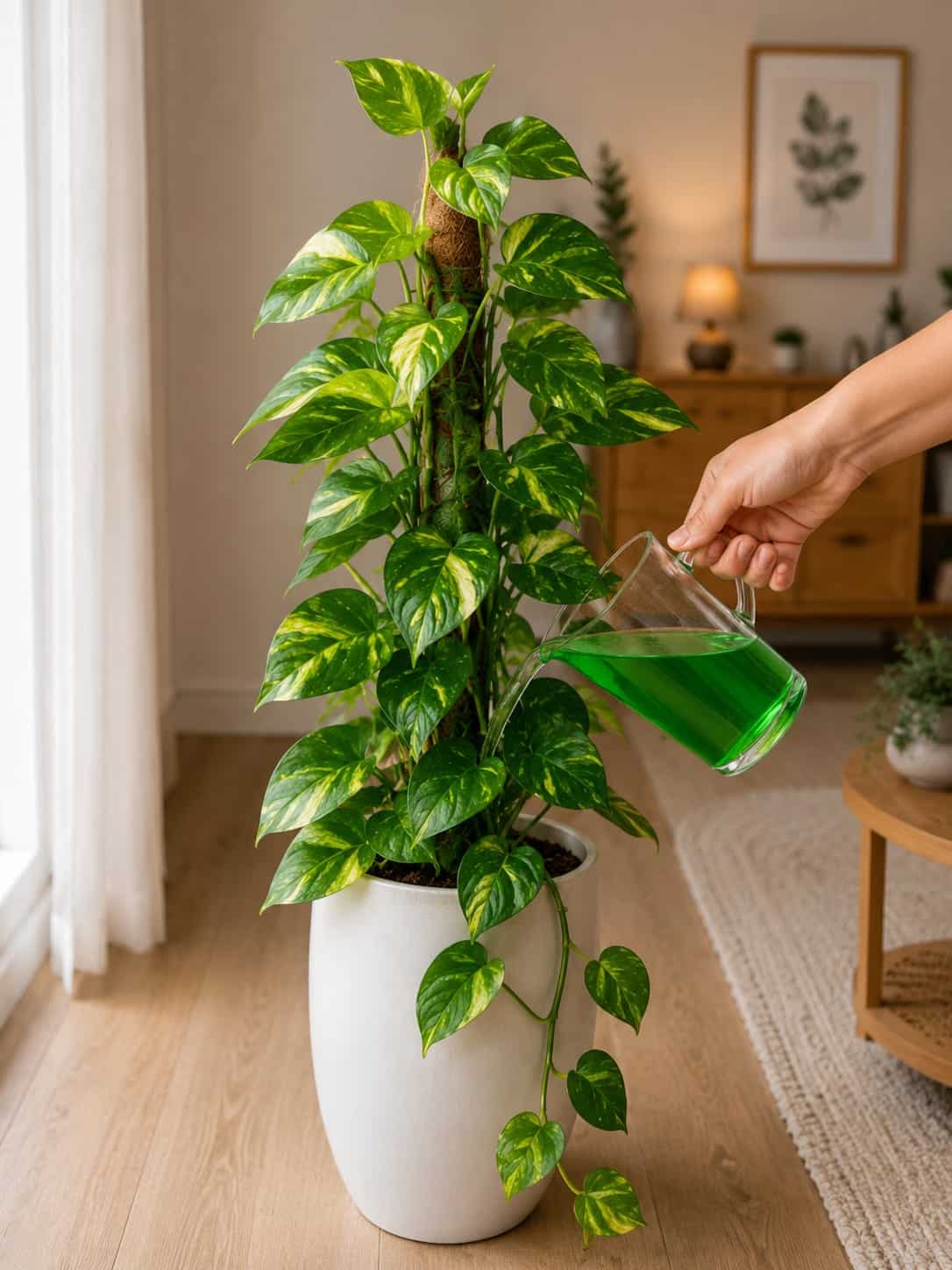
The plant in the image appears to be a golden pothos growing on a moss pole. Its leaves are glossy, full, and beautifully variegated, while a hand pours a bright green liquid into the pot. This green liquid is best understood as a diluted seaweed fertilizer tonic, sometimes called green growth water, algae water, or kelp plant food.
This trick is popular because pothos responds very well to gentle liquid feeding. When the plant has enough light, moisture, drainage, and mild nutrients, it can grow longer vines, stronger roots, and larger leaves. A moss pole also encourages the plant to climb, which can help the leaves become bigger and more mature over time.
But the green liquid must be used correctly. Pothos is easy to grow, but it can still suffer from overwatering, root rot, fertilizer burn, fungus gnats, and yellow leaves if the soil stays wet or the mixture is too strong. The safe version of this trick is simple: dilute the seaweed tonic heavily, pour it only into the soil, avoid the leaves and moss pole, let the pot drain fully, and use it only during active growth.
What Plant Is in the Image?
The plant in the image looks like golden pothos, also known as Epipremnum aureum. It has green heart-shaped leaves with yellow marbling, which is one of the classic signs of golden pothos. The plant is growing upward on a moss pole, which helps support climbing growth.
Golden pothos is loved because it is:
- Easy to grow indoors
- Fast-growing in bright indirect light
- Great for moss poles and hanging baskets
- Simple to propagate from cuttings
- Beautiful for home decor
- Tolerant of normal indoor humidity
- Perfect for beginners
When pothos climbs instead of only trailing, it may produce larger leaves because the plant receives physical support similar to how it grows in nature.
What Is the Green Liquid?
The bright green liquid in the image can be explained as a diluted seaweed or kelp-based liquid fertilizer. Seaweed fertilizer often has a green-brown color and is used by gardeners as a mild plant growth booster.
Seaweed tonic is not the same as strong synthetic fertilizer. It is usually gentle and contains natural compounds, trace minerals, and plant-supporting elements that may help roots and leaves grow steadily.
The green liquid may also represent:
- Diluted liquid seaweed
- Kelp extract water
- Algae-based plant tonic
- Weak balanced houseplant fertilizer with green tint
- Homemade nettle or leafy green plant infusion
For indoor pothos, the safest and most reliable option is a diluted liquid seaweed fertilizer or a weak balanced houseplant fertilizer.
Why Pothos Loves Gentle Liquid Feeding
Pothos is a steady grower. It does not need heavy fertilizer, but it responds beautifully to mild nutrients during spring and summer. Liquid feeding works well because nutrients reach the root zone quickly and evenly.
A gentle green growth tonic may support:
- Faster vine growth
- Bigger pothos leaves
- Stronger root development
- Deeper green leaf color
- Brighter yellow variegation
- Better climbing growth on a moss pole
- Healthier indoor plant growth
- Reduced stress after pruning or propagation
The key word is gentle. Pothos grows best with consistent care, not aggressive feeding.
How to Make the Green Growth Water Tonic
This is the safest version for indoor pothos plants.
Ingredients
- 1 liter clean room-temperature water
- ¼ teaspoon liquid seaweed fertilizer or kelp extract
- Clean watering can or pitcher
Steps
- Fill the watering can with 1 liter of clean water.
- Add ¼ teaspoon liquid seaweed fertilizer.
- Stir well until fully mixed.
- Use immediately on the soil.
- Do not store the mixture for long periods.
The liquid should look lightly green or tea-colored. If it looks dark, thick, or concentrated, add more water.
Extra-Gentle Recipe for Small Pothos Plants
If your pothos is young, newly propagated, recently repotted, or growing in a small pot, use a weaker version.
- 1 liter clean water
- ⅛ teaspoon liquid seaweed fertilizer
This gentle mixture is safer for delicate roots and small containers.
How to Apply the Green Liquid Correctly
The image shows the liquid being poured from the side into the pot. This is the right idea, but the amount should be controlled. Do not flood the pot.
Application Steps
- Check the soil moisture first.
- Use the tonic only when the top inch of soil feels dry.
- Pour slowly around the soil edge.
- Avoid pouring directly onto the moss pole.
- Avoid soaking the leaves.
- Stop when the soil is evenly moist.
- Let excess liquid drain fully.
- Empty the saucer after 10 to 15 minutes.
Never leave pothos sitting in fertilizer water. Standing water can cause root rot and yellow leaves.
How Often Should You Use This Trick?
Pothos does not need constant feeding. Use the green growth water only during active growth, especially in spring and summer.
A safe schedule:
- Spring: once every 3 to 4 weeks
- Summer: once every 3 to 4 weeks
- Fall: once every 6 to 8 weeks or stop
- Winter: avoid unless the plant is actively growing under strong light
If your pothos is in low light, feed less often. Low-light plants use water and nutrients more slowly.
Why the Moss Pole Matters
The pothos in the image is climbing a moss pole. This is one of the best ways to grow a fuller, more dramatic pothos indoors. In nature, pothos climbs trees and attaches with aerial roots. A moss pole gives the plant support and encourages upward growth.
A moss pole can help pothos produce:
- Larger leaves
- Thicker vines
- More mature growth
- A fuller vertical shape
- Better home decor impact
However, the moss pole should not stay soaking wet all the time. Light moisture is useful, but constant wetness can encourage mold or fungus gnats.
Should You Pour Green Tonic on the Moss Pole?
Usually, no. Apply the green tonic to the soil, not the moss pole. The roots in the soil absorb most nutrients. If you soak the moss pole with fertilizer, it may become smelly, moldy, or attract pests.
If you want to moisten the moss pole, use plain water in a spray bottle. Keep fertilizer water mainly for the soil.
Best Light for Golden Pothos
Golden pothos grows best in bright indirect light. It can survive in lower light, but the yellow variegation may fade and growth may slow. If you want larger leaves and faster vines, give the plant more bright filtered light.
Best light conditions include:
- Bright indirect sunlight
- Near an east-facing window
- A few feet from a south or west window
- Filtered light through sheer curtains
- Grow lights in darker rooms
Avoid harsh direct afternoon sun because it can burn pothos leaves.
Best Watering Routine for Pothos
Pothos prefers soil that dries slightly between waterings. It does not like constantly wet roots.
Water when:
- The top inch of soil feels dry
- The pot feels lighter
- The leaves slightly soften but are not severely wilted
Do not water if the soil is still wet. Yellow leaves often appear when pothos is overwatered.
Best Soil Mix for Pothos
A healthy pothos needs soil that holds moisture but drains well. Dense soil can suffocate roots, while very dry soil can slow growth.
Good Pothos Soil Mix
- 2 parts indoor potting mix
- 1 part perlite
- 1 part orchid bark or coco chips
This mix gives pothos roots moisture, oxygen, and drainage. Healthy roots create stronger vines and better leaves.
Can Green Water Make Pothos Grow Faster?
Yes, a diluted seaweed tonic may support faster pothos growth when the plant already has good light, healthy roots, and proper watering. But fertilizer alone cannot fix poor conditions.
For faster pothos growth, combine the green tonic with:
- Bright indirect light
- Warm indoor temperatures
- Proper watering
- Well-draining soil
- Regular pruning
- Moss pole support
- Occasional gentle feeding
If the room is dark or the roots are rotting, green liquid will not solve the problem.
Can This Trick Make Pothos Leaves Bigger?
It can help indirectly. Bigger pothos leaves usually come from climbing support, bright light, and strong roots. A gentle seaweed tonic may support that process, but the moss pole and light are very important.
To encourage bigger leaves:
- Let the plant climb upward
- Secure vines gently to the moss pole
- Keep the plant in bright indirect light
- Feed lightly during active growth
- Keep soil evenly moist, not soggy
- Avoid cutting every new vine too soon
Can Green Water Improve Variegation?
Golden pothos variegation is mostly controlled by genetics and light. Feeding can support overall leaf health, but bright indirect light is what helps keep yellow marbling strong.
If your pothos turns mostly green, move it to a brighter location. Do not increase fertilizer too much. Too much nitrogen can sometimes encourage greener, less variegated growth.
When Not to Use the Green Liquid Trick
Do not use seaweed tonic if the plant is already stressed from wet soil or root problems.
Avoid this trick if:
- The soil is wet
- The pot has no drainage holes
- The plant has root rot
- The leaves are yellowing quickly
- The soil smells sour
- Fungus gnats are present
- The plant was just repotted
- The room is very dark
- It is winter and growth has stopped
Fix the growing conditions first. Fertilizer should support healthy growth, not cover up poor care.
What If Your Pothos Has Yellow Leaves?
Yellow leaves are common in pothos. One or two old yellow leaves are normal, but many yellow leaves at once usually mean a problem.
Common Causes of Yellow Leaves
- Overwatering
- Poor drainage
- Low light
- Root rot
- Underwatering
- Too much fertilizer
- Cold drafts
- Natural old leaf loss
If your pothos has many yellow leaves, do not add green tonic immediately. Check the roots and soil first.
What If Your Pothos Has Brown Tips?
Brown tips can come from dry air, inconsistent watering, excess fertilizer, or mineral buildup. If brown tips appear after using green water, the mixture may have been too strong.
Fix brown tips by:
- Using weaker fertilizer
- Flushing the soil with clean water
- Watering more consistently
- Avoiding dry heat vents
- Using filtered water if needed
Can Green Liquid Cause Root Burn?
Yes, if it is too concentrated. Even natural fertilizer can damage roots when used too strong. Seaweed fertilizer is gentle only when diluted.
Signs of too much fertilizer include:
- Brown leaf tips
- Yellow leaf edges
- Drooping after feeding
- White crust on soil
- Slow growth
- Root stress
If this happens, flush the soil with plain water and stop feeding for several weeks.
Continue to Page 2
Continue to page 2 for more details about this article and the key points many readers miss on the first page.