How to Encourage an Orchid to Rebloom
After flowers fade, many orchid owners think the plant is done. But Phalaenopsis orchids can rebloom with good care. The plant needs time to grow leaves and roots, then may produce a new flower spike when conditions are right.
To encourage reblooming:
- Give bright indirect light
- Water correctly
- Use orchid fertilizer during active growth
- Keep roots healthy
- Provide a slight nighttime temperature drop for several weeks
- Be patient
A honey trick alone will not create reblooming. A healthy plant cycle will.
What to Do After the Orchid Finishes Blooming
When the flowers fade, remove them gently. If the flower spike turns brown, cut it near the base. If it stays green, you can either leave it or cut above a node, depending on the look you prefer.
After blooming, focus on root and leaf growth. This is when the orchid rebuilds strength. Continue bright indirect light and careful watering. Feed lightly with orchid fertilizer during active growth.
This is also a better time to repot if the bark is old. Avoid repotting when the orchid is full of buds unless there is a serious root problem.
Can You Use Honey Water on a Sick Orchid?
Use caution. If an orchid is sick because of dehydration and the roots are still alive, careful watering is helpful. But if the orchid is sick because of rot, pests, or fungal issues, honey water can make the problem worse.
Do not use honey water on orchids with:
- Mushy roots
- Crown rot
- Moldy bark
- Fungus gnats
- Ants
- Sour-smelling potting mix
- Severe leaf yellowing from root damage
In those cases, fix the root and potting mix problem first.
Can You Use Molasses Instead of Honey?
Molasses is sometimes used in gardening, but it is not ideal for indoor orchids. It is thick, sticky, and sugar-rich. It can attract pests and create residue in the bark.
For orchids, avoid molasses, syrup, sugar water, and sweet drinks. If you want to try the amber tonic idea, use only a tiny amount of plain honey diluted heavily in water.
Or skip sweet liquids completely and use orchid fertilizer instead.
Can You Use Tea Instead?
Some orchid growers use weak tea-like rinses, but not all teas are suitable. Strong tea, sweetened tea, flavored tea, or acidic mixtures can cause issues. If you are not sure, plain water and orchid fertilizer are safer.
Many viral orchid tricks use kitchen liquids because they look interesting, but orchids usually prefer simple, clean care.
Can Honey Water Replace Orchid Fertilizer?
No. Honey water is not a complete fertilizer. It does not provide the balanced nutrients orchids need for leaves, roots, and flowers. Orchid fertilizer is formulated to provide nutrients in a usable way.
If your orchid is growing new leaves or roots, use a proper orchid fertilizer at a gentle strength. Use honey water only as an occasional optional rinse, if at all.
For reliable results, fertilizer is better than honey.
Common Mistakes With the Honey Orchid Trick
Using Pure Honey
Pure honey is too thick and sticky. Always dilute heavily.
Using Too Much
A tiny amount is enough. More honey does not mean more blooms.
Pouring It Into the Crown
Never let liquid sit in the orchid crown. Crown rot can kill the plant.
Using It Too Often
Frequent honey water can attract pests and encourage mold.
Applying It to Flowers or Buds
Keep honey water away from buds and flowers. Sticky residue can damage the display.
Using It on Rotten Roots
Rotten roots need removal and repotting, not sweet liquid.
Expecting Instant Blooms
Orchid blooming depends on light, temperature, maturity, and root health.
Signs the Trick Is Being Used Safely
The honey water trick is being used safely if the bark drains quickly, the pot does not smell sour, no pests appear, and the roots remain firm and healthy. The leaves should stay clean and dry. There should be no sticky residue around the pot.
The plant may not show dramatic changes immediately. Orchids grow slowly. A successful routine looks like stable buds, firm leaves, and healthy roots.
If the buds continue swelling and eventually open, that is a good sign that the plant’s overall care is stable.
Signs You Should Stop Using Honey Water
Stop immediately if you notice ants, gnats, mold, sticky bark, sour smell, or root softness. These signs mean the pot environment is becoming unhealthy.
Flush the pot with plain water at the next watering, let it drain thoroughly, and return to a simple care routine. If the bark is contaminated or moldy, repot into fresh orchid mix.
Orchids do not need sweet treatments to survive. When in doubt, simplify.
A Safe Honey Orchid Routine
Here is the safest way to use the trick:
- Use only when the orchid is actively growing or budding.
- Make a very weak mixture with 1/8 teaspoon honey in 1 cup water.
- Apply only when the bark is nearly dry.
- Pour around the bark, not into the crown.
- Let the pot drain completely.
- Use it no more than once every six to eight weeks.
- Use plain water for normal watering.
- Use orchid fertilizer for actual feeding.
- Stop if pests, mold, or odor appear.
This routine keeps the trick gentle and prevents the biggest risks.
Better Alternatives to the Honey Trick
If your goal is stronger orchid growth, there are safer and more reliable options than honey.
- Use a proper orchid fertilizer at a diluted strength.
- Repot into fresh bark if the mix is old.
- Improve light if the plant is too dark.
- Use room-temperature water and drain fully.
- Increase humidity without wetting the crown.
- Keep the orchid away from drafts and heaters.
- Support flower spikes with soft clips.
These steps produce better long-term results than relying on sweet liquids.
Frequently Asked Questions
What is the amber liquid on the spoon?
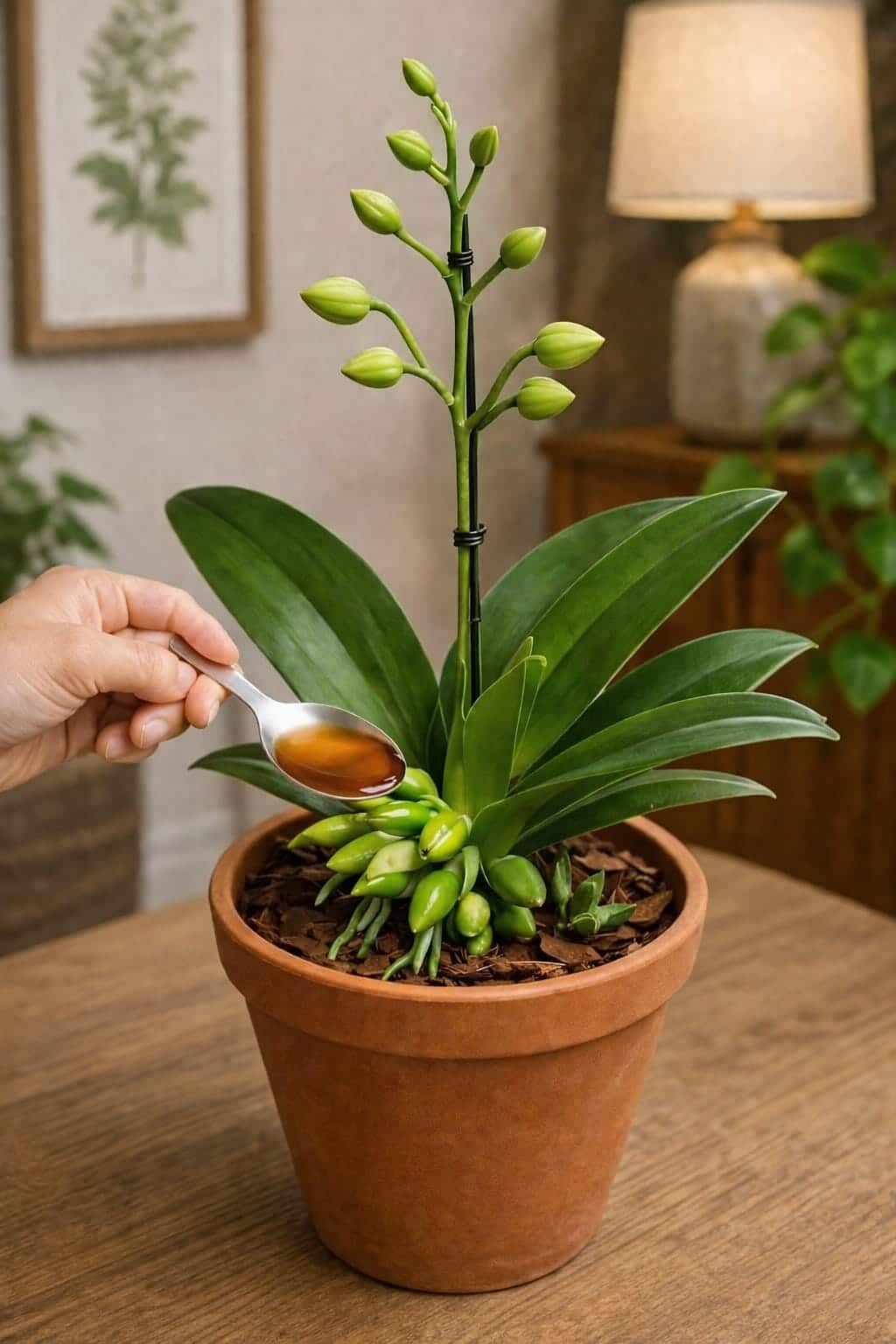
It appears to be honey or a honey-water tonic. The safe version is a tiny amount of honey diluted heavily in water.
Can I pour pure honey on my orchid?
No. Pure honey is too sticky and can attract pests, cause mold, and block airflow in the bark mix.
Can honey make orchids bloom?
Not directly. Orchids bloom from proper light, healthy roots, maturity, and stable care. Honey water is only an optional light rinse.
How often can I use honey water?
No more than once every six to eight weeks, and only if the orchid is healthy and actively growing.
Can honey water attract ants?
Yes, especially if the mixture is too strong or spilled. Use a very weak mix and wipe up any drips.
Should I put honey on orchid roots?
Do not coat roots with honey. If using the trick, pour a very diluted mixture through the bark and let it drain fully.
Can I use honey on orchid buds?
No. Keep honey water away from buds and flowers.
What if my orchid roots are rotten?
Remove rotten roots and repot in fresh orchid bark. Do not use honey water on rotten roots.
What is better than honey for orchids?
Bright indirect light, correct watering, fresh bark, good airflow, and diluted orchid fertilizer are better and more reliable.
Can I use this trick on all orchids?
Use caution. Different orchids have different care needs. The method is most commonly discussed for Phalaenopsis orchids, and even then it should be rare and very diluted.
Final Thoughts
The honey spoon orchid trick is beautiful, warm, and tempting. A spoonful of amber liquid near a budding orchid makes the whole scene feel like a secret bloom ritual. It suggests that one simple kitchen ingredient can wake up the plant and help the buds open into a stunning display.
But orchids need gentle care, not sticky shortcuts. Pure honey should never be poured directly into an orchid pot. It can attract pests, encourage mold, leave residue, and interfere with the airy root environment orchids need.
The safe version is very diluted honey water used rarely. A tiny amount of honey dissolved in plenty of water can create a light amber rinse, but it should be applied only to the bark mix, never into the crown or onto buds. The pot must drain completely afterward.
Even then, honey water is optional. The real secrets to orchid success are bright indirect light, healthy roots, fresh bark, proper watering, stable temperatures, and gentle orchid fertilizer during active growth. If your orchid is already producing buds, the best thing you can do is keep conditions steady and avoid shocking the plant.
Use the honey trick as a rare, delicate ritual if you enjoy it, but do not depend on it as a miracle cure. Watch the roots, protect the crown, keep the bark airy, and let the orchid grow at its own pace.
With patient care, your orchid can hold its buds, open its flowers, and return to bloom again in the future. The amber spoon may look magical, but the true magic is steady, simple orchid care done well.