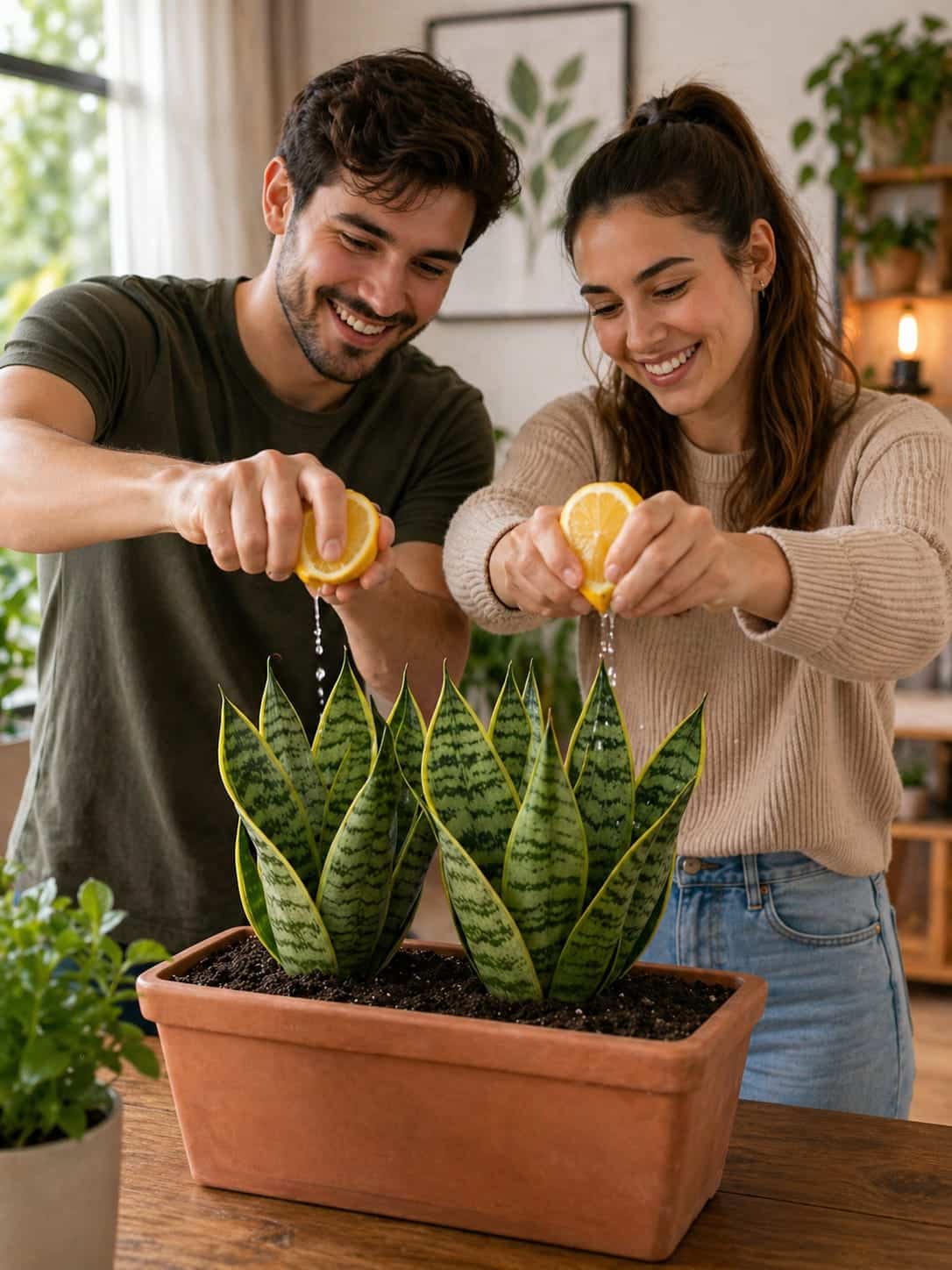
Can Lemon Damage Snake Plants?
Yes, if used incorrectly. Straight lemon juice can damage roots if poured into the soil. Strong lemon water can leave residue on leaves. Lemon peels left on soil can mold. Lemon mixed with sugar or other kitchen ingredients can attract pests.
Damage may show as yellowing leaves, soft bases, sour-smelling soil, fungus gnats, or slowed growth. If any of these happen after using lemon, stop immediately and return to plain water care.
If the soil was heavily treated with lemon and smells sour, repot the plant into fresh gritty mix. Check the roots and rhizomes for rot.
Used carefully and externally, lemon can be safe. Used heavily in the root zone, it is risky.
What If Lemon Juice Accidentally Gets Into the Soil?
A few drops are usually not a disaster, especially in a large pot with drainage. Let the soil dry normally and avoid adding more. The next time the plant needs watering, water with plain water and let it drain completely.
If a large amount was poured in, flush the pot with plain water if it has good drainage. Let all excess water escape. Then allow the soil to dry thoroughly. Watch for sour smell or yellowing.
If the pot has no drainage or the soil stays wet, repotting may be safer. Snake plants do not like wet acidic soil.
The key is to avoid repeating the mistake. Lemon should not become part of the regular soil watering routine.
How to Use Lemon Around Snake Plants Safely
Here is the safest way to enjoy the lemon trick without harming the plant:
- Use lemon mainly for cleaning, not feeding.
- Dilute lemon juice heavily before using it near leaves.
- Never pour straight lemon juice into the soil.
- Do not leave lemon peels on the potting mix.
- Keep citrus mixtures away from the leaf bases.
- Wipe leaves with plain water after using lemon water.
- Use lemon on pot exteriors, not root zones.
- Stop immediately if the plant shows stress.
This gives you the freshness of lemon without risking the snake plant’s roots.
A Better Lemon-Inspired Snake Plant Routine
If you want a complete routine inspired by the lemon trick, try this:
Monthly Freshening Routine
- Check the soil moisture deeply.
- Remove any dead leaves or debris from the pot.
- Wipe leaves with a soft damp cloth.
- Use very weak lemon water only if leaves have mineral marks.
- Wipe again with plain water.
- Clean the outside of the pot with diluted lemon water.
- Dry the pot and leaves.
- Rotate the plant toward the light.
- Check for pups or root crowding.
- Water only if the soil is dry.
This routine is safe because it focuses on observation and cleanliness. It makes the plant look better while helping you notice what it actually needs.
Why the Rectangular Planter Works Well
The snake plants in the image are growing in a rectangular terracotta-style planter. This type of planter can look excellent with snake plants because the upright leaves create a row of vertical shapes. It gives the display a clean architectural look.
A rectangular planter also allows several snake plant divisions to grow together. This can create a fuller arrangement faster than one small plant in a round pot.
However, rectangular planters must drain well. Because they hold more soil, they can stay wet longer if the mix is dense. Make sure there are drainage holes along the bottom. Use gritty soil. Do not water too often.
If the planter is heavy and deep, check moisture carefully before watering. The top may look dry while the lower soil remains damp.
How to Make Snake Plants Look Fuller
If you want a fuller snake plant display like the one in the image, the best method is division and grouping. Instead of waiting for one plant to fill a large planter, you can plant several healthy divisions together.
Choose firm, rooted snake plant sections. Plant them in a gritty mix with space between clusters. Keep the leaves upright and avoid burying them too deeply. Water lightly after repotting, then let the soil dry.
Over time, the rhizomes may produce new pups and fill the container. Bright indirect light will help the arrangement grow stronger.
Do not overcrowd the planter so much that airflow disappears. A little space between clusters helps prevent moisture problems.
How to Separate Snake Plant Pups
Snake plant pups can be separated when they are large enough to have their own roots or rhizome connection. Remove the plant from the pot and gently loosen the soil. Find where the pup connects to the main rhizome. Use clean scissors or a sharp knife to separate it, making sure the pup has roots attached.
Let cut areas dry for a day if they are large or wet. Then plant the pup in a small pot with gritty soil. Wait a few days before watering if the cut was fresh.
Small pups should not be separated too early. Let them grow several inches tall first. Larger pups establish more easily.
A rectangular planter can be refreshed by removing overcrowded pups and replanting them elsewhere.
What to Do With Brown Tips
Brown tips are common on snake plants. They may come from inconsistent watering, physical damage, dry air, fertilizer buildup, old age, or hard water. Lemon will not turn brown tips green again.
You can trim brown tips with clean scissors. Cut along the natural point of the leaf so the shape still looks neat. Avoid cutting into too much healthy tissue.
To prevent more brown tips, water properly, avoid overfertilizing, use filtered water if your tap water is harsh, and keep the plant away from heaters or cold drafts.
If brown tips appear after using lemon on the leaves, the mixture may have been too strong. Return to plain water cleaning.
What to Do With Yellow Leaves
Yellow leaves are usually a sign that something is wrong with watering, roots, light, or age. One old yellow leaf may be normal. Several yellow leaves at once need attention.
Check the soil first. If it is wet and the leaf bases feel soft, overwatering or rot may be the problem. Remove the plant from the pot and inspect the roots and rhizomes. Trim rotten parts and repot into fresh dry gritty soil.
If the soil is bone dry and the leaves are wrinkled, the plant may need water. If the plant is in a dark corner and growing weakly, move it to brighter indirect light.
Do not use lemon as a yellow-leaf cure. Diagnose the real issue.
What to Do If the Plant Is Not Growing
A snake plant that is not growing may simply be resting. These plants can be slow, especially in winter or low light. But if months pass with no change, look at the care conditions.
First, increase light. A brighter location often makes the biggest difference. Second, check the potting mix. If it is heavy and wet, repot into gritty soil. Third, check the pot size. A slightly snug pot can encourage pups, while an oversized pot may stay wet too long.
Feed lightly in spring or summer with diluted succulent fertilizer. Do not overwater. Do not keep adding homemade liquids.
Growth comes from the full care routine, not from lemon juice.
Can Lemon Be Used With Fertilizer?
Do not mix lemon juice with fertilizer. The combination is unnecessary and may make the solution too acidic or unpredictable. Fertilizer should be mixed according to its label, usually with plain water.
If you use a diluted lemon leaf wipe, do it separately from fertilizing. Lemon should stay mostly on leaf and pot surfaces, while fertilizer belongs in the soil during active growth.
Keep plant care simple. Too many mixtures can create problems and make it hard to know what caused the plant to react.
Can Lemon Be Used With Baking Soda?
Lemon and baking soda may fizz together, but that does not make them a good plant treatment. The reaction looks exciting, but snake plants do not need fizzing mixtures in the soil. Baking soda contains sodium, which can build up and stress roots if overused.
Do not pour lemon-baking soda mixtures into snake plant pots. Use plain water, proper soil, and gentle fertilizer instead.
Fizz is fun in a cleaning bowl, not in a plant root zone.
Can Lemon Be Used With Milk?
No. Lemon and milk together can curdle and create an unpleasant mixture. This should not be used on snake plant leaves or soil. Milk can sour in potting mix, and lemon can make it even messier.
Avoid dairy-based plant tricks for snake plants. They can smell, attract pests, and create residue.
For leaf cleaning, plain water is better. For feeding, use succulent fertilizer. For freshness, clean the pot exterior with diluted lemon water.
How to Keep the Plant Area Fresh Without Harming the Soil
If your goal is a fresh-smelling plant corner, there are safer ways than pouring lemon into the pot. Clean the shelf or table with diluted lemon water, then dry it. Wipe the outside of the planter. Remove dead leaves from the soil surface. Improve airflow in the room. Keep the soil from staying wet.
You can also place a small bowl of lemon peel nearby for a short time as a natural room freshener, then remove it before it dries or molds. Do not place peel pieces inside the pot.
A clean plant area feels fresher and also reduces pest problems. Most bad plant smells come from wet soil, not from the plant itself.
Common Mistakes With the Lemon Snake Plant Trick
Pouring Straight Lemon Juice Into the Soil
This can stress roots and create sour residue. Avoid it.
Using Lemon Too Often
Even diluted lemon should be occasional. Plain water is best for regular care.
Leaving Lemon Peels on the Soil
Peels can mold and attract pests. Keep them out of the pot.
Using Lemon as Fertilizer
Lemon is not balanced plant food. Use proper fertilizer if needed.
Scrubbing Leaves With Lemon Halves
This can leave sticky acidic residue. Use a diluted wipe only.
Ignoring Drainage
No trick can save a snake plant sitting in wet soil without drainage.
Expecting Instant Pups
Pups come from healthy rhizomes, light, and time.
Signs the Lemon Routine Is Safe
If you are using lemon safely, the plant should look clean and stable. The leaves should not develop new yellow patches or soft spots. The soil should not smell sour. There should be no fungus gnats. The pot should look fresher, and the leaves should be dust-free.
After cleaning, the plant may look brighter immediately because dust has been removed. Over time, if you also improve light and watering, the plant may grow more strongly.
The best sign is not a dramatic reaction. It is quiet health: firm leaves, dry soil between waterings, and slow steady growth.
Signs You Should Stop Using Lemon
Stop using lemon if leaves develop spots after wiping, the soil smells sour, gnats appear, leaf bases soften, or the plant starts yellowing after lemon exposure. Return to plain water care.
If lemon was used on leaves, wipe them with plain water and dry them. If lemon was poured into soil, flush with plain water only if the pot drains well, then let the plant dry. If the smell continues, repot.
Snake plants do not need lemon to survive. If there is any negative reaction, skip it completely.
A Safe Lemon-Inspired Snake Plant Care Routine
Here is a safe routine that gives you the fresh feeling of the lemon trick without risking the roots:
- Place the snake plant in bright indirect light.
- Use a pot with drainage holes.
- Grow it in gritty succulent soil.
- Water only when the soil is dry.
- Clean leaves monthly with a damp cloth.
- Use very diluted lemon water only for occasional mineral marks.
- Wipe again with plain water after lemon cleaning.
- Clean the pot exterior with diluted lemon water.
- Never pour straight lemon juice into the soil.
- Feed lightly during spring or summer with succulent fertilizer.
This routine supports the plant and keeps the display looking clean, fresh, and attractive.
Frequently Asked Questions
Can I put lemon juice on my snake plant?
You should not pour lemon juice into the soil. If using lemon at all, dilute it heavily and use it only as an occasional leaf or pot-cleaning wipe.
Can lemon juice make snake plants grow faster?
No. Snake plant growth depends mostly on light, healthy roots, gritty soil, and correct watering.
Can lemon juice make snake plants produce pups?
No. Pups come from underground rhizomes when the plant has enough energy and healthy conditions.
Can I clean snake plant leaves with lemon?
Yes, but only with a very weak solution: 2 to 3 drops lemon juice in 1 cup water. Wipe gently, then wipe again with plain water.
Can lemon remove hard water spots?
A very diluted lemon wipe may help with light mineral spots, but do not use straight lemon juice or scrub hard.
Can I leave lemon peels on the soil?
No. Lemon peels can mold and attract pests. Keep them out of the pot.
What happens if lemon juice gets in the soil?
A few drops may not hurt, but large amounts can make the soil too acidic or sour. Flush with plain water if the pot drains well, and avoid repeating it.
Is lemon a fertilizer?
No. Lemon does not provide balanced plant nutrition. Use a diluted cactus or succulent fertilizer if feeding is needed.
Can lemon keep bugs away?
Not reliably. Pest problems need proper treatment. Lemon should not be used as the main pest control method.
What is better than lemon for snake plants?
Bright indirect light, drainage holes, gritty soil, careful watering, and occasional light fertilizer are much better for long-term growth.
Final Thoughts
The lemon squeeze snake plant trick looks bright, natural, and fun. It gives plant care a fresh kitchen-garden feeling, and it makes a snake plant display look cheerful and intentional. But lemon must be used wisely. Snake plants do not need lemon juice in their soil, and straight citrus can do more harm than good.
The safest way to use this trick is as a cleaning and freshening routine. Use very diluted lemon water to wipe mineral marks from leaves occasionally. Use diluted lemon water to clean the outside of pots. Use lemon peel water as a short surface freshener away from the root zone. Keep lemon peels, strong juice, sugar mixtures, and sour liquids out of the pot.
The real secret to a strong snake plant is not lemon. It is bright indirect light, a pot with drainage holes, gritty fast-draining soil, and watering only when the soil is dry. If you want more pups, give the plant better light and healthy roots. If you want shinier leaves, clean off dust. If you want fewer problems, avoid overwatering.
Used gently, lemon can make your plant-care routine feel fresh and polished. Used heavily, it can stress the soil and roots. Keep the lemon for cleaning, keep the roots dry and airy, and let the snake plant grow at its steady natural pace.
With the right balance, your snake plant can stay upright, patterned, and beautiful for years. The lemon may catch the eye, but the true magic is simple, steady care.