How to Prune Geraniums for Fuller Growth
Pruning is one of the most powerful ways to turn a tired geranium into a fuller plant. If stems are long and bare, cut them back. This encourages branching.
Use clean scissors or pruning shears. Cut just above a node, which is the point where leaves or side shoots grow. Do not remove all the foliage at once unless the plant is extremely leggy. A moderate prune is safer.
After pruning, place the plant in bright light. New shoots need energy to develop. The milky water trick can be used after pruning if the soil is dry and the plant needs watering.
Within a few weeks, you may see fresh growth from lower stems.
How to Deadhead Geraniums for More Flowers
Deadheading means removing old flower clusters after they fade. This keeps the plant neat and encourages more blooms. If spent flowers remain on the plant, the geranium may put energy into seed production instead of new buds.
To deadhead, follow the flower stem down to where it meets the main stem and snap or cut it off. Remove the whole spent stalk, not just the petals.
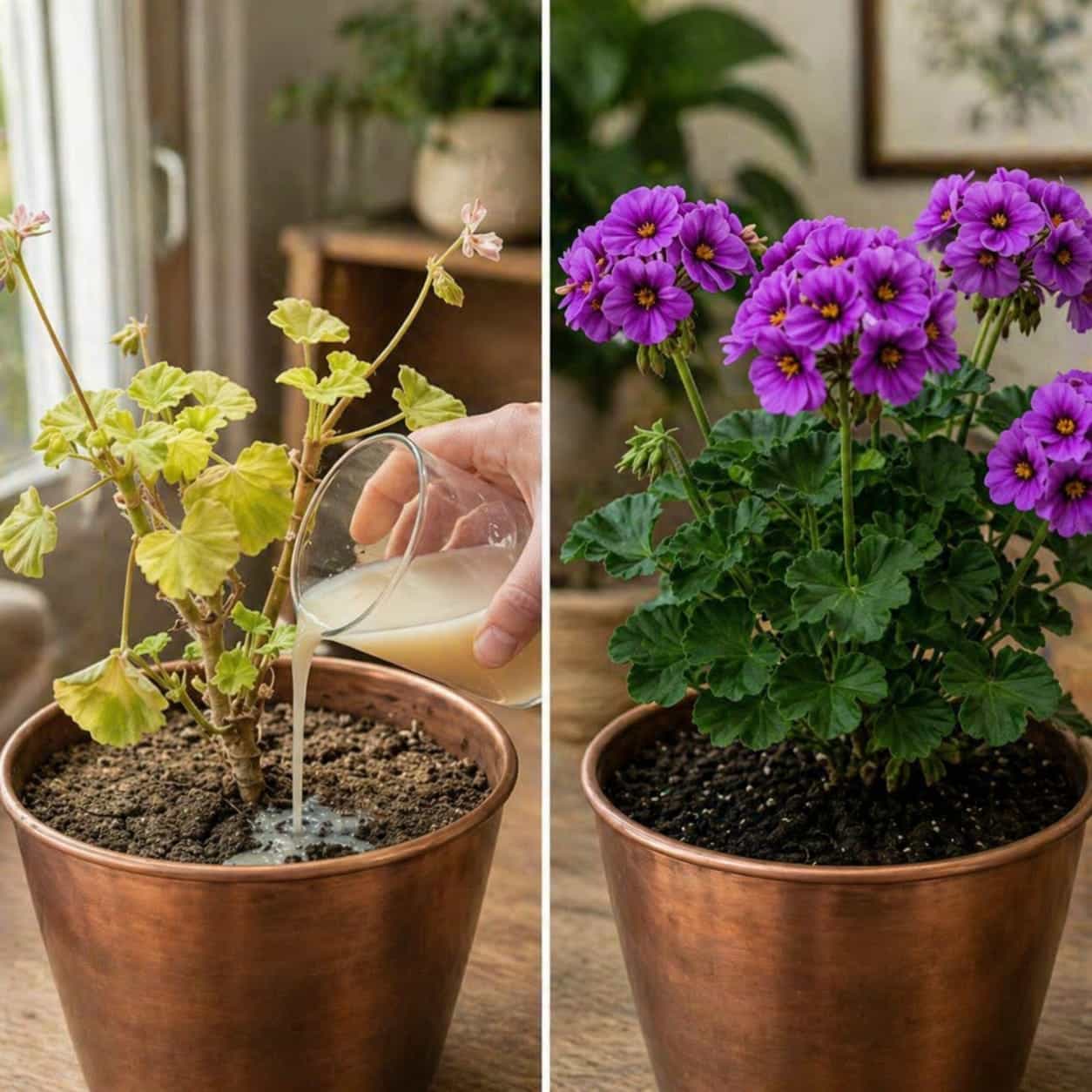
Regular deadheading is far more important for blooms than any homemade liquid. If you want a geranium like the one on the right side of the image, deadheading should become a regular habit.
How to Feed Geraniums for Blooms
Geraniums are blooming plants, so they appreciate feeding during active growth. Use a balanced flowering plant fertilizer or a geranium fertilizer. Follow the label instructions, and do not overfeed.
If your plant is indoors, a half-strength fertilizer every few weeks during spring and summer may be enough. Too much fertilizer can cause weak growth or salt buildup.
The milky rice water trick is not a complete fertilizer. It may gently refresh the soil, but it does not provide all nutrients needed for long-term blooming.
For best results, combine occasional rice water with a proper feeding routine.
When Not to Use the Milky Water Trick
Do not use the trick if the soil is already wet. Do not use it if the pot has no drainage. Do not use it if the plant smells sour or has root rot. Do not use it during cold, dark periods when the plant is barely growing.
Also avoid it if fungus gnats are already a problem. Rice water can make damp soil more attractive if used too often.
The trick is best for a plant that is actively growing or beginning to recover, not a plant sitting in soggy soil with damaged roots.
Can This Trick Help Yellow Leaves?
The trick will not turn yellow leaves green again. Once a leaf has yellowed, that tissue is usually finished. Remove yellow leaves and focus on supporting new growth.
If the yellowing is caused by dry soil and lack of nutrients, a gentle watering and better care may help prevent more yellow leaves. If yellowing is caused by overwatering, adding more liquid will make the problem worse.
Always check the soil before using the trick.
Can This Trick Help a Leggy Geranium?
A leggy geranium needs pruning and more light. The white pour alone will not make long bare stems become bushy. But after pruning, a gentle watering can help the plant recover and push new shoots.
If your geranium is leggy, cut it back, move it to brighter light, and water carefully. Once new growth appears, feed lightly.
The milky water trick can be part of that routine, but pruning and light are the real keys.
Can This Trick Help Outdoor Geraniums?
Yes, diluted rice water can be used occasionally on outdoor potted geraniums, but outdoor plants often receive rain and stronger airflow, so the trick is less necessary. Outdoor geraniums usually need regular feeding, sun, and deadheading more than homemade rinses.
If using it outdoors, apply it to the soil in the morning and avoid wetting the leaves. Do not use it before heavy rain, because the pot may become too wet.
Can You Use Rice Water on Flowering Geraniums?
You can use diluted rice water on flowering geraniums, but do so lightly. Avoid splashing blooms. Wet petals can become spotted or fade faster.
When a geranium is covered in flowers, keep the routine simple. Water at the soil level, deadhead regularly, and provide bright light. If the plant is already blooming well, it may not need any special trick.
Do not disturb a happy plant too much.
Can You Store Rice Water for Later?
It is better not to store rice water for long. Fresh rice water is cleaner. Stored rice water can ferment and develop a sour smell. Fermented liquids may be too strong for indoor pots and can attract pests.
Make only what you need. Use it right away. Discard the rest.
If the liquid smells unpleasant, do not use it on plants.
How to Avoid Fungus Gnats
Fungus gnats are tiny flying insects that often appear around damp potting soil. If you use rice water too often, or if the soil stays wet, gnats may become a problem.
To avoid them:
- Let the top inch of soil dry between waterings
- Remove dead leaves from the soil surface
- Use pots with drainage holes
- Avoid thick organic liquids
- Use yellow sticky traps if needed
- Improve airflow around the plant
A clean, dry soil surface is one of the best protections.
How Long Until You See Results?
A weak geranium will not become full and blooming overnight. After pruning and improving care, you may see fresh green shoots within two to four weeks. Flower buds may take longer, depending on the season, light level, and plant strength.
The before-and-after image represents a process, not an instant result. The white pour may be the beginning of the revival, but time and steady care create the final transformation.
Be patient. Geraniums can recover beautifully when the stems and roots are still alive.
A Complete Geranium Revival Routine
Here is a practical routine inspired by the image:
- Move the geranium to bright light.
- Remove yellow leaves and dead flowers.
- Prune long, bare stems to encourage branching.
- Check the pot for drainage.
- Refresh or replace tired soil if needed.
- Water with diluted rice water only if the soil is dry enough.
- Let the pot drain fully.
- Use plain water for regular watering afterward.
- Feed lightly once new growth begins.
- Deadhead regularly when flowers appear.
This routine gives the plant a real chance to recover and bloom again.
Common Mistakes With the Milky Water Geranium Trick
Using Real Milk
Milk can sour, smell bad, and attract pests. Use diluted rice water instead.
Using the Liquid Too Thick
The mixture should be lightly cloudy, not creamy. Thick liquid can leave residue.
Watering Already Wet Soil
Geraniums do not like soggy roots. Only use the trick when the plant needs watering.
Pouring Over the Leaves
Wet geranium leaves can develop mildew. Pour only into the soil.
Expecting Overnight Blooms
The transformation takes time. Light, pruning, and feeding are also required.
Ignoring Poor Light
A geranium in dim light will not bloom heavily, even with homemade tonics.
Using It Every Week
Too much rice water can create buildup or pests. Use it occasionally.
Signs the Trick Is Working
The trick is working if the geranium begins to look firmer, produces new green shoots, and stops losing leaves. The soil should smell fresh, not sour. The plant should gradually become bushier after pruning.
Later, with enough light, flower buds may begin to appear. The leaves should become deeper green, and stems should look stronger.
Progress may be slow at first, but steady improvement is a good sign.
Signs You Should Stop
Stop using rice water if the soil smells bad, mold appears, fungus gnats increase, or the plant becomes more yellow and limp. These signs suggest the pot may be staying too wet or the liquid is being used too often.
If the plant declines after watering, inspect the roots. Root problems cannot be fixed by adding more liquid.
Sometimes the best solution is repotting into fresh soil.
Frequently Asked Questions
What is the white liquid being poured on the geranium?
The safest version is diluted rice water. It looks milky but should be thin and fresh.
Can I use real milk?
No. Real milk can sour in soil, attract pests, and create unpleasant residue.
Will this make my geranium bloom overnight?
No. Blooms require time, bright light, pruning, feeding, and healthy roots.
How often should I use rice water?
Once every four to six weeks during active growth is enough.
Can I pour it on the leaves?
No. Pour it only into the soil. Keep geranium leaves dry indoors.
Can it help yellow leaves?
It will not turn yellow leaves green, but it may support new growth if the plant is otherwise cared for correctly.
What if the soil is wet?
Do not use the trick. Wait until the soil dries. Wet soil plus extra liquid can harm geranium roots.
Do geraniums need fertilizer too?
Yes, during active growth, a balanced flowering plant fertilizer is more reliable than rice water alone.
Why is my geranium not blooming?
The most common reason is not enough light. Lack of pruning, old flowers, or low nutrients can also reduce blooming.
What matters most for a full geranium?
Bright light, pruning, deadheading, well-draining soil, careful watering, and light feeding matter most.
Final Thoughts
The milky water geranium trick is a beautiful and simple-looking method that makes plant care feel almost magical. A tired yellow geranium receives a gentle white pour, and the after image shows a lush plant covered in purple blooms. It is the kind of transformation every plant lover wants to see.
The safe version of the trick uses diluted rice water, not dairy milk. The liquid should be fresh, thin, and lightly cloudy. It should be poured only into the soil when the plant actually needs watering. It should not be used every week, and it should never be poured onto already wet soil.
But the real secret is not the white liquid alone. A weak geranium needs a full reset. Remove yellow leaves, prune leggy stems, give the plant bright light, refresh tired soil, water correctly, and feed lightly once new growth begins. Deadhead old flowers to encourage more blooms.
When all of these steps come together, a tired geranium can surprise you. It may push new shoots, deepen in color, and eventually produce fresh flower clusters. The white pour can be part of the ritual, but the plant’s recovery comes from steady, complete care.
Use the trick gently. Keep the soil clean. Give the plant light. Be patient with new growth. With the right routine, your geranium can move from pale and tired to full, green, and blooming beautifully again.