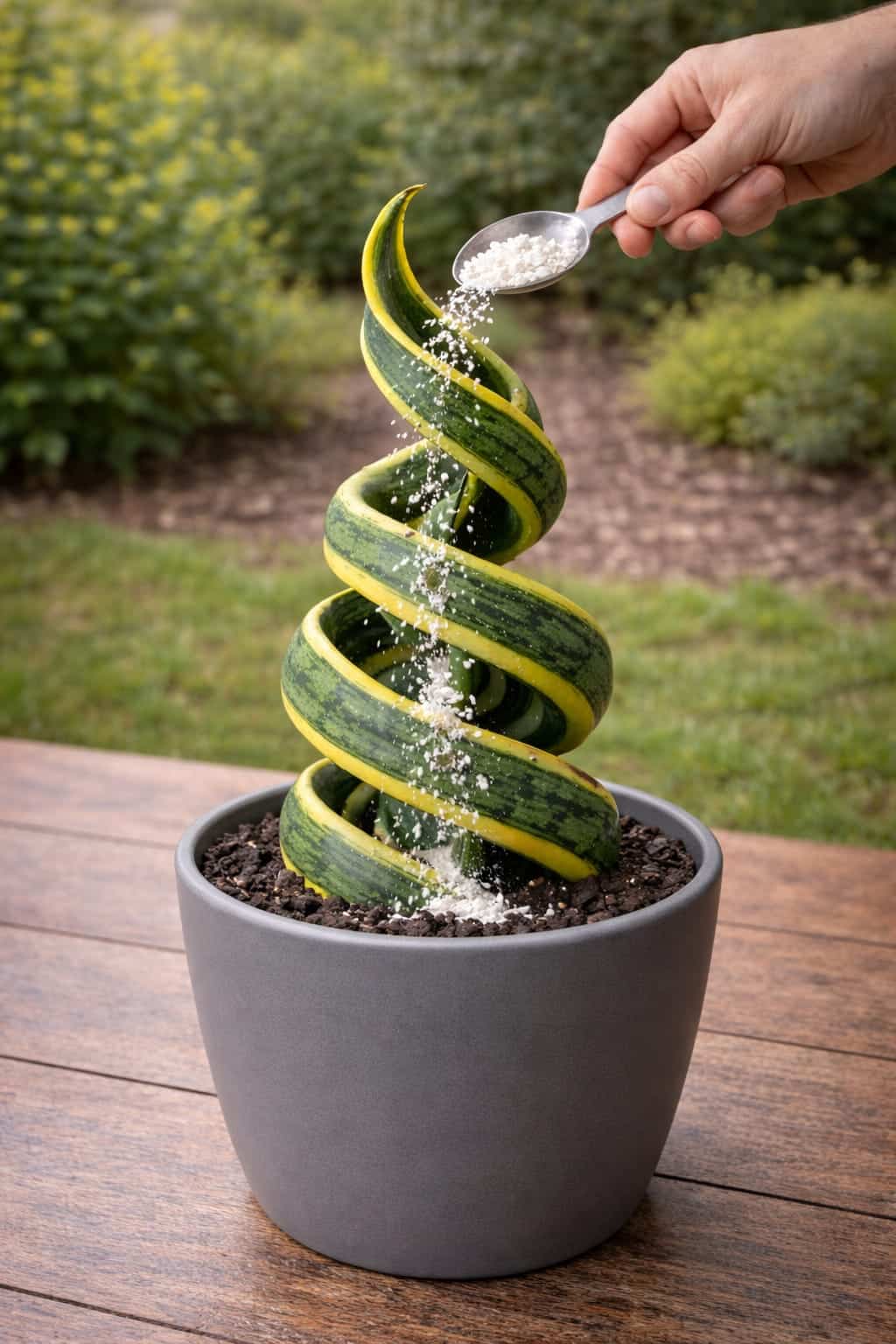
💧 How Soil Boosters Are Typically Applied
When gardeners add small granular materials to the soil surface, they usually follow a cautious method. Moderation is key.
Typical Approach – Step by Step
- Sprinkle a small amount over the top layer of soil – a light dusting or thin layer.
- Spread it evenly around the base of the plant – avoid clumping.
- Water lightly so it blends with the soil – just enough to settle it.
- Repeat only occasionally – once every few months at most.
- Do not use during winter – the plant rests.
Overuse of any additive can disturb soil balance, so moderation is important. When in doubt, use less.
What to Avoid
· Heavy layers – can block airflow and water penetration.
· Mixing into the entire pot without knowing the material – some materials alter pH.
· Using as a replacement for well‑draining soil – always start with good soil.
· Ignoring light and watering – no soil booster fixes poor care.
⚠️ Common Snake Plant Care Mistakes
Even though snake plants are hardy, a few common mistakes can cause problems. The soil booster will not fix these.
Frequent Issues to Avoid
Mistake Why It’s Harmful Correct Approach
Overwatering the soil Root rot, yellow leaves Let soil dry completely between waterings.
Using heavy potting mixes Traps moisture, suffocates roots Use cactus/succulent mix with perlite.
Containers without drainage holes Water pools at bottom Always use pots with holes.
Very dark indoor locations Weak growth, pale leaves Move to bright indirect light.
Excess fertilizer use Burns roots, brown tips Feed lightly once or twice a year.
Most snake plant problems actually come from too much attention rather than too little – overwatering, over‑feeding, and over‑handling.
🌱 Ideal Conditions for Healthy Snake Plants
To grow strong leaves and new offsets (pups), snake plants thrive in stable indoor conditions. Natural soil boosters can be a small help, but these fundamentals matter far more.
Best Environment for Snake Plants
Factor Ideal Condition Why It Matters
Light Bright, indirect (east/west window) Supports strong leaf growth
Soil Fast‑draining mix (cactus soil + perlite) Prevents root rot
Water Infrequent – let soil dry completely Protects roots
Temperature Warm indoor climate (18–30°C / 65–86°F) Encourages steady growth
Feeding Light seasonal nutrients (once or twice a year) Maintains plant health
Soil boosters Light, occasional (optional) Gentle support – not required
With the right care routine, mature snake plants may also produce small new shoots (pups) around the base of the plant – a sign of a happy, healthy plant.
How to Use a Natural Soil Booster Safely – Step by Step
If you want to try this method, follow this simple plan.
- Choose a safe material – perlite, pumice, or zeolite (avoid unproven additives).
- Ensure your soil is already well‑draining – start with cactus mix.
- Sprinkle a thin layer on top – about 1 tablespoon for a 6‑inch pot.
- Gently water to settle it.
- Do not reapply for 2–3 months – less is more.
- Observe your plant – if it seems happy, continue; if leaves yellow or soil stays wet, reduce amount.
Pro tip: The best “soil booster” for snake plants is simply a well‑draining cactus mix with added perlite. You don’t need fancy additives.
Snake Plant Care Overview – Quick Reference Table
Factor Ideal Condition Why It Matters
Light Bright, indirect Supports strong leaf growth
Soil Fast‑draining mix Prevents root rot
Water Infrequent watering Protects roots
Temperature Warm indoor climate Encourages steady growth
Feeding Light seasonal nutrients Maintains plant health
Soil boosters Light, occasional (optional) Gentle support – not required
Frequently Asked Questions (FAQs)
Q: Why are snake plants so popular indoors?
They are durable, stylish, and require minimal maintenance – perfect for busy homeowners.
Q: How often should snake plants be watered?
Usually every two to three weeks depending on indoor conditions. Always check that the soil is completely dry before watering.
Q: Can snake plants grow in low light?
Yes, although growth may slow in very dark spaces. For best health, provide bright indirect light.
Q: Why do snake plant leaves turn yellow?
Often caused by overwatering or poor drainage. Check soil moisture and roots.
Q: Do snake plants need fertilizer often?
Only light feeding during active growth periods (spring and summer). Once or twice a year is plenty.
Q: Can snake plants produce flowers?
Yes, mature plants may occasionally bloom indoors – it’s rare but beautiful.
Q: What soil works best for snake plants?
Cactus or succulent soil with excellent drainage – add perlite for extra aeration.
Q: Are snake plants good for beginners?
Yes, they are among the easiest houseplants to grow – very forgiving.
Q: Do snake plants produce baby plants?
Yes, they often grow small offsets (pups) around the base – you can leave them or separate.
Q: Do snake plants improve interior spaces?
Yes, their vertical structure adds a modern decorative element – they complement any style.
Printable Snake Plant Care Checklist
☐ Place in bright, indirect light (east/west window) – tolerates low light
☐ Use a pot with drainage holes (terracotta preferred)
☐ Fill with fast‑draining cactus/succulent soil (add perlite)
☐ Water only when soil is completely dry (check with finger)
☐ Water deeply, then empty saucer
☐ Do not water again for 2–4 weeks (depending on light)
☐ Fertilize lightly once or twice a year in spring/summer (optional)
☐ Use natural soil boosters (perlite, pumice) sparingly – optional
☐ Do not feed in fall/winter
☐ Wipe leaves with damp cloth monthly
☐ Inspect roots annually – repot if root‑bound or soil degraded
☐ Be patient – slow growth is normal
Final Thoughts – Gentle Support, Strong Fundamentals
Adding natural soil boosters to your snake plant’s soil can be a small, helpful addition – but only when used lightly and occasionally. The real drivers of a healthy snake plant are well‑draining soil, infrequent watering, bright indirect light, and stable temperatures.
If your snake plant is struggling, don’t reach for a soil booster first. Check the soil, adjust your watering, and move it to a brighter spot. Once those basics are right, a little perlite or pumice can help improve aeration – but it’s never the cure.
With patience and the right care, your snake plant will reward you with strong, upright leaves and maybe even a few pups.
Now it’s your turn! Have you tried natural soil boosters on your snake plant? What worked – or didn’t? Drop a comment below – I’d love to hear your experience.
And if you found this guide helpful, share it with a friend who loves snake plants. Pin it for later, and subscribe to our newsletter for more practical plant care.
Stay dry, stay bright, and watch your snake plant thrive. 🌿✨