When Not to Use Orange Peel Water
This trick is not safe for every snake plant situation. Knowing when to avoid homemade plant tonics is as important as knowing how to use them.
Avoid orange peel water if:
- The soil is wet
- The pot has no drainage holes
- The plant has mushy leaves
- The base smells rotten
- Fungus gnats are present
- Mold is on the soil
- The plant is in a cold dark room
- You recently fertilized
- The plant was recently repotted
- The leaves are collapsing from root rot
In these cases, the plant needs dry soil, better drainage, and root care before any homemade plant tonic.
How to Check Snake Plant Roots
If your snake plant looks stressed, check the roots and rhizomes. Snake plant roots should not be mushy. This snake plant root health check is essential for diagnosis.
Healthy Roots and Rhizomes
- Firm texture
- White, tan, or orange roots
- Firm underground rhizomes
- No rotten smell
- No slimy tissue
Rotten Roots and Rhizomes
- Black or dark brown
- Mushy
- Slimy
- Bad-smelling
- Leaves pull out easily
- Base feels soft
If the roots are rotting, orange peel water should not be used. The plant needs rescue pruning and dry fresh soil.
How to Rescue a Snake Plant With Root Rot
Root rot is one of the most common snake plant killers. If the base is soft, act quickly. This emergency snake plant root rot treatment can save your plant.
Root Rot Rescue Steps
- Remove the plant from the pot.
- Shake away wet old soil.
- Cut off mushy roots and soft rhizome sections.
- Keep only firm healthy parts.
- Let cut rhizomes dry for several hours.
- Repot into dry, fast-draining soil.
- Wait several days before watering.
- Place in bright indirect light.
Do not add orange peel water, rice water, compost tea, coffee, milk, or fertilizer during root rot recovery.
Best Soil Mix for Snake Plants
Snake plants need fast-draining soil. Regular heavy potting mix may hold too much water. Choosing the best potting mix for snake plants is half the battle.
Good Snake Plant Soil Mix
- 2 parts cactus or succulent mix
- 1 part perlite or pumice
- 1 part coarse sand or orchid bark
This type of mix dries faster and protects the roots from rot.
Best Pot for Snake Plants
The pot matters. A beautiful decorative pot can still harm the plant if it traps water. Using a pot with drainage for snake plants is non-negotiable.
A good snake plant pot should:
- Have drainage holes
- Not be too large
- Allow airflow around the soil
- Use a removable saucer
- Drain completely after watering
Terracotta pots are often helpful because they dry faster than glazed ceramic or plastic. If using a decorative ceramic pot, be extra careful with watering.
Best Light for Snake Plants
Snake plants tolerate low light, but they grow best in bright indirect light. A snake plant in very low light needs much less water. Providing optimal light for snake plant health prevents many problems.
Best light conditions include:
- Bright indirect window light
- Morning sun
- Filtered afternoon light
- A few feet from a sunny window
- Grow light support in dark rooms
Harsh direct sun can burn leaves, especially if the plant was previously grown indoors in low light. Brown dry edges may come from sudden sun exposure.
How to Water Snake Plants Correctly
The best watering rule for snake plants is: water only when the soil is completely dry. Proper watering is a critical snake plant maintenance skill.
To check, push your finger deep into the soil or use a wooden skewer. If moisture remains, wait. Snake plants prefer drying out between waterings.
Watering Tips
- Water deeply but rarely
- Let excess drain fully
- Empty the saucer
- Water less in winter
- Water less in low light
- Never keep the soil constantly moist
If you use orange peel water, count it as a normal watering. Do not water again the same week unless the soil dries completely.
Can Orange Peel Water Be Mixed With Rice Water?
It is better not to combine orange peel water with rice water for snake plants. Rice water adds starch, while orange peel water adds citrus compounds. Together, they may be too much for a slow-drying pot. For simple natural snake plant care, use one tonic at a time.
Use one mild homemade tonic at a time, and use it rarely.
Can Orange Peel Water Be Mixed With Fertilizer?
No. Do not mix orange peel water with commercial fertilizer. This may overload the soil and increase the risk of root stress. This balanced snake plant feeding plan prevents nutrient overload.
A simple routine is better:
- Mostly plain water
- Occasional weak fertilizer during active growth
- Rare orange peel water as a separate soil refresh
Can You Spray Orange Peel Water on Snake Plant Leaves?
It is better not to spray orange peel water on snake plant leaves. Citrus residue may leave marks, attract dust, or irritate damaged leaf tissue. For shiny snake plant leaves naturally, stick to gentle wiping.
To clean snake plant leaves, use:
- Soft damp cloth
- Plain water
- Gentle wiping from base to tip
Do not use oily leaf shine products. Snake plant leaves naturally look better when clean and dust-free.
Orange Peel Water Care Table
| Care Factor | Safe Method | Why It Matters |
|---|---|---|
| Orange peel water | Fresh, strained, diluted | Prevents odor and pests |
| Application | Soil edge only | Protects leaf bases |
| Frequency | Every 6 to 8 weeks max | Prevents overwatering |
| Soil | Fast-draining mix | Prevents root rot |
| Watering | Only when fully dry | Protects succulent roots |
| Light | Bright indirect | Supports firm growth |
| Drainage | Required | Stops water from sitting |
Simple Orange Peel Water Recipe
Ingredients
- Peels from ½ orange
- 2 cups clean water
Instructions
- Wash the orange peel well.
- Cut it into small pieces.
- Place it in a clean jar with water.
- Soak for 4 to 8 hours.
- Strain completely.
- Dilute with equal parts clean water.
- Use only when the snake plant soil is fully dry.
- Apply a small amount around the outer soil edge.
- Let the pot drain fully.
Common Mistakes to Avoid
- Using fermented orange peel water indoors
- Leaving orange peels in the pot
- Using the mixture every week
- Applying it to wet soil
- Pouring it into the leaf crown
- Using it on a plant with root rot
- Mixing it with fertilizer
- Using citrus water with sugar
- Ignoring drainage problems
- Expecting brown leaves to turn green
Avoid these common DIY plant tonic mistakes for success.
Signs the Trick Is Helping
Watch the plant for several weeks. Snake plants grow slowly, so changes are not instant. These are positive indicators of snake plant recovery.
- Leaves stop curling further
- No new browning appears
- Soil smells fresh
- No fungus gnats appear
- Leaf bases stay firm
- New growth emerges upright
- The plant looks more stable
Signs You Should Stop Immediately
Stop using orange peel water if you notice:
- Sour smell
- Mold on soil
- Fungus gnats
- Soft leaf bases
- Yellowing after application
- Soil staying wet too long
- Leaves collapsing
- Rotten smell near the crown
If any of these happen, return to plain water only and inspect the roots.
Short Caption for This Trick
“For snake plants, orange peel water must be fresh, strained, and diluted. Soak clean orange peels for only a few hours, dilute the liquid with water, and apply a small amount only when the soil is completely dry. Never leave peels in the pot or use this on wet soil. This natural citrus tonic is a gentle soil refresher, not a heavy fertilizer.”
Frequently Asked Questions
Is orange peel water good for snake plants?
Fresh diluted orange peel water can be used occasionally as a mild soil refresh, but it should not be used often because snake plants dislike wet soil.
How often should I use orange peel water on snake plants?
Use it no more than once every 6 to 8 weeks during active growth. Avoid it in winter or low-light conditions.
Can orange peel water save a dying snake plant?
Only if the plant still has healthy roots and the problem is mild stress. It will not fix root rot or dead leaves.
Can I put orange peels directly in snake plant soil?
No. Orange peels can mold, smell, and attract fungus gnats. Use a strained diluted infusion instead.
Can orange peel water cause fungus gnats?
Yes, if used too often or if peel pieces remain in the soil. Always strain and let soil dry completely.
Can brown snake plant leaves turn green again?
No. Brown tissue is dead. Trim damaged areas if needed and focus on preventing new damage.
Why are my snake plant leaves curling?
Common causes include underwatering, overwatering, root rot, harsh sun, cold stress, or compacted soil.
Should I use fermented orange peel water?
Not for indoor snake plants. Fermented mixtures can smell, attract pests, and irritate roots if too strong.
Can I spray orange peel water on leaves?
It is better not to. Clean snake plant leaves with plain water and a soft cloth.
What is the best homemade fertilizer for snake plants?
Snake plants do not need much fertilizer. A weak balanced fertilizer during active growth is more reliable. Homemade tonics like orange peel water should be rare and mild.
Final Thoughts
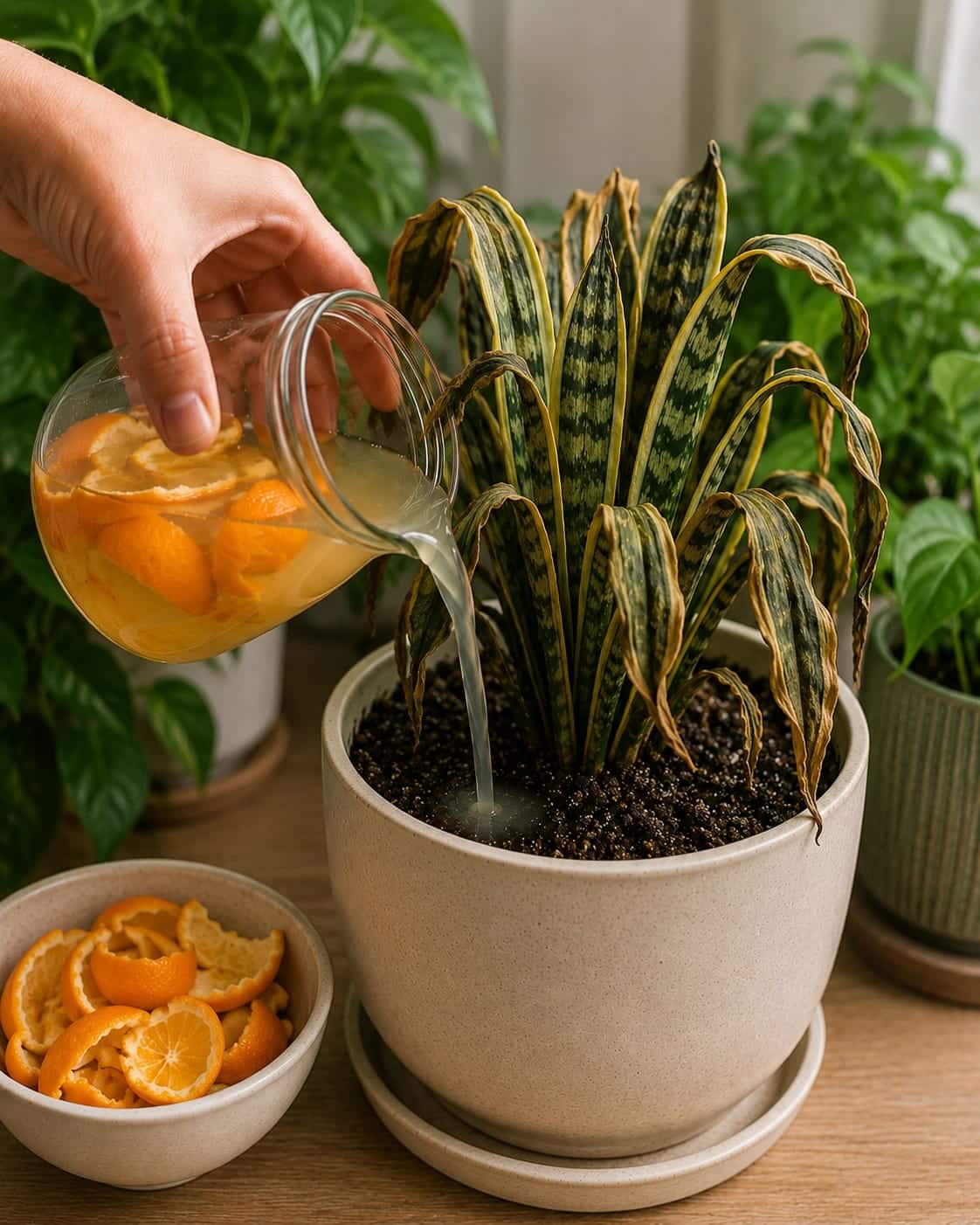
The orange peel water trick can be a useful natural plant care method when used carefully. The image shows a stressed snake plant receiving a pale citrus infusion from a jar of orange peels. This method can lightly refresh the soil, but it should never be treated like a strong fertilizer or emergency cure. This natural snake plant revival method has helped many indoor gardeners.
The safest method is to soak clean orange peels for a few hours, strain the liquid, dilute it well, and apply only a small amount when the snake plant soil is completely dry. Never leave orange peels in the pot, never use fermented citrus water indoors, and never apply the mixture to wet soil or a plant with root rot. Following this complete snake plant care guide will keep your plant thriving.
For real recovery, focus on what snake plants need most: fast-draining soil, drainage holes, bright indirect light, dry periods between waterings, and clean firm roots. Orange peel water can support a healthy routine, but it cannot replace proper care. These professional indoor plant care secrets will help you succeed.
Used wisely, this simple citrus peel tonic may help your snake plant stay fresher and stronger. Used too often, it can cause pests, mold, sour soil, and root damage. With snake plants, the best care is always simple, dry, and consistent. Enjoy your beautiful, resilient snake plant for years to come.