Can You Use Effervescent Vitamin Tablets?
No. Many fizzy vitamin tablets contain sweeteners, flavorings, acids, sodium, dyes, and other ingredients that are not meant for orchid roots. They may leave residue or damage the potting medium.
Use only plant-safe tablets designed for gardening, rooting, or transplant recovery.
If the tablet smells like orange, lemon, candy, or medicine flavoring, do not use it.
Can You Use Activated Charcoal Tablets?
Activated charcoal can be useful in orchid mixes when used as horticultural charcoal pieces, but charcoal tablets are not the same as fresh orchid bark care. If using charcoal, use horticultural charcoal mixed into the potting medium, not random supplement tablets.
Charcoal may help keep the medium fresher, but it will not feed the orchid.
For the white tablet rescue idea, Vitamin B1 is the better match.
Can You Use a Fertilizer Tablet?
Slow-release fertilizer tablets can be used for some plants, but orchids need very careful feeding. A strong tablet can burn roots, especially inside a glass vase with little drainage.
If using orchid fertilizer, choose one made for orchids and use it diluted. Avoid dropping a strong fertilizer tablet directly into the pot.
Weak, regular feeding is safer than one concentrated dose.
Can This Trick Save a Rootless Orchid?
It may help slightly, but it cannot perform miracles. A rootless orchid needs humidity, airflow, patience, and careful rehab. A Vitamin B1 soak can be part of the process, but the orchid must be kept from rotting.
For rootless orchids, many growers use a humidity setup with sphagnum moss nearby, not packed tightly around the crown. The goal is high humidity without wet rot.
The plant must grow new roots before it can truly recover.
Signs the Tablet Trick Is Helping
Orchid recovery is slow. You may not see results for several weeks. Positive signs include:
- New green root tips
- Firmer leaves
- No rotten smell
- New leaf growth
- A flower spike continuing to develop
- Roots staying firm after watering
Do not expect a weak orchid to bloom instantly. Root recovery comes first.
Signs You Should Stop and Repot
Stop using any tablet or tonic and repot if you notice:
- Black mushy roots
- Sour smell from the vase
- Standing water at the bottom
- White mold on the medium
- Leaves turning yellow and soft
- The crown becoming mushy
- Gnats around the pot
These signs mean the root environment is failing. Fresh airy medium is more important than adding more treatments.
How to Avoid Crown Rot
Never let water sit in the center of the orchid leaves. If water gets into the crown, blot it gently with a paper towel. Crown rot can kill phalaenopsis orchids quickly.
When using any soak or tablet solution, keep the leaves and crown mostly dry. Treat the roots, not the center of the plant.
Good orchid care is often about keeping moisture in the right place.
How to Use the Glass Vase Safely
If you love the glass-vase look, use it as an outer decorative container. Keep the orchid in a clear slotted orchid pot inside the vase. When watering, remove the inner pot, soak it separately, let it drain completely, then return it to the vase.
You can also keep a few decorative stones at the bottom of the vase, but the orchid pot should not sit in water.
This setup gives beauty and safety at the same time.
Quick Orchid Recovery Tablet Routine
- Use only a plant-safe Vitamin B1 rooting tablet.
- Dissolve it in 1 liter of room-temperature water.
- Remove old soggy medium if the orchid is struggling.
- Trim only dead or mushy roots.
- Soak healthy roots for 10 to 15 minutes.
- Let roots drain completely.
- Repot into fresh airy orchid bark.
- Keep the crown dry.
- Place in bright indirect light.
- Wait before fertilizing again.
Common Mistakes to Avoid
- Dropping a random tablet directly into the pot
- Using human medicine or fizzy vitamin tablets
- Leaving the orchid sitting in tablet water
- Keeping standing water in a glass vase
- Using dense soil instead of orchid bark
- Cutting healthy firm roots
- Watering the crown
- Using strong fertilizer on weak roots
- Keeping the orchid in low light
- Expecting instant flowers from a recovery tablet
Short Caption for This Trick
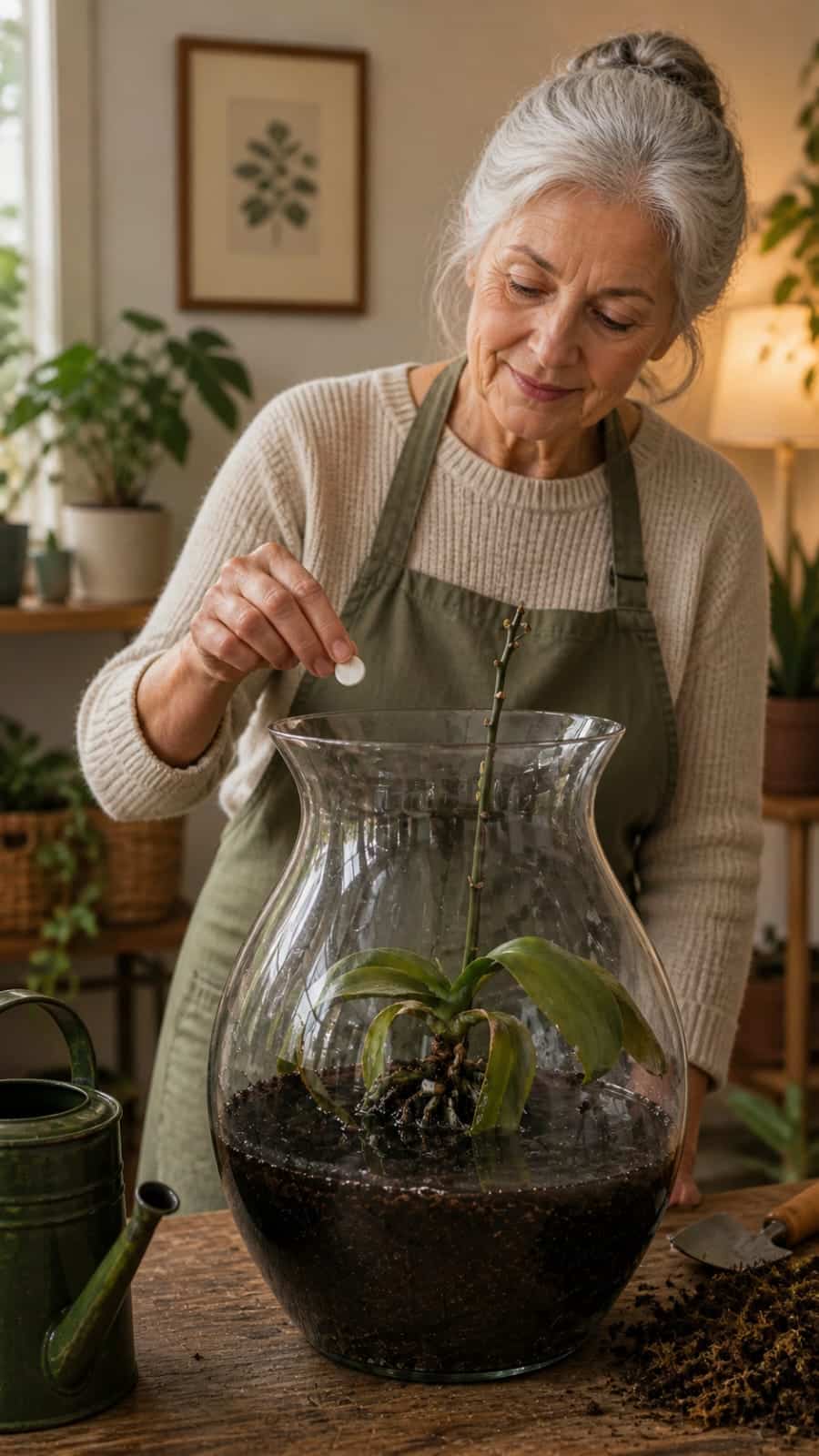
“For a weak orchid, the white tablet should be a plant-safe Vitamin B1 recovery tablet, not random medicine. Dissolve it in water first, soak the roots briefly, then drain completely and repot in airy orchid bark. The real rescue is healthy roots, bright indirect light, and no standing water in the glass vase.”
Frequently Asked Questions
What is the white tablet for orchids?
The safest version is a plant-safe Vitamin B1 rooting or recovery tablet used to support stressed roots after repotting or trimming.
Can I drop the tablet directly into the orchid pot?
No. Dissolve it in water first so the solution is diluted and even.
Can I use aspirin?
It is better not to use aspirin on orchids. A plant-safe Vitamin B1 tablet is gentler and more appropriate.
How long should I soak orchid roots?
Soak for 10 to 15 minutes only, then drain completely.
Can this make orchids bloom?
It supports recovery, but it does not force blooms. Orchids bloom from healthy roots, proper light, good watering, and seasonal conditions.
Is a glass vase safe for orchids?
It can be risky if there is no drainage. It is safer to keep the orchid in a slotted orchid pot inside the decorative vase.
What soil should orchids use?
Most phalaenopsis orchids prefer chunky orchid bark with perlite and charcoal, not dense soil.
Should I cut the flower spike?
If the orchid is very weak or rootless, cutting the spike can help the plant focus on roots. If the plant is stable, you can keep the spike.
How often can I use the tablet trick?
Use it only after stress, repotting, or root trimming. Once every 4 to 6 weeks at most is enough for a weak plant.
What is the real secret to saving orchids?
Healthy roots, airy bark, bright indirect light, careful watering, and good drainage are the real secrets.
Final Thoughts
The white tablet trick in the image is a beautiful orchid rescue idea, but it must be done safely. The tablet should not be random medicine, not a fizzy vitamin, and not a strong fertilizer. The safest version is a plant-safe Vitamin B1 recovery tablet dissolved in plenty of water and used as a short root soak.
For orchids, roots come first. If the roots are rotten, clean them. If the medium is soggy, replace it. If the glass vase holds water, change the setup so the orchid can drain and breathe. A tablet cannot fix a suffocating root zone.
Used gently, this trick can support a stressed orchid after repotting or root trimming. But the real recovery comes from fresh orchid bark, bright indirect light, careful watering, and patience. Give the orchid air, give it time, and watch for the best sign of success: new green root tips reaching out for life again.