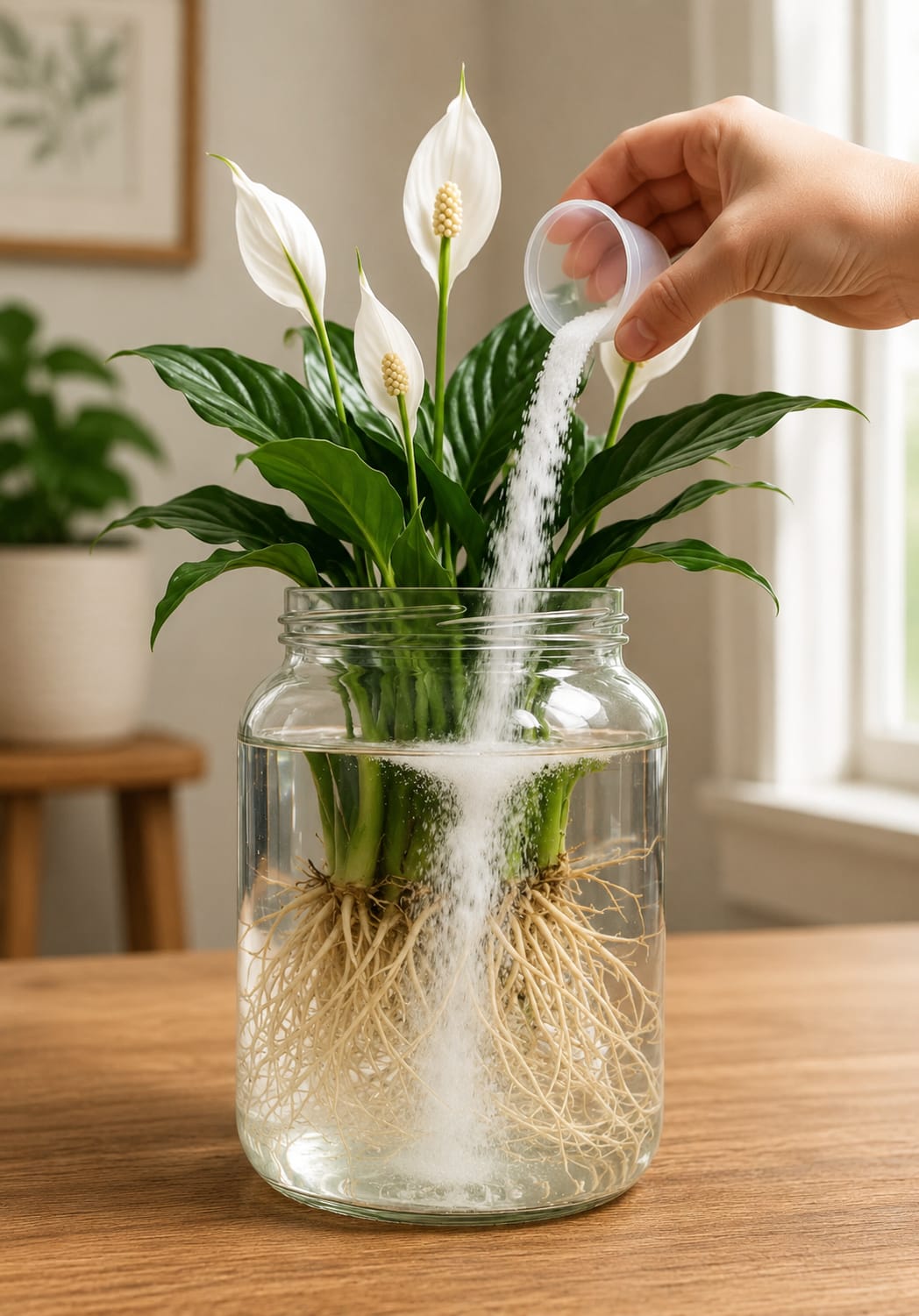
Peace lilies are among the most loved indoor plants thanks to their elegant white blooms, glossy green foliage, and ability to thrive in typical household conditions. Their graceful appearance makes them a favorite choice for living rooms, bedrooms, offices, and indoor decorative spaces. Because they are relatively easy to care for, many plant lovers constantly search for new tips and tricks that promise larger flowers, greener leaves, and faster growth.
One trend that frequently appears online involves growing peace lilies in water-filled containers and adding various household ingredients to the water. Images often show white powders being poured into jars containing exposed roots, claiming dramatic improvements in plant health. While these pictures can be eye-catching, understanding how peace lilies actually grow is far more important than following every gardening trend.
The real secret to a thriving peace lily isn’t a mysterious ingredient. Instead, it comes from maintaining healthy roots, clean water, proper lighting, balanced nutrition, and a stable growing environment. When these needs are met consistently, peace lilies can reward growers with lush foliage and beautiful white blooms for years.
Understanding the Peace Lily
The peace lily is admired for its attractive leaves and distinctive white blooms that brighten indoor spaces throughout the year. Native to tropical regions, peace lilies naturally grow in warm, humid environments where they receive filtered sunlight beneath larger plants and trees.
Because of these natural growing conditions, peace lilies prefer:
- Bright indirect light.
- Consistent moisture.
- Moderate humidity.
- Warm temperatures.
- Good air circulation.
Providing these conditions indoors helps support healthy growth and flowering.
Why Water Culture Is Becoming Popular
Many indoor gardeners have become interested in growing peace lilies directly in water rather than traditional potting soil. Water culture allows the roots to remain visible, creating a decorative display that highlights the plant’s unique root structure.
This method can be visually appealing and allows growers to monitor root health more easily. However, water-grown plants require specific care practices to remain healthy over the long term.
Simply placing a plant in water is not enough. Water quality and maintenance become extremely important.
The Importance of Healthy Roots
Roots serve as the foundation of every peace lily. They absorb water, nutrients, and oxygen while supporting the entire plant.
Healthy roots generally appear:
- Firm.
- Light-colored.
- Well-branched.
- Free from foul odors.
- Actively growing.
When roots remain healthy, the plant can support stronger foliage and more consistent flowering.
Why Root Oxygen Matters
Many people assume that roots only need water, but oxygen is equally important.
In natural soil environments, tiny air pockets provide oxygen around the root system. When growing peace lilies in water, maintaining oxygen availability becomes even more important.
Fresh water changes and proper container maintenance help support healthy root conditions.
Keeping Water Clean
One of the most important aspects of growing peace lilies in water is maintaining cleanliness.
Over time, stagnant water may accumulate organic debris and reduce overall water quality. Regular water changes help create a healthier environment for the roots.
Many successful water-culture growers replace water periodically to keep conditions fresh and balanced.
The Role of Light in Peace Lily Growth
Light serves as the energy source that powers plant growth.
Peace lilies generally thrive in bright indirect light. While they can tolerate lower light conditions, increased brightness often promotes stronger growth and better flowering performance.
Direct sunlight should usually be avoided because it may scorch delicate leaves.
A location near a bright window with filtered light is often ideal.
How Proper Hydration Supports Healthy Foliage
Peace lilies are known for communicating their water needs clearly. When they become thirsty, their leaves often begin to droop noticeably.
After receiving adequate moisture, the plant typically recovers quickly.
This characteristic makes peace lilies one of the easiest plants for beginners to monitor.
Consistent hydration helps maintain lush, vibrant foliage.
Understanding Nutrient Requirements
Plants require nutrients to support growth, flowering, and overall health.
In soil-based systems, nutrients are naturally available within the growing medium and supplemental fertilizers.
When growing in water, nutrient management becomes especially important because the plant no longer has access to soil reserves.
Balanced nutrition supports both foliage development and flower production.
Why Household Ingredients Attract Attention
Many gardening enthusiasts enjoy experimenting with common household items because they are affordable and easily accessible.
Various online posts suggest using kitchen ingredients, minerals, or other products in plant water.
While some materials may contribute nutrients in specific situations, they should never replace a complete understanding of plant care fundamentals.
Healthy growing conditions remain the most important factor.
Creating a Stable Environment
Peace lilies generally perform best when environmental conditions remain consistent.
Sudden changes in temperature, lighting, or moisture can stress the plant and slow growth.
Maintaining stability allows the plant to focus its energy on healthy development.
Consistency often produces better results than frequent experimentation.
The Relationship Between Roots and Flowers
Beautiful blooms begin below the surface.
Strong roots support the production of flower stalks and provide the resources needed for long-lasting blooms.
When roots remain healthy, the plant can devote more energy to flowering rather than recovery.
This is why root care plays such a central role in peace lily success.
Signs of a Healthy Peace Lily
A thriving peace lily often displays several positive characteristics:
- Deep green leaves.
- Strong upright growth.
- Firm stems.
- Active root development.
- Regular flower production.
- Healthy new leaves.
Monitoring these indicators helps growers evaluate overall plant health.
Common Causes of Decline
Several factors can negatively affect peace lilies.
Common issues include:
- Poor lighting.
- Water quality problems.
- Nutrient deficiencies.
- Temperature stress.
- Insufficient humidity.
- Root damage.
Addressing these conditions early often prevents more serious problems.
Humidity and Tropical Growth
Because peace lilies originate from tropical regions, they appreciate moderate humidity levels.
Dry indoor air may cause leaf tips to brown or become crispy.
Increasing humidity can help maintain healthier foliage and improve overall appearance.
Simple methods such as grouping plants together may help create a more favorable environment.
Decorating With Peace Lilies
Peace lilies are among the most versatile indoor plants available.
Their elegant appearance complements many decorating styles, including:
- Modern interiors.
- Minimalist designs.
- Traditional homes.
- Scandinavian decor.
- Contemporary offices.
Their white blooms create a calming atmosphere while adding visual interest throughout the year.
Continue to Page 2
Continue to page 2 for more details about this article and the key points many readers miss on the first page.