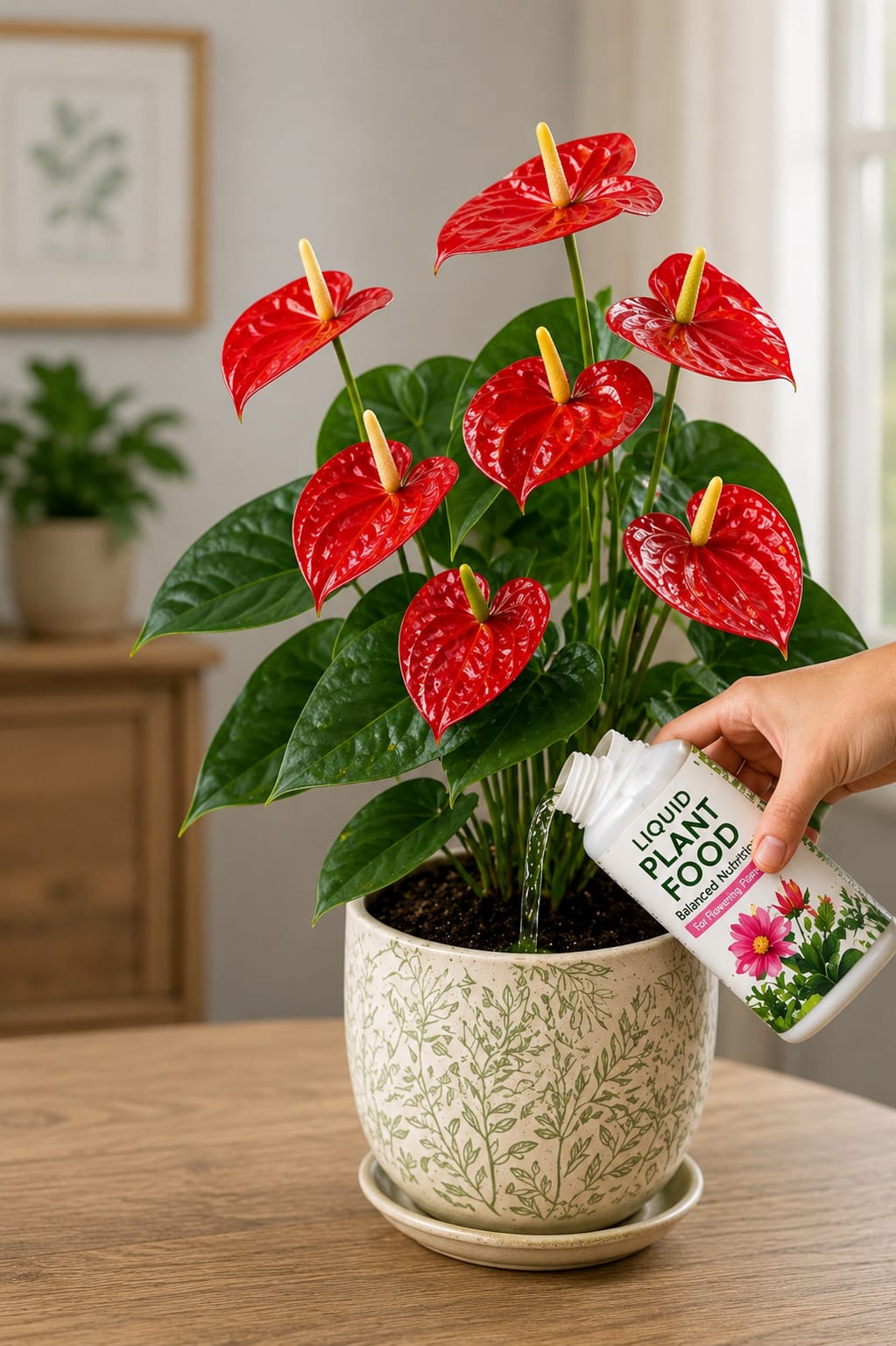
Anthuriums are among the most striking flowering houseplants grown indoors. Their glossy heart-shaped blooms, rich green foliage, and tropical appearance make them a favorite for homes, offices, sunrooms, and indoor plant collections. Whether displaying brilliant red, pink, white, or purple blooms, Anthuriums can instantly transform a room into a vibrant indoor oasis.
One of the most common questions Anthurium owners ask is how to encourage more blooms while maintaining healthy foliage. Many growers notice that their plant produces beautiful flowers when first purchased but may bloom less frequently over time. In most cases, the solution is not complicated. Consistent care, proper lighting, balanced watering, and an effective feeding routine can help Anthuriums thrive for years.
Understanding how Anthuriums use nutrients is the first step toward supporting vigorous growth and repeat flowering. When given the right environment and nutrition, these tropical beauties can reward gardeners with continuous displays of colorful blooms throughout much of the year.
Understanding the Anthurium Plant
Anthuriums originate from tropical rainforests where they grow beneath larger trees in warm, humid conditions. In their natural habitat, they receive filtered sunlight, consistent moisture, and a steady supply of organic matter from decomposing plant material.
Because of this tropical background, Anthuriums prefer:
- Bright indirect light.
- Warm temperatures.
- Moderate to high humidity.
- Well-draining growing media.
- Regular but balanced nutrition.
Replicating these conditions indoors helps support healthier growth and more reliable flowering.
Why Feeding Matters
Like all plants, Anthuriums require nutrients to perform essential biological processes. These nutrients support leaf production, root development, flower formation, and overall plant health.
Over time, nutrients stored within potting mixes become depleted. Without replenishment, growth may slow and flowering can become less frequent.
A proper feeding routine helps ensure the plant has access to the resources needed for continued development.
The Connection Between Nutrition and Flowering
Many indoor gardeners focus primarily on watering, but flowering plants have additional nutritional needs. Producing colorful blooms requires energy and resources.
Healthy nutrition helps support:
- Flower stalk development.
- Bud formation.
- Leaf production.
- Root growth.
- Stem strength.
- Long-lasting blooms.
When nutrient levels remain balanced, Anthuriums are better equipped to maintain both foliage and flowers.
The Importance of Balanced Fertilization
Successful Anthurium care is not about using excessive fertilizer. In fact, too much fertilizer can create problems.
Balanced feeding provides nutrients gradually while avoiding unnecessary stress on roots.
Moderation often produces better long-term results than heavy applications.
The goal is steady, healthy growth rather than rapid growth that weakens the plant.
Signs Your Anthurium May Need Feeding
Plants often provide clues when nutritional support becomes limited.
Common indicators include:
- Slower growth.
- Smaller leaves.
- Reduced flowering.
- Pale foliage.
- Weak stems.
- Less vigorous new growth.
These symptoms may have multiple causes, but nutrition is often one factor worth evaluating.
Healthy Leaves Reflect Healthy Nutrition
Anthuriums are admired not only for their flowers but also for their lush foliage.
Proper nutrition helps support the glossy appearance that makes these plants so attractive indoors.
Healthy leaves contribute significantly to the plant’s overall decorative value.
Even when flowers are not present, vibrant foliage keeps the plant visually appealing.
Why Root Health Comes First
Before nutrients can benefit the plant, roots must be capable of absorbing them effectively.
Healthy roots generally appear:
- Firm.
- Light-colored.
- Well-developed.
- Free from rot.
- Actively growing.
Strong roots form the foundation for successful nutrient uptake and long-term plant health.
Creating the Ideal Growing Environment
Even the best feeding routine cannot compensate for poor environmental conditions.
For optimal growth, Anthuriums should receive:
- Bright filtered sunlight.
- Warm indoor temperatures.
- Adequate humidity.
- Good air circulation.
- Proper watering practices.
When these factors are in balance, the plant can use nutrients more efficiently.
Light and Flower Production
Light plays a critical role in the flowering process.
Anthuriums thrive in bright indirect light where they can generate sufficient energy through photosynthesis without suffering leaf burn.
Insufficient light often leads to reduced flowering, even when feeding is adequate.
Positioning the plant near a bright window can significantly improve overall performance.
Watering and Nutrient Absorption
Water serves as the transport system that moves nutrients throughout the plant.
If soil remains excessively dry, nutrient movement becomes limited. If soil remains constantly saturated, roots may become stressed.
Maintaining balanced moisture levels helps support efficient nutrient uptake.
Consistency is often more important than frequency.
Humidity and Tropical Growth
As tropical plants, Anthuriums appreciate moderate to high humidity.
Dry indoor air may contribute to:
- Brown leaf tips.
- Reduced growth.
- Lower flowering potential.
- General plant stress.
Maintaining humidity supports healthier foliage and encourages stronger overall development.
The Value of Consistency
One of the most effective strategies for Anthurium care is maintaining a consistent routine.
Plants respond well when environmental conditions remain stable.
Sudden changes in watering, lighting, or feeding schedules may create unnecessary stress.
A predictable routine allows the plant to focus on growth and flowering.
Supporting Long-Lasting Blooms
Anthurium flowers are known for their exceptional longevity.
Under favorable conditions, blooms may remain attractive for weeks or even months.
Proper nutrition helps support this extended flowering period by providing the resources necessary for bloom maintenance.
Healthy plants often produce flowers more consistently throughout the year.
Decorating With Anthuriums
Anthuriums serve as both flowering plants and decorative design elements.
Their bold colors make them excellent focal points in indoor spaces.
Popular placement locations include:
- Living rooms.
- Entryways.
- Home offices.
- Dining rooms.
- Bedrooms.
- Sunrooms.
Their glossy leaves and colorful blooms complement both modern and traditional decor styles.
Pairing Anthuriums With Interior Design
Because Anthuriums have a naturally elegant appearance, they blend well with numerous decorating themes.
They look especially attractive when paired with:
- Neutral-colored furniture.
- Natural wood finishes.
- Modern ceramic planters.
- Minimalist interiors.
- Tropical-inspired spaces.
Their vivid blooms add color without overwhelming a room.
Choosing the Right Container
The container used for an Anthurium affects both aesthetics and plant health.
Good containers should provide:
- Proper drainage.
- Adequate root space.
- Stable support.
- Visual appeal.
Decorative pots can enhance the plant’s appearance while supporting healthy root development.
Monitoring Growth Throughout the Year
Anthuriums often experience periods of active growth followed by slower phases.
Regular observation helps growers understand the plant’s natural rhythm.
Tracking new leaves, flower spikes, and root development provides valuable insight into overall health.
Healthy growth is usually gradual and steady rather than dramatic.
Recognizing a Thriving Anthurium
Well-maintained Anthuriums typically display several positive characteristics.
- Deep green foliage.
- Glossy leaf surfaces.
- Strong stems.
- Active new growth.
- Healthy roots.
- Consistent flowering.
These indicators suggest that the plant’s growing conditions are meeting its needs.
Avoiding Common Care Mistakes
Many Anthurium problems result from simple care issues rather than serious diseases.
Common mistakes include:
- Overwatering.
- Poor drainage.
- Insufficient light.
- Low humidity.
- Irregular feeding.
- Temperature fluctuations.
Addressing these factors often restores plant vigor.
The Importance of Patience
Healthy plant growth takes time.
Flowering plants often respond gradually to improved care practices.
New leaves and blooms may take weeks or months to appear after environmental conditions improve.
Patience allows natural growth processes to unfold successfully.
Continue to Page 2
Continue to page 2 for more details about this article and the key points many readers miss on the first page.