Flowering plants bring instant charm to patios, balconies, windowsills, porches, and indoor garden corners. A single pot filled with pink, red, purple, yellow, or white flowers can soften a plain space and make it feel fresh, cheerful, and cared for. But anyone who grows flowers in containers knows that keeping them full, leafy, and blooming can sometimes feel challenging. The plant may look beautiful at first, then slowly lose color, produce fewer flowers, or appear tired even when it is watered regularly.
One simple plant-care idea many gardeners use is a very light Epsom salt water routine. Epsom salt is magnesium sulfate, and magnesium is one of the secondary nutrients plants use to support healthy green growth. When used carefully and in the right amount, it can be part of a balanced flower-care routine for potted blooming plants, especially when the goal is to support rich foliage color and steady growth.
This does not mean Epsom salt is a magic bloom booster or a replacement for good soil, sunlight, water, and complete fertilizer. Flowering plants still need a full range of nutrients and proper growing conditions. However, when applied responsibly, a diluted Epsom salt solution can be a simple supplemental step that fits into a practical container-gardening routine.
Why Container Flowers Need Extra Attention
Flowers grown in pots live in a limited amount of soil. Unlike garden beds, where roots can explore a wider area, container plants depend entirely on the soil inside the pot. Every watering, every hot afternoon, and every blooming cycle uses some of the plant’s stored resources.
Over time, nutrients can wash out of the pot through drainage holes. This is especially true when plants are watered frequently during warm weather. Even a high-quality potting mix can become less nutrient-rich after weeks or months of growth.
This is why container flowers often benefit from a consistent care routine that includes watering, feeding, pruning, light management, and occasional soil refreshment.
What Epsom Salt Does for Plants
Epsom salt contains magnesium and sulfur. Magnesium helps plants produce chlorophyll, the green pigment involved in photosynthesis. Photosynthesis is the process plants use to convert light into energy.
When plants have access to the nutrients they need, they are better able to maintain strong leaves, healthy stems, and steady growth. Sulfur also plays a role in plant development, although plants usually need it in smaller amounts.
Because of this, some gardeners use diluted Epsom salt water as a gentle supplement for certain plants. It is especially popular for flowering containers, roses, peppers, tomatoes, and ornamental plants. Still, it should be used carefully because too much can disturb the balance of the soil.
Why Balance Matters More Than Quantity
With plant care, more is not always better. A small amount of a helpful ingredient can support growth, while too much of the same ingredient can create stress.
Flowering plants need balanced nutrition. They require nitrogen, phosphorus, potassium, magnesium, calcium, sulfur, and trace minerals. Epsom salt only supplies magnesium and sulfur, so it cannot replace a complete fertilizer.
The best approach is to use it occasionally and lightly, not as the main food source for the plant.
A Gentle Epsom Salt Water Recipe
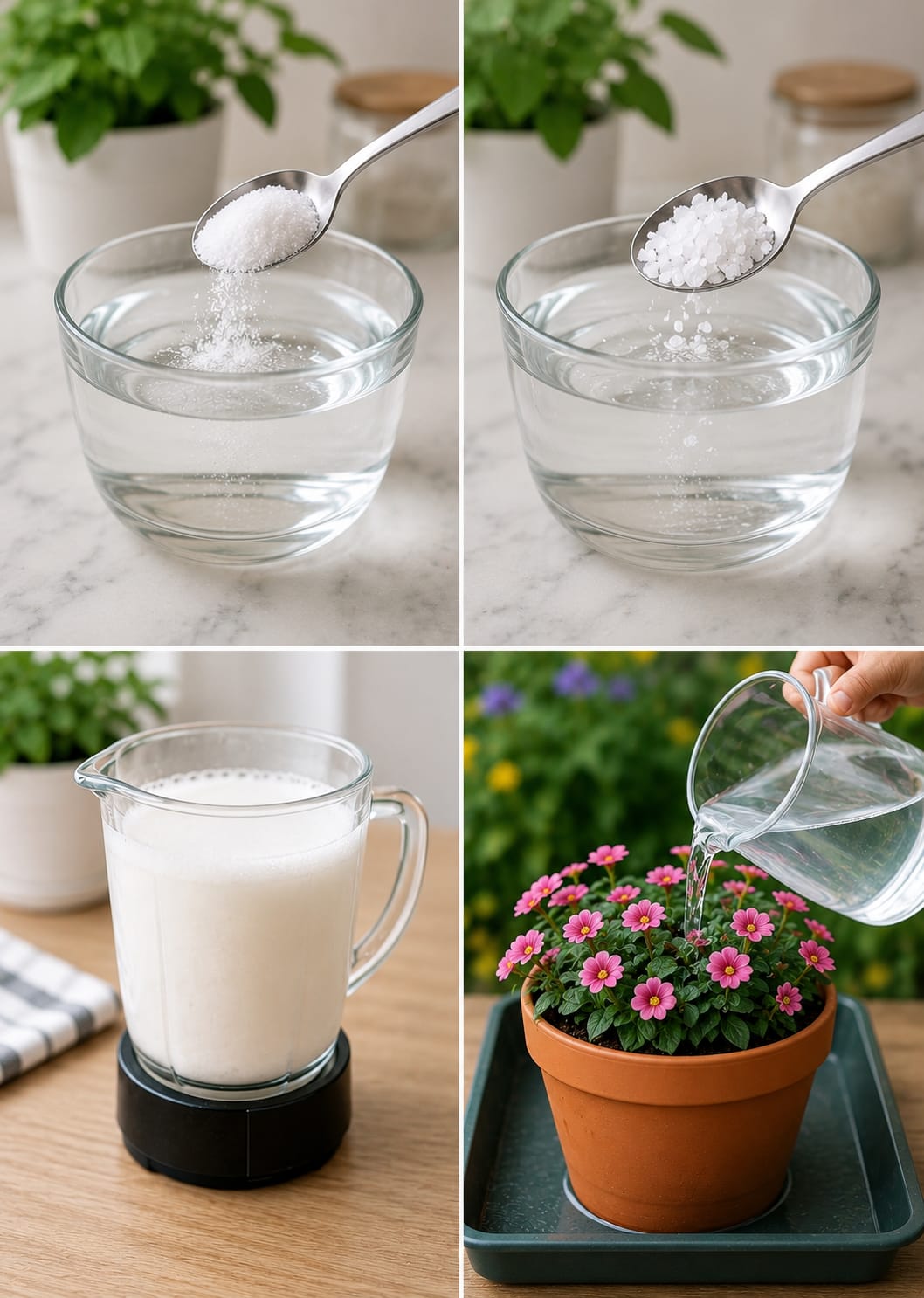
For potted flowers, a mild mixture is usually best. A common gentle ratio is:
- 1 teaspoon Epsom salt
- 1 liter of water
Stir until fully dissolved. The solution should look clear or slightly cloudy. Use it only on already-moist soil, not on a severely dry plant. Applying any supplement to very dry roots can cause stress.
For small pots, use only a small amount around the soil surface. For larger containers, apply enough to moisten the root zone lightly, but do not flood the pot.
How Often to Use It
Epsom salt water should not be used every day. For most container flowers, once every 4 to 6 weeks during the active growing season is enough.
During cold months or periods when the plant is not actively growing, reduce or stop supplemental feeding. Plants use fewer nutrients when growth slows, and extra minerals can build up in the potting mix.
Always watch the plant’s response. If the plant looks healthy, green, and full, it may not need extra supplements at all.
Which Flowers May Benefit Most
This routine is often used with flowering container plants that are actively growing and blooming. It may suit plants such as:
- Geraniums
- Petunias
- Impatiens
- Marigolds
- Roses in containers
- Begonias
- Zinnias
- Garden mums
- Balcony mixed flower pots
However, every plant is different. Some plants are more sensitive to mineral buildup than others, so always begin with a diluted mixture and occasional use.
When Not to Use Epsom Salt
Avoid using Epsom salt if the plant is already stressed from overwatering, root rot, pest infestation, severe heat damage, or disease. A supplement will not solve those problems and may make the plant work harder while it is already weak.
Also avoid adding it repeatedly to soil that has white crust on the surface. That crust may indicate mineral or fertilizer salt buildup. In that case, the plant may need fresh water flushing, better drainage, or fresh potting mix instead.
Signs Your Plant Needs Better Overall Care
Sometimes gardeners add supplements when the real issue is something else. Before using any plant-care mixture, inspect the full condition of the plant.
Common signs of care problems include:
- Yellow leaves from overwatering
- Wilted leaves from underwatering
- Leggy growth from low light
- Few flowers from lack of sunlight
- Brown edges from heat or dry air
- Weak stems from poor nutrition
- Root rot from soggy soil
Understanding the cause helps you choose the right solution.
Sunlight Is the Real Bloom Engine
Flowers need light to bloom well. Many blooming plants require bright light or several hours of sun each day. If a plant is kept in too much shade, it may produce leaves but few flowers.
Before blaming fertilizer, check the plant’s location. A brighter spot can often make a dramatic difference.
For balcony and patio plants, morning sun is often ideal because it provides strong light without the harshest afternoon heat. Indoor flowering plants should be placed near a bright window where they receive enough indirect or filtered sunlight.
Watering Correctly for Better Blooms
Watering is one of the most important parts of flower care. Too little water causes wilting and bud drop. Too much water can suffocate roots and invite disease.
The best method is to check the soil before watering. Insert a finger into the top inch of soil. If it feels dry, water thoroughly until excess drains from the bottom. If it still feels moist, wait a little longer.
Good watering supports healthy roots, and healthy roots support better flowers.
Why Drainage Is Essential
Every flower pot should have drainage holes. Without drainage, water collects at the bottom and creates a soggy environment around the roots.
Soggy roots cannot breathe properly. Over time, this can lead to yellow leaves, weak stems, and root rot.
If a decorative pot has no drainage holes, use it as a cover pot. Keep the plant in a nursery pot with holes, then place that inside the decorative container. Remove the inner pot when watering and allow it to drain fully before returning it.
The Role of Complete Fertilizer
Epsom salt is only a supplement. Flowering plants usually still need a complete fertilizer that includes nitrogen, phosphorus, and potassium.
A balanced liquid plant food or bloom-supporting fertilizer can be used according to label directions. For container flowers, many gardeners prefer diluted feeding because pots are more sensitive to excess fertilizer.
When using both fertilizer and Epsom salt, do not apply them heavily at the same time. Gentle spacing prevents overload.
How to Apply the Mixture Safely
Apply the diluted solution directly to the soil, not heavily over the flowers. Wet flowers can sometimes develop spotting, especially if moisture sits on petals for too long.
Pour slowly around the base of the plant. Try to distribute the liquid evenly rather than dumping it in one spot.
After applying, allow the pot to drain normally. Never let the plant sit in a tray full of leftover solution.
Why Some Gardeners Blend the Mixture
Some gardeners mix supplements in a blender or pitcher to dissolve them completely. This can help ensure the powder is evenly distributed in the water before application.
If you use a blender, keep it clean and use only simple plant-care ingredients that are safe to handle. Never mix unknown chemicals or strong household cleaners into plant solutions.
A spoon and a glass of water are usually enough for Epsom salt because it dissolves easily.
Maintaining Flower Pots for a Luxury Look
A healthy flowering pot is not only about plant care. Presentation matters too. Clean containers, trimmed leaves, and balanced plant shape can make even a simple pot look more expensive and professionally styled.
Remove faded blooms regularly. This process, called deadheading, encourages many flowering plants to keep producing new blooms. It also keeps the plant looking tidy.
Wipe the outside of the pot, remove fallen leaves from the soil, and rotate the container occasionally so all sides receive light.
Deadheading for More Flowers
Deadheading is one of the simplest ways to keep flowering plants attractive. When flowers fade, the plant may begin using energy to form seeds. Removing spent blooms encourages the plant to redirect energy toward new flowers and fresh growth.
Use clean scissors or pinch off faded blooms with your fingers. Remove the flower stem back to a healthy leaf joint when possible.
This small routine can make a flowering pot look fuller and more polished.
Pruning Leggy Growth
Some flowering plants become stretched or sparse over time. Light pruning encourages branching and helps the plant develop a fuller shape.
Trim long weak stems just above a leaf node. New growth often appears below the cut, creating a bushier plant.
Do not remove too much at once. Light, regular pruning is safer than severe cutting.
Refreshing the Soil Surface
Container soil can become compacted, crusted, or depleted. A simple top refresh can improve appearance and function.
Remove the top layer of tired soil carefully without damaging roots. Add fresh potting mix or compost-rich container mix on top. This gives the pot a cleaner look and helps improve the growing environment.
Do this especially at the beginning of the growing season.
Continue to Page 2
Continue to page 2 for more details about this article and the key points many readers miss on the first page.