Using Mulch in Flower Pots
A thin layer of decorative mulch can help retain moisture and improve the finished appearance of a container.
Good options include:
- Fine bark chips
- Coconut husk chips
- Decorative gravel
- Small river stones
- Compost mulch
Keep mulch slightly away from the plant crown to prevent excess moisture around stems.
How to Style Flower Pots Indoors
Flowering plants can brighten indoor rooms when placed thoughtfully. A blooming pot on a coffee table, windowsill, kitchen counter, or entryway console creates an inviting focal point.
Choose a container that matches the room’s style. Terracotta gives a warm cottage feel. White ceramic creates a clean modern look. Woven baskets add softness and texture. Patterned planters bring personality and color.
For a luxury look, group flowers with leafy houseplants of different heights.
Balcony and Patio Styling Ideas
Outdoor flower pots can transform a balcony or patio into a relaxing garden corner. Place larger pots at the back and smaller pots near the front. Mix flowering plants with trailing greenery for depth and movement.
Pink flowers look beautiful with white, gray, terracotta, and natural wood tones. Red flowers create bold energy, while purple flowers feel calming and elegant.
To make the display look intentional, repeat one color in several containers.
How to Keep Flowers Blooming Longer
Long-lasting blooms depend on several simple habits:
- Provide enough light.
- Water consistently.
- Remove faded flowers.
- Feed lightly during active growth.
- Protect from extreme heat.
- Keep the pot clean.
- Use well-draining soil.
When these steps work together, flowering plants usually stay attractive much longer.
Common Mistakes With Homemade Plant Tonics
Homemade plant-care mixtures can be useful when they are mild and appropriate, but they can also cause problems when used carelessly.
Avoid these mistakes:
- Using too much powder.
- Applying mixtures too often.
- Pouring on dry, stressed roots.
- Mixing multiple ingredients without understanding them.
- Ignoring light and watering problems.
- Using supplements as a replacement for complete fertilizer.
Simple, gentle routines are usually safer than complicated mixtures.
Signs of Overuse
If too much mineral supplement builds up in the pot, the plant may begin showing stress.
Possible signs include:
- Brown leaf tips
- White crust on soil
- Wilting despite moist soil
- Yellowing leaves
- Slowed growth
- Leaf edge burn
If this happens, stop applying supplements and water thoroughly with plain water, allowing excess to drain out. In severe cases, repotting with fresh mix may be necessary.
Why Plain Water Still Matters
Most of the time, flowering plants need plain water more than any supplement. Clean water supports hydration, nutrient movement, and healthy root function.
A good routine may include mostly plain watering, occasional complete fertilizer, and rare supplemental Epsom salt water only when appropriate.
This balanced approach prevents overcomplication and keeps the plant care routine manageable.
Creating a Weekly Flower-Care Routine
A simple weekly routine can keep potted flowers looking fresh:
- Check soil moisture.
- Remove faded blooms.
- Inspect leaves for pests.
- Rotate the pot for even light.
- Clean the pot and surrounding surface.
- Trim damaged leaves.
- Check drainage trays.
These small steps often do more for plant beauty than any one-time trick.
The Best Time to Feed Flowers
Feed flowering plants when they are actively growing. Spring and summer are often the most productive seasons for many container flowers.
Avoid feeding heavily during extreme heat, drought stress, or cold dormant periods.
Plants under stress need stability first. Once they recover, feeding can resume gently.
How to Encourage Bushier Growth
For many flowering plants, bushier growth means more places for blooms to develop. Pinching young stems encourages branching and creates a fuller plant.
Use clean fingers or scissors to remove the growing tip above a leaf node. The plant may respond by sending out side shoots.
This method is especially useful for plants that become tall and thin.
Combining Beauty and Practical Care
The best plant-care routines are both practical and beautiful. A pot of flowers should be easy to maintain and enjoyable to look at. When the soil is healthy, the watering is balanced, and the plant receives enough light, the flowers naturally become more decorative.
Epsom salt water can be one small part of this routine, but the full result comes from thoughtful care.
Final Thoughts
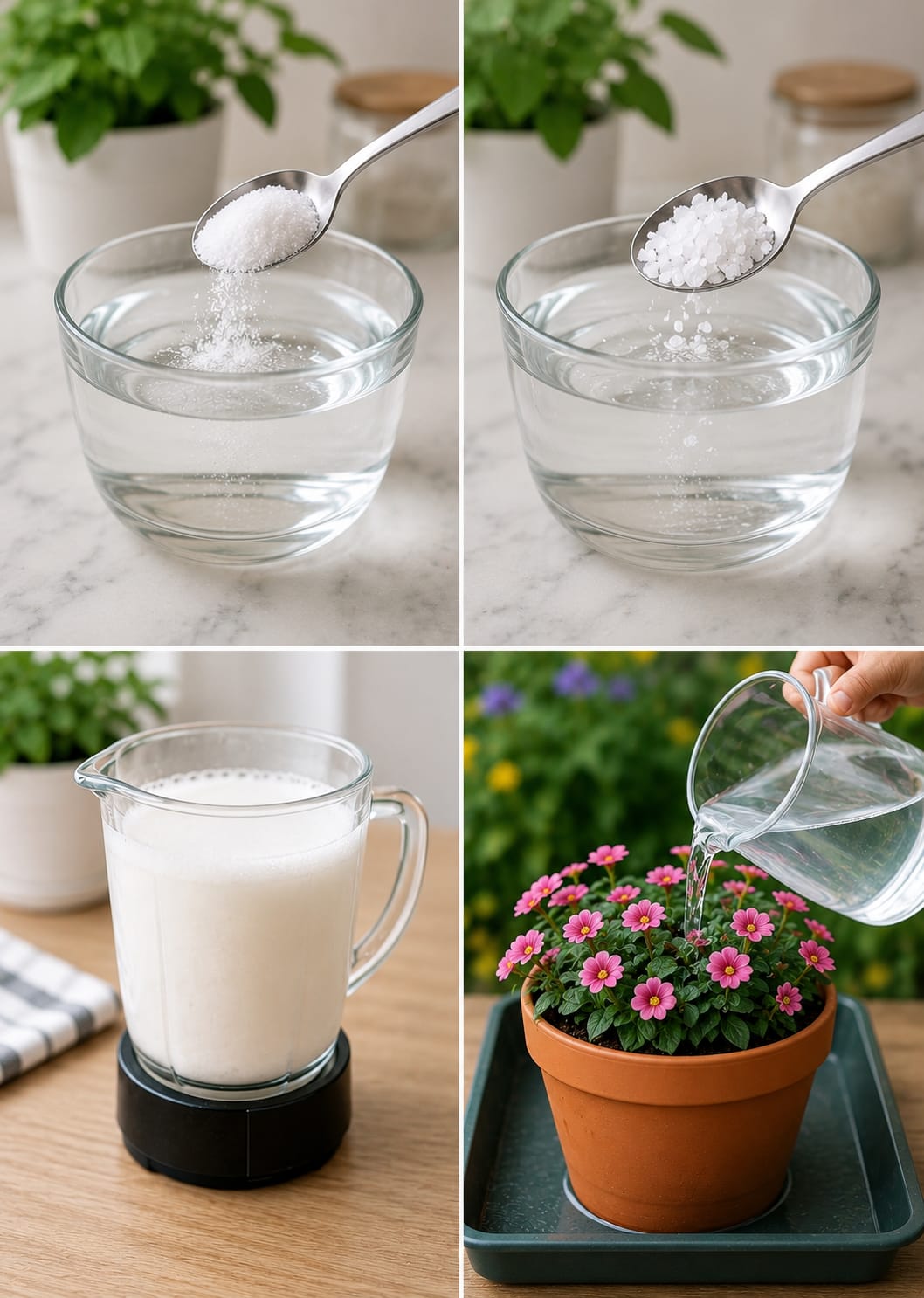
A light Epsom salt water routine can be a simple supplemental step for container flowers when used carefully and occasionally. Because Epsom salt provides magnesium and sulfur, it may help support healthy green growth in plants that can benefit from those nutrients. However, it should never be treated as a miracle solution or a complete fertilizer.
The real secret to brighter blooms and fuller plants is balance. Give your flowers enough light, water them properly, use well-draining soil, feed with a complete fertilizer when needed, and keep the plant clean and pruned. Add mild supplements only when they fit the plant’s needs.
With steady care and patience, even a simple potted flower can become a lush, colorful, expensive-looking display that brings beauty to your balcony, patio, windowsill, or indoor garden corner.