Should You Cut Curled Snake Plant Leaves? – Pruning Guidelines
It depends on the condition of the leaves. A curled leaf that is still firm and green may recover partially once the plant receives proper care. A leaf that is yellow, soft, cracked, or rotten should be removed. This snake plant pruning for damaged leaves guide will help.
Keep the Leaf If:
- It is firm
- It is mostly green
- The base is healthy
- It is not mushy
- It still stands upright
Cut the Leaf If:
- It is mushy
- It has black spots
- It is severely yellow
- It is cracked from rolling
- It smells bad
- It is fully collapsed
Use clean scissors and cut damaged leaves near the soil line.
Can Curled Leaves Uncurl? – Realistic Snake Plant Recovery Expectations
Sometimes they improve, but they may not return perfectly flat. If curling happened from temporary underwatering, the leaf may plump up after proper watering. If the leaf was physically rolled and tied, the shape may remain permanently bent or creased. This snake plant recovery timeline sets realistic expectations.
The best goal is not perfect old leaves. The goal is healthy new growth.
How to Propagate Snake Plant Safely – Step-by-Step Propagation Guide
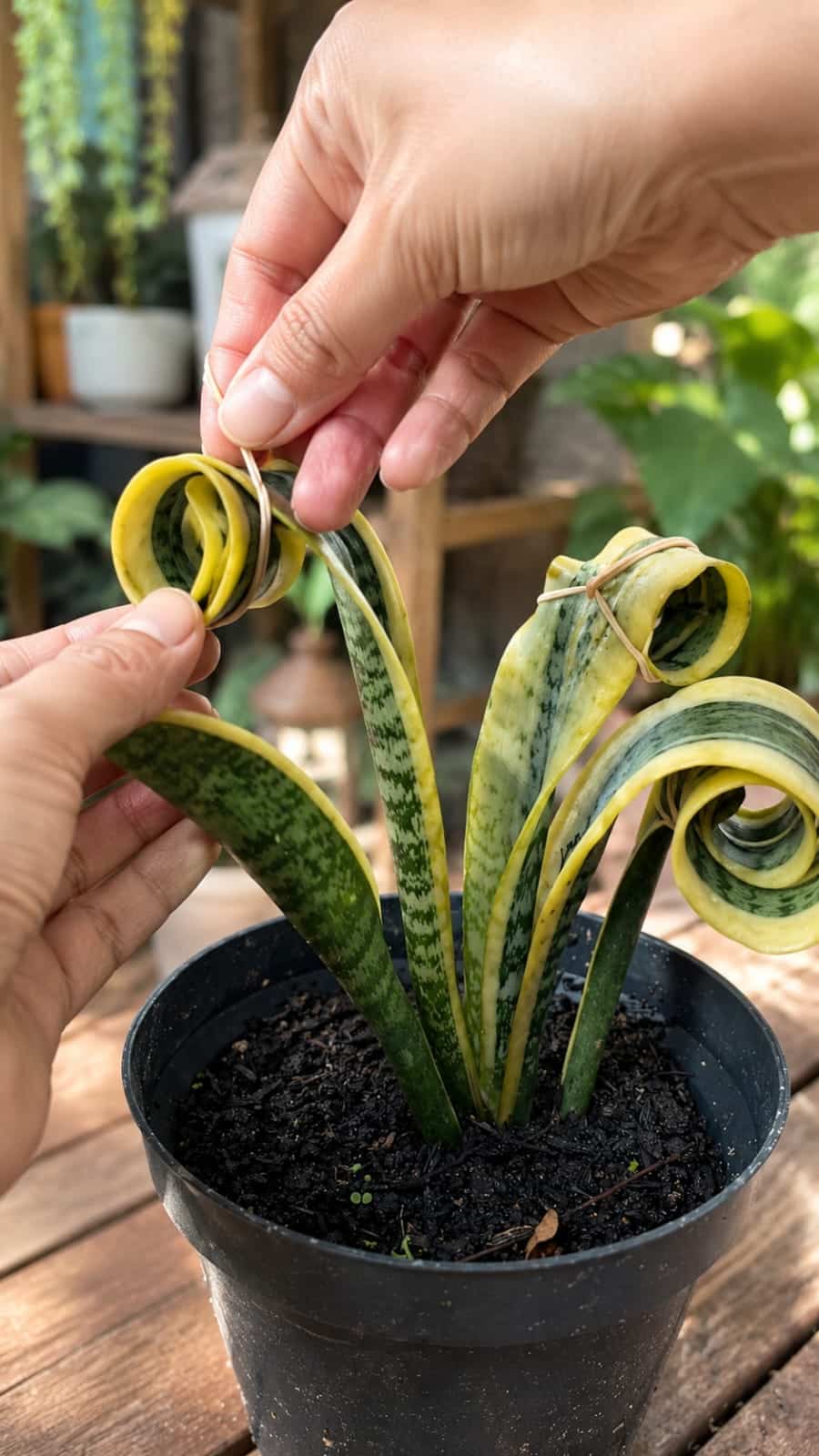
If you want to multiply the plant in the image, do not roll the leaves. Use one of the proper propagation methods below. This best snake plant propagation guide for beginners will show you exactly how.
Method 1: Leaf Cuttings in Soil
- Choose a firm healthy leaf.
- Cut it near the base with clean scissors.
- Divide it into 3 to 5 inch sections.
- Mark the bottom end of each cutting.
- Let the cuttings dry for 1 to 3 days.
- Plant the bottom end 1 inch deep in cactus mix.
- Keep in bright indirect light.
- Water lightly only when soil is dry.
This method can produce several new plants, but yellow-edged varieties may grow green pups.
Method 2: Leaf Cuttings in Water
- Cut a healthy leaf into sections.
- Let the cut ends callus for 1 day.
- Place the bottom inch in clean water.
- Keep the top above water.
- Change water every few days.
- Move to soil once roots are 1 to 2 inches long.
Water propagation is fun because you can watch roots grow, but soil roots are often stronger long-term.
Method 3: Division – Best for Variegated Snake Plants
Division is the best method for keeping yellow edges. This snake plant division propagation guide is perfect for preserving variegation.
- Remove the plant from the pot.
- Find pups or clumps with roots attached.
- Separate a section carefully.
- Keep rhizomes and roots attached.
- Repot each division in cactus mix.
- Water lightly after the plant settles.
Division gives faster results than leaf cuttings because each new plant already has roots.
Why Rolling Leaves Is Not a Good Propagation Method – Common Mistake
Rolling snake plant leaves may look creative, but it does not improve rooting. A leaf cutting roots from the cut base, not because the leaf is curled into a spiral. This snake plant propagation myth can ruin your cuttings.
Rolling can actually reduce success because it:
- Damages the leaf surface
- Creates pressure marks
- Traps moisture
- Encourages rot
- Blocks light from the leaf
- Makes pest inspection harder
A flat, firm, properly callused cutting is safer than a rolled leaf.
How to Rescue the Snake Plant in the Image – Step-by-Step Recovery Plan
This plant needs gentle correction, not more bending or tying. Follow this snake plant emergency rescue protocol for the best chance of success.
Step 1: Remove All Rubber Bands
Free the leaves so they can breathe and receive light.
Step 2: Inspect Each Leaf
Look for mushy spots, cracks, pests, and yellowing.
Step 3: Check the Soil
Determine whether it is too dry, too wet, or compacted.
Step 4: Check the Roots
If curling is severe, remove the plant from the pot and inspect rhizomes.
Step 5: Repot if Needed
Use a fast-draining cactus mix and a pot with drainage holes.
Step 6: Adjust Light
Place the plant in bright indirect light, away from harsh sun.
Step 7: Water Correctly
Water only when the soil is completely dry.
Best Watering Routine for Snake Plants – How Often to Water
Snake plants prefer to dry out between waterings. Overwatering is one of the fastest ways to cause root rot. This snake plant watering guide for beginners will prevent overwatering.
Watering Rules
- Water only when the soil is dry all the way down
- Use a pot with drainage holes
- Water thoroughly, then drain completely
- Empty the saucer
- Water less in winter
- Never keep the soil constantly wet
In many homes, snake plants need water every 2 to 4 weeks, but the exact schedule depends on light, pot size, temperature, and soil mix.
Best Light for Snake Plants – Optimal Placement
Snake plants tolerate lower light, but they grow best in bright indirect light. Variegated snake plants need good light to maintain strong color. Providing optimal light for snake plant health prevents many problems.
Best locations include:
- Near an east-facing window
- A bright room with indirect light
- A few feet from a south or west window
- Filtered sunlight through a curtain
- Under a grow light
Avoid hot direct afternoon sun if leaves are already stressed or curling.
Best Pot for Snake Plants – Drainage and Size
The pot should drain quickly and not stay soggy. A pot that is too large can hold excess moisture around the roots. Using a pot with drainage for snake plants is non-negotiable.
Choose a pot with:
- Drainage holes
- A removable saucer
- A size only slightly larger than the root ball
- Fast-drying soil
- Good stability for tall leaves
Terracotta pots are useful if you often overwater.
Should You Fertilize a Curled Snake Plant? – When to Feed
Do not fertilize until you know why the leaves are curling. If the plant has root rot, fertilizer can make the problem worse. If it is dehydrated, fertilizer is not the first solution. This best fertilizer for snake plants should only be used on healthy plants.
Fertilize only when:
- The plant is stable
- Roots are healthy
- New growth appears
- It is spring or summer
- The soil is not compacted or sour
Use a diluted cactus or balanced houseplant fertilizer once a month during active growth.
Safe Homemade Support for Snake Plants – Natural Care Tips
Snake plants do not need complicated homemade treatments. They usually respond best to correct soil, light, and watering. This natural snake plant care guide emphasizes simplicity.
Safe support includes:
- Fresh cactus mix
- Extra perlite for drainage
- Occasional diluted aloe water
- Plain water most of the time
- Gentle leaf cleaning
- Proper pruning
Avoid strong kitchen tonics on stressed snake plants. Coffee, sugar water, milk, thick compost tea, salty liquids, and heavy powders can damage roots.
Quick Diagnosis Table – Snake Plant Leaf Curl Causes and Solutions
| Symptom | Likely Cause | Best Fix |
|---|---|---|
| Leaves curling inward | Underwatering or root stress | Check soil and roots |
| Leaves tied in rolls | Physical stress | Remove bands immediately |
| Yellow soft leaves | Overwatering or rot | Inspect roots and repot |
| Wrinkled leaves | Dehydration | Water correctly after soil check |
| Black mushy base | Root or crown rot | Cut rot and repot dry |
| Pale scorched leaves | Too much sun | Move to indirect light |
| Small insects or webbing | Pests | Clean leaves and treat pests |
Common Mistakes to Avoid – Snake Plant Care Don’ts
- Tying snake plant leaves into tight rolls
- Ignoring curled leaves
- Watering without checking soil
- Using heavy wet potting soil
- Fertilizing a stressed plant
- Leaving rubber bands on leaves
- Trying to force curled leaves flat
- Propagating mushy or yellow leaves
- Using a pot without drainage
- Expecting damaged leaves to look perfect again
Short Caption for This Trick
“Snake plant leaves should not be tied into tight rolls. If leaves are curling, remove the rubber bands, check the soil and roots, and fix the real cause. For propagation, cut healthy firm leaves into sections, let them dry for 1 to 3 days, and root them in fast-draining soil. Use division if you want to keep yellow edges – follow this natural snake plant rescue guide for the best results.”
Frequently Asked Questions – Snake Plant Leaf Curl and Propagation
Why are my snake plant leaves curling?
Snake plant leaves usually curl because of underwatering, root rot, heat stress, direct sun, pests, or compacted soil.
Should I tie snake plant leaves into rolls?
No. Tying leaves can damage them, trap moisture, and increase the risk of rot.
Can curled snake plant leaves recover?
Sometimes they improve if the cause is fixed, but leaves that were physically bent or damaged may stay curled or creased.
Can I propagate a curled snake plant leaf?
Only if the leaf is still firm and healthy. Do not propagate mushy, yellow, or badly damaged leaves.
How do I propagate snake plant from a leaf?
Cut a healthy leaf into 3 to 5 inch sections, mark the bottom end, let the pieces dry, then plant the bottom end in fast-draining soil.
Will yellow-edged snake plant cuttings stay yellow?
Often no. Leaf cuttings from yellow-edged snake plants may produce green pups. Division is better for keeping yellow edges.
Should I cut off curled leaves?
Cut them only if they are mushy, yellow, cracked, rotten, or badly damaged. Firm green curled leaves can stay while the plant recovers.
How often should I water a snake plant?
Water only when the soil is completely dry. Many indoor snake plants need water every 2 to 4 weeks, depending on conditions.
What soil is best for snake plants?
Use a fast-draining cactus or succulent mix with added perlite, pumice, coarse sand, or orchid bark.
What is the fastest way to multiply snake plant?
Division is the fastest method because the new plant already has roots and rhizomes attached.
Final Thoughts – Gentle Care Always Wins
The rolled snake plant leaves in the image may look like a creative gardening trick, but they are actually a warning sign. Snake plants should not be tied into tight curls. Curling leaves usually mean the plant is stressed, and rubber bands can make the damage worse. This natural snake plant revival guide emphasizes proper care over gimmicks.
The safest approach is simple: remove the ties, inspect the leaves, check the soil, examine the roots if needed, and correct the growing conditions. Snake plants need fast-draining soil, a pot with drainage holes, bright indirect light, and watering only when the soil is dry. Following this complete snake plant care guide will keep your plant thriving for years.
If you want to multiply your snake plant, use proper propagation methods instead of rolling the leaves. Healthy leaf cuttings can be rooted in soil or water, and division can create new plants while preserving yellow-edged variegation. These professional indoor plant care secrets will help you succeed.
With the right care, a stressed snake plant can recover and produce strong upright new growth. The key is to fix the cause, not force the leaves into shape. Start your snake plant recovery journey today and watch your plant return to health.