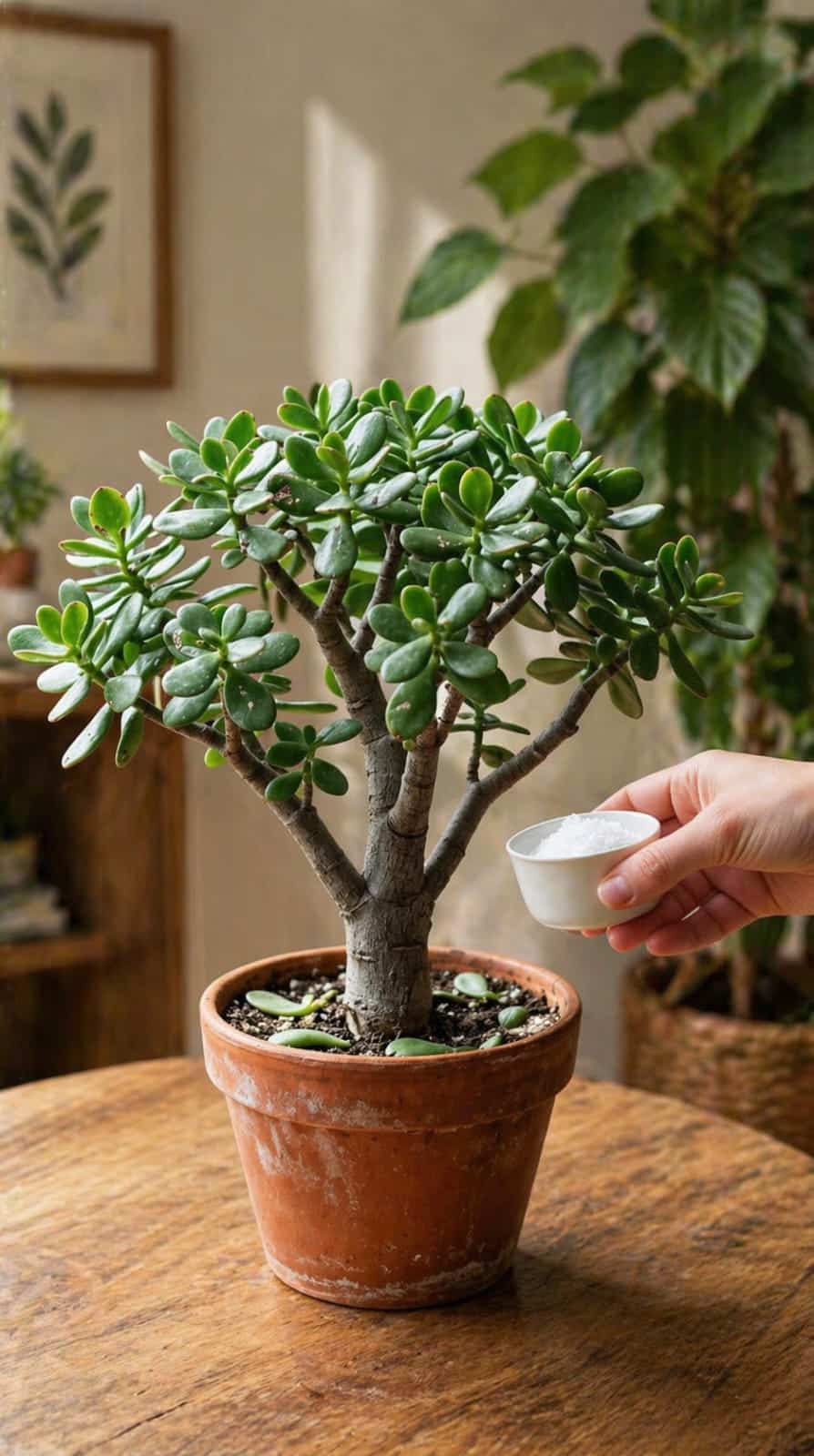
Jade plants (Crassula ovata) are beloved for their thick, glossy, jewel‑like leaves and almost effortless care. They are often passed down through generations, growing into majestic, tree‑like specimens that anchor a room. But what many people don’t realize is that jade plants can also bloom — producing clusters of small, star‑shaped white or pink flowers with a light, pleasant fragrance.
If your jade plant has never bloomed, don’t worry. You are not alone. Most indoor jade plants never flower because they are kept in conditions that are too comfortable — too much water, too little light, and no seasonal rhythm. But with the right approach, you can encourage your jade plant to bloom and bring a fresh, subtle scent into your space.
In this guide, you will learn the simple tricks that trigger jade plant blooms: bright light, dry soil, gentle feeding, snug pots, cool nights, and patience. By the end, you will have a step‑by‑step routine to turn your leafy jade into a flowering showpiece.
Why Jade Plants Bloom (And Why Most Never Do)
Jade plants are succulents native to South Africa, where they grow in rocky, sun‑baked conditions with distinct wet and dry seasons. In their natural habitat, they experience:
· Intense, direct sunlight for much of the day.
· Long dry spells followed by occasional rain.
· Cooler nights in the winter that signal the arrival of spring.
· Slightly root‑bound conditions in rocky crevices.
Indoors, we often provide the opposite: dim light, frequent watering, warm nights year‑round, and spacious pots. These conditions keep the plant healthy and green, but they do not trigger the reproductive cycle that leads to flowers.
To make a jade plant bloom, you need to recreate the mild stress signals of its native environment. The good news is that these adjustments are easy to make and will also make your plant stronger and more beautiful, even if it never flowers.
Give It Plenty of Light (The #1 Factor)
Light is the most important factor for blooming. Without enough light, your jade plant may grow, but it will almost certainly never flower. Flowering requires a significant amount of energy, and that energy comes from photosynthesis.
Ideal Light Conditions for Blooming
· Place your jade plant near a bright window – A south‑ or west‑facing window is best. If you only have east or north windows, use a sheer curtain to diffuse light but still maximize exposure.
· Aim for 4–6 hours of direct or very bright indirect sunlight daily – Jade plants can tolerate more sun than many houseplants. In fact, a little direct morning sun is beneficial.
· Consider a grow light – If your home lacks natural light, use a full‑spectrum LED grow light for 10–12 hours daily, placed 6–12 inches above the plant.
Signs Your Jade Plant Is Getting Enough Light
· Leaves develop reddish edges (a healthy stress response).
· Growth is compact, with short internodes (space between leaves).
· Leaves are thick, firm, and vibrant green.
Signs of Too Little Light
· Leggy, stretched growth (etiolation).
· Leaves are pale green or yellow.
· Lower leaves drop off.
· No flowers, even after years.
If your jade plant has never bloomed, moving it to a brighter spot is the single most effective change you can make.
Let the Soil Dry Out (Slight Dryness Encourages Flowers)
Jade plants are succulents. They store water in their thick leaves and stems. Overwatering is the #1 killer of jade plants, and it also prevents blooming. Constantly moist soil keeps the plant in a vegetative “survival” mode, focused on leaves rather than flowers.
Watering Rules to Encourage Blooms
· Water only when the soil is completely dry – Stick your finger into the soil. If it is dry at least 2 inches down, water. If it feels damp, wait another week.
· Reduce watering during cooler months – In fall and winter, water once a month or even less. This mimics the dry season and signals the plant to prepare for blooming.
· Avoid letting the roots sit in water – Always use a pot with drainage holes and empty the saucer after watering.
Why Slight Dryness Triggers Blooms
In nature, jade plants experience a distinct dry period. A mild drought stress tells the plant that resources are becoming scarce, so it should reproduce before conditions worsen. By letting the soil dry out completely between waterings, you are mimicking that natural signal.
Do not overdo it. If the leaves become wrinkled or soft, you have gone too far. The goal is slight stress, not dehydration.
Use a Gentle Nutrient Boost (But Not Too Much)
Jade plants are not heavy feeders. In fact, over‑fertilizing can actually reduce blooming by promoting excessive leaf growth. However, a small amount of balanced nutrition during the active growing season can provide the energy needed for flower production.
Best Fertilizer for Jade Plant Blooms
· Use a balanced, water‑soluble fertilizer (like 10‑10‑10 or 20‑20‑20) diluted to half strength.
· Feed once a month at most – Only during spring and summer.
· Stop feeding completely in winter – The plant rests during this period.
· Alternatively, use a slow‑release succulent fertilizer – Apply once in early spring.
What to Avoid
· High‑nitrogen fertilizers – These encourage leafy growth at the expense of flowers. Look for a formula where the middle number (phosphorus) is equal to or higher than the first (nitrogen).
· Over‑fertilizing – Too much fertilizer causes salt buildup, brown leaf tips, and weak growth. If you see a white crust on the soil, flush with water and reduce feeding.
When to Feed for Best Results
Start feeding in early spring (March) when the plant begins active growth. Continue once a month through August. In September, stop feeding to allow the plant to enter its rest period. Blooming, if it happens, typically occurs in late winter to early spring — after the rest period.
Keep It Slightly Root‑Bound (The Snug Pot Trick)
Jade plants are more likely to bloom when they feel a little “tight” in their pot. A pot that is too spacious encourages root growth, not flower production. When the roots are slightly crowded, the plant shifts its energy toward reproduction.
Pot Size Guidelines
· Choose a pot that fits the root system closely – The pot should be only 1–2 inches larger in diameter than the root ball.
· Avoid repotting too often – Repot every 2–3 years, or only when the plant is cracking its pot. Frequent repotting resets the plant and delays blooming.
· Use a pot with drainage holes – Terracotta pots are ideal because they wick away excess moisture.
Signs Your Jade Plant Is Ready for a Larger Pot (Even if You Want Blooms)
· Roots growing out of the drainage holes.
· The plant becomes top‑heavy and tips over.
· Soil dries out within 2–3 days after watering.
If you see these signs, repot into a slightly larger pot (1–2 inches wider). Do not go up multiple sizes. After repotting, the plant may take a year or two to resume blooming.
Continue to Page 2
Continue to page 2 for more details about this article and the key points many readers miss on the first page.