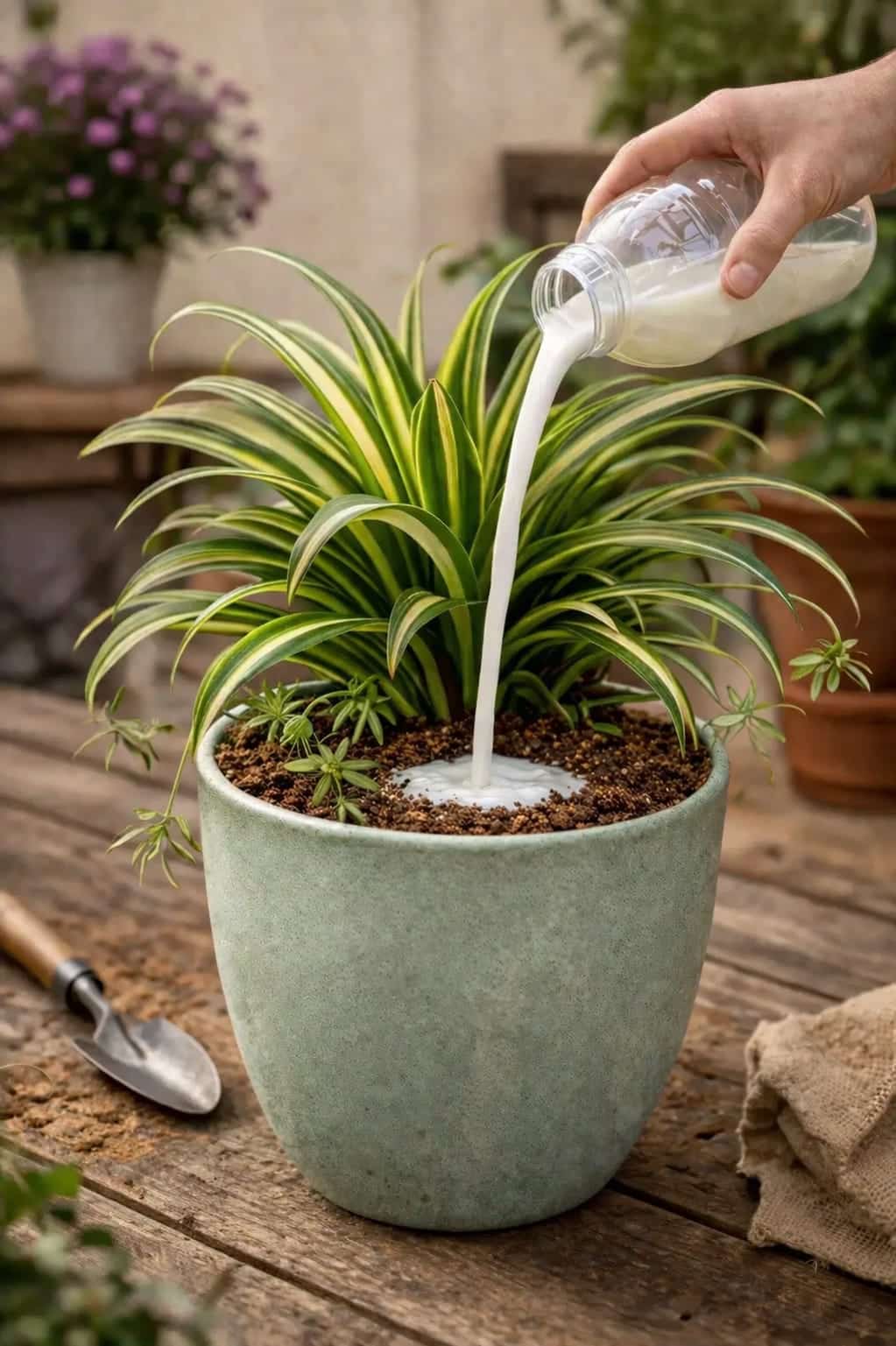
🪴 What Actually Triggers More Spider Plant Babies? (The Real Secrets)
If your spider plant isn’t multiplying, focus on these proven factors. The diluted milk rinse can be a small boost, but these matter far more.
- Bright Indirect Light – The #1 Trigger
Spider plants need bright, indirect light to produce spiderettes. In low light, they survive but rarely send out runners.
· Ideal spot: East or west‑facing window.
· Acceptable: A few feet back from a south window with a sheer curtain.
· Too little light: Dark green leaves, slow growth, no babies.
Pro tip: If your plant hasn’t produced babies in over a year, move it closer to a window. You’ll likely see runners within weeks.
- Slightly Root‑Bound Pots
Spider plants produce more babies when they are slightly snug in their containers. When roots fill the pot, the plant shifts energy to reproduction (spiderettes).
· When to repot: Only when roots are growing out of drainage holes or the plant lifts out easily.
· Pot size: Choose a pot that is only 1–2 inches larger than the root ball.
- Balanced Watering (Not Soggy)
Spider plants like evenly moist soil but hate being waterlogged.
· When to water: When the top inch of soil feels dry.
· How to water: Water thoroughly, then empty the saucer.
· Water quality: Use filtered or distilled water to prevent brown tips from fluoride.
- Light Seasonal Feeding
Instead of heavy feeding, use a diluted balanced fertilizer (e.g., 10-10-10 at half strength) once a month in spring and summer. The diluted milk rinse can be used in place of one of these feedings, not in addition.
- Stable Room Temperatures
Spider plants prefer temperatures between 60–75°F (15–24°C). Avoid cold drafts and sudden temperature changes.
How to Use the Diluted Milk Rinse – A Simple Schedule
If you want to incorporate this feeding trick, here’s a safe, effective plan.
Week Action
Week 1 Water with plain filtered water (soil dry).
Week 2 Use diluted milk rinse (1:4 ratio) instead of plain water.
Week 3 Water with plain filtered water.
Week 4 Use diluted balanced fertilizer (half strength).
Repeat Cycle plain water → milk rinse → plain water → fertilizer.
Stop in fall and winter – the plant rests.
Troubleshooting – Common Spider Plant Problems & Solutions
Problem Likely Cause Solution
No babies (spiderettes) Low light or pot too large Move to brighter light; keep pot slightly snug.
Brown leaf tips Mineral buildup (tap water) or over‑fertilizing Use filtered water; flush soil; reduce feeding.
Yellow leaves Overwatering Let soil dry out; improve drainage.
Leggy, sparse growth Low light Move to bright indirect light.
Leaves pale or faded Too much direct sun or nutrient deficiency Move to indirect light; feed lightly.
Roots growing out of drainage holes Root‑bound (good for babies, but time to repot) Repot into slightly larger container.
Frequently Asked Questions (FAQs)
Q: Can diluted milk replace fertilizer for spider plants?
A: No – it is not a complete nutrient source. Milk provides trace calcium but lacks nitrogen, phosphorus, and potassium. Use a balanced fertilizer during the growing season.
Q: Why are my spider plant leaf tips brown after using milk?
A: Possible mineral buildup or over‑application. Flush the soil with plain water and reduce the frequency to once a month. Also ensure you’re using highly diluted milk.
Q: How often should I feed my spider plant?
A: Light feeding during spring and summer only – once a month with a diluted balanced fertilizer or the diluted milk rinse (alternating). Do not feed in fall and winter.
Q: Does light affect baby production?
A: Yes – brighter indirect light significantly increases spiderette production. Low light = few or no babies.
Q: Should I mist my spider plant?
A: Optional. Misting can help with humidity, but good airflow is more important. Avoid misting if you see leaf spots.
Q: Why aren’t spider plant babies forming?
A: Most common causes: low light, oversized pot, or young plant (needs maturity). Move to brighter light, ensure the pot is snug, and be patient.
Q: Is filtered water better for spider plants?
A: Yes – it reduces mineral buildup (fluoride, chlorine) that causes brown leaf tips. Rainwater or distilled water works too.
Q: Can spider plants grow in low light?
A: Yes – but multiplication slows dramatically. For babies, provide bright indirect light.
Q: When should I repot my spider plant?
A: When roots fill the pot completely (every 1–2 years). Spider plants produce more babies when slightly root‑bound, so don’t repot too often.
Q: What’s the biggest mistake people make with spider plants?
A: Overwatering combined with heavy feeding – this leads to root rot and brown tips. Let the soil dry between waterings, and feed lightly.
Printable Spider Plant Care Checklist
☐ Place in bright, indirect light (east/west window)
☐ Use a pot with drainage holes (slightly snug fit)
☐ Fill with light, well‑draining potting mix (add perlite)
☐ Water when top inch of soil is dry
☐ Use filtered or distilled water to prevent brown tips
☐ Feed lightly during spring/summer – once a month with diluted balanced fertilizer or diluted milk rinse (1:4)
☐ Do not feed in fall/winter
☐ Rotate pot weekly for even growth
☐ Remove yellow or brown leaves
☐ Repot every 1–2 years when root‑bound
☐ Wipe leaves with damp cloth monthly
Final Thoughts – The Feeding Trick That Works
The spider plant feeding trick most American gardeners don’t know about isn’t a secret potion – it’s a gentle, balanced approach. A highly diluted milk rinse can provide a tiny calcium boost, but it will never replace the fundamentals: bright indirect light, a slightly snug pot, consistent watering, and light seasonal feeding.
If your spider plant isn’t producing babies, don’t reach for a bottle first. Move it closer to a window, check the pot size, and adjust your watering. Once those basics are right, a little diluted milk once a month can be a gentle experiment – but it’s never the cure.
With patience and the right care, your spider plant will reward you with cascading leaves, delicate white flowers, and an endless supply of baby plants to share.
Now it’s your turn! Have you tried a diluted milk rinse on your spider plant? Did you see more babies? Drop a comment below – I’d love to hear your experience.
And if you found this guide helpful, share it with a friend who loves spider plants. Pin it for later, and subscribe to our newsletter for more practical plant care.
Stay bright, stay balanced, and watch your spider plant multiply. 🌿✨