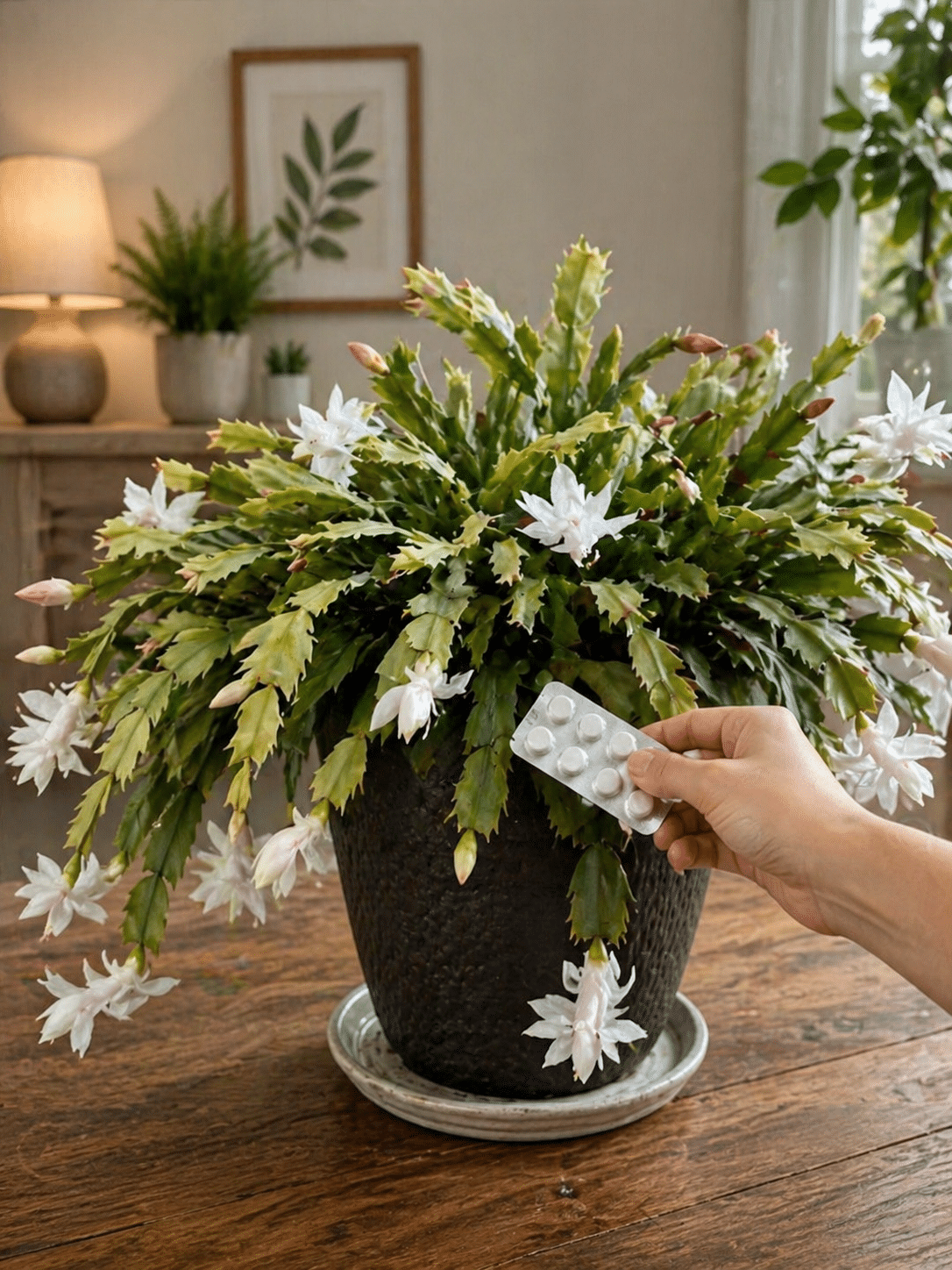
A white Christmas cactus is one of those houseplants that looks far more delicate than it really is. When it is covered in soft white blooms, it can look like a living winter decoration, full of graceful flowers that spill over the pot just when the rest of the garden feels quiet. Its segmented green stems arch beautifully, its buds form at the tips like tiny promises, and its flowers can brighten a room during the darkest months of the year.
Many people buy a Christmas cactus when it is already blooming, enjoy the flowers for a few weeks, and then wonder why it never blooms again. Others keep the plant alive for years but only see leaves, no buds. That can make the plant seem mysterious or difficult. But the truth is that Christmas cactus is one of the easiest holiday plants to rebloom once you understand its rhythm.
The white Christmas cactus is especially loved because it fits any home style. It looks clean, elegant, and peaceful. It works with rustic decor, modern rooms, holiday displays, farmhouse kitchens, and simple windowsills. Unlike poinsettias, which are often treated as seasonal decorations, a Christmas cactus can live for decades. With the right routine, it can bloom year after year and become a plant you look forward to every winter.
One trick that many plant lovers talk about is using a small white “plant tablet” or mild bloom-supporting supplement during the growing season. In photos, it may look like someone is holding a blister pack of white tablets near the plant, as if there is a secret pill that keeps Christmas cactus flowering. The idea is interesting, but it needs to be understood carefully. The best version is not random human medicine or household tablets. It is a gentle, plant-safe feeding routine using diluted fertilizer, slow-release plant food, or a mild mineral supplement made for plants.
The real secret to keeping a white Christmas cactus blooming is not one tablet, one liquid, or one magic ingredient. The real secret is seasonal care. During spring and summer, the plant needs light, gentle moisture, and mild feeding so it can grow strong. In fall, it needs longer nights, cooler temperatures, and a little rest. That change tells the plant to form buds. Once buds appear, the plant needs stable care so the buds do not drop.
In this complete guide, you will learn how to keep a white Christmas cactus blooming year after year, how the white tablet trick fits into the routine, when to feed, when to stop feeding, how to trigger buds, how to avoid bud drop, and how to keep the plant healthy for many seasons.
What Is a White Christmas Cactus?
A white Christmas cactus is a holiday cactus from the Schlumbergera group that produces white or nearly white blooms. Some flowers are pure white, while others have a soft blush of pink, cream, or pale peach near the center. The plant has flat segmented stems that cascade over the pot as it matures. Flowers form at the tips of these segments, creating a beautiful waterfall effect when the plant is full of buds.
Despite the name, Christmas cactus is not a desert cactus. It is a tropical forest cactus. In its natural environment, it grows in humid, shaded areas, often among tree branches or rocky crevices where organic matter collects. That means it wants different care from a desert cactus. It likes more moisture, more humidity, and less harsh direct sun than a cactus you might imagine growing in dry sand.
This is why many people accidentally care for it incorrectly. They hear the word “cactus” and assume it should stay very dry and sit in blazing sun. But a Christmas cactus prefers bright indirect light, moderate watering, and a loose, well-draining potting mix. It does not want soggy soil, but it also does not want to be ignored for months like a desert cactus.
The white variety is not harder to care for than pink, red, or purple varieties. In fact, once you understand the seasonal rhythm, white Christmas cactus can be one of the easiest blooming houseplants to keep.
Why White Christmas Cactus Is So Easy to Keep
The reason Christmas cactus is easy is that it is forgiving. It does not need daily attention. It can tolerate normal indoor temperatures. It does not need constant pruning. It can live in the same pot for quite a while. It also blooms from a natural trigger that you can recreate indoors without expensive equipment.
Unlike some flowering plants that need strong sun or complicated feeding schedules, Christmas cactus mainly needs a seasonal signal. In fall, when nights become longer and temperatures become cooler, the plant begins preparing to bloom. Indoors, you can imitate this by giving the plant longer periods of darkness at night and keeping it in a slightly cooler room.
Once you learn that simple pattern, the plant becomes much less confusing. Spring and summer are for growth. Fall is for bud setting. Winter is for blooming. After flowers fade, the plant rests and begins the cycle again.
The white Christmas cactus is also easy because it does not need to be replaced each year. A healthy plant can live for decades. Many families pass Christmas cactus cuttings from one generation to another. A plant that starts as a small cutting can eventually become a large, cascading centerpiece covered in flowers.
The Real Secret to Yearly Blooms
The real secret to yearly blooms is giving the plant a proper fall rest period. This rest period is what tells the Christmas cactus to stop focusing only on green growth and start forming flower buds.
About six to eight weeks before you want flowers, begin giving the plant long nights. Aim for 12 to 14 hours of darkness each night. This darkness should be uninterrupted. A room that stays dark at night is ideal. If the plant sits in a living room where lamps and televisions stay on late, it may not receive the signal properly.
Cooler nights also help. A nighttime temperature around 55 to 65 degrees Fahrenheit is often useful for bud formation. The plant does not need to be cold, and it should never freeze, but it should not stay in a very warm room all night during the bud-setting stage.
Watering should also be slightly reduced during this rest period. Do not let the plant shrivel badly, but allow the top layer of soil to dry a little more between waterings. Stop feeding during this time. Fertilizer encourages growth, while the fall rest period encourages blooming.
Once buds appear, keep the plant stable. Do not move it around constantly. Do not suddenly change temperature, light, or watering. Christmas cactus can drop buds when conditions change too quickly.
What Is the White Tablet Trick?
The white tablet trick is a plant-care idea where a small white tablet-like supplement is used to support plant growth or blooming. In a safe plant-care routine, this should mean a plant-safe fertilizer tablet, slow-release houseplant feeding tablet, or a mild mineral supplement designed for plants.
It should not mean random human medicine, painkillers, cleaning tablets, dishwasher tablets, vitamin pills, or mystery tablets. Those can contain ingredients that are not meant for potting soil and may harm the plant. A Christmas cactus does not need aspirin, antacid tablets, or household cleaning products to bloom. It needs the right seasonal care.
Plant feeding tablets can be convenient because they release nutrients slowly or dissolve into water. Some are designed for flowering houseplants. When used correctly, they may support healthy growth during spring and summer. But even plant-safe tablets should be used lightly. Christmas cactus does not need heavy feeding.
The best way to think of the white tablet trick is this: use a gentle plant fertilizer during the growing season to build strength, then stop feeding before the fall bloom trigger. The tablet is not what creates the buds by itself. The seasonal darkness and cooler nights create the bloom signal.
When to Use Plant Feeding Tablets
If you use a plant-safe feeding tablet, the best time is spring or early summer, when the Christmas cactus is actively growing. This is when the plant is producing new stem segments and storing energy for future blooms.
Use the tablet according to the label, but go gentle. If the product is strong, use less than recommended or dissolve it into more water than suggested. Christmas cactus roots are not heavy feeders, and too much fertilizer can cause weak growth, salt buildup, brown tips, or root stress.
Do not use feeding tablets in late fall when you are trying to trigger buds. Do not use them when buds are already forming. Do not use them on a plant that is struggling with root rot or soggy soil. Feeding a stressed plant can make problems worse.
A simple feeding schedule is enough: feed lightly once a month in spring and summer, then stop by late summer or early fall. During the bud-setting period, give darkness, cooler nights, and careful watering instead.
How to Use a Plant Tablet Safely
If you choose to use a plant tablet, always confirm that it is made for plants. Read the label. It should be a houseplant fertilizer tablet, flowering plant tablet, or slow-release plant food. Avoid anything not clearly meant for plants.
There are two safe ways to use it. The first is dissolving it in water and applying the diluted solution to the soil when the plant is due for watering. The second is placing a slow-release tablet into the soil according to the package instructions. For Christmas cactus, the dissolved weak-water method gives you more control.
To use it as a liquid feed, dissolve a small portion of the tablet in water. Make the mixture weak. Water the plant only when the top inch of soil is dry. Let the liquid drain from the pot and empty the saucer. Never let the pot sit in fertilizer water.
Do not push a tablet directly against the roots or crown of the plant. Concentrated fertilizer can burn roots. If using slow-release tablets, place them near the edge of the potting mix and follow the directions carefully.
Why Feeding Alone Does Not Make Christmas Cactus Bloom
Many people assume that if a plant is not blooming, it needs more fertilizer. With Christmas cactus, that is often not true. A plant can be well-fed and still refuse to bloom if it does not receive the correct seasonal signal.
Christmas cactus blooms because of long nights and cooler temperatures. Feeding helps the plant build energy earlier in the year, but it does not replace the fall rest period. In fact, feeding too late can reduce blooming because it encourages green stem growth when the plant should be forming buds.
If your plant grows lots of new green segments but never blooms, it may be receiving too much warmth, too much nighttime light, or too much fertilizer at the wrong time. The solution is not more feeding. The solution is a better seasonal routine.
Think of fertilizer as preparation, not the trigger. Spring and summer feeding helps build a strong plant. Fall darkness and cool nights tell the plant to bloom.
How to Trigger White Christmas Cactus Buds
To trigger buds, start about six to eight weeks before your desired bloom time. If you want flowers around Christmas, begin the routine in early to mid-fall.
Place the plant somewhere it receives bright indirect light during the day and 12 to 14 hours of darkness at night. The dark period should be consistent. If you cannot provide a naturally dark room, cover the plant with a breathable box or dark cloth in the evening and uncover it in the morning.
Keep nighttime temperatures cooler if possible. A cool spare room, enclosed porch that does not freeze, or bright room away from heaters can work well. Avoid cold drafts and freezing windows.
Reduce watering slightly. Let the top inch or two of soil dry before watering. Do not let the plant become severely shriveled, but do not keep it constantly moist either.
Stop fertilizer completely during the bud-trigger period. This is the time for rest, not feeding.
How Long Does It Take for Buds to Form?
Most Christmas cactus plants need several weeks of the correct conditions before buds appear. You may begin seeing tiny buds at the tips of the segments after about three to six weeks, depending on the plant, light, temperature, and overall health.
At first, buds may look like tiny colored dots or small pointed growths. On a white Christmas cactus, the buds may appear pale green, cream, blush pink, or white depending on the variety. As they grow, they become more obvious and begin to hang from the stem tips.
Once buds form, stop moving the plant around. Sudden changes can cause bud drop. Keep the soil lightly moist, protect the plant from drafts, and maintain bright indirect light.
Be patient. Some plants bloom earlier than others. Thanksgiving cactus types may bloom before true Christmas cactus types, even if they are sold under the same name.
How to Prevent Bud Drop
Bud drop is one of the biggest frustrations with Christmas cactus. The plant forms buds, looks promising, and then the buds fall off before opening. This usually happens because the plant experiences sudden stress.
Common causes include moving the plant to a new location, changing light conditions too quickly, overwatering, underwatering, hot air from heaters, cold drafts, dry air, or too much fertilizer. Once buds are visible, the plant likes stability.
Keep it away from heating vents, fireplaces, cold windows, and doors that open frequently. Do not place it near fruit bowls, as ripening fruit can release gases that may shorten flower life. Keep the soil lightly moist, but never soggy.
Do not fertilize while buds are forming or opening. The plant does not need a feeding push at this stage. It needs steady conditions.
Best Light for a White Christmas Cactus
White Christmas cactus grows best in bright indirect light. It does not need harsh direct sun. Too much strong sun can cause the stems to turn red, yellowish, or stressed. Morning sun can be fine, but hot afternoon sun should be filtered.
An east-facing window is often ideal. A bright north-facing window can work if the room is well lit. A south- or west-facing window may work if the plant is set back from the glass or protected by a sheer curtain.
During the growing season, bright indirect light helps the plant produce strong stems. During the fall bud-setting period, bright daytime light and long dark nights work together. During bloom, bright indirect light helps flowers open and last longer.
If your Christmas cactus grows weak, thin segments and never blooms, it may need more daytime brightness.
Best Soil for Christmas Cactus
Christmas cactus needs soil that holds some moisture but still drains well. It does not want dry desert sand, but it also does not want dense, soggy potting soil. A balanced, airy mix is best.
A good Christmas cactus mix can include:
- 2 parts indoor potting mix
- 1 part perlite or pumice
- 1 part orchid bark or coco coir
This mix holds enough moisture to support the tropical cactus roots while still allowing air to move through the pot. Healthy roots are the foundation of yearly blooms.
If the soil has become compacted, sour-smelling, or slow to drain, repot the plant after blooming. Do not repot right before the bud-setting period unless absolutely necessary, because stress can delay flowering.
Best Pot for a Christmas Cactus
A Christmas cactus should be grown in a pot with drainage holes. This is very important. The plant likes moisture, but it does not like sitting in water. A pot without drainage can trap water at the bottom and cause root rot.
Christmas cactus often blooms well when slightly rootbound. It does not need a huge pot. A pot that is too large holds extra soil, and extra soil holds extra moisture. This can make watering more difficult.
When repotting, choose a pot only one size larger than the current one. If the plant is already large and healthy, you may simply refresh some of the soil instead of moving it to a much bigger container.
A heavy pot can help balance a large cascading plant. White Christmas cactus can become wide and full over time, so stability matters.
How to Water Christmas Cactus
Watering Christmas cactus correctly is one of the most important parts of keeping it healthy. The plant likes more moisture than desert cacti but still needs drying time between waterings.
During active growth in spring and summer, water when the top inch of soil feels dry. Water thoroughly until excess drains from the bottom, then empty the saucer.
During the fall bud-setting period, reduce watering slightly. Let the soil dry a bit more between waterings. This mild rest helps encourage bud formation.
Once buds appear and the plant begins blooming, keep the soil lightly and evenly moist. Do not let it dry out severely during bloom, but do not keep it soggy.
After flowering, reduce watering for a short rest period. Then resume normal care when new growth begins.
Humidity Helps White Christmas Cactus Bloom Better
Christmas cactus is a tropical cactus, so it appreciates moderate humidity. Dry indoor air can stress the plant, especially during winter when heating systems are running. Low humidity can contribute to bud drop, wrinkled segments, or dry flower edges.
You can increase humidity by grouping plants together, using a pebble tray, or placing a small humidifier nearby. If using a pebble tray, make sure the pot sits above the water, not directly in it. The goal is evaporation around the plant, not soggy roots.
Misting can provide a temporary freshness, but it does not raise humidity for long. If you mist, do it lightly and avoid soaking buds or flowers.
Temperature for Yearly Blooms
Temperature plays a major role in blooming. During the growing season, normal indoor temperatures are fine. During fall, cooler nights help trigger buds.
A nighttime range of 55 to 65 degrees Fahrenheit is often helpful. The plant should not freeze or sit in a cold draft. Avoid placing it directly against icy windows. Cool and stable is good; cold and shocking is not.
Once buds form, avoid sudden temperature changes. Moving the plant from a cool room to a hot room can cause bud drop. Hot dry air from heaters can also cause problems.
Stable temperatures are especially important for white blooms because pale flowers can show stress quickly. Keep the plant comfortable and consistent.
How to Feed a White Christmas Cactus
Feed lightly during spring and summer. A balanced houseplant fertilizer at half strength once a month is usually enough. You can also use a plant-safe feeding tablet or slow-release plant food according to the label, but do not overdo it.
Stop feeding in late summer or early fall. This allows the plant to enter its bloom-triggering rest phase. Feeding during the rest phase can interfere with bud formation.
After blooming, let the plant rest for a few weeks before feeding again. When new growth appears in spring, restart gentle feeding.
Remember, Christmas cactus is not a heavy feeder. Too much fertilizer can lead to weak growth, salt buildup, and fewer flowers.
Can You Use Calcium Tablets or Antacid Tablets?
Some people see white tablets and assume they can use calcium tablets or antacid tablets for plants. This is not the best approach. Human tablets may contain binders, sweeteners, flavors, sodium, or other ingredients that are not intended for potting soil.
If you want to add calcium naturally, finely crushed clean eggshell powder is a gentler option, but even that is not usually necessary for Christmas cactus. If you want predictable feeding, use a plant fertilizer made for houseplants.
Do not place random tablets into the pot. The safest “tablet trick” uses only products labeled for plants.
Can You Use Aspirin on Christmas Cactus?
Aspirin plant hacks are often mentioned online, but they are not necessary for Christmas cactus blooming. The plant does not need aspirin to flower. The bloom trigger is darkness, cool temperatures, and proper seasonal care.
Using random medicine in houseplant soil can create uncertainty. It may not help, and it may introduce unwanted ingredients. For a long-lived plant like Christmas cactus, simple proven care is better than risky shortcuts.
If your goal is flowers, focus on the fall rest period instead of medicine-based tricks.
What to Do After the White Flowers Fade
After the flowers fade, remove spent blooms gently. Do not pull hard on the stems. The plant will enter a short rest period after blooming. During this time, water a little less and stop feeding for a few weeks.
Keep the plant in bright indirect light. Let it recover from the energy used during flowering. After the rest period, you may see new stem growth. That is your sign to resume normal care.
This post-bloom rest is part of the yearly rhythm. Do not panic when flowers fade. The plant is not dying; it is simply moving into the next stage.
How to Prune Christmas Cactus for More Blooms
Pruning helps Christmas cactus become fuller. More branches mean more stem tips, and more stem tips can mean more places for flowers to form.
The best time to prune is after blooming, usually in late winter or spring. Pinch or twist off one or two segments from the ends of long stems. Do not prune heavily in fall, because that is when buds will form at the tips.
The pieces you remove can be propagated. Let the cuttings dry for a day, then place them in lightly moist potting mix. Many Christmas cactus plants are shared this way.
Regular light pruning keeps the plant compact, bushy, and bloom-ready.
How to Propagate White Christmas Cactus
White Christmas cactus is easy to propagate from stem cuttings. Choose a healthy stem and twist off a section with two to four segments. Let the cutting sit for a day so the end dries slightly. Then place the bottom segment into a small pot of lightly moist, well-draining mix.
Keep the cutting in bright indirect light. Do not overwater. The cutting should root over time and begin producing new growth. Once established, it can be cared for like the parent plant.
Propagation is a wonderful way to share a white Christmas cactus with friends or family. If you have a plant that blooms beautifully every year, cuttings from it can become meaningful gifts.
Continue to Page 2
Continue to page 2 for more details about this article and the key points many readers miss on the first page.