Why Your White Christmas Cactus Has Leaves but No Flowers
If your plant grows green segments but produces no flowers, it probably missed the bloom trigger. It may be getting too much artificial light at night, staying too warm, receiving too much fertilizer late in the season, or not getting enough bright light during the day.
To fix this, begin a fall routine. Give the plant 12 to 14 hours of darkness each night for six to eight weeks. Keep nights cool. Stop feeding. Water slightly less. During the day, give bright indirect light.
This routine is often enough to encourage buds. If the plant is very young or recently repotted, it may need more time to mature before blooming heavily.
Why Buds Form but Fall Off
If buds form but fall off, the plant likely experienced stress. Christmas cactus can be sensitive once it has buds. Sudden changes in location, light, temperature, watering, or humidity can cause bud drop.
Once you see buds, keep the plant in one stable place. Avoid turning it constantly. Keep it away from heat vents and cold drafts. Do not let the soil dry completely, but do not overwater either.
If the home is very dry, increase humidity gently. Keep the plant comfortable and avoid dramatic changes.
Why White Flowers Turn Pink or Cream
Some white Christmas cactus flowers naturally have a blush of pink or cream, especially as buds develop or flowers age. Temperature and light can also influence flower color slightly. Cooler conditions may bring out pink tones in some varieties.
This does not mean anything is wrong. A white cactus may not always produce pure snow-white flowers under every condition. Some blooms may open white and age to cream, while others may show pink edges or centers.
The variation can be part of the plant’s charm.
How to Make the Plant Fuller
To make a Christmas cactus fuller, prune after flowering and provide good growing conditions in spring and summer. Each place where you pinch back a stem may branch, creating a denser plant.
Give bright indirect light so the new growth is strong. Feed lightly during active growth. Water when the top inch of soil dries. Avoid letting the plant become severely dehydrated.
A fuller plant usually blooms more impressively because it has more stem tips. Since flowers form at the tips, more tips can mean more blooms.
Should You Repot Every Year?
No, Christmas cactus does not need yearly repotting. In fact, it often blooms well when slightly rootbound. Repot every two to three years or when the soil breaks down, drainage becomes poor, or the plant becomes unstable.
The best time to repot is after blooming, usually in late winter or spring. Avoid repotting right before the bud-setting period or while buds are forming.
When repotting, use a pot only slightly larger. A huge pot can hold too much moisture and reduce blooming.
Seasonal Care Calendar for White Christmas Cactus
Winter
Enjoy the flowers. Keep the plant in bright indirect light, water when needed, and avoid drafts. Do not fertilize heavily while it is blooming.
After Blooming
Remove faded flowers and let the plant rest. Water a little less for a few weeks. Keep it in bright indirect light.
Spring
New growth begins. Resume normal watering and light feeding. Prune lightly to encourage branching.
Summer
Keep the plant bright but out of harsh direct sun. Water when the top inch dries. Feed lightly once a month. A plant-safe feeding tablet may be used during this stage if desired.
Late Summer
Reduce feeding and prepare for the fall rest period. Keep the plant healthy but do not push too much new growth.
Fall
Begin bloom triggering. Give 12 to 14 hours of darkness nightly, cooler temperatures, no fertilizer, and slightly reduced watering.
Early Winter
Buds should form. Keep the plant stable and avoid sudden changes. Enjoy the bloom display when flowers open.
Common Problems and Easy Fixes
No Blooms
The plant likely needs longer nights, cooler temperatures, or brighter daytime light. Follow the fall rest routine.
Bud Drop
Bud drop usually comes from sudden changes, drafts, dry air, or inconsistent watering. Keep conditions steady once buds form.
Wrinkled Segments
Wrinkling may mean underwatering, but it can also mean root damage. Check the soil. Dry soil means water. Wet soil means inspect roots.
Red or Purple Stems
This can happen from strong light, cool temperatures, or stress. Move the plant away from harsh sun if needed.
Soft Mushy Stems
Soft stems may indicate rot. Check the roots and soil immediately. Repot into fresh mix if necessary.
Yellowing Growth
Yellowing may come from too much water, too much direct sun, or nutrient imbalance. Check light, soil, and watering habits.
Can White Christmas Cactus Bloom More Than Once a Year?
Yes, it can sometimes bloom more than once a year. The main bloom usually happens in late fall or winter, but some plants may produce a smaller second bloom in spring if conditions are favorable.
However, do not force constant blooming. The plant needs time to rest and grow. A reliable winter bloom every year is better than exhausting the plant with constant stress.
Healthy seasonal care gives the best long-term results.
Why This Plant Can Last for Decades
Christmas cactus is long-lived because it grows steadily and can recover well from pruning, propagation, and seasonal changes. It does not need to be replaced after blooming. With the right care, it can become larger and more beautiful over time.
Older plants often bloom more dramatically because they have more stem tips. A mature white Christmas cactus in full bloom can be breathtaking, with flowers cascading all around the pot.
This is why many people treat Christmas cactus as a family plant. It is not just seasonal decor. It can become part of holiday memories year after year.
Frequently Asked Questions
Is white Christmas cactus easy to grow?
Yes. It is easy once you understand that it is a tropical cactus, not a desert cactus. It needs bright indirect light, moderate watering, drainage, and a fall rest period to bloom.
How do I make it bloom every year?
Give it 12 to 14 hours of darkness each night for six to eight weeks in fall, cooler nighttime temperatures, no fertilizer during bud setting, and slightly reduced watering.
What is the white tablet trick?
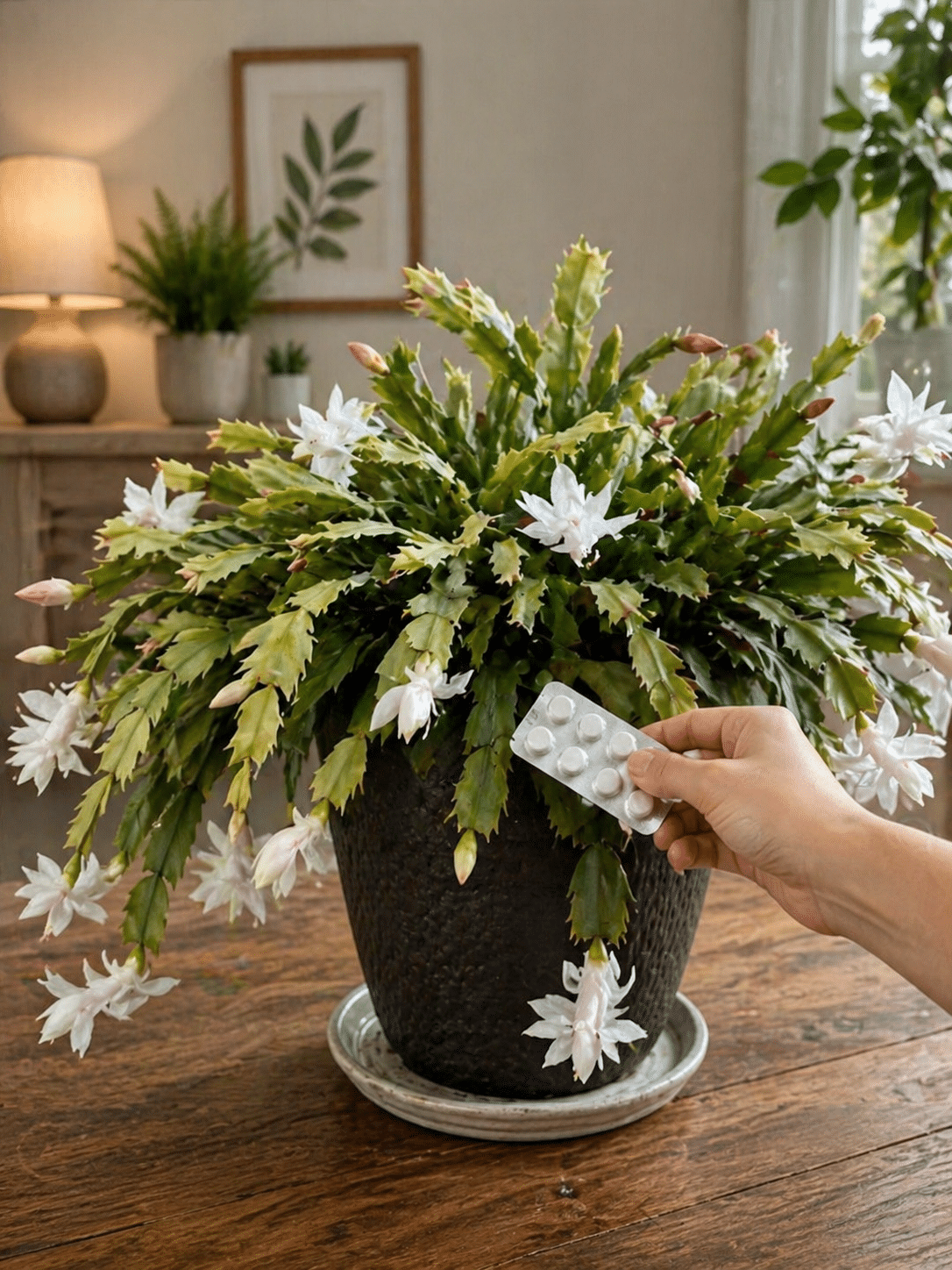
The safe version uses a plant-safe fertilizer tablet or slow-release feeding tablet during spring or summer. It should not involve random human medicine or household tablets.
Can a tablet make Christmas cactus bloom?
Not by itself. Feeding can support growth, but blooms are triggered mainly by long nights and cool temperatures.
When should I feed Christmas cactus?
Feed lightly in spring and summer during active growth. Stop feeding in late summer or early fall before bud formation.
Why are my buds falling off?
Bud drop can happen from moving the plant, sudden temperature changes, drafts, inconsistent watering, dry air, or too much fertilizer.
Does white Christmas cactus need direct sun?
No. It prefers bright indirect light. Gentle morning sun may be fine, but harsh afternoon sun can stress the plant.
How often should I water?
Water when the top inch of soil feels dry. Water less during the fall rest period and keep soil lightly moist during blooming.
Should I repot before blooming?
No. Repot after blooming, usually in late winter or spring. Repotting before bud formation can delay or reduce blooms.
Can I propagate white Christmas cactus?
Yes. Take a cutting with two to four segments after blooming, let it dry for a day, then root it in lightly moist potting mix.
Final Thoughts
The white Christmas cactus may look delicate, but it is one of the easiest blooming houseplants to keep year after year. Its secret is not complicated. It needs a simple seasonal rhythm: grow in spring and summer, rest in fall, bloom in winter, recover after flowering, and repeat.
The white tablet trick can be useful only if it means a plant-safe feeding tablet or gentle fertilizer used at the right time. Feed lightly during the growing season to help the plant build strength. Then stop feeding before the fall rest period. Random tablets, medicines, cleaning tablets, or mystery supplements should never be used in the pot.
For reliable blooms, focus on the real triggers. Give your Christmas cactus bright indirect light during the day, long uninterrupted darkness at night in fall, cooler nighttime temperatures, and careful watering. Once buds appear, keep the plant stable and protect it from drafts, heat vents, and sudden changes.
With this routine, your white Christmas cactus can bloom again and again, becoming more beautiful each year. It can grow from a simple holiday plant into a long-lived indoor treasure covered in soft white flowers every winter.
If you want an elegant plant that rewards patience but does not demand constant work, the white Christmas cactus is a perfect choice. Give it the right rhythm, and it may become the easiest plant in your home to keep blooming year after year.