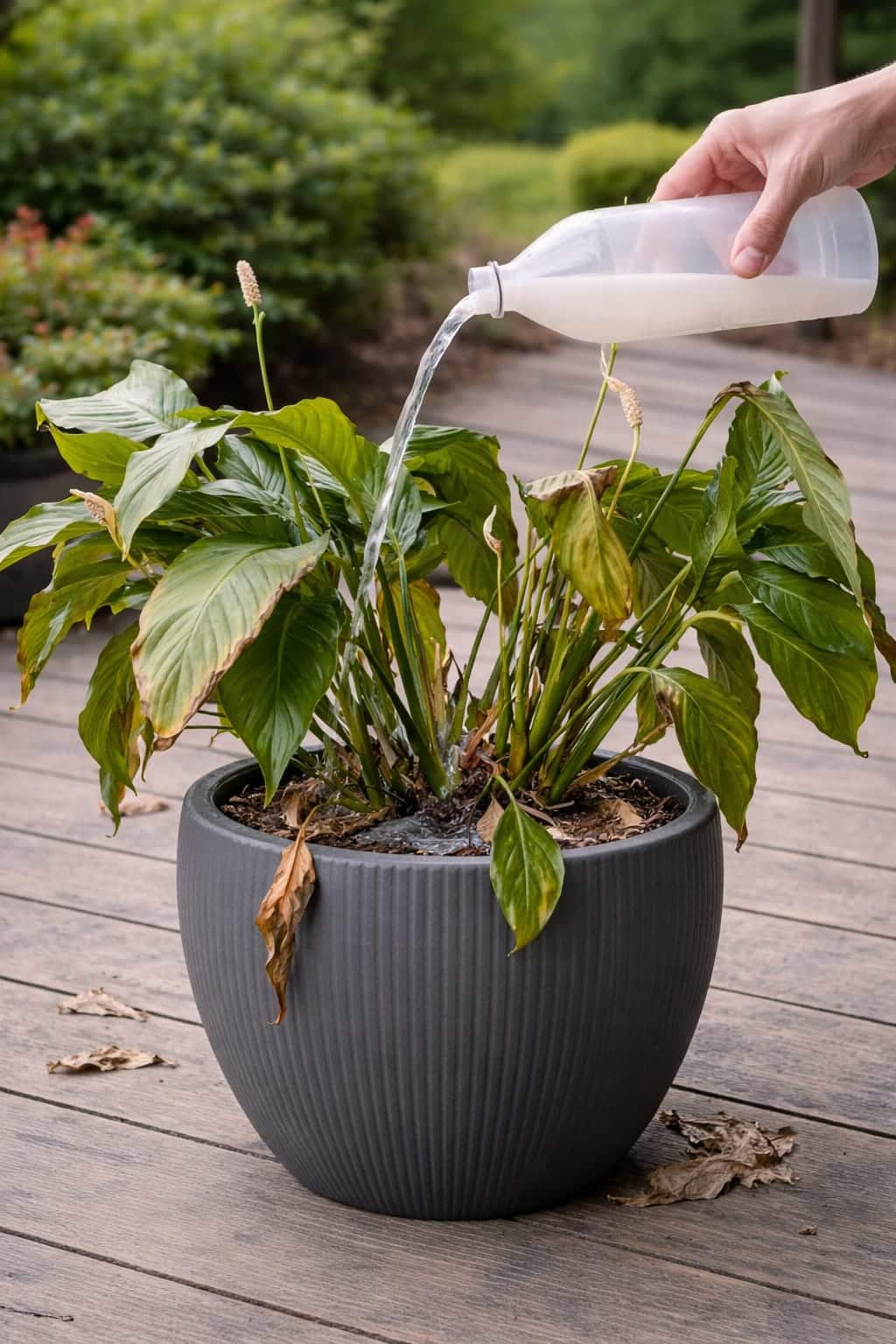
How a Mild Homemade Liquid Can Actually Help
When the plant is not severely damaged, a mild homemade liquid can support recovery in a few ways.
- It Gives a Small Nutrient Boost
If the soil is old or the plant has not been fed in a long time, a gentle tonic may help refresh growth.
- It Can Improve Leaf Appearance
A healthier plant often responds with stronger, more upright leaves and deeper green color
- It May Support Longer Blooms
Once the plant is less stressed, the flowers can last longer and look fresher.
But this is the key point:
👉 The liquid helps most when the plant’s basic care has also been fixed.
The Real Revival Method – What Actually Works
If you want a peace lily to recover and bloom longer, this is what truly matters.
- Check the Soil
If it is constantly wet, the roots may be stressed. Let the top inch of soil dry slightly before watering again.
- Make Sure the Pot Drains
A beautiful decorative pot means nothing if water gets trapped around the roots. Always use a pot with drainage holes, or remove the inner pot to empty excess water.
- Move It into Bright, Indirect Light
Peace lilies can survive in low light, but they recover and bloom much better with brighter filtered light. An east or north‑facing window is ideal.
- Remove Damaged Leaves and Old Blooms
Cut off yellow leaves, brown tips, and faded flowers at the base. This helps the plant redirect energy into healthy growth.
- Use the White Liquid Lightly
Do not drench the plant every day. A small amount, used occasionally, is enough.
How to Use a Homemade White Liquid Safely (Step by Step)
If you want to try this method, keep it simple and gentle.
Basic Recipe: Diluted Rice Water
- Rinse raw rice (white or brown) in water, saving the cloudy liquid. Or soak rice in water for 30 minutes.
- Dilute the rice water with equal parts plain water (1:1 ratio).
- Use immediately – do not store for more than 24 hours.
How to Apply
· Pour a small amount onto the soil – about ¼ to ½ cup for a 6‑inch pot.
· Do not soak the pot. The soil should already be slightly dry.
· Use only occasionally – once a month at most, during spring and summer.
· Stop in fall and winter – the plant rests.
What to Avoid
· Using it too often – more liquid does not mean faster recovery.
· Pouring it into soggy soil – if the plant is already overwatered, this can make things worse.
· Ignoring light – a peace lily in deep shade will not suddenly bloom beautifully because of one homemade mix.
· Expecting instant transformation – recovery usually happens over days or weeks, not seconds.
· Treating the tonic like a full fertilizer routine – a homemade liquid can help, but it should not replace balanced plant care.
Pro tip: If you notice a sour smell, white mold on the soil, or fungus gnats, stop using the rice water. You may be applying too much or the soil is staying too wet.
What Changes You Might Notice (Realistic Results)
If the peace lily responds well, you may see:
· Leaves standing more upright – no more drooping.
· Deeper green color – richer, glossier foliage.
· Fewer limp stems – stronger structure.
· A fuller overall shape – new leaves emerging.
· Flowers lasting longer before fading – blooms stay fresh for weeks.
These are the real signs that the plant is improving. Not overnight magic. Just healthier growth.
Common Mistakes That Make Peace Lilies Worse
A lot of viral plant tricks fail because of these mistakes:
Mistake Why It’s Harmful Correct Approach
Using too much liquid Keeps roots too wet, causes rot Use a small amount, occasionally.
Pouring into soggy soil Adds moisture to already stressed roots Let soil dry first.
Ignoring light No energy for recovery Move to bright indirect light.
Expecting instant transformation Leads to disappointment Recovery takes weeks.
Treating the tonic like a full fertilizer Neglects real nutrient needs Use balanced fertilizer occasionally.
The Truth About Keeping Your Peace Lily Blooming Longer
Longer blooms come from a healthier plant. That means:
· Stable moisture – not too wet, not too dry.
· Proper drainage – pots with holes, empty saucer.
· Bright indirect light – the #1 bloom trigger.
· Decent humidity – 50–60% (pebble tray or humidifier).
· Light feeding – a balanced, diluted fertilizer once a month in spring/summer.
· Less overall stress – no drafts, no sudden temperature changes.
So while the white liquid may support the process, it is really the improved environment that keeps the peace lily blooming better for longer.
Peace Lily Revival Checklist
☐ Check soil – if wet, let dry; if compacted, repot with fresh mix.
☐ Ensure pot has drainage holes.
☐ Move to bright, indirect light (east or north window).
☐ Remove yellow leaves and spent blooms.
☐ Water only when top inch of soil is dry.
☐ Water thoroughly, then empty saucer.
☐ Optional: use diluted rice water once a month (spring/summer only).
☐ Maintain humidity 50–60% (pebble tray).
☐ Keep temperature 65–80°F, away from drafts.
☐ Be patient – recovery takes weeks.
Frequently Asked Questions (FAQs)
Q: Can rice water really revive a peace lily?
A: It can help support recovery if the plant is already in decent shape. It provides trace nutrients and may improve leaf color and vigor. But it will not fix root rot or severe overwatering.
Q: Is milk better than rice water?
A: No – milk can sour, smell, and attract pests. Rice water is safer and less likely to cause problems.
Q: How often should I use rice water on my peace lily?
A: Once a month during spring and summer. Do not use in fall and winter.
Q: Why are my peace lily leaves still droopy after using rice water?
A: Drooping is often caused by watering issues (too much or too little) or low light. Check soil moisture and light conditions first.
Q: Can I use rice water on other houseplants?
A: Yes – many houseplants (spider plants, pothos, philodendrons) can benefit from occasional diluted rice water. Use sparingly.
Q: What’s the biggest mistake people make with peace lilies?
A: Overwatering. Peace lilies are dramatic but sensitive. Let the top inch of soil dry out before watering again.
Final Thoughts – Gentle Support, Stronger Recovery
The “white liquid” trick is not pure fantasy, but it is also not a miracle cure. Used carefully, a mild homemade tonic like diluted rice water can help support a tired peace lily. It may improve leaf strength, color, and overall vigor. And once the plant feels healthier, it may hold its blooms longer too.
But the real secret is still the same:
👉 Better light.
👉 Smarter watering.
👉 Healthy roots.
👉 Gentle support, not overcare.
That is what truly revives a peace lily. And when those things come together, even a tired‑looking plant can become lush, glossy, and elegant again.
Now it’s your turn! Have you tried the rice water trick on your peace lily? What results did you see? Drop a comment below – I’d love to hear your experience.
And if you found this guide helpful, share it with a friend who loves peace lilies. Pin it for later, and subscribe to our newsletter for more practical plant care.
Stay bright, stay balanced, and watch your peace lily thrive. 🌿🤍✨