Can You Use Sugar?
No. Sugar should never be used as a houseplant soil topping. It can attract ants, mold, fungus gnats, and bacteria. Plants make their own sugars through photosynthesis. Pouring sugar into the soil does not make the plant stronger.
Snake plants need healthy roots, not sweet soil.
Can You Use Baking Soda?
No. Baking soda can alter soil conditions and may harm roots when used incorrectly. It is not a snake plant fertilizer and should not be used as a soil amendment for routine indoor plant care.
The safest white material for this visual is perlite or pumice.
Should You Water After Adding Perlite?
Only water if the soil is dry. Adding perlite does not mean the plant immediately needs water. If you just repotted into slightly moist soil, wait a few days before watering. If roots were trimmed, waiting is even more important.
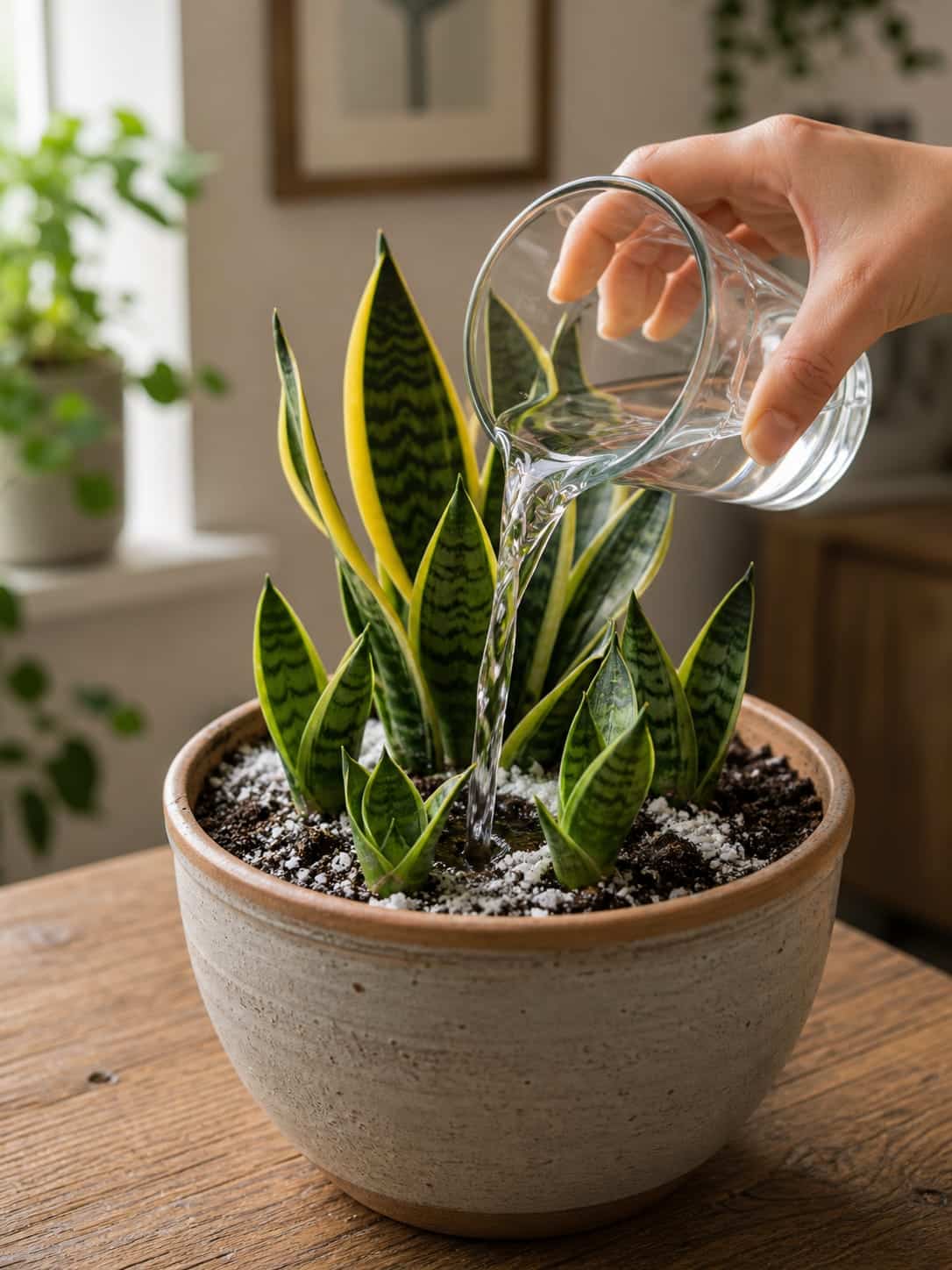
In the image, the plant is being watered after the white pieces are already present. That is fine if the soil is dry and the pot has drainage.
Never water only because you added a soil amendment.
Best Light for Snake Plant Growth
Snake plants tolerate low light, but they grow much better in bright indirect light. Place the plant near a window with filtered sunlight. Gentle morning sun is usually safe, while harsh afternoon sun can scorch some leaves if the plant is not acclimated.
If your snake plant is not producing new pups, low light may be the reason. A better soil mix helps, but light powers growth.
For stronger leaves and new shoots, give the plant brighter indirect light.
Should You Fertilize Snake Plant?
Yes, but lightly. Snake plants do not need heavy feeding. During spring and summer, you can use a diluted balanced houseplant fertilizer or cactus fertilizer once every four to eight weeks.
Do not fertilize heavily in winter. Do not fertilize a plant with root rot. Do not fertilize dry roots with a strong dose.
Fertilizer supports growth only when the roots are healthy and the plant has enough light.
Natural Fertilizer Options for Snake Plant
If you prefer organic indoor gardening, gentle options include:
- Worm castings mixed lightly into the soil
- Diluted worm casting tea
- Very diluted compost tea
- A mild organic cactus fertilizer
Use all natural fertilizers carefully. Organic does not automatically mean risk-free. Too much organic material in a snake plant pot can hold moisture and attract pests.
Keep feeding light and the soil airy.
How to Prevent Root Rot
Root rot prevention is the heart of snake plant care. To prevent it:
- Use fast-draining soil
- Add perlite or pumice
- Choose a pot with drainage holes
- Water only when the soil is dry
- Empty saucers after watering
- Give bright indirect light
- Avoid oversized pots
- Reduce watering in winter
If you follow these steps, your snake plant has a much better chance of staying firm, upright, and healthy.
Why Pot Size Matters
A pot that is too large holds more soil than the roots can use. Extra soil stays wet longer, which increases the risk of root rot. Snake plants often do well in slightly snug pots because the soil dries faster and the rhizomes can fill the space gradually.
When repotting, choose a pot only one to two inches wider than the current root ball.
Bigger is not always better for indoor plants.
Why Ceramic Pots Need Drainage
Ceramic pots are attractive and stable, but some do not have drainage holes. If water cannot escape, even the best soil mix can become soggy.
Use a ceramic pot with drainage, or use it as a decorative outer pot with a nursery pot inside. This gives you the look you want while keeping the root system safe.
Drainage holes are not optional for snake plant care.
Can This Trick Save a Rotting Snake Plant?
Perlite and pumice can help prevent future rot, but they cannot reverse severe rot by themselves. If the plant is already mushy, remove it from the pot and cut away damaged roots and leaves.
Let healthy sections dry, then repot into fresh fast-draining soil. If needed, propagate healthy leaf sections or rhizome divisions.
The white pebble trick is best used before root rot becomes serious.
How to Propagate Snake Plant Pups
If your snake plant has pups like the one in the image, you can eventually separate them. Wait until the pup has its own roots. Remove the plant from the pot and gently divide the pup from the main rhizome using clean scissors or a clean knife.
Plant the pup in a small pot with fast-draining soil. Wait a few days before watering if the cut area is fresh.
Division is the easiest way to create new snake plants while keeping the same variegation.
How to Clean Snake Plant Leaves
Dust can collect on snake plant leaves and reduce their shine. Wipe the leaves gently with a damp cloth every few weeks. Avoid leaf shine products because they can clog the surface and attract dust.
Clean leaves look better and help the plant receive more light.
Do not pour water into the center of the leaf cluster while cleaning.
Quick White Pebble Watering Routine
- Use perlite or pumice as the white soil amendment.
- Mix it into cactus or succulent soil for better drainage.
- Use a pot with drainage holes.
- Check that the soil is dry before watering.
- Pour water slowly around the soil, not into the crown.
- Let water drain completely.
- Empty the saucer after watering.
- Wait until the soil dries before watering again.
- Give bright indirect light for stronger growth.
- Feed lightly only during spring and summer.
Common Mistakes to Avoid
- Using salt instead of perlite
- Using sugar or rice on the soil
- Watering while the soil is still wet
- Using a pot without drainage
- Keeping the plant in dense potting soil
- Adding too thick of a decorative stone layer
- Pouring water into the leaf crown
- Using strong fertilizer on dry roots
- Keeping the plant in very low light
- Ignoring mushy leaves or yellowing
Short Caption for This Trick
“For a stronger snake plant, add perlite or pumice to the soil before watering. These white mineral pieces help the pot drain faster, keep roots airy, and reduce the risk of root rot. Water only when the soil is dry, let the pot drain completely, and keep the plant in bright indirect light for firm leaves and new pups.”
Frequently Asked Questions
What are the white pieces on snake plant soil?
They should be perlite or pumice. These materials improve drainage and airflow in the soil.
Is the white material fertilizer?
No. Perlite and pumice do not feed the plant. They improve soil structure and help prevent soggy roots.
Can I use salt on snake plant soil?
No. Salt can damage roots and should not be used as a houseplant soil treatment.
How often should I water a snake plant?
Water only when the soil is dry. Indoors, this may be every two to four weeks, or less in winter.
Does perlite prevent root rot?
Perlite helps reduce the risk by improving drainage and airflow, but you still need proper watering and a pot with drainage holes.
Can I put perlite only on top of the soil?
You can add a thin top layer, but it works best when mixed throughout the potting soil.
What is the best soil for snake plant?
A fast-draining cactus or succulent mix with perlite, pumice, coarse sand, or orchid bark is best.
Why is my snake plant turning yellow?
Yellowing is usually caused by overwatering, poor drainage, cold damage, or root rot.
How do I get snake plant pups?
Give bright indirect light, use fast-draining soil, avoid overwatering, and keep the plant slightly snug in its pot.
Should I fertilize snake plant?
Yes, but lightly during spring and summer. Use diluted houseplant fertilizer, cactus fertilizer, or a mild organic fertilizer.
Final Thoughts
The white pebble watering trick in the image is one of the safest and most practical snake plant care methods when the white material is perlite or pumice. These small mineral pieces help create the fast-draining, breathable soil that snake plants need for healthy roots.
This trick is especially useful for indoor plant care because many houseplants are grown in soil that holds too much moisture. For snake plants, that can lead to yellow leaves, mushy bases, and root rot. Adding perlite or pumice gives the roots more oxygen and helps water move through the pot properly.
Use the trick correctly: mix the white pieces into the soil, water only when dry, keep water away from the crown, and let the pot drain completely. Do not use salt, sugar, rice, or random white powders. Keep the routine simple and clean.
With bright indirect light, fast-draining soil, and careful watering, your snake plant can stay upright, produce new pups, and remain one of the most beautiful low-maintenance houseplants in your home.