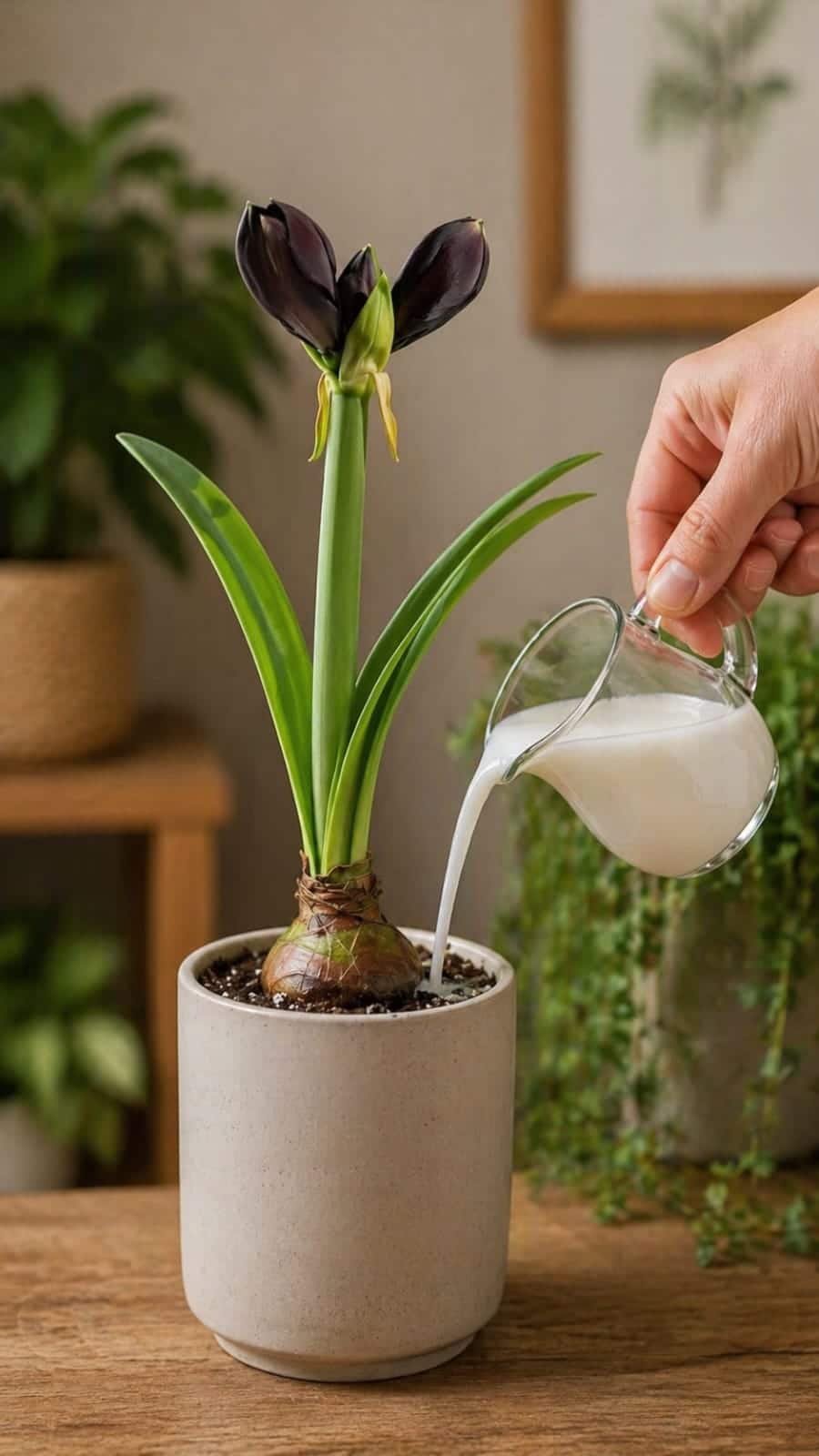
Can You Pour the White Liquid Over the Bulb?
No. Do not pour the white liquid over the bulb. Always pour around the bulb into the soil. The bulb neck and upper scales should stay dry.
If liquid splashes onto the bulb, wipe it away gently with a clean cloth. If the bulb stays wet, it may develop soft spots or rot.
Amaryllis care is different from watering leafy plants. The bulb is sensitive to moisture sitting on its surface.
Signs the White Pour Is Being Used Safely
You are using the trick safely if the soil drains well, the bulb stays firm, the water does not smell sour, and the leaves remain upright. The pot should not remain wet for many days. There should be no fungus gnats, mold, or sticky residue.
The white liquid should disappear into the soil like water. It should not sit on top in a thick layer. The bulb should remain mostly dry above the soil line.
If everything stays clean and fresh, the method is being used gently enough.
Signs You Should Stop Immediately
Stop using the white pour if the soil smells sour, the bulb becomes soft, mold appears, fungus gnats show up, or the pot stays wet too long. Also stop if the liquid leaves a film on the soil or pot.
If the bulb feels soft, remove it from the pot and inspect it. Firm bulbs are healthy. Soft, mushy, or foul-smelling bulbs may be rotting.
Do not keep adding more homemade liquid to fix a problem caused by too much moisture.
How to Check an Amaryllis Bulb for Rot
Bulb rot is one of the biggest risks with amaryllis. Check the bulb if you notice yellowing leaves, a bad smell, soft spots, or collapsing growth.
- Gently press the exposed bulb surface.
- Look for soft, sunken, or wet areas.
- Smell near the soil line for sour odor.
- If needed, remove the bulb from the pot.
- Inspect the roots and base.
- Trim away mushy roots.
- Let the bulb dry before replanting.
- Use fresh, well-draining soil.
A slightly dry outer layer is normal. A soft wet bulb is not.
Can You Use Milk on Amaryllis Leaves?
No. Do not use milk on amaryllis leaves. Milk can leave residue, smell sour, and attract pests. The leaves should be kept clean with a damp cloth if dusty.
Leaf shine products, oils, and kitchen liquids are unnecessary. Amaryllis leaves need light and airflow. Clean, plain water on a cloth is enough.
If the white pour splashes onto the leaves, wipe it off.
Can You Use This Trick on Other Bulbs?
A diluted rice water pour can be used carefully on some potted bulbs during active growth, but the same rule applies: do not soak the bulb. Bulbs like tulips, hyacinths, daffodils, and paperwhites can rot if kept too wet.
For most bulbs, plain water and proper drainage are safer. If using any homemade liquid, keep it weak and occasional.
Bulbs are storage organs. They need careful moisture, not constant feeding.
Can You Use This Trick on Amaryllis Bulbs in Wax?
No. Waxed amaryllis bulbs are sold as no-water decorative bulbs. They usually do not have access to soil or roots in the normal way. Pouring liquid on a waxed bulb will not help and may create mess or rot.
This white pour trick is only for potted amaryllis bulbs growing in soil with roots.
Can You Use Fertilizer Instead?
Yes. A balanced fertilizer is more predictable than rice water if your goal is to rebuild the bulb after blooming. Use a diluted houseplant or bulb fertilizer during the active leaf-growing stage. Do not overfeed.
Fertilizer should be used only when the plant is growing leaves. Do not fertilize a dormant bulb. Do not fertilize a newly planted bulb before it begins active growth unless the product instructions specifically allow it.
If you use fertilizer one month, skip the rice water that month. Too many treatments can create buildup.
Can Rice Water Attract Gnats?
It can if used too often or left to sour. Fungus gnats are attracted to damp organic soil. Rice water contains starch particles, so it can contribute to gnat problems if the pot remains wet.
To avoid this, dilute it well, use it rarely, and let the top of the soil dry between waterings. Keep the pot clean and remove dead plant material.
If fungus gnats appear, stop using rice water and allow the soil to dry more between waterings.
Can Rice Water Cause Mold?
Yes, if overused. Mold can develop when organic material sits on damp soil. If you see white fuzzy growth, stop using rice water. Scrape off the affected top layer and replace it with fresh dry mix.
Improve airflow and reduce watering frequency. Make sure the pot drains well.
A light cloudy pour should never leave the soil wet and coated. If it does, the mixture is too strong or used too often.
Common Mistakes With the White Pour Amaryllis Trick
Using Real Milk
Milk can spoil and attract pests. Use diluted rice water if you want the white liquid effect.
Pouring Over the Bulb
Always pour into the soil around the bulb. Keep the bulb neck dry.
Using It Too Often
Once every four to six weeks during active growth is enough.
Using It During Dormancy
Dormant bulbs need dry rest, not extra liquid.
Using a Pot Without Drainage
Amaryllis bulbs need drainage. Trapped liquid can cause rot.
Making the Liquid Too Thick
The mixture should look like lightly cloudy water, not cream.
Expecting Instant Blooms
Blooming depends on bulb strength, maturity, and proper growth cycles.
A Safe White Pour Amaryllis Routine
Here is the safest way to use this trick:
- Use only on a potted amaryllis during active growth.
- Make fresh diluted rice water.
- Keep the liquid thin and lightly cloudy.
- Check that the soil is slightly dry.
- Pour around the bulb, not on top of it.
- Let the pot drain fully.
- Empty the saucer.
- Use plain water for regular watering.
- Repeat only after four to six weeks if desired.
- Stop if any odor, mold, gnats, or bulb softness appears.
This keeps the trick gentle and safe.
Frequently Asked Questions
What is the white liquid being poured on the amaryllis?
The safest version is diluted rice water. It gives a milky appearance without using dairy milk.
Can I use real milk on amaryllis?
No. Milk can sour, smell, attract pests, and increase the risk of rot.
Can this make amaryllis bloom faster?
No. Amaryllis blooms from stored energy inside the bulb. The white pour is only an optional soil refresh.
How often should I use rice water?
Once every four to six weeks during active growth is enough. Use plain water the rest of the time.
Should I pour it on the bulb?
No. Pour it into the soil around the bulb and keep the bulb neck dry.
Can I use it after flowering?
Yes, lightly, while the leaves are actively growing. After flowering is when the bulb rebuilds energy.
Can I use it during dormancy?
No. Dormant amaryllis bulbs should be kept dry or nearly dry.
Why is my amaryllis bulb soft?
A soft bulb may be rotting. Stop watering, inspect the bulb, remove damaged roots, and repot if needed.
What matters most for reblooming?
Bright light after flowering, healthy green leaves, careful watering, light feeding, and a proper rest period matter most.
Does the pot need drainage?
Yes. Drainage is essential for amaryllis bulbs.
Final Thoughts
The white pour amaryllis trick looks elegant and mysterious. A glass pitcher of milky liquid being poured beside a blooming bulb makes the plant feel like it is receiving a special homemade boost. It is a beautiful image and an appealing ritual for indoor plant lovers.
But the safe version of this trick is gentle. Do not use real milk. Do not pour liquid over the bulb. Do not use thick cloudy mixtures. Do not apply it during dormancy. Do not use it in a pot without drainage.
If you want to try the trick, use fresh diluted rice water. Pour it lightly into the soil around the bulb only when the plant is actively growing and needs water. Let the pot drain fully and use plain water for normal care.
The real secret to amaryllis success is not the white liquid alone. It is a healthy bulb, proper planting depth, bright light, careful watering, and patience. After the flowers fade, keep the leaves growing so they can recharge the bulb. Later, give the bulb a rest period if you want it to bloom again.
Used wisely, the white pour can become a charming part of your amaryllis routine. Used heavily, it can create rot and pest problems. Keep it light, keep it clean, and protect the bulb from excess moisture.
With the right care, your amaryllis can produce strong leaves, dramatic flower stalks, and beautiful blooms that return year after year. The white pour may make the routine feel special, but the bulb’s true power comes from steady care, good light, and a healthy growing cycle.