Can Brown Peace Lily Leaves Turn Green Again? – Realistic Expectations
No. Brown leaf tissue is dead and will not turn green again. The goal is to protect the roots and encourage healthy new leaves. This is why realistic peace lily recovery expectations are important.
Recovery signs include:
- New green shoots
- Firm stems
- No new browning
- Fresh white roots
- Leaves standing better
- Soil smelling fresh
Old damaged leaves may remain ugly until they are pruned.
Best Soil Mix for Peace Lily Recovery – Well-Draining Potting Mix
Peace lilies need soil that stays lightly moist but still drains well. Dense soil causes root rot. Very dry soil causes wilting and crispy edges. Choosing the best potting mix for peace lilies is half the battle.
Good Peace Lily Soil Mix
- 2 parts indoor potting mix
- 1 part perlite or pumice
- 1 part coco coir or peat moss
- A small amount of orchid bark
This mix holds moisture while allowing air to reach the roots.
Best Pot for a Peace Lily – Drainage is Essential
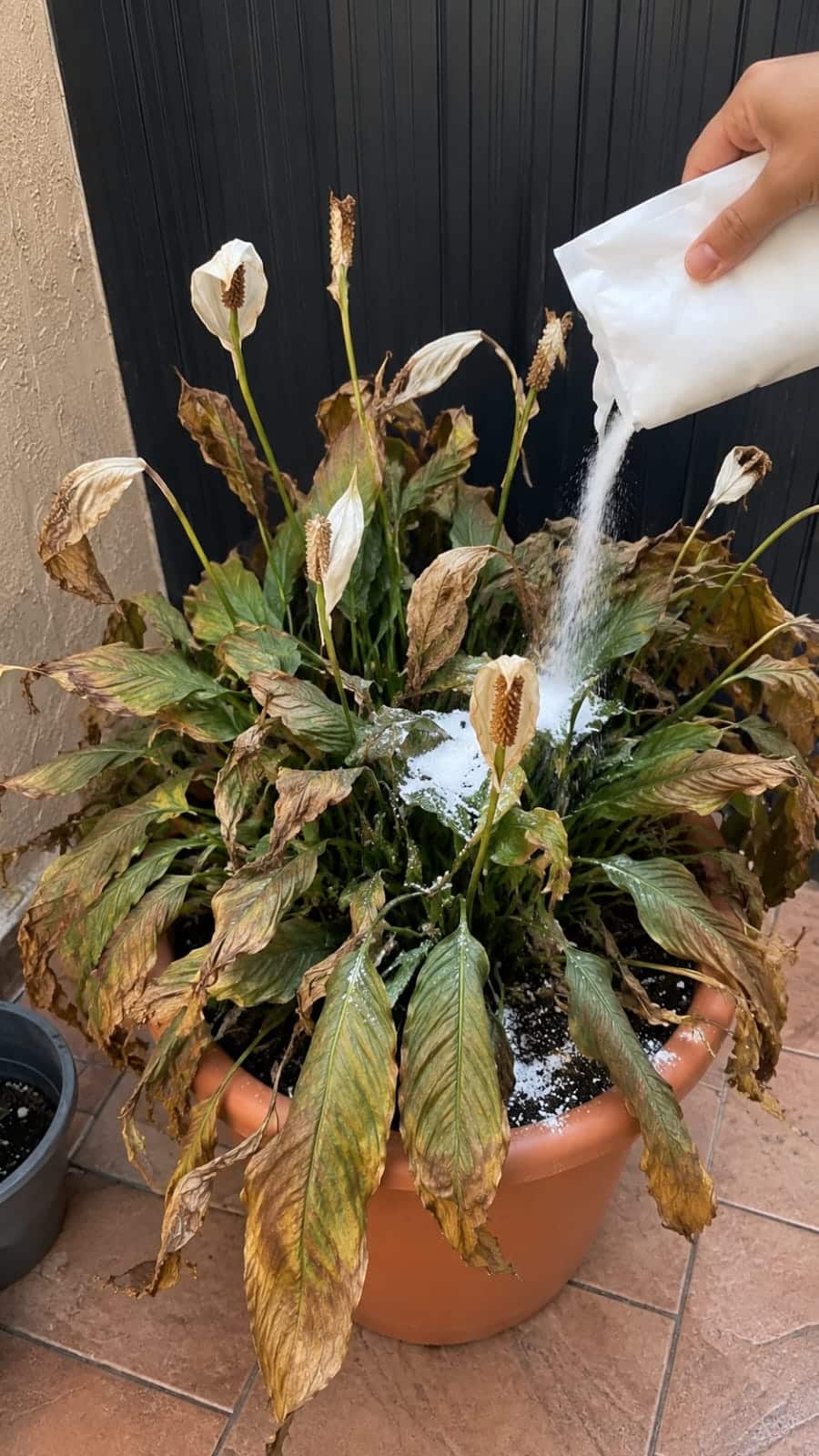
A peace lily needs a pot that drains properly. The plant in the image is in a large container, and large pots can stay wet too long if the root ball is smaller than the pot. Using a pot with drainage for peace lilies is non-negotiable.
A good pot should:
- Have drainage holes
- Use a removable saucer
- Be only slightly larger than the root ball
- Not trap water at the bottom
- Allow excess water to drain fully
If the pot is too large, repot into a better size after root inspection.
Best Light for Peace Lily Recovery – Bright Indirect Light
Peace lilies need bright indirect light to recover. Outdoor patios can be risky if the plant receives direct sun, strong heat, or drying wind. Providing optimal light for peace lily recovery accelerates healing.
Best recovery location:
- Bright shade
- Indoor window with filtered light
- Morning light only
- No hot afternoon sun
- No cold drafts
- No strong wind
Direct sun can burn peace lily leaves quickly, especially when the plant is already weak.
Best Watering Routine After Damage – Consistent Moisture
After cleaning and pruning, watering must be careful. Too much water can kill damaged roots. Too little water can finish off a dehydrated plant. This peace lily watering after stress guide will help.
Use this rule:
Water when the top inch of soil feels slightly dry.
When watering:
- Use room-temperature water
- Water evenly around the soil
- Let excess drain out
- Empty the saucer
- Do not leave the pot sitting in water
- Do not water again until the top inch dries
If the roots were recently pruned for rot, water even more carefully.
Should You Fertilize a Damaged Peace Lily? – No, Wait for Recovery
No. Do not fertilize a severely damaged peace lily right away. A weak plant with stressed roots cannot handle strong nutrients. This when to fertilize peace lilies after damage guide is important.
Wait until:
- New green growth appears
- The plant stops declining
- Roots are firm
- Soil smells fresh
- Watering is stable
Then use a diluted balanced houseplant fertilizer at half strength during active growth. The best natural fertilizer for peace lilies is always gentle and occasional.
Why Heavy Powder Can Cause Fertilizer Burn – Understanding Mineral Buildup
Many white powders contain salts or minerals. When too much mineral material builds up in soil, roots struggle to absorb water. The plant may look thirsty even when soil is moist. This peace lily fertilizer burn symptoms guide will help you recognize the signs.
Fertilizer burn signs include:
- Brown leaf tips
- Yellowing leaves
- Crispy edges
- White crust on soil
- Stunted growth
- Drooping after feeding
If fertilizer burn is suspected, remove the powder and consider repotting into fresh soil.
Can You Use Baking Soda for Peace Lily Fungus? – Safer Alternatives
Baking soda is not ideal for peace lilies. It may be used in some outdoor garden fungus sprays, but indoor peace lilies are sensitive. Dumping baking soda onto the soil is unsafe. For natural fungus treatment for peace lilies, try safer methods first.
For fungus problems, safer first steps include:
- Remove dead leaves
- Improve airflow
- Avoid wetting leaves
- Water correctly
- Remove moldy top soil
- Repot if soil is sour
- Use a plant-safe fungicide only when needed
Do not treat every fungal issue with kitchen powders.
Can You Use Cinnamon Instead? – Limited Use for Peace Lilies
Cinnamon is sometimes used lightly on soil surface or fresh cuts, but even cinnamon should be used carefully. It is not fertilizer and will not fix root rot or burned leaves. This cinnamon for peace lily soil tip is only for minor surface mold.
If using cinnamon, use only a tiny pinch on a small problem area. Do not dump large amounts over the plant.
Can You Use Eggshell Powder Instead? – Slow Calcium Source
Eggshell powder is slow-release and mild only when clean, dry, and finely ground. It does not rescue a dying peace lily quickly. A heavy layer can create soil crust and residue. For organic calcium for peace lilies, use a tiny amount mixed into fresh soil.
Use eggshell powder only in tiny amounts, mixed into fresh soil, not poured over damaged leaves.
Can You Use Rice Water After This? – Wait for Stabilization
Do not use rice water immediately after heavy powder stress. The plant first needs cleanup and stabilization. Rice water can add starch and moisture, which may worsen fungus gnats or mold if the soil is already stressed. This rice water for peace lily recovery should only be used on healthy plants.
Wait until the plant has recovered and the soil is healthy before using any mild homemade tonic.
Emergency Rescue Plan for the Plant in the Image – Step-by-Step
This is the safest step-by-step plan for a peace lily that looks like the one in the image. Follow this peace lily emergency rescue protocol for the best chance of recovery.
Step 1: Remove the Powder
Brush powder off leaves, flowers, stems, and soil. Scoop away heavily coated top soil.
Step 2: Prune Dead Growth
Cut off fully brown leaves and dead flowers near the base using clean scissors.
Step 3: Check Soil Moisture
If dry, water carefully. If wet, do not water.
Step 4: Inspect Roots
If the plant is severely limp or the soil smells bad, remove it from the pot and check roots.
Step 5: Repot if Needed
Use fresh airy soil and a pot with drainage holes.
Step 6: Move to Bright Indirect Light
Keep it away from direct sun, wind, and extreme heat.
Step 7: Wait
Do not keep adding treatments. Let the plant recover slowly.
Peace Lily Recovery Timeline – What to Expect
| Time | What to Expect | What to Do |
|---|---|---|
| Day 1 | Powder removed, dead leaves pruned | Check soil and roots |
| Days 2–3 | Some leaves may remain limp | Keep in bright indirect light |
| Week 1 | Plant should stop declining | Water only when needed |
| Weeks 2–4 | New growth may begin if roots are healthy | Avoid fertilizer |
| Month 2 | Plant may look cleaner and stronger | Resume gentle care |
Common Mistakes to Avoid – Peace Lily Care Don’ts
- Dumping unknown white powder onto the plant
- Watering powder into the crown
- Fertilizing a dying peace lily
- Ignoring root rot
- Leaving dead flowers and leaves attached
- Keeping the plant in direct sun
- Letting the saucer stay full
- Using salt, baking soda, or strong powders as fertilizer
- Using multiple homemade remedies at once
- Expecting brown leaves to turn green again
Safe Alternatives to White Powder – Gentle Plant Care
Instead of dumping powder on a damaged peace lily, use safer recovery methods. These best natural peace lily care practices are more reliable.
- Fresh airy soil
- Clean pruning
- Correct watering
- Bright indirect light
- Root inspection
- Better drainage
- Leaf cleaning with plain water
- Humidity support
- Gentle fertilizing only after recovery
These steps are more reliable than dramatic powder treatments.
How to Prevent Peace Lily Damage in the Future – Long-Term Care Routine
Once the plant recovers, prevention is easier than rescue. This peace lily care guide for beginners will keep your plant healthy.
Peace Lily Care Routine
- Keep in bright indirect light
- Water when the top inch of soil dries
- Use a pot with drainage holes
- Empty the saucer after watering
- Trim old flowers and yellow leaves
- Wipe leaves with a damp cloth
- Use diluted fertilizer only during active growth
- Avoid harsh sun and cold drafts
- Repot when soil becomes compacted
- Do not use unknown powders
Quick Safety Table for White Powders – What to Avoid
| Powder Type | Safe for Peace Lily? | Best Action |
|---|---|---|
| Salt | No | Remove and repot |
| Baking soda | Risky | Remove from soil and leaves |
| Powder fertilizer | Only diluted properly | Never dump on weak plants |
| Eggshell powder | Only tiny amounts | Use clean fine powder sparingly |
| Diatomaceous earth | Limited use | Thin dry soil layer only |
| Lime | Risky indoors | Avoid unless soil pH is tested |
| Unknown powder | No | Remove immediately |
Short Caption for This Trick
“Do not pour heavy white powder over a damaged peace lily. Remove the powder, prune dead leaves, check the soil and roots, and recover the plant with fresh airflow, bright indirect light, correct watering, and well-draining soil. A weak peace lily needs gentle care, not strong unknown powder – follow this natural peace lily revival guide for the best results.”
Frequently Asked Questions – Peace Lily White Powder and Brown Leaves
Is white powder good for peace lilies?
Not unless you know exactly what it is and how to use it. Unknown white powder can burn roots, damage leaves, and change soil balance.
Can baking soda save a peace lily?
No. Baking soda is not a peace lily fertilizer and can stress roots if used heavily.
Can I put salt on a peace lily?
No. Salt can severely damage or kill houseplants.
Can eggshell powder help peace lilies?
Clean fine eggshell powder can provide slow calcium support, but it should be used in tiny amounts. It will not quickly rescue a dying plant.
Why are my peace lily leaves turning brown?
Common causes include underwatering, overwatering, root rot, direct sun, fertilizer burn, mineral buildup, or low humidity.
Should I cut off brown peace lily leaves?
Yes, remove leaves that are fully brown, crispy, or collapsing. Keep partly green leaves until the plant stabilizes.
Can brown peace lily leaves turn green again?
No. Brown tissue is dead. The goal is to grow healthy new leaves.
What should I do if I put too much powder on my plant?
Remove the powder from leaves and soil, scoop off the top soil layer, and repot if the powder was salt, strong fertilizer, baking soda, or an unknown chemical.
Should I fertilize a dying peace lily?
No. Fertilizer can burn stressed roots. Wait until the plant shows new healthy growth.
What is the best way to revive a peace lily?
Check soil moisture, inspect roots, prune dead leaves, improve drainage, move to bright indirect light, and water correctly.
Final Thoughts – Gentle Care Always Wins
The image shows an important lesson in houseplant care: a weak peace lily should not be covered with heavy white powder. Whether the powder is baking soda, salt, fertilizer, lime, eggshell powder, or something else, a strong application can make a stressed plant worse. This natural peace lily revival guide emphasizes gentle, consistent care over harsh treatments.
The safest first step is always diagnosis. Check the soil. Inspect the roots. Remove dead leaves. Improve drainage. Move the plant into bright indirect light. Water only when the plant needs it. If powder has already been added, remove as much as possible and replace the top layer of soil. Following this complete peace lily care guide will keep your plant thriving for years.
Peace lilies can recover when their roots are still alive, but they need gentle, consistent care. They do not need dramatic treatments, heavy powders, or multiple homemade remedies at once. With clean pruning, fresh soil, proper watering, and patience, a damaged peace lily can produce new green growth and slowly return to health. These professional indoor plant care secrets will help you succeed with even the most stressed peace lily.