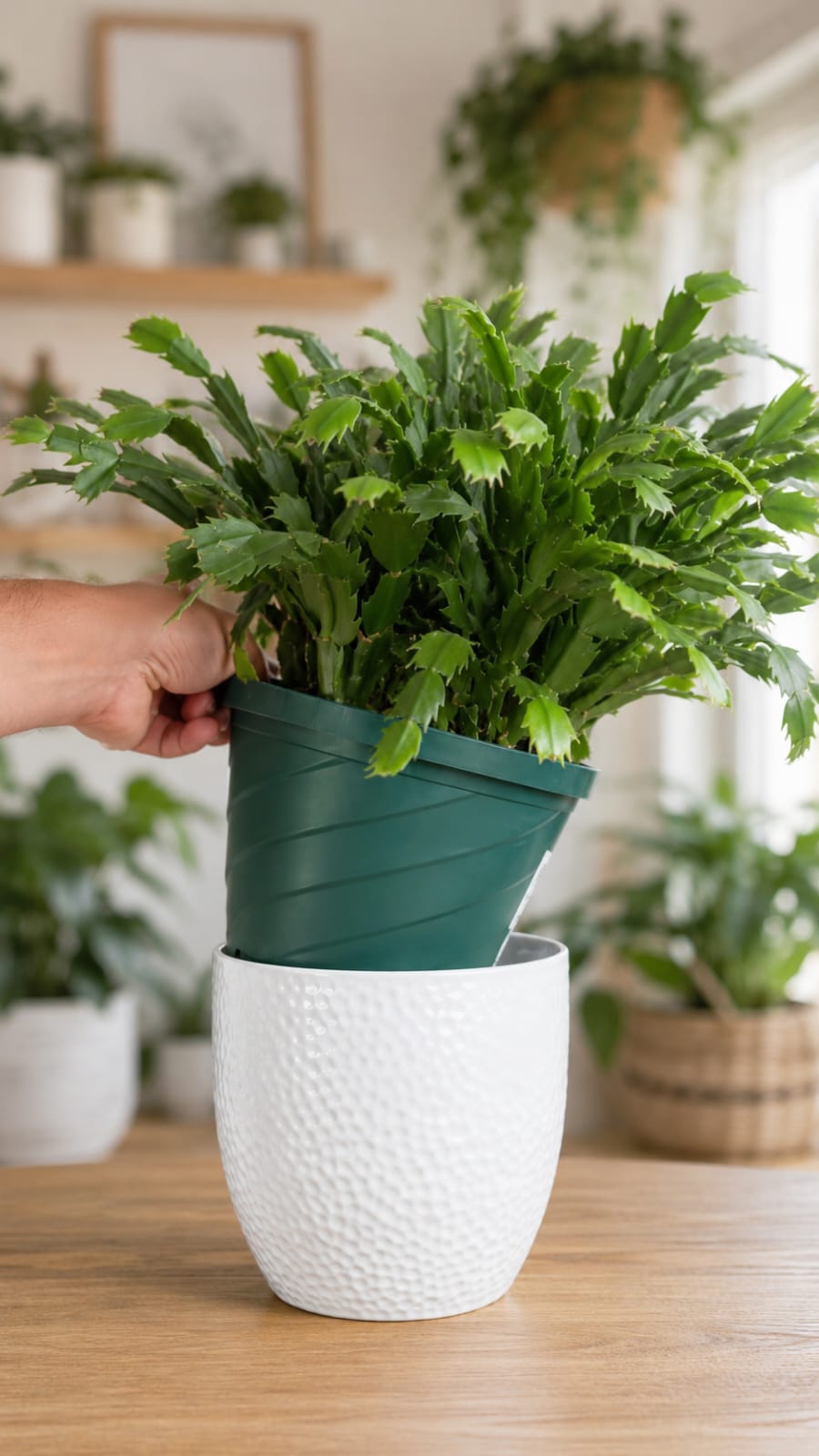
Christmas cactus is one of the most loved holiday houseplants because it brings color, softness, and charm into the home when many other plants are resting. Its arching green stems, segmented leaves, and bright winter flowers make it perfect for windowsills, shelves, side tables, hanging baskets, and cozy holiday displays. When a Christmas cactus is healthy, it can bloom year after year, sometimes becoming a treasured family plant that lasts for decades.
One simple care routine that often helps Christmas cactus grow better is improving the soil with a light white amendment. Many plant owners call this the “white powder” or “white soil sprinkle” trick, but the safest and most useful material is usually perlite or a similar airy mineral amendment. Perlite is the small white material often found in potting soil. It helps loosen the mix, improve drainage, and keep oxygen around the roots.
This is especially important for Christmas cactus because it is not a desert cactus. It is a tropical forest cactus. It likes moisture more than a desert cactus, but it still does not like heavy, compact, soggy soil. The best soil should stay lightly moist while allowing extra water to drain away. That balance is what keeps roots healthy and helps the plant store enough energy for strong growth and beautiful blooms.
Why Christmas Cactus Needs Special Soil
Christmas cactus grows differently from many common cactus plants. A desert cactus is built for hot dry conditions and gritty soil. Christmas cactus naturally grows in tropical forest environments, often in organic material around tree branches and shaded areas. This means it likes more moisture than desert cactus, but it also needs excellent airflow around its roots.
In a pot, the roots can suffer if the soil becomes too dense. Heavy soil holds water for too long. When roots sit in wet soil without enough oxygen, they can rot. Root rot often begins quietly, then the plant starts showing limp stems, yellowing sections, weak growth, or sudden bud drop.
Adding perlite or another light amendment helps create air spaces inside the soil. These air spaces make it easier for water to move through the pot and for roots to breathe.
What Is the White Powder?
The safest “white powder” for Christmas cactus care is not kitchen flour, sugar, salt, baking soda, or random household powder. Those can harm the soil, attract pests, burn roots, or cause unwanted buildup.
For soil improvement, the white material should be something made for plants, such as:
- Perlite
- Pumice dust or small pumice pieces
- Fine orchid mix particles
- Small mineral grit
- Light cactus soil amendment
Perlite is the most common choice. It is lightweight, white, and easy to mix into potting soil. It does not feed the plant directly, but it improves the soil structure. Better soil structure supports healthier roots, and healthier roots support stronger growth and better blooming.
Why Perlite Helps Christmas Cactus
Perlite helps Christmas cactus because it keeps the soil from becoming compact. When potting soil becomes dense, water drains slowly and oxygen cannot move easily. The roots become stressed, and the plant may stop growing well.
Perlite creates tiny air pockets. These pockets allow water to drain while still letting the soil hold some moisture. That is the perfect balance for Christmas cactus.
Perlite also helps prevent the soil from becoming heavy over time. Indoor potting mixes can break down after months or years. When that happens, the soil becomes flat, muddy, and slow to dry. Mixing in perlite refreshes the texture and gives roots a healthier environment.
When to Add Perlite
The best time to add perlite is when repotting or refreshing the soil. Spring or early summer is usually best because the plant is entering active growth. Repotting during active growth gives the plant time to recover before the bloom season.
You can also add a small amount to the top layer if the soil looks compact, but perlite works best when mixed throughout the potting mix. Sprinkling it only on the surface may help a little, but it does not fully improve drainage around the roots.
If the plant is currently blooming, avoid major repotting unless there is an emergency. Christmas cactus can drop buds when disturbed during the bloom period.
Signs Your Christmas Cactus Soil Needs Improvement
Your Christmas cactus may need a better soil mix if you notice these signs:
- Soil stays wet for many days
- Water sits on the surface before draining
- The pot feels heavy long after watering
- Stems look limp even when soil is wet
- Roots smell sour or rotten
- Fungus gnats appear often
- Growth slows during the active season
- The plant drops buds easily
- The soil looks compact and hard
If the soil is too wet and heavy, adding fresh airy mix can make a big difference. Christmas cactus needs moisture, but it does not want to live in swampy soil.
The Best Soil Mix for Christmas Cactus
A good Christmas cactus soil mix should be light, airy, and moisture-retentive without staying soggy. Regular potting soil can work if amended properly.
A simple mix can include:
- 2 parts indoor potting mix
- 1 part perlite
- 1 part orchid bark or fine bark
This gives the plant organic material, drainage, and air. The potting mix holds moisture, the perlite improves drainage, and the bark creates structure. This combination works well for many indoor Christmas cactus plants.
If your home is very dry, you can add a little coco coir to help hold moisture. If your home is humid or cool, use extra perlite or bark to prevent the mix from staying wet too long.
How to Refresh the Soil Without Fully Repotting
If your Christmas cactus is healthy but the top soil looks compact, you can refresh the surface gently.
Use a small spoon or your fingers to remove the top inch of old soil. Be careful not to damage the shallow roots. Add a fresh mix of potting soil, perlite, and fine bark. Gently settle it around the base of the plant.
This method improves the surface layer and makes the pot look cleaner. It is not a full replacement for repotting, but it can help between repotting sessions.
How to Repot a Christmas Cactus
Repotting should be gentle. Christmas cactus roots are not huge, and the plant often prefers being slightly snug in its pot.
Follow these steps:
- Choose a pot with drainage holes.
- Prepare a light mix with perlite and bark.
- Remove the plant carefully from the old pot.
- Shake off loose old soil gently.
- Inspect roots for rot or damage.
- Trim only dead or mushy roots with clean scissors.
- Place the plant in the new pot at the same depth.
- Fill around roots with fresh mix.
- Water lightly after settling, unless roots were heavily trimmed.
Do not bury the base too deeply. The plant should sit at the same level it was growing before.
Choosing the Right Pot
Christmas cactus blooms best when slightly root-bound, so do not move it into a huge pot. A pot only one size larger is enough when repotting.
A pot that is too large holds extra soil, and extra soil holds extra water. This can lead to root rot, especially indoors.
Always use a pot with drainage holes. Decorative cover pots are fine, but the inner pot should drain freely. After watering, empty any water that collects in the outer container.
Watering After Adding Perlite
After improving the soil with perlite, water should drain more easily. This means your watering routine may change slightly. The soil may dry faster than before, especially if the mix is very airy.
Water when the top inch of soil feels dry. Do not let the plant stay bone dry for too long during active growth, but do not water while the soil is still wet.
When watering, water thoroughly until excess drains from the bottom. Then empty the saucer. This encourages even moisture through the root ball without leaving the plant sitting in water.
How Often to Water Christmas Cactus
There is no perfect calendar for watering. The right timing depends on light, temperature, humidity, pot size, soil mix, and season.
During active growth, the plant may need water more often. During cooler months, it may need less. When buds are forming, avoid letting the soil dry completely for too long, because dryness can cause bud drop.
The best method is to check the soil with your finger. If the top inch is dry and the pot feels lighter, water. If the soil is still damp, wait.
Signs of Underwatering
A thirsty Christmas cactus may look wrinkled, limp, or slightly shriveled. The segments may lose their firm feel. The soil will usually be dry, and the pot may feel light.
If the plant is underwatered, water thoroughly and let the excess drain. The stems may firm up again after a little time.
Do not panic and overwater repeatedly. Give the plant time to recover after one good watering.
Signs of Overwatering
Overwatering can look similar to underwatering, which confuses many plant owners. A Christmas cactus with rotten roots may also look limp, but the soil will be wet.
Signs of overwatering include:
- Limp stems with wet soil
- Yellowing segments
- Soft mushy base
- Bad smell from the pot
- Black or brown root rot
- Fungus gnats
- Soil staying wet too long
If the soil is wet and the plant is limp, do not add more water. Check the roots and improve drainage.
Light for Strong Growth
Christmas cactus grows best in bright indirect light. It can handle gentle morning sun, but harsh direct afternoon sun can burn the segments.
A bright window with filtered light is ideal. East-facing windows often work well. South or west windows may need a sheer curtain or some distance from the glass.
Low light can cause weak growth and fewer blooms. Bright indirect light helps the plant build energy for flowering.
How Light Affects Blooming
Christmas cactus needs a seasonal signal to bloom. Shorter days and cooler nights help trigger bud formation. If the plant receives too much artificial light at night, it may not bloom as well.
In fall, place the plant where it receives bright daytime light and longer darkness at night. Avoid placing it near lamps that stay on late.
Once buds appear, keep the plant in stable conditions. Sudden changes in light, temperature, or watering can cause buds to drop.
Temperature for Bud Formation
Christmas cactus often blooms better when nights become slightly cooler. A cool but not cold room can help encourage buds.
Avoid freezing temperatures and cold drafts. The plant is tropical and can be damaged by cold. Keep it away from open winter windows and heating vents.
Stable conditions are important once buds form. Moving the plant too often can stress it.
Humidity Needs
Christmas cactus appreciates moderate humidity. Dry indoor air can cause shriveled segments or bud drop, especially in winter when heaters are running.
You can improve humidity by grouping plants together, using a pebble tray, or placing the plant in a bright bathroom or kitchen. A small humidifier can also help.
Do not mist heavily if airflow is poor. Wet stems that stay damp too long may develop spots.
Feeding Christmas Cactus
Perlite improves soil structure, but it does not feed the plant. Christmas cactus still benefits from light fertilizer during active growth.
Use a balanced houseplant fertilizer at half strength once a month in spring and summer. Stop or reduce feeding in fall when you want the plant to prepare for blooming.
Do not fertilize a stressed plant, a plant with root rot, or a plant that has just been heavily repotted.
Should You Add White Powder on Top Every Week?
No. Perlite should not be treated like a weekly fertilizer. It is a soil amendment. Once it is mixed into the soil, it stays there and continues improving drainage.
Sprinkling more and more on top every week is not necessary. Too much loose material on the surface can make watering harder to judge and may create a messy layer.
Use perlite when preparing soil or refreshing the potting mix, not as a constant topping.
What Not to Use as White Powder
Some white powders are harmful to plants. Avoid using:
- Salt
- Sugar
- Flour
- Baking soda
- Laundry powder
- Powdered medicine
- Cleaning powder
- Random household chemicals
Only use plant-safe amendments. Perlite, pumice, and similar materials are suitable. Unknown powders can burn roots or damage soil health.
Cleaning Christmas Cactus Stems
Christmas cactus stems can collect dust over time. Dust reduces light absorption and makes the plant look dull.
Wipe the segments gently with a soft damp cloth or rinse the plant lightly in the sink. Let it drain well afterward.
Clean stems look brighter and help the plant use light more efficiently.
Pruning for a Fuller Shape
Pruning helps Christmas cactus become fuller and more balanced. After blooming, you can remove a few segments from long uneven stems. Twist gently at the joint instead of cutting through the middle of a segment.
Pruned pieces can be propagated. Let the cuttings dry for a day or two, then place them in a light soil mix.
Pruning after bloom season encourages branching and creates a fuller plant over time.
Propagating Christmas Cactus
Christmas cactus is easy to propagate from stem segments. Take a cutting with two to four segments. Let it rest for a day or two so the end can dry slightly.
Plant the cutting in a light mix with perlite. Keep the soil lightly moist, not wet. Place it in bright indirect light.
Roots should form with time. Once new growth appears, the cutting is becoming established.
Continue to Page 2
Continue to page 2 for more details about this article and the key points many readers miss on the first page.