Watering Spider Plants Correctly – Moisture Balance
White water tricks only work if the basic watering routine is right. Spider plants like evenly moist soil, but they should not sit in water. This spider plant watering guide for beginners will prevent common problems.
Watering Rules
- Water when the top inch of soil feels dry
- Water thoroughly until excess drains out
- Empty the saucer
- Water less in winter
- Do not let the crown stay wet
- Do not keep soil constantly soggy
If the leaves fold, fade, or develop brown tips, check both watering and water quality.
Why Spider Plant Leaf Tips Turn Brown – Common Causes and Fixes
Brown tips are very common on spider plants. They can happen even on otherwise healthy plants. Understanding why spider plant leaves turn brown helps you prevent it.
Common causes include:
- Dry air
- Tap water minerals
- Fluoride sensitivity
- Too much fertilizer
- Underwatering
- Overwatering
- Salt buildup in soil
- Harsh sun exposure
If your spider plant has brown tips, do not immediately add more fertilizer. First check water quality, soil moisture, drainage, and light.
Can Rice Water Cause Brown Tips? – Yes, If Overused
Yes, if used too often or too strong. Rice water contains starch, and too much buildup can affect the soil. Spider plants are sensitive to excess minerals and salts, so moderation is important. For safe spider plant feeding, always dilute and use sparingly.
Use rice water only occasionally, and flush the soil with plain water from time to time to prevent buildup.
How to Flush Spider Plant Soil – Removing Mineral Buildup
If you use homemade tonics or fertilizer, occasional flushing helps clean the soil. This spider plant soil maintenance tip keeps roots healthy.
Flushing Steps
- Take the plant to a sink or outdoor area.
- Run clean water slowly through the soil.
- Let it drain fully from the bottom.
- Empty the saucer completely.
- Let the soil dry normally afterward.
Do this only when the plant is healthy and the pot has drainage holes.
When Not to Use White Water – Spider Plant Health Warnings
Do not use rice water or milk water on every spider plant problem. Sometimes plain water and root care are safer. Knowing when to avoid homemade plant tonics is as important as knowing how to use them.
Avoid white water if:
- The soil is already wet
- The pot has no drainage holes
- The plant has root rot
- The soil smells sour
- Fungus gnats are present
- The plant is cold or dormant
- The mixture smells fermented
- The leaves are yellowing from overwatering
- The plant was recently repotted
- The roots are damaged
If the plant is struggling, inspect the roots and soil before adding any homemade plant tonic.
How to Make Spider Plants Grow More Babies – Production Tips
Many people grow spider plants because they want the hanging baby plants. Rice water may support general growth, but baby production depends mostly on maturity, light, root health, and seasonal conditions. This how to get spider plant babies fast guide will help you succeed.
To Encourage More Babies
- Give bright indirect light
- Keep the plant slightly root-bound
- Water consistently
- Use light feeding during spring and summer
- Avoid oversized pots
- Keep the plant warm
- Trim dead leaves
- Do not overfertilize
A slightly snug spider plant often produces more runners than one placed in a very large pot.
How to Propagate Spider Plant Babies – Easy Propagation Methods
The small trailing plantlets can be rooted easily. This spider plant propagation guide for beginners will give you unlimited new plants.
Soil Propagation Method
- Choose a baby plant with small root nubs.
- Place a small pot of moist soil near the mother plant.
- Pin the baby onto the soil while still attached.
- Wait until roots form.
- Cut the runner once the baby is rooted.
Water Propagation Method
- Cut a baby plant from the runner.
- Place the base in clean water.
- Keep leaves above the water.
- Change water every few days.
- Plant in soil when roots are 1 to 2 inches long.
Once the baby is established, you can use very diluted rice water occasionally.
White Water Spider Plant Care Table – Quick Reference
| Care Step | Best Method | Why It Matters |
|---|---|---|
| White liquid | Diluted rice water | Gentle support for soil |
| Dilution | 1 part rice water to 2–3 parts water | Prevents starch buildup |
| Frequency | Every 3–4 weeks | Avoids overuse |
| Soil | Light, well-draining mix | Protects roots |
| Light | Bright indirect | Encourages fuller growth |
| Watering | When top inch dries | Prevents rot |
| Pot | Drainage holes | Stops standing water |
Simple Step-by-Step White Water Routine
- Rinse ½ cup rice in 2 cups water.
- Let it soak for 10 to 20 minutes.
- Strain out all rice grains.
- Dilute the cloudy water with 2 to 3 parts clean water.
- Check that the spider plant soil is slightly dry on top.
- Pour slowly around the soil edge.
- Avoid soaking the crown.
- Let excess drain fully.
- Use plain water for the next several waterings.
Common Mistakes to Avoid – Spider Plant Care Don’ts
- Using undiluted rice water
- Using fermented rice water indoors
- Applying white water every week
- Pouring into already wet soil
- Letting the pot sit in the saucer water
- Using milk water too strong
- Ignoring brown tips and adding more tonic
- Using heavy soil without drainage
- Keeping spider plants in harsh direct sun
- Expecting instant baby plants from one treatment
Short Caption for This Trick
“To make white water for spider plants, rinse ½ cup uncooked rice in 2 cups water, let it sit for 10 to 20 minutes, strain well, then dilute 1 part rice water with 2 to 3 parts clean water. Pour around the soil only when the top inch is dry, let the pot drain fully, and use it once every 3 to 4 weeks – this natural spider plant tonic encourages fuller growth and more baby plants.”
Frequently Asked Questions – Spider Plant Rice Water Q&A
Is rice water good for spider plants?
Diluted rice water can be used occasionally as a gentle homemade tonic for spider plants, but it should not replace proper watering, light, drainage, or fertilizer.
How do you make white water for spider plants?
Rinse or soak uncooked rice in water, strain out the rice, dilute the cloudy water, and apply it lightly to the soil.
How often should I use rice water on spider plants?
Use it once every 3 to 4 weeks during active growth. Use plain water between treatments.
Can I use milk water on spider plants?
Very diluted milk water can be used rarely, but it can sour and attract pests. Rice water is usually safer for indoor spider plants.
Can rice water make spider plants grow more babies?
It may support overall growth, but baby plant production depends mostly on bright indirect light, plant maturity, root health, and a slightly snug pot.
Can rice water cause fungus gnats?
Yes, if used too strong or too often. Always dilute it, strain it, and avoid using it in soggy soil.
Should I spray rice water on spider plant leaves?
No. Apply it to the soil only. Spraying starchy water on leaves can leave residue.
Why does my spider plant have brown tips?
Brown tips can come from tap water minerals, dry air, overfertilizing, underwatering, overwatering, or too much direct sun.
Can I use leftover cooked rice water?
Only if it is unsalted, unseasoned, thin, cooled, strained, and diluted. Thick cooking water is not ideal for indoor pots.
What is the best light for spider plants?
Bright indirect light is best. It helps spider plants grow fuller leaves and produce more baby plantlets.
Final Thoughts – Gentle Care Always Wins
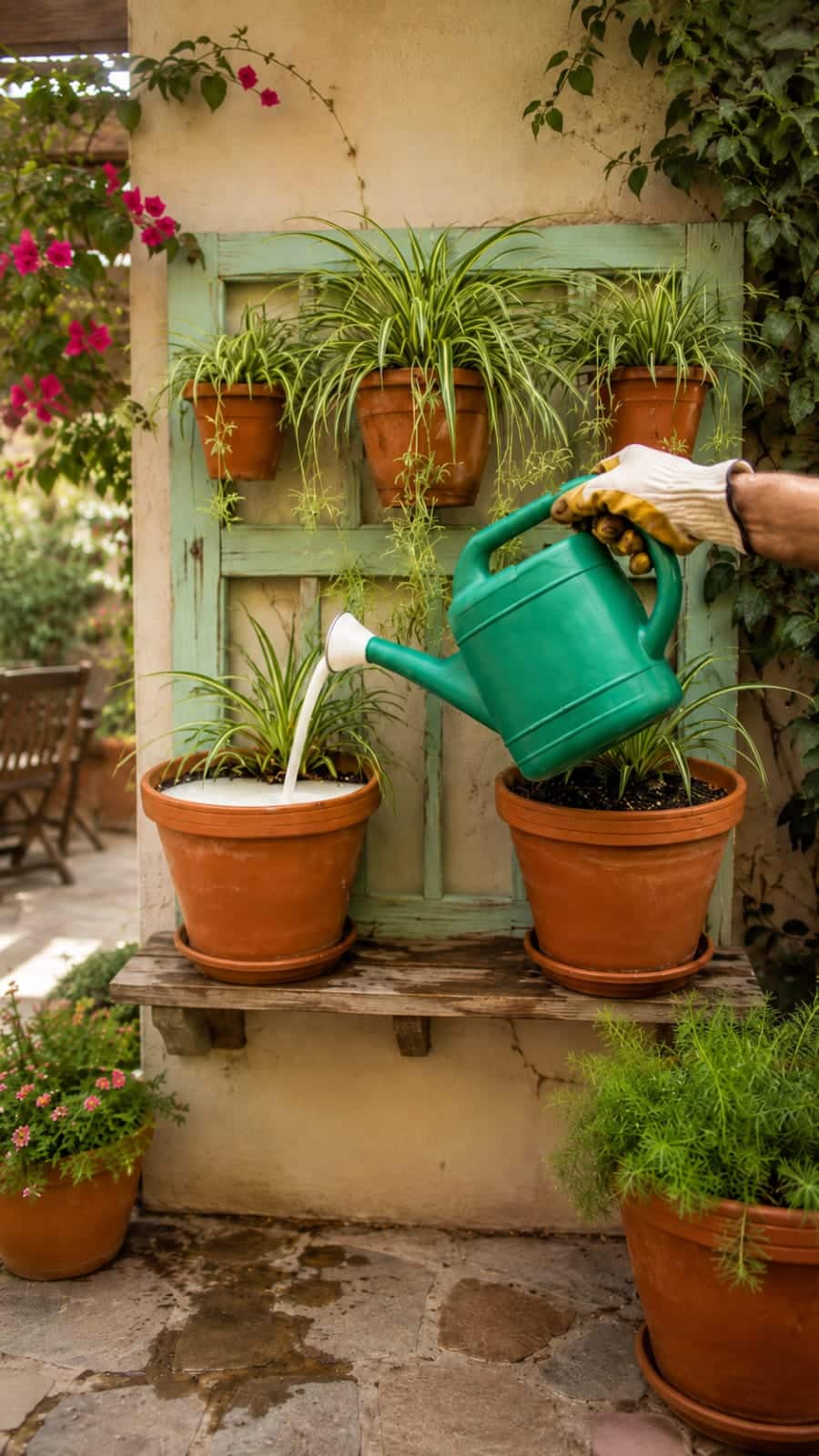
The white water trick shown in the image can be a gentle way to support spider plant growth when used correctly. The safest version is diluted rice water made from rinsing or soaking uncooked rice. It should be fresh, strained, diluted, and applied only occasionally. This natural spider plant care method has helped many indoor gardeners achieve stunning results.
Spider plants do not need heavy feeding to look beautiful. They need bright indirect light, well-draining soil, a pot with drainage holes, steady moisture, and occasional gentle nutrition during active growth. Too much homemade tonic can cause more harm than good, especially if the soil stays wet or the mixture is too strong. Following this complete spider plant care guide will keep your plant thriving.
Used wisely, diluted rice water may help refresh the soil, support roots, and encourage fuller growth. Combined with proper care, your spider plant can become lush, trailing, and full of baby plants that are easy to propagate and share. These professional indoor plant care secrets will help you succeed with even the most demanding spider plant varieties.