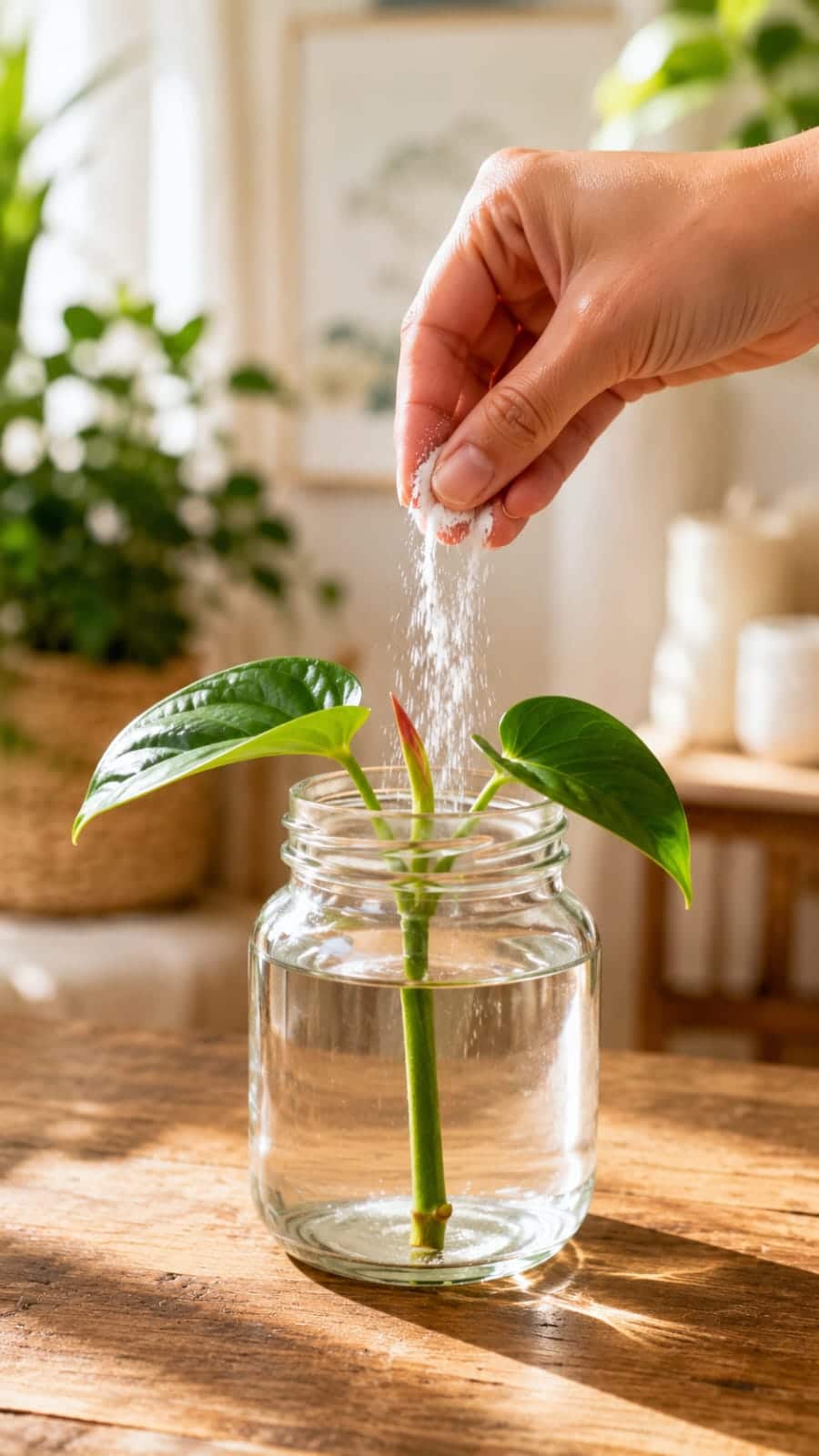
How Much Water Should Be in the Jar?
The water should cover the node and any emerging root points, but not the leaves. For a small cutting, 1–2 inches of water may be enough. As water evaporates, top it up, but also do full water changes regularly. If water level drops below the node, the cutting may dry out. If too high, the stem may rot.
How Often to Change the Water
Change water every 3 to 7 days. In warm rooms or bright light, change more often. Fresh water provides oxygen and removes bacteria. When changing, rinse the jar if it feels slippery (biofilm). Rinse roots gently if slimy, but don’t scrub. Trim any brown, mushy roots with clean scissors. Never let the cutting sit in foul‑smelling water.
Bright Indirect Light: The Real Growth Driver
Bright indirect light is one of the biggest secrets behind successful anthurium propagation. Direct sun can heat the water and scorch leaves. Too little light slows rooting. A good location: near an east‑facing window, a bright north window, or a few feet away from a south/west window with filtered light. If your home is dark, a grow light can help.
Temperature and Humidity
Anthuriums prefer warmth (comfortable indoor temperatures). Avoid cold windowsills in winter, cold drafts, or air conditioning blasts. Humidity helps – use a humidifier or place near other plants. Warmth, humidity, and bright indirect light create a supportive environment for root growth.
What About the White Powder in the Image?
The image shows white powder being sprinkled near the jar. This may represent cinnamon, rice powder, eggshell powder, sugar, or rooting hormone. Most kitchen powders are not ideal for water jars. They can cloud the water, feed bacteria, coat the stem, and encourage rot. Cinnamon is sometimes used on cut surfaces, but it should not be dumped into water. Sugar should never be added – it feeds bacteria and causes slime.
For anthurium water propagation, clean water is usually better than mystery powder.
✅ Safe rooting support: A proper rooting hormone designed for cuttings (used sparingly) or nothing at all. Most anthurium cuttings root in clean water without additives.
Why You Should Avoid Sugar, Rice Water & Thick Tonics
Sugar, rice water, and starchy liquids can cloud the jar, lower oxygen, and promote rot. Anthurium cuttings need oxygen‑rich clean water, not sweet or starchy water. Plain water is safest.
How Long Does Anthurium Take to Root in Water?
Several weeks. Some cuttings show root bumps within 2–4 weeks. Others take longer, especially in cool or low‑light conditions. As long as the cutting stays firm and water stays clean, be patient. New roots often appear as pale bumps before they extend.
Signs of Healthy Water Roots vs. Root Trouble
Healthy: Pale, white, cream, or light green roots; firm; water mostly clear; no smell.
Trouble: Brown, black, mushy, slimy, or foul‑smelling roots; cloudy water; stem base softening. Act immediately – change water, trim rotted parts, clean jar.
How to Prevent Stem Rot
- Keep only the node and root area underwater – leaves above water
- Change water regularly
- Use a clean jar
- Avoid direct hot sun
- No sugar or powders
- Start with a healthy cutting and clean tools
Should You Grow Anthurium in Water Forever?
Anthuriums can live in water for a while, but plain water does not provide long‑term nutrition. For best results, use water propagation as a rooting stage, then move the cutting to a chunky anthurium potting mix or a semi‑hydro setup (leca with nutrients). If you keep it in water long term, you must add a very diluted nutrient solution and change water frequently.
When to Transfer Anthurium from Water to Soil
Transfer when the cutting has several healthy roots a few inches long. Do not wait until the jar is packed with long water roots – moderate roots transition easier. Use a small pot with drainage holes and a chunky, airy mix (orchid bark, perlite, coco coir, a little potting soil). Keep the soil lightly moist after transfer, not soggy. Place in bright indirect light. Do not fertilize immediately.
How to Transition Without Shock
Moving from water to soil can cause stress. Use a small pot, keep the mix evenly moist (but not wet) for the first 1–2 weeks, maintain high humidity, and avoid direct sun. Some older water roots may die back, but new soil‑adapted roots should grow if the plant is healthy.
Can Anthurium Grow in Leca After Water Rooting?
Yes. Rinse leca thoroughly, place the rooted cutting in a container with leca and a small water reservoir below the roots. Use a diluted hydroponic nutrient solution. Refresh the reservoir regularly. Leca can work well but requires a different maintenance routine than soil.
Decorating with Anthurium Water Jars
A clear jar with a fresh green cutting looks beautiful in minimalist spaces, bathrooms with windows, or kitchen counters. To keep it attractive: change water regularly, remove debris, avoid direct sun (which causes algae). If algae becomes a problem, use an amber glass jar or a decorative cover that still allows you to check roots. Healthy, clear water is both pretty and functional.
What If Algae Grows in the Jar?
Algae appears as green film on glass or roots, usually from too much light. Clean the jar, rinse roots gently, change water more often, and move the jar away from direct sun. Do not add fertilizer – nutrients fuel algae.
Can You Propagate Anthurium from a Single Leaf?
No. A single leaf without a node will not grow into a new plant. It may stay green for a while in water, but it will not produce roots or shoots. Always use a stem cutting with a node.
Common Mistakes with the Water Jar Method
- Using a cutting without a node
- Not changing water often enough
- Adding powders, sugar, or rice water
- Placing jar in direct hot sun
- Submerging too much stem or leaves
- Moving water roots into dense soil (use chunky mix)
- Forgetting that clean water and oxygen matter most
How to Rescue a Rotting Anthurium Cutting
Remove it from the jar. Cut away all black, mushy, or smelly tissue with clean scissors. If a healthy node remains, clean the jar, fill with fresh water, and place only the healthy part back in water. Keep in bright indirect light and change water every 2–3 days during recovery. If the node itself is rotten, the cutting is likely lost.
Can Anthurium Bloom from Water Propagation?
Not immediately. A newly rooted cutting needs time to establish roots, leaves, and energy. Flowering comes later when the plant is mature, well‑fed, and has bright indirect light. Focus first on healthy roots and leaves.
Frequently Asked Questions
Can anthurium cuttings root in water?
Yes, if the cutting includes a node. A leaf alone will not grow.
How often should I change the water?
Every 3–7 days, or sooner if cloudy or smelly.
Should I add white powder to the water?
Usually no. Clean water is safer. Powders can cloud the water and encourage rot.
Can I use rooting hormone?
Yes, but follow label instructions. Many anthurium cuttings root without it.
Why are my water roots turning brown?
If firm, they may be aging. If mushy or smelly, trim and refresh water.
When should I move the cutting to soil?
When it has several healthy roots a few inches long. Use a chunky, airy mix.
Can anthurium live in water forever?
It can for a while, but long‑term requires nutrients. Most growers move to soil or semi‑hydro.
Final Thoughts
The anthurium water jar method is beautiful, simple, and satisfying. It lets you watch roots develop in clear water while adding elegant green decor to your home. But the most important part is not the jar, the powder, or the visual effect. The roots matter most.
To succeed: start with a healthy cutting that has a node. Use a clean jar and fresh water. Keep only the node and roots underwater. Place in bright indirect light. Change water regularly. Avoid sugar, starch, and unnecessary powders. Once roots are strong, move the cutting to a chunky anthurium mix or semi‑hydro setup.
With patience and clean care, your anthurium will grow fresh green leaves, strong roots, and eventually become a stunning tropical plant that fits beautifully into your home decor.
© High‑RPM Anthurium Propagation Guide – All rights reserved.