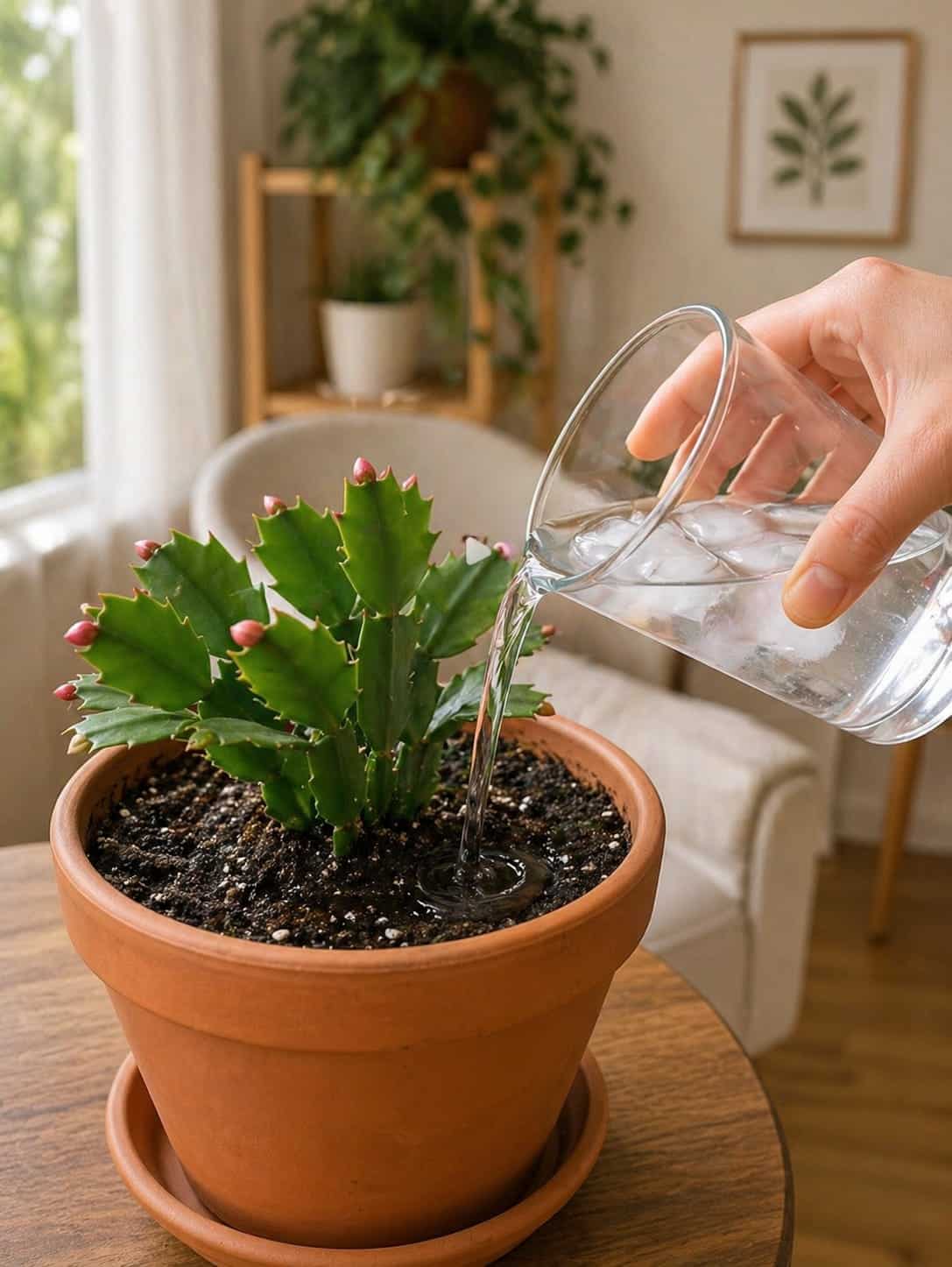
What Actually Triggers Blooms (Beyond Watering)
Watering matters immensely, but blooming depends on a combination of factors. If watering is off, the plant will not respond to these signals properly.
- Longer Nights (Short Day Length)
Christmas cacti are short‑day plants. They need 12–14 hours of uninterrupted darkness each night for 6–8 weeks in early fall to set buds. Even a few minutes of light from a lamp or TV can reset the cycle.
- Cooler Night Temperatures
Nighttime temperatures between 50–65°F (10–18°C) strongly encourage bud formation. Move your plant near a cool window or to a cool room, but avoid freezing.
- Proper Watering Rhythm (As Described Above)
Slightly reduced watering during the bud‑prep period (early fall) combined with consistent moisture during budding and blooming is critical.
- Bright Indirect Light During the Day
The plant needs energy from light to support flowers. An east window or a south/west window with a sheer curtain is ideal.
- No Moving Once Buds Appear
Once you see tiny pink or red buds, do not move the plant. Do not rotate it. Do not expose it to drafts or heat vents. Stability prevents bud drop.
When all these factors align, your Christmas cactus will reward you with weeks of beautiful blooms.
Signs Your Watering Is Finally Right
When you get the watering routine correct, you will notice these positive signs:
· Firm, plump segments – No wrinkling, no softness.
· Strong, upright growth – Stems stand tall, not drooping.
· Buds forming at leaf tips – Tiny red, pink, or green bumps appear in late fall.
· Flowers opening instead of dropping – Blooms last for several days each, and the overall display lasts weeks.
· Healthy, green color – No yellowing or browning.
That is when your Christmas cactus starts living up to its name 🎄✨
A Complete Year‑Round Watering and Care Schedule
Use this monthly guide to keep your Christmas cactus healthy and blooming.
Spring (March – May) – Recovery & Growth
· Light: Bright indirect light.
· Water: When top inch of soil is dry (every 7–10 days). Water deeply.
· Fertilizer: Begin feeding every 2–4 weeks with half‑strength balanced fertilizer (20‑20‑20).
· Other: Prune back leggy segments. Repot if needed (every 2–3 years).
Summer (June – August) – Active Growth
· Light: Bright indirect light. Can move outdoors to shaded patio.
· Water: Water when top inch dries (1–2 times per week in hot weather). Do not overwater.
· Fertilizer: Continue feeding every 2–4 weeks.
· Other: Pinch back tips for fullness.
Early Fall (September – October) – Bloom Prep
· Light: Bright indirect light during the day.
· Darkness: 12–14 hours of complete darkness each night.
· Temperature: Cool nights (50–65°F / 10–18°C).
· Water: Reduce slightly. Let soil dry a bit more than usual. Do not let it wilt.
· Fertilizer: Stop feeding completely.
· Do not repot or move the plant.
Late Fall (November – December) – Budding & Blooming
· Light: Bright indirect light (no darkness treatment once buds are visible).
· Water: Keep soil lightly moist. Do not let it dry completely or stay soggy. Water when the top inch feels dry.
· Fertilizer: None.
· Temperature: Stable, avoid drafts and heat vents.
· Do not move the plant. Do not rotate.
Winter (January – February) – Rest Period
· Light: Still bright light, but days are shorter – consider a grow light.
· Water: Reduce watering significantly (once every 2–3 weeks).
· Fertilizer: None.
· Other: Remove spent flowers. Let the plant rest for 6–8 weeks.
Late Winter (February – March)
· Gradually increase watering as new growth appears.
· Resume fertilizing in spring.
Frequently Asked Questions (Christmas Cactus Watering)
How often should I water my Christmas cactus?
There is no fixed schedule. Water when the top inch of soil feels dry. In spring and summer, this is typically every 7–10 days. In fall and winter, every 10–14 days. Always check the soil first.
Can I use tap water?
Yes, but let it sit out overnight to allow chlorine to dissipate. If your tap water is highly chlorinated or very hard, use filtered or distilled water.
Why are my Christmas cactus buds falling off?
Bud drop is usually caused by inconsistent watering (too dry or too wet), sudden temperature changes, moving the plant, or low humidity. Check your watering routine first.
Should I water from the bottom or top?
Top watering is fine as long as you water thoroughly and let excess drain. Bottom watering (placing the pot in a tray of water for 15 minutes) works too. Both are fine.
Is misting helpful?
Light misting can increase humidity, but do not mist the flowers or buds. Misting is not a substitute for proper soil watering.
What type of pot is best?
Use a pot with drainage holes. Terracotta is excellent because it wicks away excess moisture. Plastic pots retain more moisture; adjust watering accordingly.
How do I know if I have root rot?
Signs: yellow or mushy segments, a foul smell from the soil, and the plant pulls up easily with no roots. If you suspect rot, unpot, trim rotten roots, and repot in fresh, dry soil.
Can I save an overwatered Christmas cactus?
Yes, if caught early. Stop watering immediately, unpot, remove rotten roots, and repot in fresh, dry mix. Do not water for 5–7 days. Then resume a correct watering routine.
Why This One Change Makes All the Difference
The most common watering mistake — keeping the soil constantly wet or letting it dry out too long — is the #1 reason Christmas cacti fail to bloom. When you learn to water based on the soil’s moisture level rather than a calendar date, you give the plant exactly what it needs to thrive. The roots stay healthy, the segments stay firm, and the energy that would go into survival instead goes into producing those magnificent flowers.
If you have been struggling to get your Christmas cactus to bloom, start with your watering can. Check the soil before every watering. Adjust for the seasons. Use room‑temperature water. And watch as your plant transforms from a green foliage plant into a cascading waterfall of holiday color.
Final Thoughts
That viral message is actually true in one way: most people really do water their plants wrong. But the fix is not fancy tricks or ice cubes. It is simple: let the soil guide you, keep moisture balanced, and avoid extremes. Do that, and your Christmas cactus will reward you with beautiful blooms year after year.
So the next time you reach for that watering can, remember: your Christmas cactus is not a desert cactus. It is a tropical plant that needs just the right rhythm. Master the watering, and you will master the blooms.
Have you been making this common watering mistake? Share your experience in the comments below. And if you found this guide helpful, save it for later or send it to a friend who wants a spectacular blooming Christmas cactus.
This article is for informational purposes only. Growing conditions vary. Always observe your plant and adjust care as needed. When in doubt, let the soil dry slightly rather than staying wet.