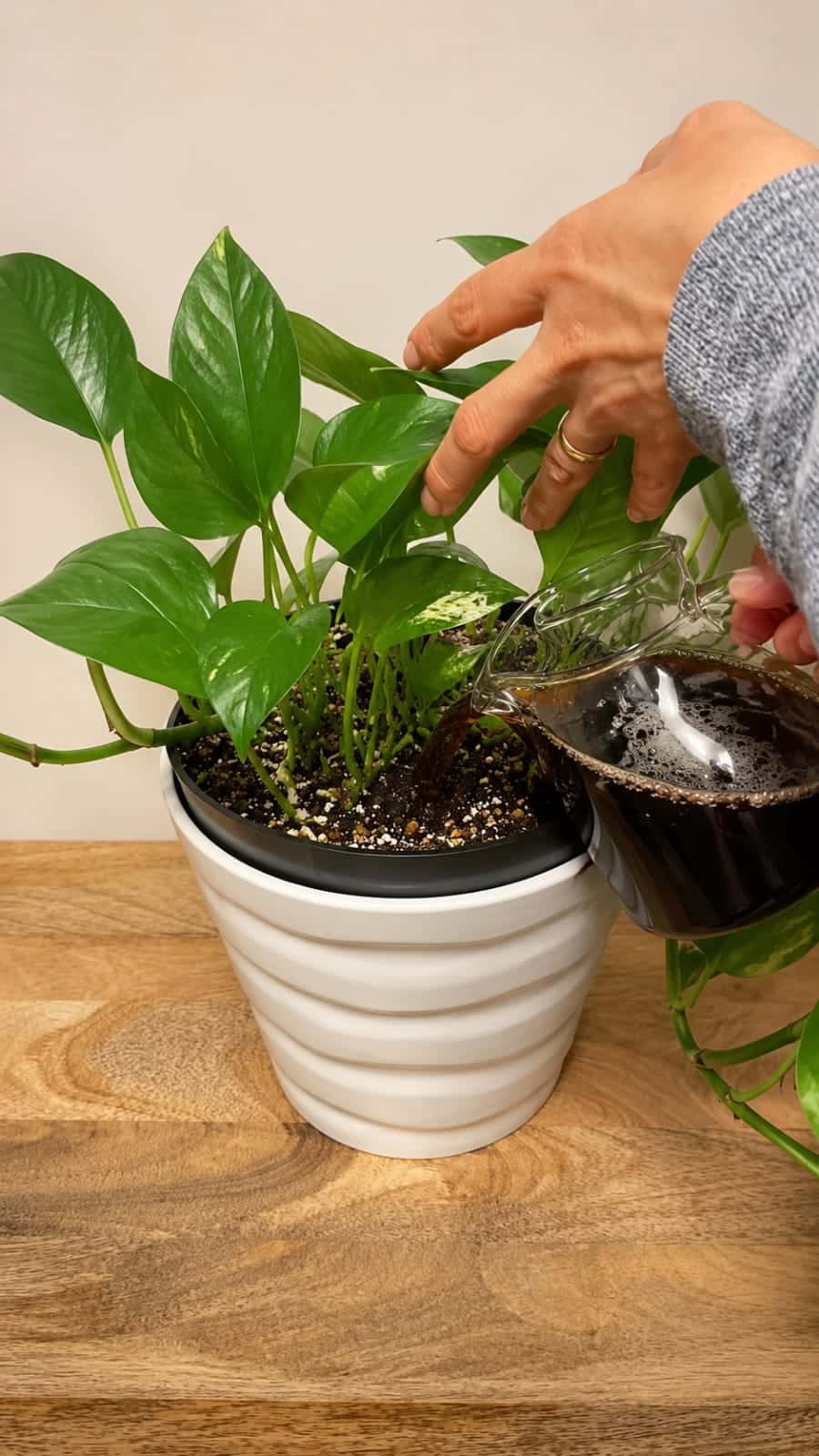
How Often Should You Feed Indoor Pothos?
Indoor pothos generally benefits from light feeding during active growth periods.
Most gardeners fertilize:
- Every 4 to 6 weeks during spring
- Every 4 to 6 weeks during summer
- Less frequently during winter
Overfeeding often causes more problems than underfeeding.
Signs Your Pothos Needs Better Care
Yellow Leaves
Often caused by overwatering or poor drainage.
Slow Growth
Usually linked to low light or nutrient deficiency.
Brown Leaf Tips
Can result from dry air, inconsistent watering, or mineral buildup.
Drooping Vines
Often caused by watering problems.
How to Make Pothos Grow Faster Naturally
The fastest-growing pothos plants usually receive:
- Bright indirect light
- Warm temperatures
- Balanced moisture
- Healthy humidity
- Occasional feeding
- Regular pruning
Combining these conditions matters far more than using any single miracle fertilizer.
Can Dark Homemade Fertilizer Cause Problems?
Yes if used incorrectly.
Potential issues include:
- Fungal growth
- Moldy soil
- Bad odors
- Fruit flies
- Fungus gnats
- Root rot
- Nutrient imbalance
This is why homemade fertilizers should always be used carefully and moderately indoors.
Indoor Plant Soil Matters More Than Most People Realize
Healthy pothos plants need airy fast-draining soil.
A good indoor potting mix may include:
- Potting soil
- Perlite
- Orchid bark
- Coconut coir
Dense compact soil traps moisture and suffocates roots.
Why Drainage Holes Are Essential
Decorative pots without drainage remain one of the biggest killers of indoor plants.
Drainage holes allow:
- Excess water removal
- Better oxygen flow
- Reduced root rot risk
- Healthier root systems
Can Homemade Fertilizers Improve Leaf Shine?
Healthy nutrition supports stronger leaf development, but glossy leaves also depend heavily on:
- Humidity
- Proper light
- Healthy roots
- Clean foliage
Dusty leaves block light absorption, so occasional gentle leaf cleaning helps pothos look vibrant.
Why Sustainable Gardening Keeps Growing
Modern indoor gardeners increasingly prefer:
- Natural plant care
- Waste reduction
- Eco-friendly lifestyles
- Organic gardening
- Affordable plant routines
Kitchen-based fertilizers fit perfectly into this movement.
Can You Store Homemade Fertilizer?
Fresh mixtures are usually safest.
If storing organic liquid fertilizer:
- Use sealed containers
- Keep refrigerated if necessary
- Avoid spoiled smells
- Never use moldy mixtures
The Truth About Fast Plant Growth
Healthy plant growth happens gradually.
Social media videos often compress weeks or months of growth into seconds, making results appear instant.
The healthiest pothos plants grow steadily through consistent long-term care.
Can Homemade Fertilizer Help Propagation?
Pothos cuttings propagated in water or soil may benefit from gentle nutrients once roots develop.
However, newly forming roots remain delicate, so mild diluted solutions work best.
How Humidity Affects Indoor Pothos
Pothos adapts well to normal household humidity, but moderate humidity often encourages:
- Larger leaves
- Faster growth
- Reduced leaf curling
- Better overall appearance
Should You Rotate Indoor Plants?
Yes.
Rotating pothos occasionally encourages even growth because plants naturally lean toward light sources.
How Pruning Creates Fuller Plants
Trimming long vines encourages branching and fuller growth.
Many gardeners propagate trimmed cuttings and place them back into the same pot for a denser appearance.
Can Overfeeding Harm Pothos?
Absolutely.
Too much fertilizer often causes:
- Brown edges
- Salt buildup
- Weak roots
- Yellowing leaves
- Soil imbalance
Gentle feeding works far better than aggressive fertilization.
Why Beginners Love Easy Plant Hacks
Simple gardening tricks create confidence.
When beginners see even small improvements after trying homemade plant care methods, they become more motivated to continue learning indoor gardening.
Can Homemade Fertilizer Work on Other Houseplants?
Many indoor gardeners use mild homemade fertilizers on:
- Philodendrons
- Monsteras
- Snake plants
- Peace lilies
- Spider plants
- ZZ plants
Still, every plant reacts differently, so moderation remains important.
The Emotional Side of Indoor Gardening
Indoor plants transform homes emotionally as much as visually.
Green foliage creates calming environments, improves room aesthetics, and adds life to indoor spaces. Caring for plants also builds routines that many people find relaxing and therapeutic.
Why Natural Gardening Content Performs So Well Online
Plant videos combine several highly engaging elements:
- Visual transformations
- Low-cost DIY solutions
- Relaxing aesthetics
- Eco-friendly living
- Easy tutorials
- Instant emotional appeal
That combination makes indoor gardening one of the strongest evergreen content niches online.
Final Thoughts
The dark homemade fertilizer shown in viral pothos videos represents a growing trend toward sustainable indoor gardening and natural plant care. While homemade plant boosters are not magic solutions, they can become enjoyable additions to balanced indoor gardening routines when used carefully.
The healthiest pothos plants still depend mostly on proper light, watering, drainage, and consistent care. Homemade fertilizers work best as gentle supplements that support healthy soil and steady growth over time.
For many indoor gardeners, the real joy comes from experimenting with simple natural methods, watching leaves unfurl slowly, and creating greener healthier living spaces without relying entirely on synthetic products.
Sometimes the smallest gardening habits lead to the most satisfying results. A little patience, balanced care, and a thriving pothos plant can completely change the feeling of a room.