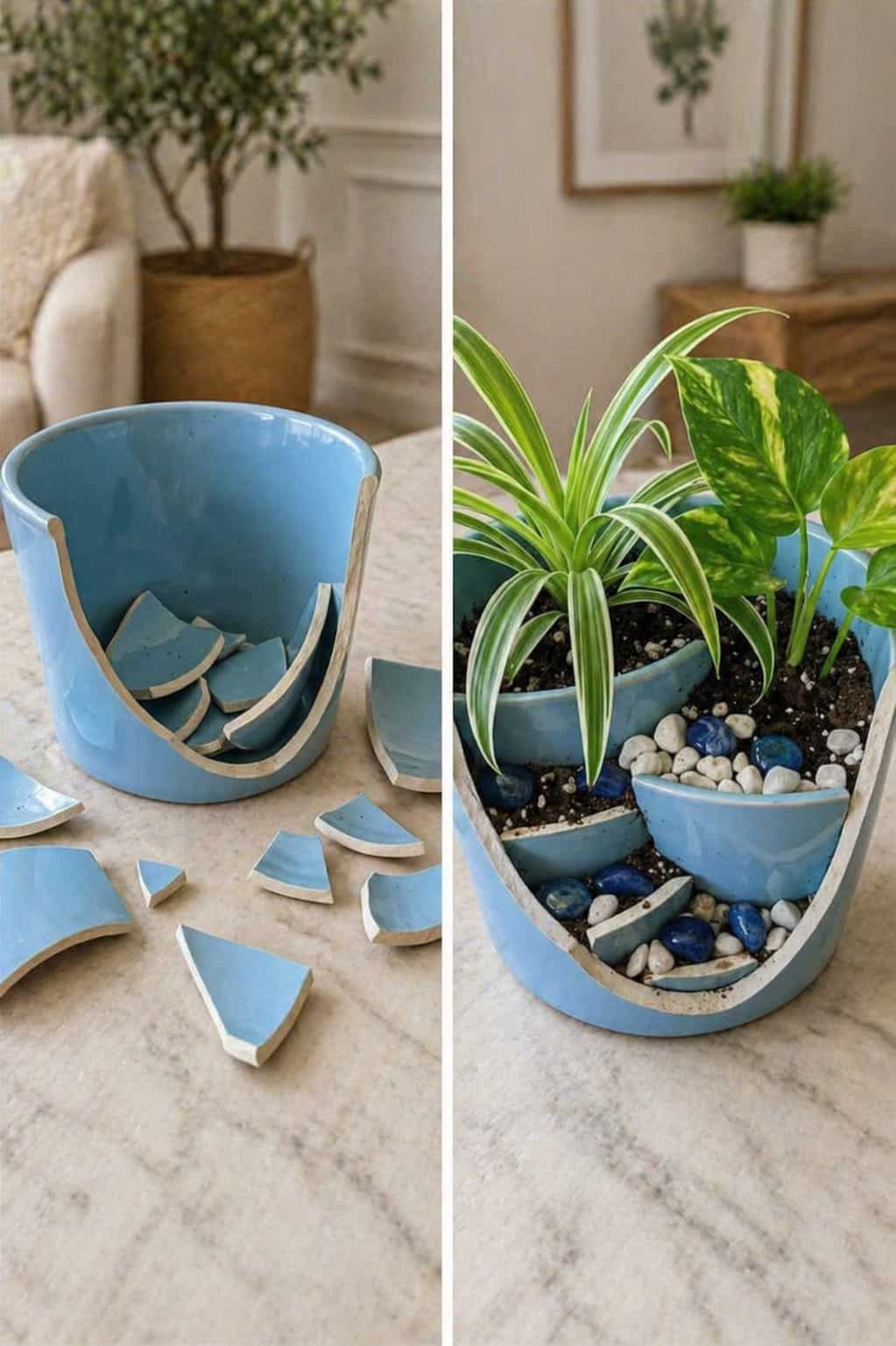
How to Arrange the Layers Beautifully
The most attractive broken-pot gardens have depth. Instead of placing all plants at one level, use the shards to create a visual journey. The eye should move from the front stones to the middle plants to the taller back foliage.
Place trailing plants near the front edge so they can soften the broken opening. Place upright plants in the back. Put colorful stones or ceramic pieces where you want attention. Use curved shards to guide the viewer’s eye through the design.
Try not to make the arrangement too symmetrical. A natural micro-garden often looks better when one side is slightly taller or fuller than the other. Broken pottery already has an organic shape, so let the design feel natural rather than perfectly measured.
How This Planter Helps Create a Humidity Pocket
When plants are grouped closely in a layered planter, they create a tiny microclimate. Moisture released by one plant can linger around the leaves of nearby plants. Soil moisture and decorative stones can also help the immediate area feel less dry.
This is especially useful in winter, when heating systems pull moisture from the air. Plants like pothos, spider plants, fittonia, ferns, and small philodendrons often appreciate being near other plants instead of sitting alone.
To improve the humidity effect, avoid placing the planter near heat vents or radiators. You can also place the broken-pot garden on a wide tray filled with pebbles and a little water, making sure the pot itself does not sit directly in water. As the water evaporates, it slightly increases moisture around the planter.
This creates a gentle, plant-friendly environment without making the soil soggy.
Watering a Broken-Pot Micro-Garden
Watering is the most important care step. Because the planter has layers, some areas may dry faster than others. The top tier may dry quickly, while the lower pocket may stay moist longer. Always check the soil with your finger before watering.
For tropical plants, water when the top inch of soil begins to feel dry. For succulents, wait until the soil is fully dry. Use a small watering can with a narrow spout so you can direct water exactly where it is needed.
Avoid pouring water heavily over the broken front. This can wash soil out of the layers. Water slowly around the base of each plant. If the planter has drainage, let excess water escape and empty the tray. If there is no drainage, water very sparingly.
Overwatering is the fastest way to ruin a micro-garden. Because several plants are sharing one container, soggy soil can cause root rot quickly. It is better to water lightly and check often than to flood the planter.
Best Soil for a Tropical Broken-Pot Garden
For a tropical indoor arrangement, use a light potting mix that holds some moisture but drains well. A good blend can include regular indoor potting mix, perlite, orchid bark, and a small amount of coco coir.
A simple mix could be:
- 2 parts indoor potting mix
- 1 part perlite
- 1 part orchid bark
- A small handful of coco coir if your home is very dry
This gives roots oxygen while still holding enough moisture for plants like pothos, spider plants, and peperomia. Avoid dense soil that becomes muddy. Dense soil is especially risky in a layered container because water may collect in hidden pockets.
Best Soil for a Succulent Broken-Pot Garden
If you prefer a dry, desert-style broken-pot garden, use cactus or succulent mix. Add extra pumice, perlite, or coarse sand for drainage. Succulents need much drier conditions than tropical plants.
A simple succulent mix could be:
- 2 parts cactus mix
- 1 part pumice or perlite
- 1 part coarse sand or small gravel
Do not add moisture-loving moss to a succulent arrangement. It may look pretty, but it can hold too much water near the plant bases. Use dry decorative gravel instead.
Choosing Plants with Similar Needs
The biggest design mistake is mixing plants only because they look good together. A micro-garden must also make sense from a care perspective. Plants in the same container share soil and watering, so they should enjoy similar conditions.
Good tropical combinations include spider plant with pothos, pothos with philodendron, fittonia with small ferns, or peperomia with syngonium. Good succulent combinations include haworthia with gasteria, echeveria with sedum, or jade cuttings with small crassula varieties.
Avoid mixing cactus with ferns, succulents with peace lilies, or moisture-loving plants with plants that need long dry periods. This usually leads to one plant thriving while another suffers.
How to Prevent Soil from Falling Out
Because the front of the pot is broken open, soil may spill if the layers are not built correctly. Use larger curved shards as retaining walls. Place them slightly angled backward so the soil presses against them instead of pushing them forward.
Decorative stones can also help hold the surface in place. Add pebbles along the front edge to weigh down loose soil. If needed, use a small piece of mesh behind a broken opening before adding soil. This helps keep soil inside while still allowing water to pass.
Do not overfill the planter. Leave a little space below the broken edge so water and soil do not spill out every time you care for the plants.
Can You Glue the Broken Pieces?
You can glue some pieces if you want a more permanent structure, but it is not always necessary. Many broken-pot gardens are simply arranged with soil and stones holding the pieces in place. This allows you to adjust the layout later.
If you do use glue, choose a waterproof, non-toxic adhesive suitable for ceramics. Let it cure fully before adding plants or soil. Do not use glue in areas where roots will be pressed directly against wet adhesive unless the product is safe after curing.
For most beginners, it is easier to build the layers without glue. The design remains flexible, and you can rebuild it if needed.
Decorating the Finished Micro-Garden
Decoration is where this project becomes personal. You can keep it simple with white stones and green plants, or you can make it whimsical with tiny garden accents. Broken pottery itself is already decorative, so you do not need much.
Ideas include:
- White pebbles for a clean modern look
- Blue stones to match a blue ceramic pot
- Small river rocks for a natural garden feel
- Preserved moss for a woodland look
- Tiny figurines for a fairy garden style
- Mini plant labels for an organized display
- Small pieces of driftwood or bark
Do not overcrowd the surface. Plants need room to grow, and the design should not feel cluttered. A few well-placed accents are better than too many decorations.
How to Care for the Planter Long-Term
A broken-pot micro-garden needs regular but gentle care. Check soil moisture every few days at first while you learn how quickly it dries. Remove yellow leaves promptly. Trim plants if they grow too large for the arrangement. Rotate the planter occasionally so all sides receive light.
If one plant begins to outgrow the others, prune it or replace it. Micro-gardens are living arrangements, so they change over time. That is part of their charm. You can refresh them seasonally by adding new cuttings, stones, or small accents.
Every few months, check whether soil has settled. Add a little fresh mix if needed. If the arrangement becomes crowded after a year or two, remove the plants, divide them, and rebuild the design.
Common Problems and How to Fix Them
Plants Are Wilting
Wilting may mean the soil is too dry, but it can also mean roots are too wet and damaged. Check the soil before watering. If it is dry, water lightly. If it is wet and plants are wilting, improve drainage and consider removing affected plants.
Soil Is Falling Out
Add a stronger front shard, more pebbles, or a small piece of mesh behind the broken opening. Water more slowly to avoid washing soil forward.
Mold Appears
Mold usually means too much moisture, poor airflow, or too much organic material. Remove the moldy surface layer, reduce watering, and move the planter to a brighter, better-ventilated spot.
Leaves Have Brown Tips
Brown tips may come from dry air, inconsistent watering, or mineral buildup. Increase local humidity by grouping plants, avoid heat vents, and water consistently.
One Plant Is Taking Over
Trim it back or replace it with a slower-growing plant. Pothos and spider plants can grow quickly in good conditions, so regular pruning may be needed.
Why This Project Looks So Beautiful
The beauty of a broken-pot micro-garden comes from contrast. The broken ceramic looks rough and imperfect, while the plants look fresh and alive. The hard edges of the shards contrast with soft leaves. The layered structure creates depth. The stones add texture. Together, these elements make the arrangement feel like a miniature world.
It also tells a story. A perfect pot is just a pot, but a broken pot that has been transformed feels meaningful. It shows creativity, resourcefulness, and care. Instead of throwing away something damaged, you gave it a second life.
This is why broken-planter gardens are so appealing. They are not just plant arrangements. They are small acts of repair and imagination.
Best Places to Display a Broken-Pot Micro-Garden
Display the finished planter where it can be seen and appreciated. A dining table, coffee table, windowsill, console table, desk, or plant shelf can work well. Choose a spot with bright indirect light and stable temperature.
Avoid placing it where it can easily be bumped again. Also avoid areas near heaters, fireplaces, or cold drafts. The planter may look sturdy, but because it is already broken, it should be handled gently.
If the pot has a rough bottom or broken edges, place it on a tray, saucer, or protective mat to prevent scratching furniture.
Can You Make This with Outdoor Plants?
Yes, broken-pot gardens are also popular outdoors. They can be made with succulents, herbs, alpine plants, or small annuals. Outdoor versions usually dry faster and may need different soil depending on climate.
For indoor winter plant care, however, tropical mini-gardens are especially useful because they bring greenery and humidity into the home. Outdoor versions are more exposed to rain, wind, and temperature changes, so drainage becomes even more important.
Can You Use Plastic Broken Pots?
You can use broken plastic pots, but ceramic works better for this style. Ceramic shards are heavier, more attractive, and better at creating stable tiers. Plastic pieces may bend, look less natural, or fail to hold soil in the same way.
However, if you have a cracked plastic pot, you can still turn it into a creative planter by cutting it into a shape and using stones, moss, or decorative edging. The principle is the same: use the broken container as structure rather than waste.
How to Make the Project Look Expensive
To make a broken planter garden look high-end, keep the color palette simple. Use one or two plant colors, matching stones, and clean layers. Avoid too many random decorations. Let the broken ceramic be the main feature.
For example, a blue broken pot looks beautiful with white pebbles, blue glass stones, and green variegated plants. A terracotta broken pot looks elegant with succulents, tan gravel, and small river rocks. A white broken pot looks modern with dark soil, green foliage, and black or gray stones.
The more intentional the color choices, the more professional the final arrangement will look.
Why This Is a Great Upcycling Project
Upcycling means turning something unwanted or damaged into something useful and beautiful. A broken planter is perfect for this. Instead of buying a new container and throwing away the old one, you reuse the pieces creatively.
This reduces waste and gives your home a unique item that cannot be bought exactly the same way. Every broken-pot garden is different because every break pattern is different. Your planter becomes one of a kind.
For plant lovers, this is especially satisfying. It combines gardening, design, sustainability, and emotional attachment. If the pot was a favorite, you do not have to say goodbye to it. You can turn it into something even more special.
Frequently Asked Questions
Can I really reuse a broken ceramic planter?
Yes. If the main shell is stable and the sharp edges are handled safely, a broken ceramic planter can become a beautiful layered micro-garden.
Do I need drainage holes?
Drainage holes are strongly recommended. If the pot has no drainage, water very carefully and use plants that tolerate slightly controlled moisture. Avoid overwatering.
What plants work best?
Small plants with similar needs work best. Spider plants, pothos, peperomia, fittonia, small ferns, haworthia, and other compact plants are good choices depending on the style.
Can I mix succulents and tropical plants?
It is better not to mix them in the same small planter because they need different watering routines. Choose one plant style and build around it.
Will grouping plants increase humidity?
Grouping plants can slightly increase local humidity around the foliage. It will not replace a humidifier, but it can help create a more comfortable microclimate.
How do I keep soil from falling out?
Use large ceramic shards as retaining walls, angle them backward, add pebbles along the front, and water slowly.
Are broken ceramic edges dangerous?
They can be sharp. Wear gloves while building and cover or bury sharp edges with soil, stones, or moss.
Can I glue the pieces together?
Yes, but use a waterproof ceramic-safe adhesive and let it cure fully. Many designs can also be built without glue.
How often should I water the finished planter?
Water when the soil moisture matches the needs of the plants you used. Tropical plants need more consistent moisture than succulents. Always check before watering.
Can I rebuild the planter later?
Yes. One of the best parts of this project is that you can refresh or rebuild it as plants grow.
Final Thoughts
A broken planter does not have to be the end of a favorite pot. With a little imagination, those jagged ceramic pieces can become the foundation for a beautiful layered indoor micro-garden. What first looked like an accident can become a creative plant display full of texture, depth, and life.
This project is especially useful during winter, when indoor heating dries the air and houseplants often need a little extra support. By grouping small plants together in a tiered arrangement, you can create a gentle humidity pocket while also making a stunning decorative piece for your home.
The key is to build carefully. Handle sharp edges safely, use plants with similar care needs, choose the right soil, water slowly, and keep the planter in bright indirect light. Let the broken pieces guide the design. Their curves and edges are what make the arrangement unique.
Instead of sweeping up the broken pot and forgetting it, you can turn it into something better than before. A layered broken-planter garden is not just a clever plant hack. It is a reminder that beautiful things can come from accidents, and that even broken pieces can become the start of a new little garden.