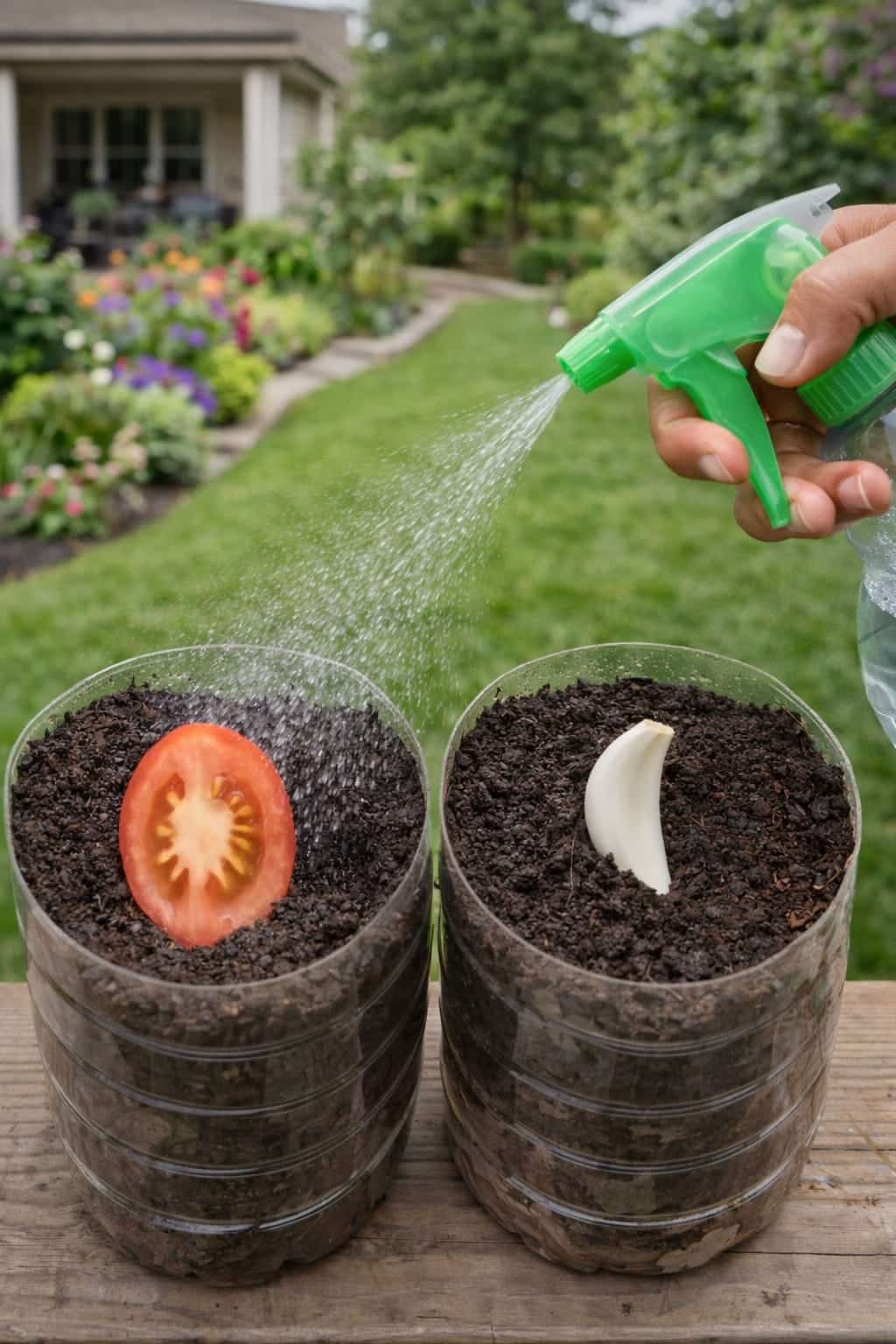
Step‑by‑Step: Growing Tomatoes from Seed (Indoor Start)
For the most control, start tomatoes indoors 6–8 weeks before your last frost date.
Materials:
· Tomato seeds (choose varieties suited to your climate)
· Seed starting mix (light, sterile)
· Small pots or seed trays
· Grow light or sunny window
· Heat mat (optional but helpful)
Steps:
Fill pots with moist seed starting mix.
Plant seeds ¼ inch deep. Cover lightly with mix.
Water gently (use a spray bottle to avoid disturbing seeds).
Cover with plastic wrap to retain humidity (remove once sprouted).
Place in warm location (70–80°F / 21–27°C).
Provide light immediately after sprouting – 14–16 hours daily under a grow light.
Thin seedlings to one per pot when they have two true leaves.
Transplant outdoors after danger of frost, when soil is warm.
Once outside, harden off seedlings by exposing them to outdoor conditions gradually over 5–7 days.
Step‑by‑Step: Growing Garlic from Cloves
Garlic is best planted in fall (October–November) in most regions, or early spring in very cold climates.
Materials:
· Garlic bulbs (seed garlic from a nursery or farmers market)
· Garden bed or large pot with drainage
· Compost or balanced fertilizer
Steps:
Break bulbs into individual cloves just before planting. Leave the papery skin on.
Choose the largest cloves – they produce the biggest bulbs.
Prepare soil – Loosen to 8–10 inches deep, mix in compost.
Plant cloves pointed end up, 2 inches deep, 6 inches apart. Space rows 12 inches apart.
Water well after planting, then keep soil lightly moist (not wet).
Mulch with straw or shredded leaves (4–6 inches) to insulate over winter.
In spring, remove mulch once shoots appear.
Water weekly during dry spells.
Stop watering in early summer when lower leaves begin to brown.
Harvest when 3–4 lower leaves are brown but upper leaves are still green.
Cure harvested garlic by hanging bundles in a dry, shaded, airy spot for 3–4 weeks.
Why Homegrown Vegetables Feel Different
There is a real difference between buying produce and growing it yourself. When you grow tomatoes and garlic at home, you do not just get food. You get:
· The full story – You witnessed every stage.
· The anticipation – The waiting makes the harvest sweeter.
· The care – Your hands were in the soil.
· The progress – You watched the transformation.
· The satisfaction of harvest – No store can replicate that.
A tomato picked from your own plant tastes different because you watched it happen. Garlic feels more valuable because you waited for it. That is why even a small garden can feel so meaningful.
Common Mistakes Beginners Make (And How to Avoid Them)
If someone is trying this for the first time, a few mistakes are common. Here is how to avoid them.
For Tomatoes:
· Planting too early – Cold soil stunts growth. Wait until soil temperature is at least 60°F (15°C).
· Overcrowding – Give each plant at least 18–24 inches of space. Good airflow prevents disease.
· Inconsistent watering – Fluctuations cause blossom end rot and cracked fruit. Water deeply and regularly.
· Too much nitrogen – Lush leaves but few tomatoes. Use a balanced fertilizer (like 5-10-10) once fruit sets.
· Not pruning – Indeterminate tomatoes need suckers removed for better air and fruit size.
For Garlic:
· Planting grocery store garlic – Often treated to prevent sprouting. Buy seed garlic from a nursery.
· Planting too shallow – Cloves need 2 inches of soil cover. Shallow planting leads to small bulbs.
· Overwatering – Garlic bulbs rot in soggy soil. Water only during dry spells.
· Harvesting too early – Bulbs will be small and not store well. Wait until lower leaves brown.
· Leaving bulbs in ground too long – Overripe garlic splits and becomes difficult to store.
The key is not perfection. The key is consistency. Keep showing up, observing, and adjusting.
Why Patience Matters So Much
The most beautiful garden transformations happen because someone kept showing up. They watered. They waited. They checked the soil. They adjusted the light. They gave the plant time to become what it was meant to become.
· Tomatoes teach you that big rewards can come quickly if you provide the right conditions.
· Garlic teaches you that some of the best things take months to develop, and that is okay.
That is the real power behind every “unbelievable growth” video. It is not just nature. It is nature meeting care. Without care, even the best seed will fail. With care, even the humblest clove becomes a harvest.
Companion Planting: Tomatoes and Garlic Together
Tomatoes and garlic are actually excellent companions in the garden. Garlic is known to repel certain pests that bother tomatoes, such as spider mites and aphids. Additionally, garlic can help deter fungal diseases.
How to Plant Them Together:
· Plant garlic around the perimeter of your tomato bed.
· Or interplant garlic cloves between tomato plants (leave enough space).
· Garlic matures earlier (mid‑summer) before tomatoes peak, so it works well in succession planting.
This is a classic example of companion planting — using natural relationships to reduce pests and improve growth.
Harvesting and Using Your Homegrown Produce
Harvesting Tomatoes:
· Pick when fully colored (red, yellow, etc.) and slightly soft to the touch.
· Do not refrigerate – store at room temperature for best flavor.
· Use immediately or preserve by canning, freezing, or drying.
Harvesting Garlic:
· Dig bulbs carefully with a garden fork (do not pull by leaves).
· Brush off soil, do not wash.
· Cure for 3–4 weeks in a dry, airy, shaded spot.
· Trim roots and tops, then store in a cool, dry place.
Simple Recipes to Enjoy Your Harvest:
· Fresh tomato & garlic bruschetta – Dice tomatoes, mince raw garlic, mix with olive oil, basil, and salt. Serve on toasted bread.
· Roasted garlic tomato sauce – Roast whole garlic bulbs and tomatoes together, then blend into a silky sauce.
· Garlic‑infused olive oil – Steep peeled garlic cloves in olive oil (refrigerate for safety).
· Caprese salad – Slice tomatoes, add fresh mozzarella, basil, and a sprinkle of raw minced garlic.
The Emotional Reward of Growing Your Own Food
There is a reason why gardening has seen a massive resurgence. In a fast‑paced, digital world, growing food grounds us. It connects us to seasons, to the earth, to our own patience.
Watching a tomato seed push through the soil for the first time — that tiny hook of green — is a small miracle. Watching garlic shoots appear after a long winter is a promise of spring.
And when you finally pull up that first garlic bulb or pick that first ripe tomato, you realize: you did that. You took almost nothing and turned it into food. That feeling never gets old.
Final Thoughts
Watching tomatoes and garlic grow from tiny starts into fresh vegetables really does feel like nature’s magic revealed. But the deeper truth is even better: it is not magic. It is possibility. It is patience. It is life doing exactly what it was designed to do.
And that is what makes it so satisfying.
From a tiny seed to a tomato plant heavy with fruit. From a single clove to a full garlic bulb beneath the soil. It is one of the simplest and most rewarding transformations a gardener can witness.
Because sometimes the most powerful thing in the world is not how big something starts. It is what it becomes when given the chance to grow.
So if you have been thinking about trying your hand at gardening, start with tomatoes and garlic. They are forgiving, delicious, and endlessly satisfying. Plant a seed. Push a clove into the soil. Water. Wait. And watch.
You will be amazed at what happens.
Have you grown tomatoes and garlic together? Share your experience in the comments below. And if you found this guide helpful, save it for later or send it to a friend who needs a little gardening inspiration.