What Results Can You Expect?
The white pour trick will not make an orchid bloom overnight. It will not instantly repair rotten roots. It will not replace proper light or good potting mix. But when used correctly, it may help support a tired orchid as part of a gentle care routine.
After a few weeks, you may notice the leaves looking firmer if the plant was mildly dehydrated. You may see new root tips during the growing season. The plant may appear cleaner and more refreshed because you are watering more intentionally. If the orchid is already healthy, the trick may simply act as a mild monthly boost.
The best orchid results come slowly. Orchids reward patience. A new leaf, a new root, or a fresh flower spike can take time. The purpose of this trick is not instant transformation, but gentle support.
Common Mistakes to Avoid
The first mistake is using the white pour too thick. If the liquid looks like cream, it is too strong. Orchids need a light rinse, not a heavy coating.
The second mistake is pouring it into the crown. Water trapped in the crown can cause rot. Always pour around the potting medium instead of into the center of the leaves.
The third mistake is using it too often. Once a month is enough for most orchids. Repeating it every few days can create problems.
The fourth mistake is using the trick on a sick orchid without checking the roots. If the roots are rotten, homemade liquid will not solve the problem. Repotting and root care come first.
The fifth mistake is leaving the orchid in a decorative pot full of standing water. Many orchids are placed inside pretty outer pots with no drainage. After watering, always empty the outer pot. Never let the orchid sit in leftover liquid.
How to Know If Your Orchid Is Too Weak for This Trick
Some orchids are only mildly stressed, while others are seriously declining. If your orchid has one or two limp leaves but still has firm roots, the white pour may be safe to try. If the roots are mostly dead, the pot smells sour, or the base of the plant is soft, skip the trick and focus on rescue care.
A severely weak orchid needs fresh orchid bark, clean trimming, careful watering, and time. Remove old bark, cut away mushy roots, and repot into a container with excellent drainage. After repotting, avoid fertilizing or using homemade solutions immediately. Let the plant adjust first.
Once new roots begin to appear, you can consider gentle supplements again. The orchid must be able to absorb what you give it. Feeding a plant with damaged roots is like serving a meal to someone who cannot eat. The roots must recover first.
Best Orchids for This Method
The most common orchid for this trick is the Phalaenopsis orchid, also called the moth orchid. These are the orchids often sold in grocery stores, garden centers, and home décor shops. They have broad leaves, arching flower stems, and thick roots that often grow partly above the potting mix.
Phalaenopsis orchids like bright indirect light, airy bark, and careful watering. They can respond well to a gentle routine, but they hate sitting wet. If you use the white pour on a Phalaenopsis, drainage and crown protection are especially important.
Other orchids, such as Dendrobium, Cattleya, and Oncidium types, may have slightly different needs. Some like to dry more thoroughly, while others appreciate a bit more moisture. Before using any homemade trick, understand the type of orchid you have.
What to Do After the White Pour
After using the white pour, leave the orchid alone for a while. Do not keep poking the roots, moving the plant, or adding more treatments. Plants need consistency. Put the orchid back in its normal bright spot and watch how it responds over the next several days.
Make sure the leaves stay dry, especially where they meet the crown. If any liquid splashed into the center of the plant, gently blot it with a paper towel. Good air circulation helps prevent fungal problems.
Wait until the bark is nearly dry before watering again. Depending on your home, this may take several days or more than a week. Warm rooms, small pots, and airy bark dry faster. Cool rooms, large pots, and compacted bark dry slower.
How to Combine This Trick With Regular Orchid Fertilizer
Orchids still benefit from a balanced orchid fertilizer when they are actively growing. The white pour should not completely replace fertilizer. Instead, it can be used as an occasional natural-style supplement.
A simple routine might look like this: plain water most weeks, weak orchid fertilizer once or twice a month during active growth, and diluted rice water once a month if the plant responds well. Avoid doing everything at once. Too many treatments can stress the plant and create buildup in the potting mix.
Every month or two, flush the pot with plain water. This means running clean water through the bark and letting it drain fully. Flushing helps remove mineral buildup and leftover residue from fertilizer or homemade rinses.
Why This Trick Feels So Satisfying
Garden tricks are popular because they make plant care feel creative. Instead of simply watering a plant, you are preparing a special rinse, applying it carefully, and watching the plant respond. This creates a stronger connection between you and your orchid.
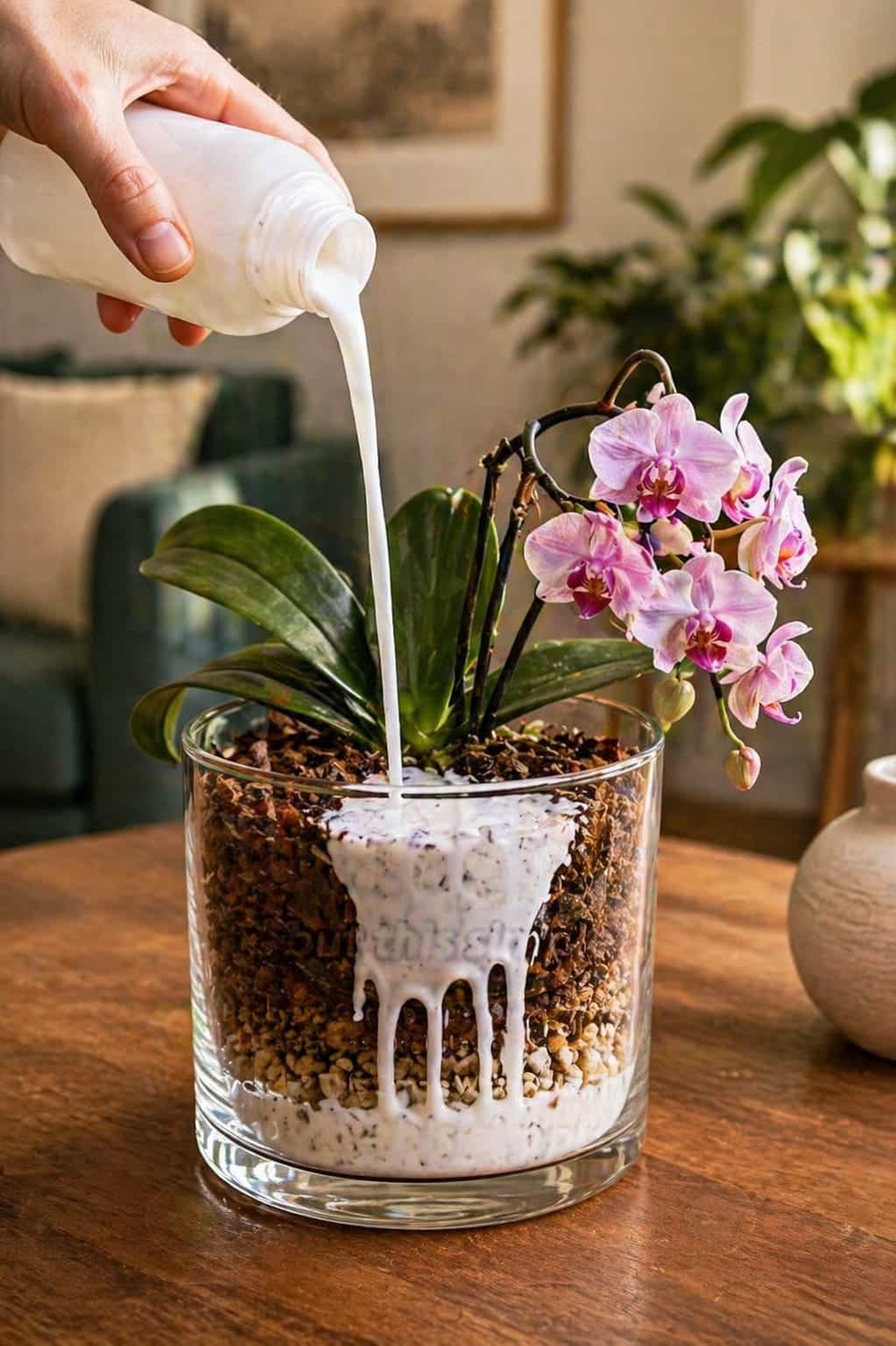
The white pour trick is especially satisfying because it is visible. You can see the liquid move through the pot. You can see the bark darken. You can see the roots change color as they hydrate. It turns a normal watering session into a small plant-care ritual.
For many people, that ritual matters. It reminds them to slow down, inspect the plant, and give it attention. In houseplant care, attention often makes the difference between success and failure. Orchids do not need constant fussing, but they do need consistent observation.
Signs the Trick Is Working Well
You may notice the orchid leaves becoming slightly firmer over time. New root tips may appear green and active. The plant may hold its leaves better and look less dull. During the proper season, a healthy orchid may eventually produce a new flower spike.
However, do not judge success after one day. Orchids move slowly. A plant that has been weak for months will not recover in 24 hours. Give it several weeks of stable care before deciding whether the method is helping.
The best sign is healthy root growth. Flowers are beautiful, but roots are the foundation. If new roots are growing, the orchid has a chance to become strong again.
Signs You Should Stop Using It
Stop using the white pour if you notice mold spreading across the bark, a sour smell from the pot, sticky residue, fungus gnats, or worsening root health. These signs suggest the potting environment is staying too wet or organic material is building up.
If that happens, flush the pot with plain water and allow it to dry. If the smell continues, repot the orchid in fresh bark. Homemade tricks should never create more problems than they solve.
Also stop if the orchid appears stressed after each use. Some plants simply do better with a very basic routine. Plain water, good light, and occasional orchid fertilizer may be all they need.
Frequently Asked Questions
Is the white pour trick safe for orchids?
It can be safe if the liquid is very diluted, drains freely, and is used only occasionally. The safest version is diluted rice water. Avoid thick, sugary, or spoiled liquids.
Can I pour milk directly on my orchid?
Direct milk is not recommended. It can spoil, smell, attract pests, and leave residue in the bark. If you want the white pour effect, diluted rice water is a better choice.
How often should I use rice water on orchids?
Once every three to four weeks during active growth is enough. Do not use it every time you water.
Can this trick make my orchid bloom?
It may support overall plant health, but blooming depends on light, temperature, plant maturity, root health, and seasonal rhythm. The trick alone cannot force blooms overnight.
Should I use this on a newly bought orchid?
It is better to let a new orchid adjust to your home first. Use plain water and observe it for a few weeks before trying any homemade supplement.
Can I use this trick on orchids in moss?
Be careful. Moss holds moisture longer than bark. If your orchid is planted in sphagnum moss, use less liquid and make sure it dries properly. Overwatering is easier in moss.
What if my orchid has no flowers?
No flowers does not always mean the orchid is weak. It may simply be between blooming cycles. Focus on healthy leaves and roots first. Flowers come later.
Final Thoughts
The “simple white pour” orchid trick is eye-catching, easy to prepare, and surprisingly satisfying to use. It looks powerful because the cloudy liquid creates a dramatic visual effect as it flows through the orchid bark. But the true value of the method comes from using it gently and wisely.
The best version for most orchid lovers is diluted rice water. It gives the same white pour appearance without the higher risks of milk or thick homemade mixtures. When used once a month, with excellent drainage and proper orchid care, it can become a gentle support ritual for tired or slow-growing orchids.
Still, the trick should never replace the basics. Orchids need bright indirect light, airy potting mix, careful watering, and healthy roots. If your orchid is truly weak, always check the roots first. A plant with rotten roots needs rescue care, not more liquid.
Used correctly, this white pour can be a beautiful addition to your orchid routine. It encourages you to slow down, observe your plant, and care for it with intention. And sometimes, that extra attention is exactly what a struggling orchid needs to begin its quiet comeback.