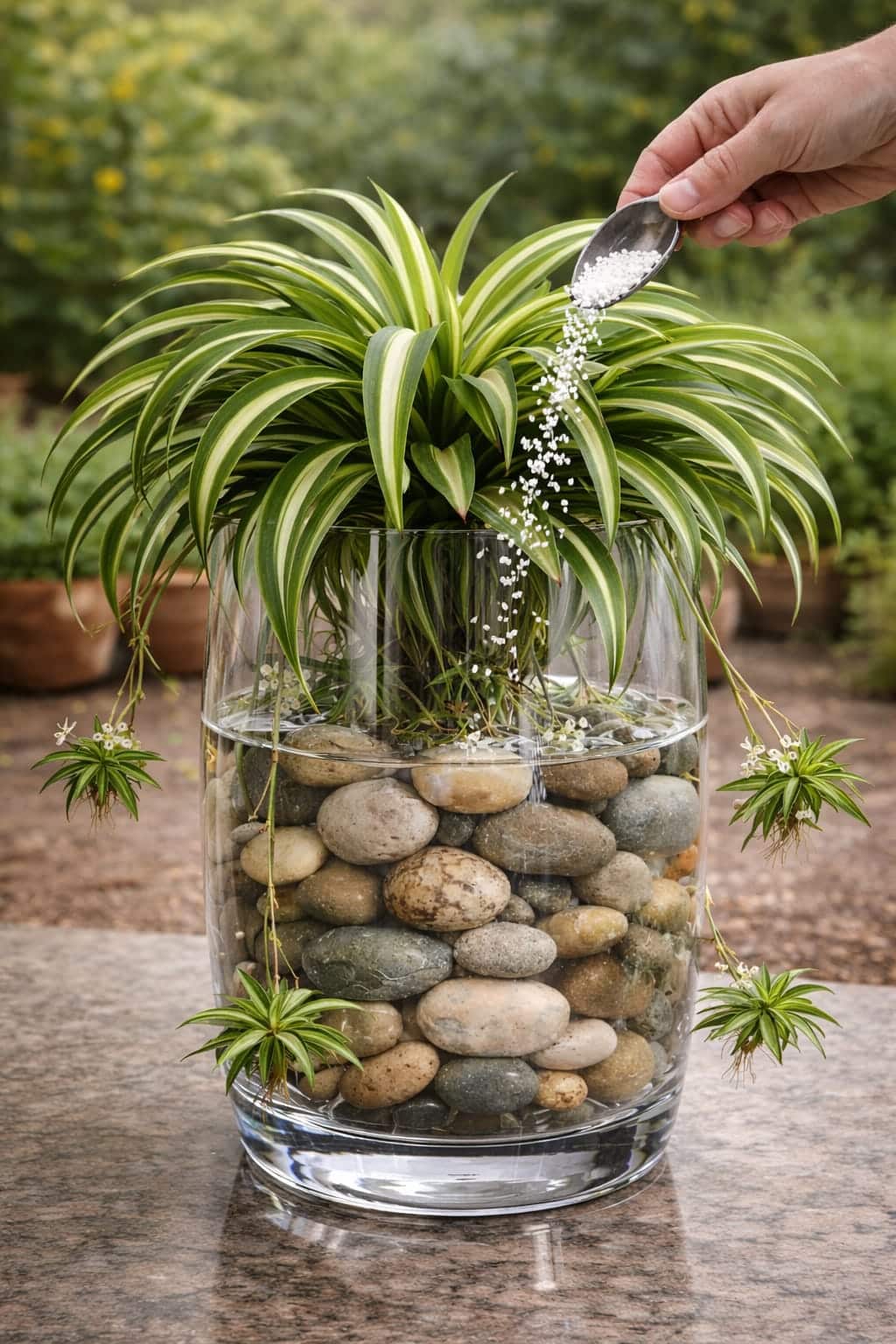
Common Method – Step by Step
- Sprinkle a very small amount on the top layer of soil – a light dusting, not a thick layer.
- Spread it evenly around the base of the plant – avoid clumping.
- Avoid covering the leaves or center crown – powder can cause rot if trapped.
- Water lightly afterward – just enough to settle the powder.
- Repeat only occasionally – once a month at most
What to Avoid
· Heavy layers – can block airflow and water penetration.
· Applying to wet soil – powder may clump and mold.
· Using as a fertilizer – powder does not replace nutrients.
· Ignoring light and watering – no powder fixes poor care.
⚠️ Common Spider Plant Care Mistakes
Even though spider plants are extremely easy to grow, certain mistakes can slow their growth or prevent baby plants from forming. The white powder will not fix these problems.
Common Issues to Avoid
Mistake Why It’s Harmful Correct Approach
Overwatering the soil Roots rot, leaves yellow Let top inch of soil dry before watering.
Poor drainage containers Water pools at bottom Use pots with drainage holes.
Very low light conditions Few or no runners Move to bright indirect light.
Heavy fertilizer use Burns roots, brown tips Use diluted fertilizer occasionally.
Dry indoor air Brown leaf tips Increase humidity with pebble tray.
Spider plants perform best when their soil is slightly moist but never waterlogged. They also love bright indirect light – the more light, the more babies.
🌱 Ideal Growing Conditions for Spider Plants (and More Babies)
To encourage more baby plants, spider plants thrive when a few basic conditions are met. The white powder can be a small boost, but these fundamentals matter far more.
Recommended Conditions
Factor Ideal Condition Why It Matters
Light Bright, indirect (east/west window) Energy for runners and spiderettes
Soil Loose, well‑draining mix (potting soil + perlite) Healthy roots, no rot
Water Moderate – water when top inch dries Prevents root rot
Temperature Warm indoor climate (18–27°C / 65–80°F) Steady growth
Feeding Occasional light nutrients (diluted fertilizer, spring/summer) Supports runner production
White powder Light dusting, occasional (optional) Gentle soil support – not necessary
When properly cared for, spider plants can produce dozens of new plantlets each year. You can leave them attached for a lush, cascading look or propagate them to create new plants.
How to Encourage More Spider Plant Babies – Step by Step
If your spider plant isn’t producing many runners, follow this simple plan.
- Move to bright indirect light – an east or west window is ideal.
- Repot if soil is old or compacted – use fresh, well‑draining mix.
- Water correctly – let the top inch of soil dry out before watering.
- Feed lightly – use a diluted balanced fertilizer once a month in spring and summer.
- Optional: lightly dust soil with cinnamon once a month to help keep surface dry.
- Be patient – babies may appear within a few weeks after conditions improve.
Pro tip: Spider plants produce more babies when they are slightly root‑bound. Don’t repot too often – every 1–2 years is enough.
Spider Plant Care Overview – Quick Reference Table
Factor Ideal Condition Benefit
Light Bright, indirect Encourages plantlets (spiderettes)
Soil Loose, well‑draining mix Healthy roots
Water Moderate – water when top inch dries Prevents root rot
Temperature Warm indoor climate Stable growth
Feeding Light nutrients (diluted fertilizer, spring/summer) Supports runners
White powder Light dusting, occasional (optional) Gentle soil support – not required
Frequently Asked Questions (FAQs)
Q: Why do spider plants produce baby plants?
They reproduce naturally through plantlets that grow on runners. This is their primary method of propagation in nature.
Q: How often should spider plants be watered?
Usually when the top layer of soil begins to dry. Stick your finger in – if the top inch is dry, water thoroughly.
Q: Can spider plants grow in low light?
Yes, but they produce more plantlets in brighter light. Low light = few or no runners.
Q: Why do spider plant leaf tips turn brown?
Often caused by dry air, fluoride in tap water, or mineral buildup. Use filtered water and increase humidity.
Q: Do spider plants need fertilizer often?
Only occasional light feeding – once a month in spring/summer with a diluted balanced fertilizer.
Q: Can spider plant babies be replanted?
Yes, they root easily in soil or water. Cut the runner and place the baby in moist soil; roots appear in 1–2 weeks.
Q: Are spider plants good for beginners?
Yes, they are one of the easiest indoor plants to grow. They forgive neglect and are very rewarding.
Q: How long do spider plants live?
With proper care they can live many years – some for decades. They are long‑lived perennials.
Q: Do spider plants grow quickly?
They grow moderately but reproduce easily. Runners and babies can appear rapidly under good conditions.
Q: Are spider plants safe indoor plants?
Yes, they are non‑toxic to pets according to the ASPCA, making them a great choice for homes with cats and dogs.
Printable Spider Plant Care Checklist (for More Babies)
☐ Place in bright, indirect light (east/west window)
☐ Use a pot with drainage holes
☐ Fill with well‑draining potting soil (add perlite)
☐ Water when top inch of soil is dry
☐ Water thoroughly, then empty saucer
☐ Do not overwater – let soil dry slightly
☐ Fertilize lightly once a month in spring/summer (diluted)
☐ Optional: lightly dust soil surface with cinnamon once a month
☐ Avoid heavy powder layers – a pinch is enough
☐ Wipe leaves with damp cloth monthly
☐ Repot every 1–2 years (spider plants like to be slightly root‑bound)
☐ Be patient – babies appear when conditions are right
Final Thoughts – Gentle Support, Strong Fundamentals
The “white powder” trick is not magic. A light dusting of cinnamon or a mineral supplement can help keep the soil surface dry and may support root health. But it will never replace the fundamentals: bright indirect light, proper watering, well‑draining soil, and occasional feeding.
If your spider plant isn’t producing babies, don’t reach for a powder first. Move it closer to a window, check the soil, and adjust your watering. Once those basics are right, a little powder every few weeks can be a small boost – but it’s never the cure.
With patience and the right care, your spider plant will reward you with cascading runners and dozens of baby plants to share with friends.
Now it’s your turn! Have you tried a white powder on your spider plant? Did it produce more babies? Drop a comment below – I’d love to hear your experience.
And if you found this guide helpful, share it with a friend who loves spider plants. Pin it for later, and subscribe to our newsletter for more practical plant care.
Stay bright, stay balanced, and watch your spider plant multiply. 🌿✨
h