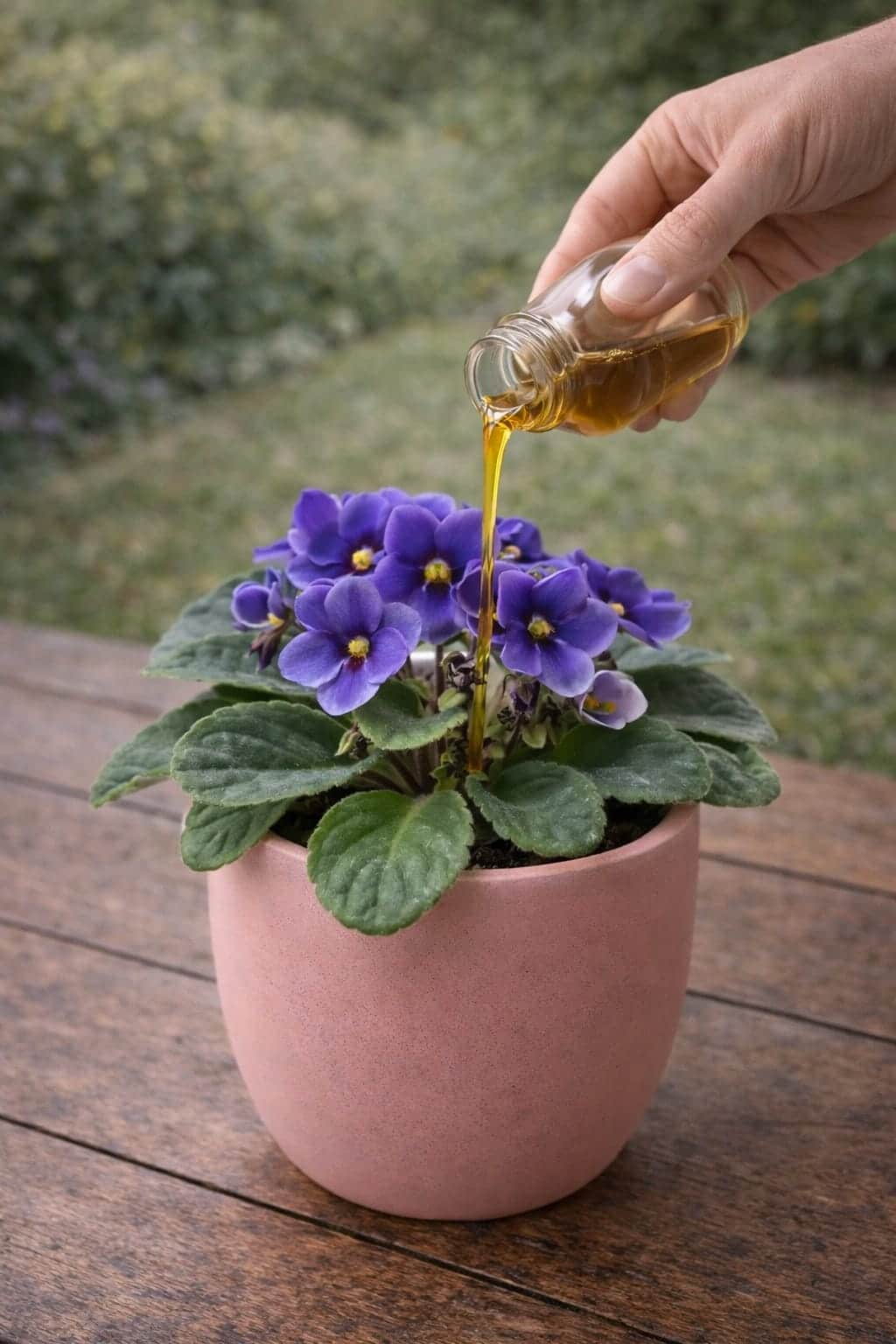
❌ Common African Violet Care Mistakes (That Golden Liquid Won’t Fix)
Even experienced gardeners sometimes run into problems with these plants. The golden liquid is a supplement – it will not fix poor care.
Common Mistakes to Avoid
Mistake Why It’s Harmful Correct Approach
Watering leaves instead of soil Causes leaf spots and crown rot Water from below or direct water to soil.
Allowing water to sit in the crown Crown rot – often fatal Use bottom‑watering or water carefully.
Using heavy garden soil Compacts, suffocates roots Use light African violet potting mix.
Placing plants in direct sunlight Leaf scorch, faded blooms Provide bright, indirect light.
Overfeeding with strong fertilizers Brown leaf tips, salt buildup Use diluted fertilizer sparingly.
African violets prefer consistent but gentle care. Get these basics right before reaching for any liquid supplement.
🪴 What Helps African Violets Bloom More (Beyond Golden Liquid)
To encourage frequent flowering, focus on these fundamentals. The golden liquid can be a small boost, but these factors matter far more.
Factor Ideal Condition Why It Matters
Light Bright, indirect (east or north‑east window, or grow light) Encourages flowers – without enough light, no blooms
Soil Lightweight African violet mix (peat + vermiculite + perlite) Supports root health, prevents rot
Watering Moderate – water when top inch is dry; bottom‑water preferred Prevents crown rot
Feeding Light seasonal feeding (diluted golden liquid or balanced fertilizer) Supports blooming
Humidity Moderate (50–60%) – use pebble tray Protects foliage, prevents brown tips
Pot size Small – about ⅓ the width of the leaf spread Snug pots encourage blooming
When conditions are stable, African violets can bloom several times per year – often 6–9 months of flowers.
How to Use Golden Liquid Safely – A Simple Plan
If you want to try this method, follow this safe routine.
- Choose a golden liquid – diluted compost tea, seaweed extract, or very weak balanced fertilizer (quarter strength).
- Test on one plant first – wait a week to see how it responds.
- Ensure soil is slightly moist – water with plain water first.
- Apply a small amount – about ¼ cup for a standard 4‑inch pot.
- Pour around the edges – avoid the crown and leaves.
- Use once every 3–4 weeks during spring and summer only.
- Observe your plant – if leaves become greener and more blooms appear, continue. If you see brown tips or leaf spots, reduce frequency or stop.
Pro tip: If you use store‑bought fertilizer, choose one labeled for African violets (e.g., 12-36-14) and dilute to half or quarter strength.
Troubleshooting – Common Problems & Solutions
Problem Likely Cause Solution
No blooms Insufficient light Move to brighter indirect light or add grow light.
Brown leaf tips Over‑fertilizing or dry air Reduce fertilizer; increase humidity.
Yellow leaves Overwatering Let soil dry out; ensure pot has drainage.
Leaf spots Water on leaves Switch to bottom‑watering.
Crown rot Water in the center Always water around edges or from below.
Small, pale leaves Underfeeding or old soil Fertilize lightly; repot with fresh mix.
Frequently Asked Questions (FAQs)
Q: Why are my African violet leaves drooping?
A: Often caused by overwatering or cold drafts. Check soil moisture and move away from windows or vents.
Q: Can African violets grow under artificial light?
A: Yes – many growers use LED or fluorescent grow lights for 12–14 hours a day. This is especially helpful in winter.
Q: How often should I water African violets?
A: Usually when the top inch of soil feels slightly dry. For most indoor conditions, every 5–7 days. Bottom‑watering is best.
Q: Why are my violets not blooming?
A: Most common reason: insufficient light. Move to a brighter spot. Also check temperature (too cold) and fertilizer (too much nitrogen).
Q: Should water touch the leaves?
A: No – leaf spots and rot can develop. Always water from below or direct water to the soil.
Q: What pot size works best for African violets?
A: Small pots – about ⅓ the diameter of the leaf spread. A 4‑inch pot is ideal for most standard violets.
Q: Do African violets like humidity?
A: Yes – moderate humidity (50–60%) supports healthy growth. Use a pebble tray or humidifier in dry homes.
Q: Can I propagate African violets from leaves?
A: Yes – leaf cuttings are a common method. Place a leaf stem in moist potting mix, and new plantlets will form in 2–3 months.
Q: When should I fertilize African violets?
A: During active growing periods (spring and summer). Use a diluted African violet fertilizer every 2–4 weeks. Stop in fall and winter.
Q: What’s the biggest mistake people make with African violets?
A: Allowing water to sit in the plant crown – this causes crown rot, which is often fatal. Always water carefully.
Printable African Violet Care Checklist (with Golden Liquid)
☐ Place in bright, indirect light (east window or grow light)
☐ Use a small pot (⅓ of leaf spread) with drainage holes
☐ Fill with lightweight African violet potting mix (peat + vermiculite + perlite)
☐ Water from the bottom when top inch of soil is dry
☐ Use room‑temperature, filtered water
☐ Keep water away from leaves and crown
☐ Maintain humidity 50–60% (pebble tray)
☐ Keep temperature 65–75°F (18–24°C)
☐ Fertilize with diluted African violet fertilizer every 2–4 weeks in spring/summer
☐ Optional: use golden liquid (diluted compost tea or weak seaweed extract) once a month
☐ Apply golden liquid to soil only – avoid leaves and crown
☐ Do not feed in fall/winter
☐ Remove spent blooms and yellow leaves
☐ Repot every 6–12 months with fresh mix
Final Thoughts – Gentle Support, Stunning Blooms
The “golden liquid” trend is not magic. Diluted compost tea, seaweed extract, or a very weak balanced fertilizer can provide a gentle nutrient boost to your African violets. But it will never replace the fundamentals: bright indirect light, proper watering, lightweight soil, a snug pot, and moderate humidity.
If your African violets aren’t blooming, don’t reach for a bottle first. Check the light, adjust your watering, and ensure the pot is the right size. Once those basics are right, a little golden liquid every few weeks can give them a gentle nudge – but it’s never the cure.
With patience and the right care, your African violets will reward you with clusters of delicate, colorful blooms that brighten your home for months on end.
Now it’s your turn! Have you tried a golden liquid on your African violets? What results did you see? Drop a comment below – I’d love to hear your experience.
And if you found this guide helpful, share it with a friend who loves African violets. Pin it for later, and subscribe to our newsletter for more practical plant care.
Stay bright, stay gentle, and watch your violets bloom. 🌸✨