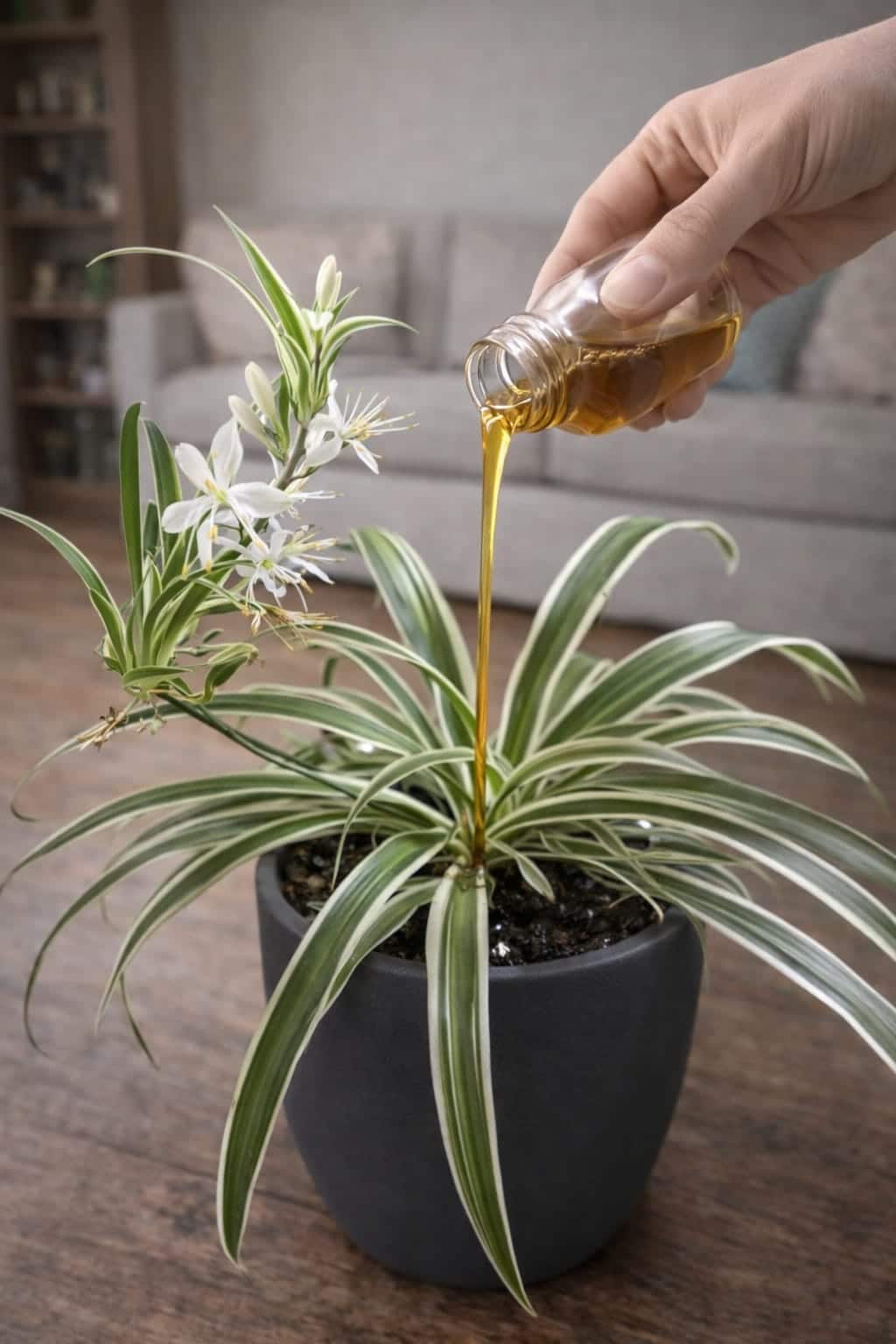
Discover why gardeners use a dark liquid (diluted compost tea or mild nutrient solution) on spider plants – to support soil health, encourage baby plantlets, and promote steady growth. Safe application tips inside.
Let’s be honest: spider plants (Chlorophytum comosum) are known for their fast growth, elegant arching leaves, and the long stems that produce adorable baby plantlets (spiderettes). Because they grow quickly compared to many houseplants, gardeners often look for gentle ways to support their growth without using strong chemical fertilizers.
Recently, a simple natural method has been trending among indoor plant enthusiasts – using a lightly diluted dark liquid similar to the one shown in the image. When applied correctly, it can support healthy soil activity and help maintain steady plant growth. But the secret isn’t just the liquid – it’s the balanced care routine that surrounds it
In this guide, you’ll learn what the dark liquid is, how to use it safely, why spider plants respond to gentle feeding, common mistakes to avoid, and the ideal conditions for fast, healthy growth and abundant baby plantlets.
Let’s pour some dark liquid gold on your spider plants – the right way.
🌿 What Is the Dark Liquid in the Image?
The dark liquid shown in the photo usually represents a mild organic liquid mixture, often compared to diluted compost tea or natural plant‑based nutrient solutions. These are not strong fertilizers. Instead, they gently enrich the soil with beneficial microbes and trace nutrients
Common Types of Dark Liquid
Liquid What It Is Benefits for Spider Plants
Diluted compost tea Steeped compost in water Adds beneficial microbes, trace nutrients
Diluted seaweed or kelp extract Natural growth stimulant Provides trace minerals, gentle hormones
Very weak liquid fertilizer (e.g., 5-5-5 at quarter strength) Mild nutrient solution Supports overall health without burn
Diluted worm casting tea Organic, gentle Feeds soil life slowly
Important Guidelines
· It should always be diluted – the mixture should appear lightly tinted, not dark or thick.
· It should never be thick or concentrated – strong solutions can burn roots.
· It should only be poured into the soil – not on the leaves or stems.
· Apply during active growth periods (spring and summer).
Spider plants prefer light feeding rather than strong fertilizer doses. A little goes a long way.
💧 How to Use This Natural Liquid Method Safely – Step by Step
If trying this type of method, plant experts usually follow these steps. Moderation is key.
Step‑by‑Step Application
- Choose a dark liquid – diluted compost tea, seaweed extract, or a very weak balanced fertilizer (quarter strength).
- Dilute heavily – the mixture should appear lightly tinted, not dark or cloudy.
- Water the plant with plain water first – moisten the soil slightly to prevent root burn.
- Apply directly to the soil – pour around the edges of the pot, avoiding the crown and leaves.
- Use during active growth periods – spring and summer support stronger growth and baby plantlets.
- Apply once every 3–4 weeks – not weekly.
- Stop in fall and winter – the plant rests.
What to Avoid
· Pouring on leaves or stems – can cause spots or rot.
· Using full‑strength fertilizer – burns roots.
· Applying to dry soil – water first.
· Overusing – more than once a month can stress the plant.
Pro tip: If you make compost tea, use it within 24 hours. It loses potency and can develop harmful bacteria if stored.
❌ Common Spider Plant Care Mistakes (That Dark Liquid Won’t Fix)
Even though spider plants are easy to grow, these mistakes can slow their growth. The dark liquid is a supplement – it will not fix poor care
Common Mistakes to Avoid
Mistake Why It’s Harmful Correct Approach
Overwatering the soil Root rot, yellow leaves Let top inch of soil dry before watering.
Using dense soil mixes Suffocates roots Use light, well‑draining potting mix (add perlite).
Feeding too frequently Brown tips, salt buildup Feed only once a month in spring/summer.
Growing in very low light Slow growth, no babies Move to bright indirect light.
Allowing water to sit in the saucer Root rot Empty saucer after watering.
Healthy spider plants rely on well‑aerated soil and moderate watering. Get these basics right before reaching for any liquid supplement.
🪴 What Actually Helps Spider Plants Grow Faster (Beyond Dark Liquid)
Spider plants naturally produce runners and baby plants (spiderettes) when they are healthy. To encourage strong growth, focus on these fundamentals.
Factor Ideal Condition Why It Matters
Light Bright, indirect (east/west window) Encourages fast growth and baby plantlets
Soil Light, well‑draining potting mix (add perlite) Protects roots, prevents rot
Watering Moderate – water when top inch is dry Prevents root rot
Feeding Light seasonal feeding (spring/summer) Supports leaf development and runners
Pot size Slightly snug – not too large Encourages runner production
Humidity Average indoor humidity (40–60%) Tolerates normal levels
When these conditions are met, spider plants produce long cascading leaves and plenty of baby plantlets to propagate or share.
Continue to Page 2
Continue to page 2 for more details about this article and the key points many readers miss on the first page.