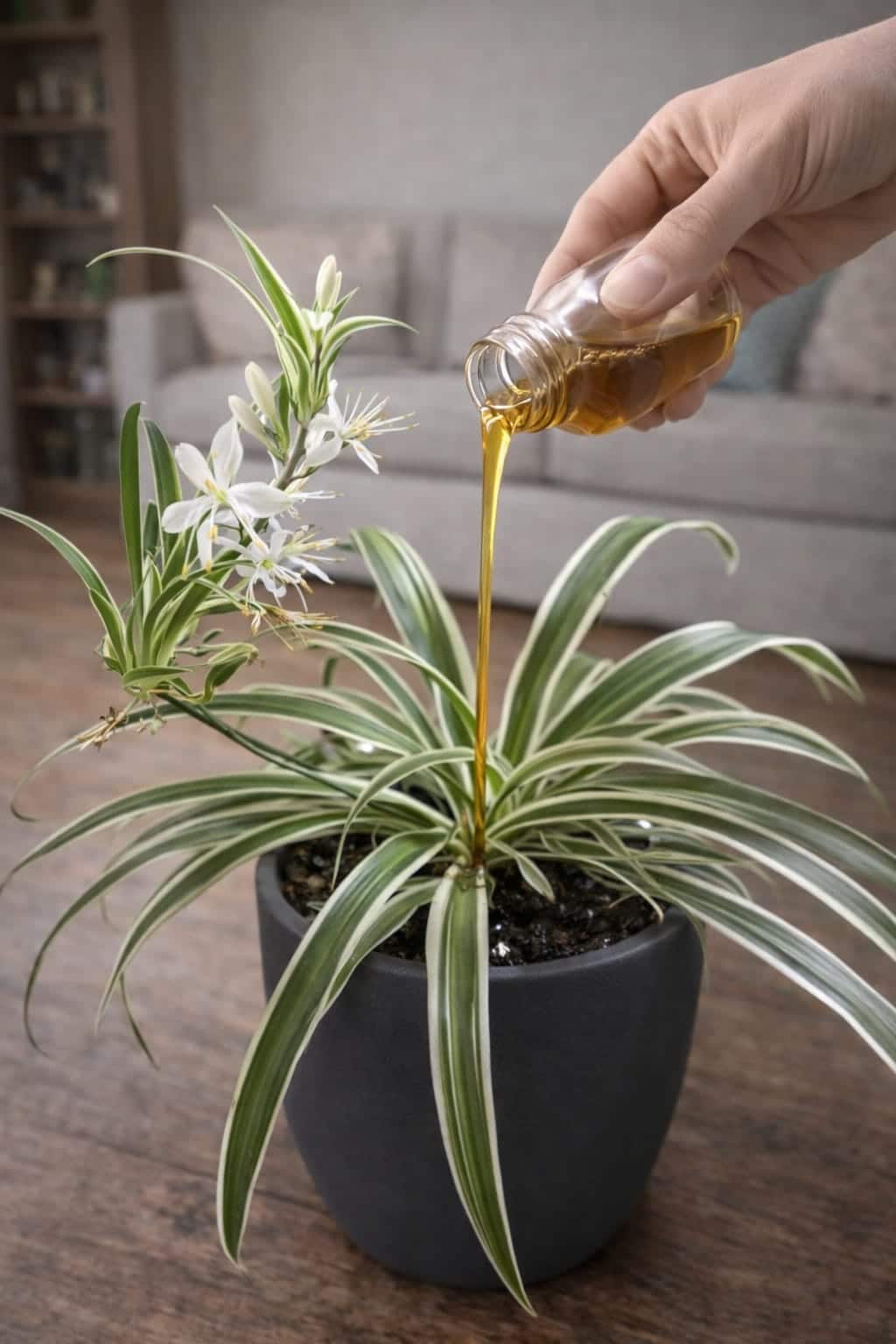
How to Use Dark Liquid Safely – A Simple Plan
If you want to try this method, follow this safe routine.
- Choose a dark liquid – diluted compost tea, seaweed extract, or very weak balanced fertilizer (quarter strength).
- Test on one plant first – wait a week to see how it responds.
- Ensure soil is slightly moist – water with plain water first.
- Apply a small amount – about ¼ cup for a 6‑inch pot.
- Pour around the edges – avoid the crown and leaves.
- Use once every 3–4 weeks during spring and summer only.
- Observe your plant – if leaves become greener and more vigorous, continue. If you see brown tips or leaf spots, reduce frequency or stop.
Pro tip: If you use store‑bought fertilizer, choose a balanced one (e.g., 10-10-10) and dilute to quarter strength. Spider plants are light feeders.
Troubleshooting – Common Problems & Solutions
Problem Likely Cause Solution
Brown leaf tips Fluoride in tap water or dry air Use filtered water; increase humidity.
No baby plantlets Not enough light or pot too large Move to brighter light; keep pot slightly snug.
Yellow leaves Overwatering Let soil dry out; improve drainage.
Leggy, sparse growth Low light Move to bright indirect light.
Slow growth Underfeeding or old soil Feed lightly in spring; repot with fresh mix.
Root rot Overwatering + poor drainage Repot in fresh, dry soil; reduce watering.
Frequently Asked Questions (FAQs)
Q: Why are my spider plant leaves turning brown?
A: Often caused by fluoride in tap water or dry air. Use filtered water and increase humidity with a pebble tray.
Q: How often should I water spider plants?
A: Water when the top inch of soil feels dry. In typical indoor conditions, every 7–10 days.
Q: Can spider plants grow in low light?
A: Yes, but growth will slow, and they may not produce baby plantlets. For best results, provide bright indirect light.
Q: Why is my spider plant not producing babies?
A: It may need brighter light or a slightly root‑bound pot. Also, young plants take time – maturity is key.
Q: Are spider plants good for beginners?
A: Yes – they are very forgiving plants and easy to propagate.
Q: Should I remove baby plantlets?
A: You can leave them attached for a fuller look, or remove and propagate them to grow new plants.
Q: Can spider plants grow outdoors?
A: They can grow outdoors in mild climates (morning sun, afternoon shade). Bring indoors before frost.
Q: Do spider plants like humidity?
A: Moderate humidity improves growth, but they tolerate average indoor humidity well.
Q: What type of pot is best for spider plants?
A: Pots with drainage holes are essential. Terracotta pots help prevent overwatering.
Q: What’s the biggest mistake with spider plants?
A: Overwatering combined with poor drainage – this is the #1 killer.
Printable Spider Plant Care Checklist (with Dark Liquid)
☐ Place in bright, indirect light (east/west window)
☐ Use a pot with drainage holes (terracotta preferred)
☐ Fill with light, well‑draining potting soil (add perlite)
☐ Water when top inch of soil is dry
☐ Water thoroughly, then empty saucer
☐ Use filtered or distilled water to prevent brown tips
☐ Dilute dark liquid (compost tea or weak fertilizer) to quarter strength
☐ Apply once every 3–4 weeks in spring/summer only
☐ Apply to soil – avoid leaves and crown
☐ Do not feed in fall/winter
☐ Wipe leaves with damp cloth monthly
☐ Remove yellow or brown leaves as needed
☐ Repot every 2–3 years when root‑bound
☐ Propagate spiderettes for new plants
Final Thoughts – Gentle Support, Lush Growth
The “dark liquid” trend is not magic. Diluted compost tea, seaweed extract, or a very weak balanced fertilizer can provide a gentle nutrient boost to your spider plant. But it will never replace the fundamentals: bright indirect light, well‑draining soil, proper watering, and a snug pot.
If your spider plant isn’t growing vigorously or producing babies, don’t reach for a bottle first. Check the light, adjust your watering, and ensure the pot is the right size. Once those basics are right, a little dark liquid every few weeks can give it a gentle nudge – but it’s never the cure.
With patience and the right care, your spider plant will reward you with cascading leaves, delicate white flowers, and plenty of baby plantlets to share.
Now it’s your turn! Have you tried a dark liquid on your spider plant? What results did you see? Drop a comment below – I’d love to hear your experience.
And if you found this guide helpful, share it with a friend who loves spider plants. Pin it for later, and subscribe to our newsletter for more practical plant care.
Stay bright, stay consistent, and watch your spider plant thrive. 🌿✨