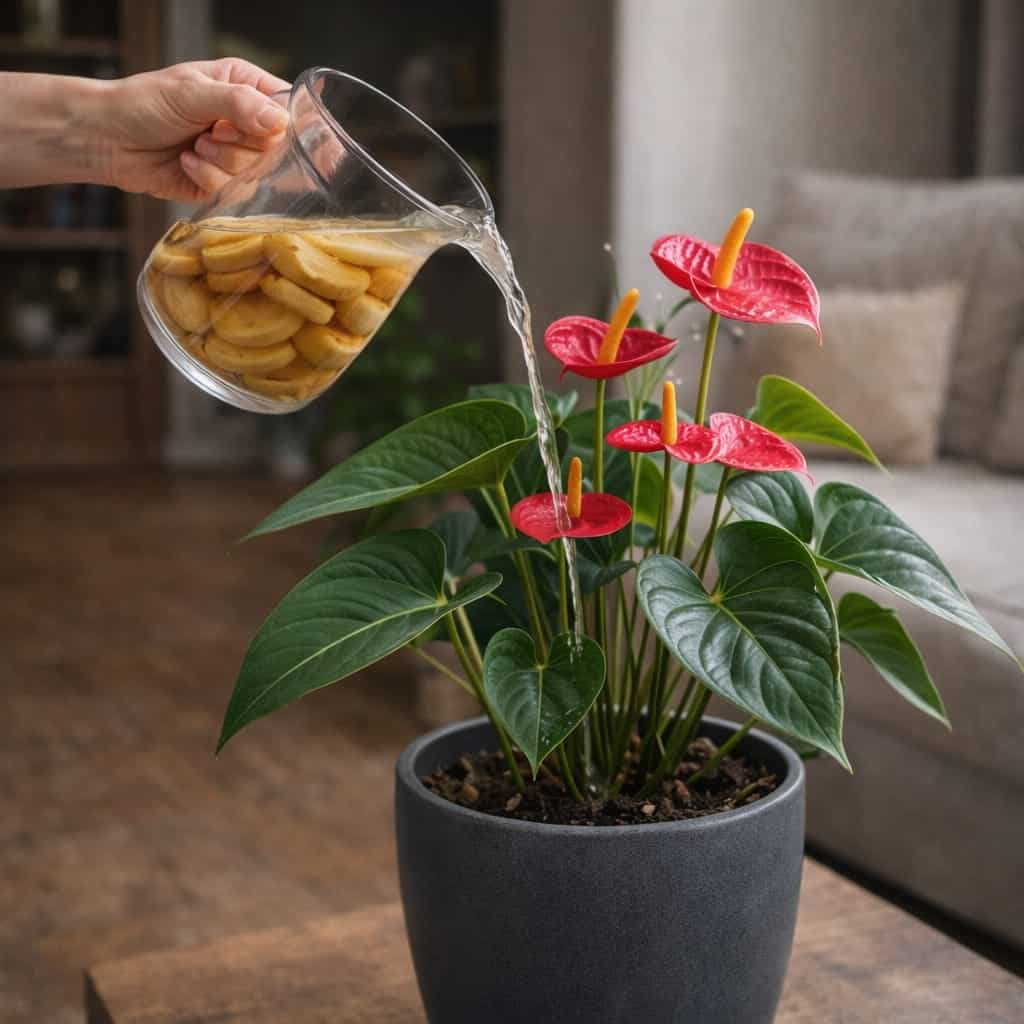
Can a homemade cucumber and baking soda spray really make Anthuriums bloom like crazy? We test the viral recipe, explain the science, and share proven tips for bigger blooms and stronger roots.
Let’s be honest: Anthuriums are showstoppers. With their glossy, heart‑shaped leaves and vibrant red, pink, white, or purple spathes, they bring a tropical elegance to any room. But getting them to bloom consistently – and to develop strong, healthy roots – can be a challenge. That’s why viral plant hacks are so tempting. The latest one making the rounds? A homemade spray made from cucumber, water, and baking soda.
The claim is bold: “Just spray some, your Anthuriums bloom like crazy with full of roots.” It sounds simple, natural, and affordable. But does it actually work? Or could it harm your plant?
In this complete guide, I’ll break down the viral cucumber and baking soda recipe, explain what each ingredient does (and doesn’t do), highlight potential risks, and give you a realistic assessment. Plus, I’ll share proven, science‑backed methods to encourage abundant blooms and strong roots – so you can enjoy thriving Anthuriums without the guesswork.
Let’s separate the viral hype from the horticultural reality.
What Is the Viral Cucumber & Baking Soda Spray?
The recipe circulating on social media claims to be a natural, homemade plant booster. Here’s what you’ll need according to the original post:
· 100 grams of cucumber (cut into small pieces)
· 0.5 liters of water (for blending)
· 1 tablespoon of baking soda
· 2 liters of additional water (for dilution)
How to Make It:
- Blend the cucumber with 0.5 liters of water until smooth.
- Add 1 tablespoon of baking soda and blend again.
- Dilute the mixture with 2 liters of water.
- Use the solution to water the soil, spray on leaves, or wipe leaves clean.
The post suggests using this mixture every two weeks for watering, weekly for leaf spraying, and monthly for cleaning.
Why Cucumber and Baking Soda? The Claims vs. The Science
Let’s look at each ingredient and evaluate the purported benefits
🥒 Cucumber – The Hydrating Veggie
Claimed Benefits:
· Rich in potassium, magnesium, and silica.
· Silica strengthens plant cells, stems, and roots.
· High water content improves soil moisture retention.
What the Science Says:
· Cucumbers do contain trace amounts of potassium and magnesium – nutrients that plants need. However, the concentration in a diluted cucumber water solution is extremely low. You would need gallons of cucumber water to provide a meaningful amount of fertilizer.
· Silica is beneficial for plant cell walls, but cucumbers are not a particularly rich source. Commercial silica supplements are far more effective.
· The water content is… water. Plain water hydrates just as well.
Verdict: Cucumber water is not harmful, but it is not an effective fertilizer. It provides negligible nutrition compared to a balanced liquid fertilizer.
🧂 Baking Soda (Sodium Bicarbonate)
Claimed Benefits:
· Balances soil pH (prevents it from becoming too acidic).
· Has antifungal properties to protect against pathogens.
What the Science Says:
· Baking soda is alkaline (high pH). If your soil is too acidic, a very small amount can raise pH. But without testing your soil pH, you could easily overshoot and make it too alkaline. Anthuriums prefer slightly acidic soil (pH 5.5–6.5). Too much baking soda can cause nutrient lockout – especially iron deficiency – leading to yellow leaves.
· Baking soda does have mild antifungal properties, but it is not a systemic treatment. For serious fungal issues, a proper fungicide is more reliable.
· Sodium (the “sodium” in sodium bicarbonate) is not a plant nutrient. Excess sodium can build up in the soil, causing brown leaf tips and root damage.
Verdict: Baking soda should be used with extreme caution, if at all. It is not a regular fertilizer and can harm your plant over time.
What This Mixture Can (and Cannot) Do for Anthuriums
✅ What It May Do (If Used Correctly)
· Provide a very mild, temporary moisture boost.
· Slightly raise soil pH if your soil is overly acidic (rare for indoor potting mix).
· Remove dust from leaves when wiped (plain water works just as well).
❌ What It Does NOT Do
· Provide significant nutrients (nitrogen, phosphorus, potassium) for blooming.
· “Make roots grow like crazy” – root growth requires proper light, water, and soil aeration.
· Replace a balanced fertilizer.
· Cure root rot or serious fungal infections.
⚠️ Potential Risks
· Salt buildup from baking soda can cause brown leaf tips and root stress.
· Alkaline soil can lock out iron, causing yellowing leaves (chlorosis).
· Overuse can harm beneficial soil microbes.
How to Use This Mixture Safely (If You Want to Try It)
If you’re curious and want to experiment, follow these strict guidelines to minimize risk:
- Test on one plant first – not your entire collection.
- Use very diluted – the recipe already dilutes with 2 liters of water. Do not make it stronger.
- Apply only to soil – avoid spraying leaves with baking soda solution; it can leave white residue.
- Use once a month at most – not every two weeks.
- Monitor your plant – if you see yellowing leaves or white crust on soil, stop immediately.
- Flush the soil with plain water after a few weeks to remove excess sodium.
Pro tip: If you want to use cucumber water, skip the baking soda. Blend cucumber with water, strain, and use as a very weak, occasional supplement. But again, it won’t replace real fertilizer.
Continue to Page 2
Continue to page 2 for more details about this article and the key points many readers miss on the first page.