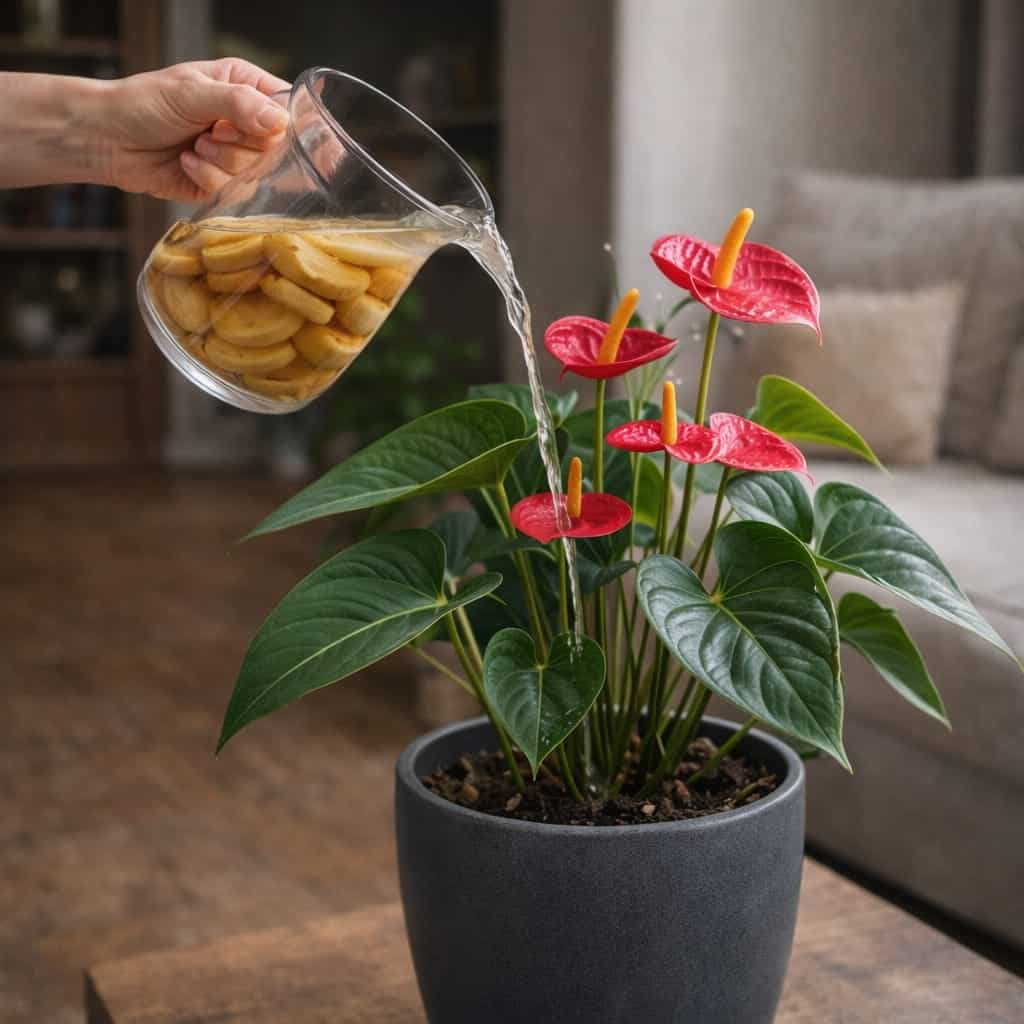
What Actually Makes Anthuriums Bloom Like Crazy (Proven Methods)
Instead of relying on unproven DIY hacks, focus on these evidence‑based practices. Anthuriums are not difficult, but they have specific needs.
- Bright, Indirect Light – The #1 Bloom Trigger
Anthuriums need bright, indirect light to produce flowers. Too little light = no blooms. Too much direct sun = scorched leaves.
· Ideal spot: East or west‑facing window, or a few feet back from a south window with a sheer curtain.
· Signs of insufficient light: Dark green leaves, slow growth, no flowers.
· Signs of too much light: Yellow or bleached leaves, brown patches.
Pro tip: If your Anthurium hasn’t bloomed in over a year, move it closer to a window. You’ll likely see buds within weeks.
- Consistent Watering – Not Too Much, Not Too Little
Anthuriums like consistently moist soil but hate soggy roots.
· When to water: When the top inch of soil feels dry.
· How to water: Water thoroughly until it runs out the drainage holes. Empty the saucer.
· Water quality: Use filtered or distilled water if your tap water is hard (brown tips are a sign)
- High Humidity – Mimic the Tropics
Anthuriums are tropical plants. They thrive in humidity levels of 60–80%.
· Increase humidity: Use a humidifier, pebble tray, or mist the leaves (morning is best).
· Signs of low humidity: Brown leaf edges, slow growth, bud drop.
- Well‑Draining, Airy Soil
Anthuriums are epiphytes in nature – they need loose, airy potting mix.
· Best mix: 2 parts peat moss + 1 part perlite + 1 part orchid bark.
· Avoid: Heavy garden soil or regular potting mix alone.
- Balanced Fertilizer – The Real Bloom Booster
Instead of cucumber water, use a proper fertilizer.
· Type: Balanced liquid fertilizer (e.g., 20-20-10 or 10-10-10) diluted to half strength.
· Frequency: Once a month during spring and summer.
· High‑phosphorus option: For extra blooms, use a bloom booster (e.g., 10-30-20) in early spring.
- Warm Temperatures and Good Airflow
· Ideal temperature: 65–80°F (18–27°C). Avoid cold drafts below 55°F.
· Airflow: A gentle fan or open space helps prevent fungal issues.
- Repot When Needed – But Not Too Often
Anthuriums like to be slightly root‑bound. Repot every 2–3 years, or when roots are growing out of the drainage holes.
· Pot size: Only 1–2 inches larger than the current pot.
· Best time: Spring.
Troubleshooting – Common Anthurium Problems & Solutions
Problem Likely Cause Solution
No blooms Insufficient light Move to brighter indirect light.
Yellow leaves Overwatering or poor drainage Let soil dry; repot with well‑draining mix.
Brown leaf tips Low humidity or fluoride in tap water Increase humidity; use filtered water.
Root rot Overwatering + dense soil Repot in fresh, airy mix; trim rotten roots.
Small, pale leaves Underfeeding or old soil Fertilize lightly; repot with fresh mix.
White residue on soil Salt buildup (from baking soda or fertilizer) Flush soil with plain water.
Frequently Asked Questions (FAQs)
Q: Can cucumber water replace fertilizer?
A: No. Cucumber water contains trace minerals but lacks nitrogen, phosphorus, and potassium – the primary nutrients plants need. Use a balanced fertilizer for real results.
Q: Is baking soda safe for Anthuriums?
A: In very small amounts, occasionally, it may not kill your plant. But overuse can cause salt buildup and alkaline soil, leading to yellow leaves. It is not recommended as a regular treatment.
Q: How often should I water my Anthurium?
A: When the top inch of soil feels dry. In typical indoor conditions, every 7–10 days.
Q: How can I make my Anthurium bloom more than once a year?
A: Provide bright indirect light year‑round, maintain high humidity, feed with a balanced fertilizer in spring/summer, and keep the plant slightly root‑bound. With good care, Anthuriums can bloom several times a year.
Q: My Anthurium has brown tips – what’s wrong?
A: Most common causes: low humidity, fluoride in tap water, or over‑fertilizing. Increase humidity, use filtered water, and reduce fertilizer.
Q: Can I use this cucumber-baking soda mixture on other plants?
A: The same risks apply – baking soda can harm many plants. It’s not recommended for regular use on any plant.
Printable Anthurium Care Checklist (Proven Methods)
☐ Place in bright, indirect light (east/west window)
☐ Use a pot with drainage holes
☐ Fill with well‑draining, airy mix (peat + perlite + orchid bark)
☐ Water when top inch of soil is dry
☐ Water thoroughly, then empty saucer
☐ Maintain humidity 60–80% (pebble tray or humidifier)
☐ Keep temperature 65–80°F (18–27°C)
☐ Fertilize with diluted balanced fertilizer once a month in spring/summer
☐ Repot every 2–3 years when root‑bound
☐ Wipe leaves with damp cloth monthly
☐ Remove spent flowers and yellow leaves
Final Thoughts – Skip the Hype, Stick to the Basics
The viral cucumber and baking soda spray is an interesting DIY experiment, but it is not a miracle solution. While cucumbers are harmless, baking soda carries risks of salt buildup and pH imbalance. More importantly, this mixture provides none of the essential nutrients your Anthurium needs to produce those stunning, long‑lasting blooms.
If you want your Anthuriums to bloom like crazy and grow full, healthy roots, focus on the fundamentals:
· Bright indirect light
· Consistent, moderate watering
· High humidity
· Well‑draining, airy soil
· Balanced fertilizer during the growing season
These proven methods will give you far better results than any viral hack. And your Anthurium will thank you with glossy leaves and vibrant flowers for years to come.
Now it’s your turn! Have you tried the cucumber and baking soda spray? What results did you see? Drop a comment below – I’d love to hear your experience.
And if you found this guide helpful, share it with a friend who loves Anthuriums. Pin it for later, and subscribe to our newsletter for more honest, evidence‑based plant care.
Stay bright, stay humid, and watch your Anthuriums thrive. 🌸✨