Best Soil for Peace Lilies
Peace lilies prefer soil that holds moisture but still drains well. They do not like cactus soil that dries too quickly, and they do not like dense garden soil that stays wet for days.
A good peace lily soil mix can include:
- 2 parts indoor potting mix
- 1 part perlite
- 1 part orchid bark or coco chips
- A small amount of compost or worm castings
This kind of mix holds enough moisture for peace lily roots while allowing air to move through the pot. It also reduces the risk of root rot.
Best Light for Peace Lily Blooms
If your peace lily is not flowering, light is usually the first thing to check. Peace lilies can survive in low light, but they bloom much better in bright indirect light.
Place your peace lily near a window with filtered sunlight. Avoid harsh direct afternoon sun because it can scorch the leaves. Gentle morning light or bright indirect light is ideal.
A ribwort plantain infusion may support soil health, but it will not replace light. Flowers need energy, and that energy comes from light.
How to Water Peace Lilies Correctly
Peace lilies are known for drooping when thirsty. This makes them easier to read than many houseplants. However, it is better not to let them collapse completely every time before watering.
Water when the top inch of soil feels dry. Pour water evenly around the soil until excess drains from the bottom. Empty the saucer afterward.
Do not let the pot sit in standing water. Constantly wet roots can cause yellow leaves, black roots, and a sour smell from the soil.
Can Ribwort Plantain Infusion Make Peace Lilies Bloom?
It may support the plant, but it does not force blooms by itself. Peace lily blooms depend mostly on maturity, light, root health, and stable care.
If your peace lily is healthy but not blooming, move it to brighter indirect light. Keep watering consistent. Feed lightly during the growing season. Avoid strong fertilizer spikes.
The infusion is best seen as a supportive soil tonic, not a flower switch.
Can It Fix Yellow Leaves?
Not always. Yellow leaves can be caused by many things, including overwatering, underwatering, old leaves, low light, nutrient imbalance, cold drafts, or poor drainage.
If one older leaf turns yellow, it may simply be natural aging. If many leaves turn yellow at once, check the roots and soil moisture before feeding.
Do not use ribwort plantain infusion as a cure-all. Diagnose the problem first.
Can It Help Brown Leaf Tips?
Brown tips on peace lilies are often caused by inconsistent watering, dry air, fertilizer buildup, minerals in tap water, or too much direct sun. A mild herbal infusion may support the soil, but it will not erase brown tips that already formed.
To reduce future brown tips:
- Use filtered water if your tap water is hard
- Avoid overfertilizing
- Keep soil evenly moist
- Improve humidity slightly
- Keep the plant out of harsh direct sun
- Flush the soil occasionally with plain water
Brown tips are common, but better care can reduce them over time.
Should You Spray Ribwort Plantain Infusion on Leaves?
No. Apply it to the soil only. Spraying herbal liquids on peace lily leaves can leave residue, attract dust, or encourage spotting if the room has poor airflow.
Peace lily leaves are best cleaned with a damp cloth. If you want shinier leaves, wipe gently with plain water. Avoid oily leaf shine products.
The ribwort plantain tonic belongs in the soil, not on the foliage.
Can You Store the Infusion?
Fresh is best. Homemade herbal liquids can spoil quickly, especially if stored at room temperature. If you make too much, store it in the refrigerator for no more than 24 to 48 hours.
Do not use it if it smells sour, rotten, fermented, or unpleasant. A bad-smelling infusion can introduce problems into your potting soil.
For indoor plants, clean and fresh is always safer.
Where to Collect Ribwort Plantain Safely
Only collect ribwort plantain from clean areas. Avoid roadsides, sprayed lawns, public parks treated with chemicals, pet areas, and places where pesticides or herbicides may have been used.
Rinse the leaves very well before simmering. If you are not completely sure the plant is ribwort plantain, do not use it.
Correct identification matters. Never make homemade plant tonics from unknown wild plants.
Can You Use Dried Ribwort Plantain?
Yes, dried ribwort plantain can be used, but use less because dried herbs are more concentrated by weight. A small pinch is enough for one cup of water.
Steep it like weak tea, cool completely, strain well, and dilute heavily before applying to the soil.
The same rule applies: weak is safer than strong.
Can You Use Other Garden Herbs?
Some gardeners make mild plant infusions from nettle, comfrey, horsetail, chamomile, or other herbs. However, each plant has different properties and strength. Some homemade fertilizers can become too strong for indoor plants.
Peace lilies are sensitive, so avoid experimenting with strong herbal mixtures. Use one gentle infusion at a time and observe the plant for several weeks.
Do not combine multiple homemade fertilizers in the same watering.
Ribwort Plantain Infusion vs. Store-Bought Fertilizer
Store-bought liquid fertilizer is more predictable because the nutrient ratio is listed on the label. Ribwort plantain infusion is more natural but less exact. That means it should be treated as a mild soil tonic rather than a complete fertilizer program.
A balanced peace lily care routine can include both, but not at the same time. For example, you might use diluted houseplant fertilizer during one month and a weak herbal infusion another month.
Do not stack fertilizers. Too much feeding can stress the roots.
When Not to Use This Infusion
Do not use ribwort plantain infusion if:
- The soil is wet
- The plant has root rot
- The pot has no drainage
- The infusion smells bad
- The plant was recently overfertilized
- The peace lily is severely wilted from root damage
- There is mold or fungus gnats in the soil
- You are unsure the herb was collected safely
In these cases, fix the main problem first. A homemade fertilizer is not helpful when the root zone is already unhealthy.
How to Tell If the Infusion Is Helping
Peace lilies respond gradually. Look for signs over several weeks, not overnight.
Good signs include:
- Leaves staying glossy and upright
- New leaf growth
- Fewer pale leaves
- Soil smelling clean
- No fungus gnats
- Roots staying firm and white or tan
- Better flowering during the growing season
If the plant looks stable and continues growing, the infusion is being used safely.
Signs You Used It Too Strong
Stop using the infusion if you notice:
- Sudden yellowing
- Brown leaf edges worsening
- Wilting while soil is wet
- Sour smell from the pot
- Mold on the soil surface
- Fungus gnats
- Soft stems near the base
These signs may mean the soil is too wet, the infusion was too strong, or the plant already had root stress. Flush the soil with plain water if needed, then let it drain fully.
How to Flush Peace Lily Soil
If you suspect fertilizer buildup, flush the soil with plain water. Place the pot in a sink or bathtub and slowly pour water through the soil for a few minutes. Let everything drain completely.
This can help remove excess minerals and salts. After flushing, do not fertilize again right away. Give the plant time to recover.
Only flush pots that have drainage holes. If your pot has no drainage, repot into one that does.
Best Pot for Peace Lily
Peace lilies need pots with drainage holes. A decorative pot is fine, but the plant should not sit in trapped water. If you use a cover pot, remove the inner nursery pot for watering and let it drain before placing it back.
A pot that is too large can also hold too much moisture. Choose a container only slightly larger than the root ball.
Good drainage protects peace lily roots more than any fertilizer can.
How to Encourage Peace Lily Flowers Naturally
To encourage blooming, focus on the full care routine:
- Place the plant in bright indirect light
- Keep soil lightly moist but not soggy
- Use a pot with drainage holes
- Feed lightly during spring and summer
- Remove spent flowers
- Wipe dust from leaves
- Avoid cold drafts
- Do not overpot
A ribwort plantain infusion can support this routine, but blooms come from overall plant health.
Peace Lily Care Table
| Care Factor | Best Setup | Why It Matters |
|---|---|---|
| Light | Bright indirect light | Supports strong leaves and better blooms |
| Watering | When top inch feels dry | Prevents both wilting and root rot |
| Soil | Moist but well-draining mix | Keeps roots oxygenated |
| Feeding | Weak fertilizer or diluted herbal tonic | Supports growth without root burn |
| Drainage | Pot with drainage holes | Stops water from sitting around roots |
| Humidity | Moderate indoor humidity | Reduces crispy leaf edges |
| Temperature | Warm, stable room temperatures | Prevents stress and drooping |
Simple Ribwort Plantain Peace Lily Routine
- Collect clean ribwort plantain leaves.
- Rinse thoroughly.
- Simmer gently in water for 5 to 8 minutes.
- Cool completely.
- Strain well.
- Dilute 1 part infusion with 4 parts water.
- Check that the peace lily soil is slightly dry.
- Pour around the outer soil edge.
- Let the pot drain fully.
- Use once every four to six weeks during active growth.
Common Mistakes to Avoid
- Using a concentrated infusion
- Pouring it into wet soil
- Applying it every week
- Using unknown wild plants
- Collecting herbs from sprayed lawns
- Spraying it on peace lily leaves
- Letting the pot sit in drainage water
- Using it on a plant with root rot
- Combining it with strong fertilizer
- Expecting instant flowers
Short Caption for This Trick
“Ribwort plantain can be turned into a gentle homemade fertilizer for peace lilies when it is simmered, cooled, strained, and heavily diluted. Use it only on slightly dry soil, pour around the outer edge of the pot, and let excess water drain fully. It supports healthy roots and steady growth without the harshness of strong fertilizer.”
Frequently Asked Questions
Can ribwort plantain be used as fertilizer for peace lilies?
Yes, it can be used as a mild homemade soil tonic when prepared as a weak, diluted infusion. It should not be used concentrated.
How often should I use ribwort plantain infusion?
Use it once every four to six weeks during spring and summer. Do not apply it weekly.
Can it replace regular fertilizer?
Not completely. It can support soil health, but a balanced fertilizer may still be useful during active growth if the plant needs nutrients.
Can I spray it on peace lily leaves?
No. Apply it to the soil only. Spraying herbal liquids on leaves can leave residue and cause spotting.
Can it make my peace lily bloom?
It may support overall health, but blooms depend mostly on bright indirect light, healthy roots, and stable care.
Why are my peace lily leaves yellow?
Yellow leaves are often caused by overwatering, low light, root stress, poor drainage, or natural aging. Check soil moisture before feeding.
Why does my peace lily have brown tips?
Brown tips may come from inconsistent watering, dry air, fertilizer buildup, hard tap water, or too much direct sun.
Can I store the infusion?
Fresh is best. If needed, store it in the refrigerator for 24 to 48 hours only. Do not use it if it smells sour or rotten.
Should the soil be wet before applying it?
No. The soil should be slightly dry at the top. Never add the infusion to already wet soil.
Is ribwort plantain the same as banana plantain?
No. Ribwort plantain is Plantago lanceolata, a wild herb. It is not the banana-like fruit called plantain.
Final Thoughts
Ribwort plantain infusion is a gentle, natural way to support peace lily care when used correctly. It fits perfectly into a slow, balanced indoor plant routine because peace lilies do not need aggressive feeding. They need healthy roots, bright indirect light, steady watering, and soil that drains well.
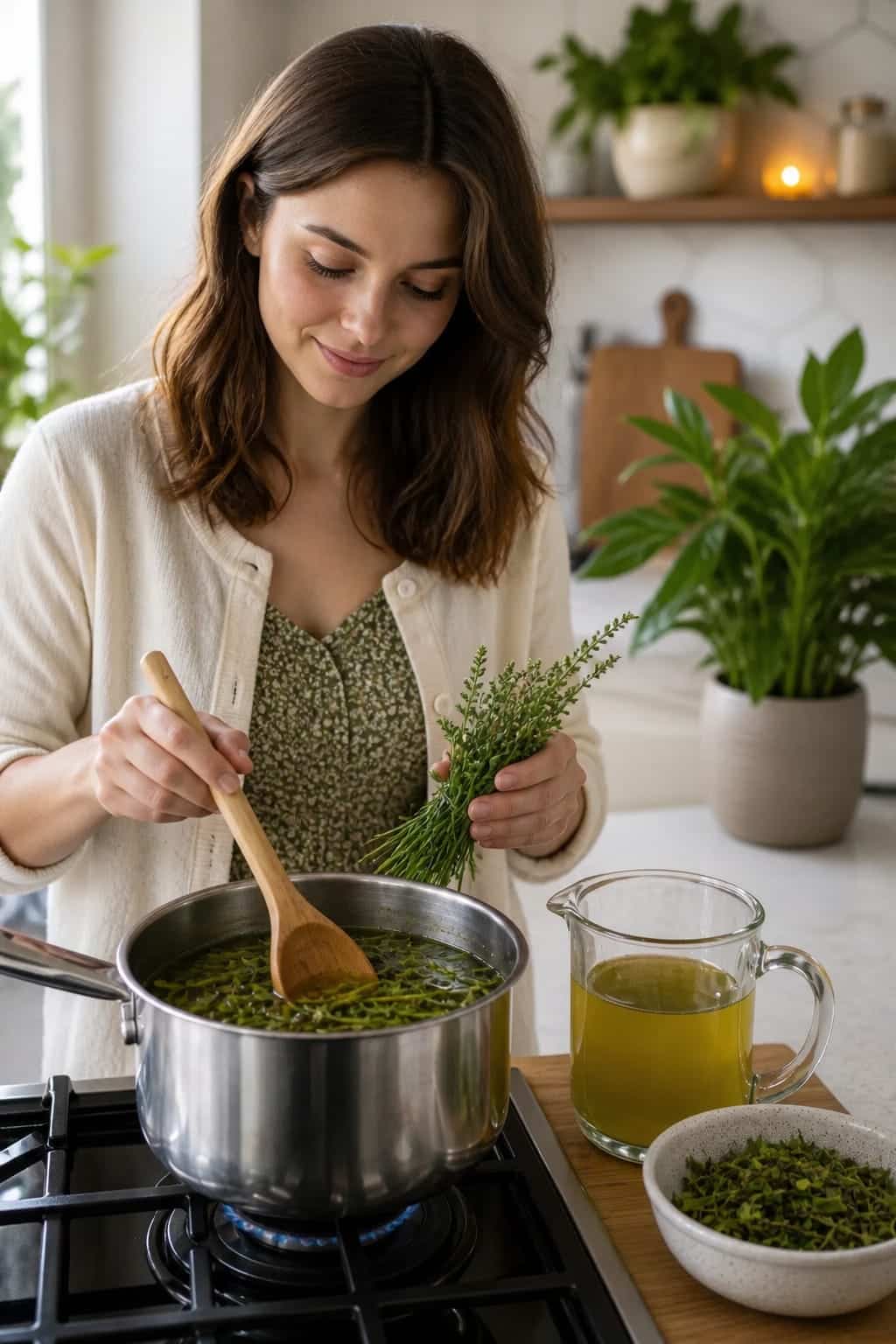
The image of simmered green herbs and a glass pitcher of golden liquid captures the idea beautifully: a homemade fertilizer made from a simple wild plant. But the real secret is not just the herb. It is how carefully you use it.
Always dilute the infusion. Apply it only to slightly dry soil. Keep it away from the leaves and crown. Let the pot drain fully. Use it occasionally during the growing season, not every week.
With the right care, your peace lily can reward you with glossy green leaves, stronger roots, and elegant white blooms that make your indoor garden feel fresh, peaceful, and alive.