Peace lilies are one of the most loved indoor plants because they bring elegance into a room without demanding constant attention. Their deep green leaves, soft white blooms, and graceful shape make them perfect for living rooms, bedrooms, offices, apartments, and bright indoor corners. But even though peace lilies are considered easy houseplants, they can become dramatic when something is wrong.
One week the leaves are glossy and upright. The next week they droop, turn pale, develop brown tips, or stop producing flowers completely. Many plant owners immediately reach for bottled fertilizer, but peace lilies do not always respond well to strong feeding. Too much fertilizer can burn the roots, damage leaf tips, and make the plant even more stressed.
That is why more indoor gardeners are experimenting with gentle homemade plant tonics. One of the most interesting natural options is ribwort plantain, also known as Plantago lanceolata. This common wild herb is often found in lawns, meadows, garden edges, and open green spaces. When prepared carefully as a weak herbal infusion, it can become a mild soil-supporting tonic for peace lilies.
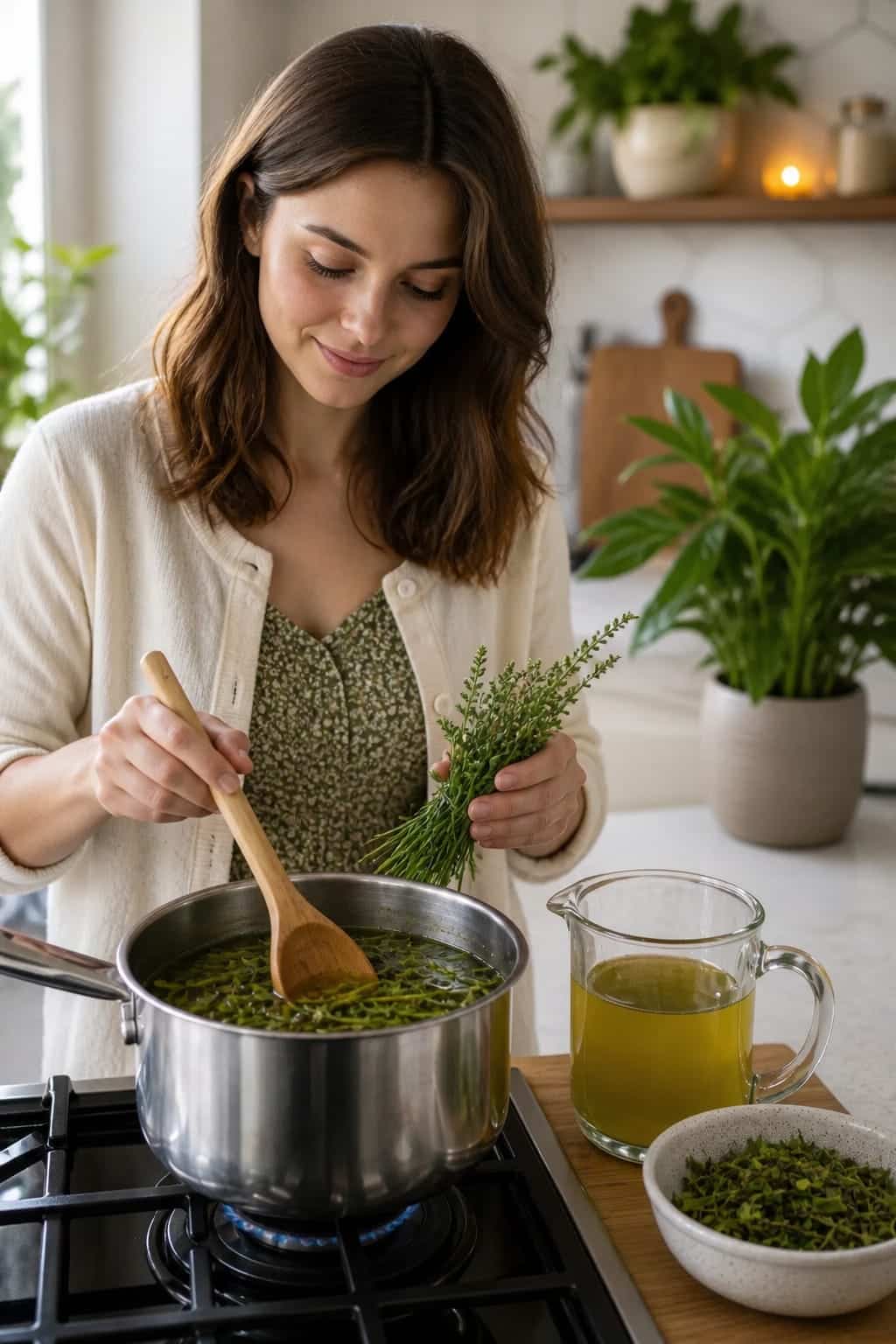
The image shows a woman preparing a green herbal liquid in a kitchen. Fresh ribwort plantain stems and leaves are being simmered in water, then strained into a glass pitcher. This visual perfectly captures a natural indoor plant care trick: turning a simple wild herb into a gentle homemade fertilizer for peace lilies.
The goal is not to force huge leaves overnight. The goal is to support healthy roots, refresh tired potting soil, and help the plant grow steadily without fertilizer burn.
What Is Ribwort Plantain?
Ribwort plantain, or Plantago lanceolata, is a hardy wild plant with narrow leaves and tall seed spikes. Many people walk past it without noticing it because it grows so commonly in grassy areas. It is not the same as banana plantain. It is a small herbaceous plant often called narrowleaf plantain, ribgrass, or English plantain.
For gardening purposes, ribwort plantain is interesting because it grows strongly in poor soil and contains natural minerals and organic compounds. When its leaves are steeped or gently simmered in water, they release a mild green infusion that can be diluted and used as a light soil tonic.
This type of homemade fertilizer is not a complete replacement for balanced houseplant fertilizer, but it can be used occasionally as part of a natural plant care routine.
Why Peace Lilies Need Gentle Feeding
Peace lilies do not like aggressive feeding. They are not heavy-feeding plants like tomatoes, roses, or fast-growing outdoor annuals. Indoors, they usually grow at a moderate pace and prefer stable conditions.
When peace lilies receive too much fertilizer, they may develop brown leaf tips, yellowing edges, weak roots, or salt buildup in the soil. In many cases, a peace lily that looks hungry is actually dealing with overwatering, poor drainage, low light, or mineral buildup from tap water.
A mild ribwort plantain infusion works best because it is gentle. It gives the soil a light refresh without overwhelming the roots. It fits the way peace lilies grow: steady, balanced, and sensitive to extremes.
Why Gardeners Use Ribwort Plantain for Indoor Plants
Ribwort plantain infusion is popular among natural gardening fans because it is simple, inexpensive, and mild. Instead of using a strong chemical fertilizer, the gardener extracts a weak herbal liquid and applies it carefully to the soil.
When used correctly, this plant-based tonic may help:
- Refresh tired indoor potting soil
- Support healthy root activity
- Encourage balanced peace lily growth
- Reduce reliance on strong synthetic fertilizer
- Support microbial life in the potting mix
- Provide a gentle homemade plant food option
- Lower the risk of fertilizer burn when heavily diluted
The most important word is gentle. Peace lilies respond better to light support than to heavy feeding.
The Best Peace Lily Fertilizer Is Never Too Strong
Many people think a plant that is not blooming needs more fertilizer. Sometimes that is true, but often it is not. Peace lily flowers depend on several factors: bright indirect light, healthy roots, proper watering, and a mature plant. Fertilizer helps only when the rest of the care routine is already correct.
If a peace lily is sitting in a dark corner, fertilizer will not make it bloom. If the roots are rotting in wet soil, fertilizer will not fix the damage. If the plant has brown tips from salt buildup, adding more fertilizer can make things worse.
This is why a weak herbal infusion is safer than a strong feeding routine. It supports the soil without shocking the plant.
How to Make Ribwort Plantain Infusion for Peace Lilies
The image shows ribwort plantain being gently simmered in a pot. This is a good visual method, but the liquid must be diluted before it touches the plant. Concentrated herbal extract should never be poured directly into a peace lily pot.
Ingredients
- 1 small handful fresh ribwort plantain leaves
- 3 cups clean water
- 1 pot
- 1 wooden spoon
- 1 strainer
- 1 glass jar or pitcher
Preparation
- Collect fresh ribwort plantain from a clean area.
- Rinse the leaves thoroughly to remove dust, soil, and insects.
- Chop the leaves lightly.
- Add them to a pot with 3 cups of water.
- Warm gently for 5 to 8 minutes.
- Do not boil aggressively.
- Turn off the heat and let the mixture cool completely.
- Strain the liquid well.
- Dilute before using on peace lilies.
The finished infusion should be light green or pale golden-green. If it is dark, thick, or strong-smelling, dilute it more.
The Correct Dilution
Dilution is the part that protects your peace lily. A strong herbal liquid can stress roots, especially in a small indoor pot.
Use this safe ratio:
1 part ribwort plantain infusion + 4 parts clean water
For example, mix:
- ¼ cup cooled infusion
- 1 cup clean water
This creates a weak plant tonic that is much safer for indoor use. If your peace lily is small, newly repotted, or already stressed, dilute it even more.
How to Apply It to a Peace Lily
Apply the diluted infusion only to the soil. Do not spray it on the leaves. Do not pour it into the center crown of the plant. Peace lilies can develop crown problems if moisture sits too long in the tight base of the stems.
Use the infusion like a light watering, but only when the plant actually needs moisture.
Application steps:
- Check the soil first.
- Use only when the top inch of soil feels slightly dry.
- Pour the diluted infusion around the outer edge of the pot.
- Avoid soaking the crown.
- Let excess liquid drain out fully.
- Empty the saucer after watering.
For a medium peace lily, use a modest amount. The soil should become lightly moist, not swampy.
How Often Should You Use Ribwort Plantain Infusion?
Use it occasionally, not weekly. Once every four to six weeks during spring and summer is enough for most peace lilies. During fall and winter, reduce or stop feeding unless the plant is actively growing in bright indoor light.
Peace lilies do not need constant fertilizer. Too much homemade plant food can still cause problems, even when it is natural.
A gentle monthly tonic during the growing season is safer than frequent feeding.
Do Not Use It on Wet Soil
Never pour ribwort plantain infusion into already wet soil. Peace lilies like evenly moist soil, but they do not like soggy soil. Wet soil blocks oxygen from the roots and can lead to root rot.
Before applying the infusion, touch the soil. If the top inch is still damp, wait. If the plant is drooping but the soil is wet, the issue may be root stress, not thirst.
Adding more liquid to a wet pot is one of the fastest ways to damage peace lily roots.
Why Peace Lily Roots Matter Most
Healthy roots are the foundation of peace lily care. A peace lily with strong roots can produce glossy leaves and white blooms. A peace lily with damaged roots will struggle even if you use the best homemade fertilizer.
Roots need three things:
- Moisture
- Oxygen
- Loose, well-draining soil
Most peace lily problems happen when one of these is missing. Too little water causes wilting. Too much water causes rot. Dense soil reduces oxygen. A gentle infusion can support the root zone, but it cannot fix poor drainage or constant overwatering.
Continue to Page 2
Continue to page 2 for more details about this article and the key points many readers miss on the first page.