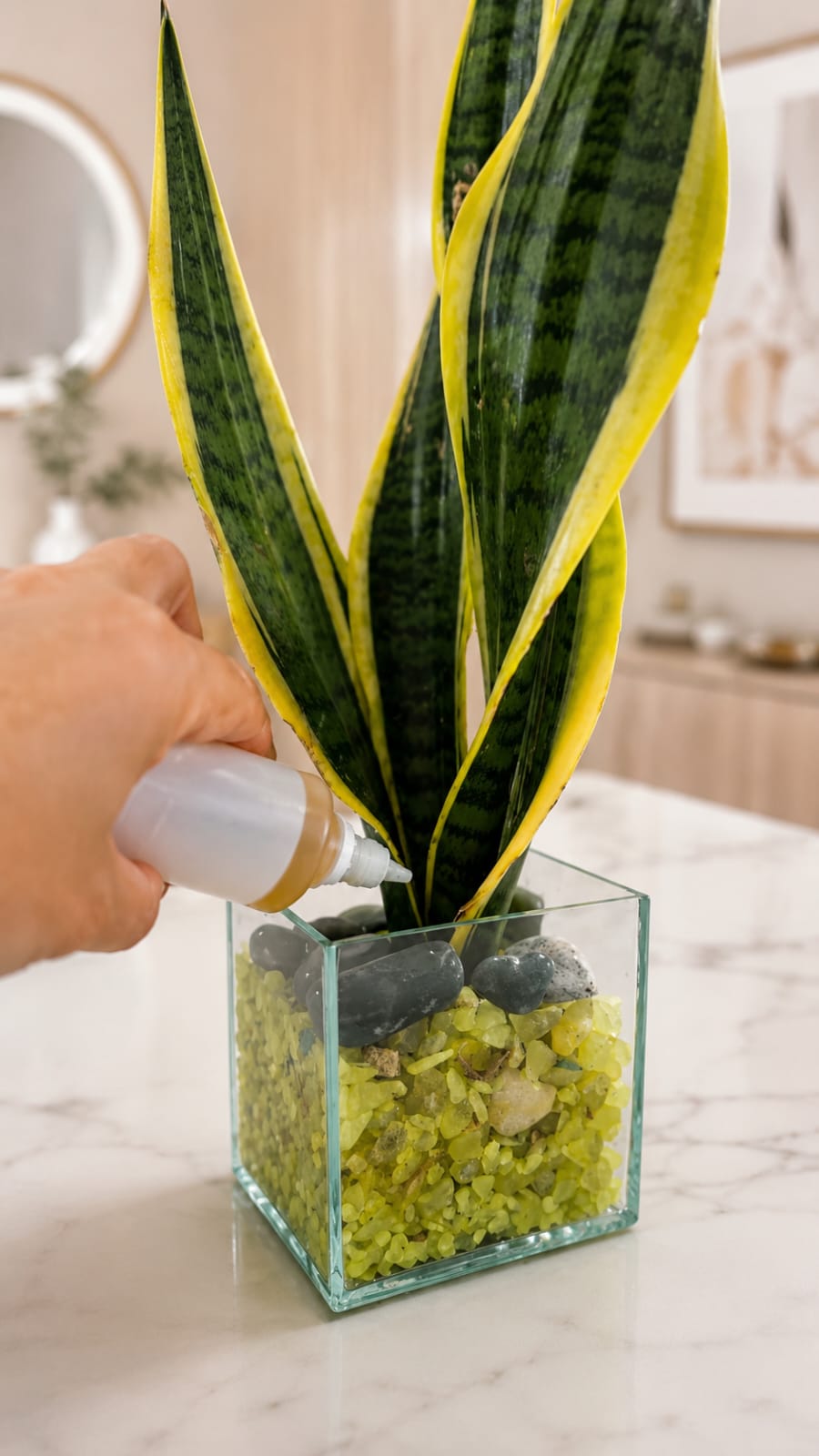
How to Water a Snake Plant in a Glass Stone Setup
Watering is the part of this trick that needs the most care. A snake plant in a glass container should not be watered heavily just because the top layer looks dry. Decorative stones can hide moisture below the surface, which means the lower root area may still be wet even when the top looks clean.
If the plant is in a removable nursery pot inside the glass container, it is safer to remove the inner pot for watering, let it drain fully, and then return it to the display. This protects the roots while keeping the polished look. If the plant is directly planted in the glass container, watering should be very small and carefully spaced out.
A moisture meter can help after soil planting, but observation is also important. If condensation appears inside the glass, if the lower area looks wet for days, or if the plant begins to soften, the setup may need less water, more airflow, or a different container strategy.
Best Container Choices for This Snake Plant Trick
The container is both a care choice and a design choice. A snake plant arrangement looks best when the container supports the upright structure of the leaves. A square glass vase creates a clean modern look, while a rounded glass vase creates a softer decorative style. A decorative ceramic pot with drainage may be easier for long-term care.
A clear glass container makes the stone layer part of the design. It can look very premium on a shelf, console, countertop, or table. However, it needs more moisture control than a normal pot. A ceramic pot with drainage holes or a hidden nursery pot may be more practical for homeowners who want beauty with less maintenance risk.
Self-watering pots should be used carefully with snake plants. They can help some houseplants, but if the reservoir keeps the soil too moist, the risk of root rot can increase. Snake plants usually prefer a drier rhythm than many moisture-loving indoor plants.
Glass Vase and Pot Comparison Table
| Container Type | Best Feature | What to Watch For |
|---|---|---|
| Square glass vase | Creates a clean, modern, structured display | Needs careful watering because drainage is limited |
| Rounded glass vase | Softens the upright shape of snake plant leaves | Can hold moisture if used without a drainage plan |
| Decorative ceramic pot | Creates a refined indoor plant styling look | Needs drainage holes or a removable inner pot |
| Plastic nursery pot | Practical, lightweight, and usually drains well | May need an outer container for a more polished look |
| Terracotta pot | Allows moisture to dry more naturally | May dry faster in warm or sunny rooms |
| Self-watering pot | Can support watering consistency for some plants | May keep snake plant roots too wet if not managed carefully |
Indoor Lighting and Plant Grow Lights for This Arrangement
Snake plants can tolerate lower light, but they often look cleaner and stronger in brighter indoor positions. Bright indirect light helps the plant maintain stronger color, use water more efficiently, and hold a more upright shape. In a glass container setup, good light can also help reduce the risk of the root area staying wet for too long.
For homes without strong natural light, plant grow lights can be useful. This is especially helpful in apartments, offices, shaded rooms, and winter conditions. A plant grow light should be used as gentle support, not harsh exposure. It should not be placed too close to the leaves or the glass container because too much heat can stress the plant.
Good lighting also improves the decorative effect of the arrangement. The yellow stones look brighter, the green leaves look cleaner, and the glass container feels more polished. The goal is bright, calm, indirect light that supports both plant health and home styling.
Lighting Support Table for Snake Plant Glass Arrangements
| Lighting Option | How It Helps | Best Use |
|---|---|---|
| Bright indirect window light | Supports stronger growth and cleaner leaf color | Best everyday placement for a glass container arrangement |
| Morning sun | Provides gentle brightness without excessive heat | Can work if the glass container does not overheat |
| Filtered afternoon light | Gives brightness while reducing stress | Useful near sheer curtains or bright rooms |
| Plant grow lights | Can support growth when natural light is weak | Helpful for winter, apartments, offices, and darker rooms |
| Low-light corner | May keep the plant alive but can slow growth | Better for short display periods than active growth |
| Harsh direct sun | Can heat the glass and stress the plant | Use caution, especially near strong afternoon windows |
Indoor Plant Care Tools That Make This Trick Easier
A glass container snake plant arrangement is simple, but the right indoor plant care tools can make it safer and cleaner. A narrow-tip applicator bottle helps apply Bokashi-style tonic in a small controlled amount. A small scoop helps place decorative stones neatly around the base. A soft brush or cloth helps keep the glass clean. Clean pruning scissors are useful if a damaged leaf or soft base needs trimming.
A moisture meter can help when the plant is in soil, although stone layers can sometimes make the surface harder to read. A potting mat can make setup and repotting less messy indoors. If the arrangement uses a hidden nursery pot, a tray can help catch drainage after watering before the plant is returned to the glass container.
These tools are not about making the routine complicated. Their value is control. A clean glass arrangement stays attractive only when moisture, stones, roots, and container surfaces are managed carefully.
Indoor Plant Care Supplies Table
| Supply | Why It Helps | How It Supports This Trick |
|---|---|---|
| Yellow decorative stones | Create a warm, bright, styled base | Useful around the snake plant for support and appearance |
| Clear glass container | Makes the arrangement look modern and refined | Works best with careful watering and drainage planning |
| Bokashi-style plant tonic | May support the root zone when used lightly | Apply sparingly and follow product directions |
| Narrow-tip applicator | Helps control liquid placement | Prevents heavy pouring in a closed container |
| Plant grow light | Supplements light in darker rooms | Can support better growth and leaf strength |
| Well-draining cactus mix | Supports root health when soil is used | Helps reduce soggy conditions around snake plant roots |
Product-Support Choices Without Making the Routine Complicated
Many homeowners want to know what to buy for a better snake plant display, but the goal should not be to collect too many products. The better approach is to choose a few items that solve real problems. A clear glass container improves styling. Yellow decorative stones create a clean surface. A well-draining cactus mix helps protect roots. A narrow-tip applicator helps control tonic use. A plant grow light may help in darker rooms. A gentle indoor plant fertilizer may support growth when the plant is healthy.
None of these items guarantees a perfect plant. They simply help create better conditions. That is the right way to think about plant-care products. They are not miracle solutions. They are support tools that help the plant stay stable, clean, and attractive.
The same is true for the yellow stone and Bokashi trick itself. It can make the arrangement look cleaner and more refined, and the tonic may support the root zone when used carefully, but it should not replace the basics. Better soil, better drainage planning, better light, and better watering habits matter more than any single product.
Commercial Care Support Table for Higher-Quality Indoor Styling
| Care Category | Helpful Option | Why Homeowners Consider It |
|---|---|---|
| Container | Square glass vase or decorative glass planter | Creates a clean modern display and makes the setup feel premium |
| Styling layer | Yellow decorative stones or polished gravel | Supports the base and gives a finished designer look |
| Root support | Bokashi-style plant tonic or gentle indoor plant fertilizer | May support growth when used lightly and correctly |
| Lighting | Plant grow lights for indoor plants | Helpful when natural light is weak, especially in apartments or offices |
| Soil and drainage | Well-draining cactus mix or houseplant drainage mix | Helps reduce soggy soil and supports cleaner root conditions |
| Maintenance tools | Applicator bottle, soft cloth, small scoop, and moisture meter | Helps keep the arrangement clean and controlled |
Premium Home Decor Placement for This Snake Plant Arrangement
A snake plant in a glass container with yellow stones works best when it is treated like a small sculptural decor piece. It does not need many accessories around it. In fact, it often looks more expensive when it has breathing room. A bright side table, console, bathroom counter, bedroom dresser, home office shelf, or living room corner can all make the arrangement feel intentional.
The yellow stones bring warmth, while the snake plant leaves bring height and structure. The clear glass container adds a light modern feeling that works well with neutral colors, soft walls, natural wood, minimal furniture, and calm decorative accents.
The goal is not to overstyle the arrangement. The goal is to let the clean container, warm stone layer, and upright leaves do the work. When the plant is healthy and the moisture is controlled, the whole display can make a room feel fresher, calmer, and more beautifully cared for.
Design and Placement Table
| Styling Element | Better Choice | Why It Adds More Value |
|---|---|---|
| Container | Square glass vase, rounded glass vase, or neutral ceramic pot | Makes the snake plant look more intentional and premium |
| Base layer | Yellow stones, polished pebbles, or decorative gravel | Creates a warm, clean, modern finish |
| Placement | Bright table, shelf, entryway, bedroom, office, or living room corner | Supports growth while making the plant visually important |
| Surface | Console, countertop, side table, bathroom shelf, or clean desk | Turns the plant into a decorative focal point |
| Decor pairing | Neutral ceramics, wood tones, soft walls, simple art, or woven baskets | Helps the green leaves and yellow stones stand out without clutter |
| Final effect | Upright snake plant leaves in a clear container with warm stones | Makes the room feel cleaner, calmer, and more refined |
Why This Yellow Stone and Bokashi Trick Is Not a Miracle Shortcut
This point should stay clear. Yellow stones and Bokashi-style tonic do not guarantee a healthier snake plant by themselves. The stones may help stabilize the plant and improve the display, while the tonic may support the root zone when used carefully, but neither one replaces healthy roots, bright indirect light, proper moisture control, and a suitable growing setup.
If the plant base is damaged, soft, or rotting, the container will not fix the problem. If the soil is dense and wet, the tonic may make the issue worse. If the arrangement sits in a dark corner, growth may slow down. If the glass container traps too much water, the plant may decline even though the display looks attractive.
The strongest result usually comes from the full system. A clean glass arrangement may look elegant, but the whole environment determines how well the snake plant responds.
Frequently Asked Questions
What is the yellow stone snake plant trick?
It is a decorative root-zone support method where a snake plant is styled in a glass container with yellow stones around the base. A light Bokashi-style tonic may be applied carefully near the root zone as part of a balanced care routine.
Do yellow stones help snake plants grow?
Yellow stones mainly help with support and styling. They can stabilize the plant and create a cleaner surface, but they do not replace soil, fertilizer, light, or proper watering.
Can Bokashi tonic be used on snake plants?
A Bokashi-style plant tonic may be used cautiously if it is diluted and applied according to product directions. It should be used lightly, especially in glass containers or pots without drainage.
Can this trick cause root rot?
Yes, it can if too much liquid is used, if water collects in the container, or if the plant is sitting in wet conditions. Root rot prevention depends on controlled moisture, healthy roots, and a proper drainage plan.
What is the best soil for snake plants?
The best soil for snake plants is usually a loose, fast-draining mix. A well-draining cactus mix or houseplant drainage mix with perlite, pumice, coarse sand, or bark can help reduce soggy root conditions and support healthier growth.
Can indoor plant fertilizer replace Bokashi tonic?
A gentle indoor plant fertilizer may be more reliable for nutrient support when used correctly during active growth. Bokashi-style tonic may support the soil environment, but it should not automatically replace a complete fertilizer.
Are glass containers good for snake plants?
Glass containers can look very refined, but they need careful watering because many do not have drainage holes. A hidden draining inner pot is often the safer long-term option.
Can plant grow lights help this arrangement?
Plant grow lights may help when natural light is weak, especially in apartments, offices, or darker rooms. They should be placed at a safe distance and used as gentle support rather than harsh exposure.
Final Thoughts
The yellow stone and Bokashi-style snake plant trick is best understood as a decorative root-zone support idea, not a miracle growing method. A clear container, warm yellow stones, smooth accent rocks, and a small amount of carefully applied plant tonic can make a snake plant look modern, bright, and refined, but the setup still needs smart care. The root area should not stay wet, the tonic should not be overused, and the plant should receive bright indirect light.
The best result does not come from the stones or tonic alone. It comes from the full care system around the plant. That includes healthy snake plant roots, a well-draining cactus mix or houseplant drainage mix when soil is used, careful watering, a proper container strategy, bright indoor light, and cautious use of indoor plant fertilizer or Bokashi-style support when appropriate. Product-support choices such as decorative glass vases, plant grow lights, narrow-tip applicator bottles, moisture meters, decorative stones, and drainage-friendly potting mixes can all help when they solve real care problems without overwhelming the plant.
When those parts work together, a snake plant becomes more than a low-maintenance houseplant. It becomes a clean, sculptural indoor design feature. The upright leaves look sharper, the yellow stone layer feels warm and polished, and the room can feel calmer, brighter, and more beautifully maintained.