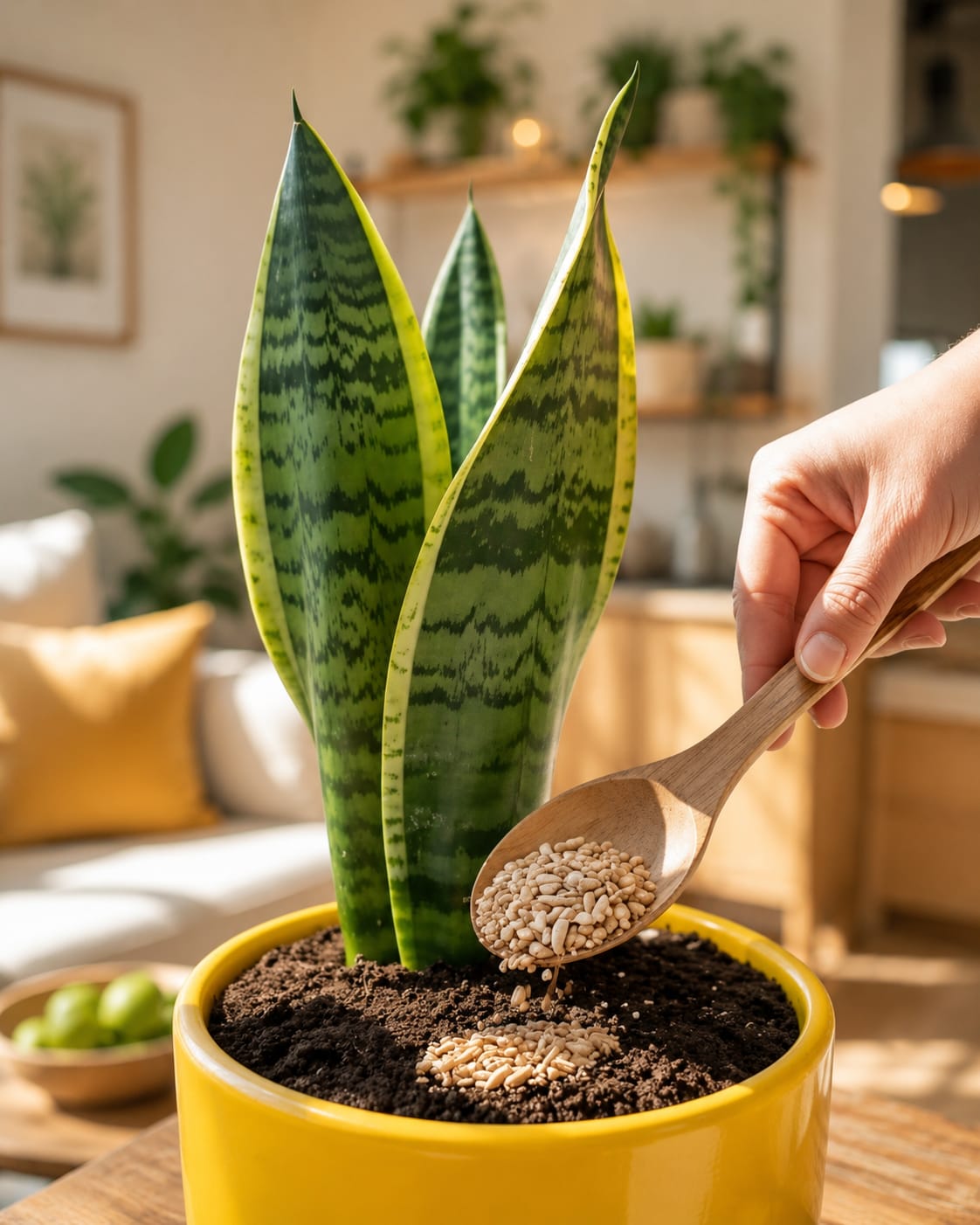
Snake plant is one of the most dependable indoor plants for people who want strong upright leaves, simple care, and a clean modern look that fits beautifully in living rooms, bedrooms, home offices, apartments, entryways, windowsills, plant shelves, and premium indoor plant displays. Its sword-shaped foliage, green patterned surface, yellow-edged variegation, thick water-storing leaves, and bold architectural shape make it a favorite for indoor plant styling, modern apartment decor, low-maintenance houseplant care, commercial interior landscaping, luxury home staging, and polished property presentation. When a snake plant is healthy, it looks structured, elegant, and almost effortless.
Many homeowners become curious when they see small white pellets being added around a snake plant. These pellets may be slow-release fertilizer granules, controlled-release plant food, perlite pieces, mineral soil amendments, pumice chips, or another dry root-zone support material. The idea is usually connected with fuller growth, stronger leaves, healthier roots, and a cleaner indoor look. However, snake plants are not heavy feeders, and they do not like rich wet soil. Any pellet-style product must be used carefully because too much fertilizer, too much moisture, or the wrong material can damage the roots instead of helping the plant.
A snake plant does not need a thick layer of pellets piled around the base. It needs fast-draining soil, a pot with drainage holes, bright indirect light, long dry-down periods between watering, and only light feeding during active growth. Small white pellets can be helpful only when they are clearly plant-safe and used in the correct amount. If they are fertilizer pellets, they should be measured according to the pot size and kept away from the crown. If they are perlite or pumice, they can improve drainage and soil airflow. If they are unknown pellets, they should not be used.
This guide explains what the small white pellets might be, why homeowners use them, how they may support a snake plant, how to apply them safely, when they should be avoided, what damage can happen if they are overused, and how to keep a snake plant healthy, clean, and suitable for indoor plant styling, bedroom decor, home office greenery, modern apartment interiors, commercial plant displays, luxury home staging, and premium houseplant presentation.
Quick Answer
Small white pellets can be used around a snake plant only if they are clearly identified and safe for houseplants. They may be slow-release fertilizer pellets, perlite, pumice, or another mineral soil amendment. Slow-release fertilizer can support steady growth when used lightly during active growth, but too much can burn roots or create salt buildup. Perlite and pumice are not fertilizers, but they can improve drainage and help the root zone stay airy. The pellets should be placed lightly around the outer soil surface or mixed into the top layer, away from the leaf bases and crown. Snake plants still need fast-draining soil, drainage holes, bright indirect light, and watering only when the soil has dried well. Pellets should never replace proper watering and drainage.
What Plant This Is
The plant is a snake plant, also known as Sansevieria or Dracaena trifasciata. It is recognized by its upright sword-like leaves, green marbled patterning, yellow-edged margins, and thick succulent-like structure. It is one of the most popular indoor plants because it tolerates missed watering, lower light, and busy routines better than many houseplants.
Snake plants grow from underground rhizomes that store water and energy. These rhizomes help the plant survive dry periods, but they can rot if the soil remains wet too long. This is why any pellet, powder, fertilizer, or soil amendment must be used in a way that protects the dry-friendly root zone.
A healthy snake plant usually has firm upright leaves, stable color, clean leaf bases, and soil that smells fresh and earthy. If the plant has soft leaves, yellowing at the base, sour soil, mold, or fungus gnats, the problem is usually related to watering, drainage, soil, or root health. Pellets should not be used to hide those problems.
What the Small White Pellets Might Be
The small white pellets may be slow-release fertilizer granules. These are designed to release nutrients gradually when the soil is watered. They can be useful for some indoor plants when used correctly, but snake plants need only light feeding. A heavy amount of fertilizer pellets can create nutrient buildup, root burn, and brown leaf tips.
The pellets may also be perlite. Perlite is a lightweight white volcanic material commonly added to potting mixes to improve drainage and airflow. It does not feed the plant directly, but it helps keep the soil from becoming too dense. In snake plant care, perlite can be very useful because it helps water move through the pot faster.
The pellets may be pumice, a heavier mineral amendment that improves drainage while staying more stable than perlite. Pumice can support root oxygen and prevent the mix from compacting. If the pellets are pumice or perlite, they are usually more about soil structure than feeding.
The important point is that the pellets must be identified before use. A white pellet is not automatically safe. Some pellets may be decorative filler, moisture beads, cleaning material, pest products, or unknown household items. Unknown pellets should never be added to a snake plant pot.
Why Homeowners Add White Pellets
Homeowners add white pellets because they want a simple way to support fuller growth and stronger leaves. The pellets look neat, controlled, and easy to apply. Unlike liquid mixtures, they do not splash the leaves or immediately soak the soil. This makes the method look cleaner and more suitable for indoor plant displays.
If the pellets are slow-release fertilizer, the goal is usually steady feeding. Instead of adding liquid fertilizer often, the plant receives small amounts over time. This can be convenient, but it must be used lightly with snake plants because they are not heavy feeders.
If the pellets are perlite or pumice, the goal is better drainage. Many snake plant problems come from soil that stays wet too long. Adding airy mineral material to the mix can help roots breathe and reduce the risk of rot. In many cases, drainage support is more useful than fertilizer.
What This Method Should Not Be Misunderstood As
This method should not be misunderstood as an instant growth trick. Snake plants grow slowly by nature. White pellets will not make the plant produce new leaves overnight. Fuller growth depends on healthy rhizomes, enough light, correct watering, and time.
It should not be misunderstood as a cure for root rot. If the plant is already suffering from wet soil, mushy roots, or soft leaf bases, fertilizer pellets can make stress worse. The correct solution is to inspect the plant, remove damaged roots, repot into fast-draining soil, and adjust watering.
It should also not be misunderstood as a reason to water more. Fertilizer pellets usually release nutrients when water is added, but that does not mean the plant should be watered frequently. Snake plants still need soil to dry well between waterings. Watering more often to “activate” pellets can create rot.
How to Use Fertilizer Pellets Safely
If the white pellets are slow-release fertilizer, they should be used sparingly. The amount should match the pot size and the product instructions, but for snake plants it is often safer to use less than the maximum amount. More fertilizer does not mean better growth. It can create root stress.
The pellets should be placed around the outer soil surface, away from the leaf bases and central crown. They can be lightly mixed into the top layer of soil, but they should not be pushed deeply against the rhizomes. The crown should remain clean and open.
Fertilizer pellets should usually be used during spring or summer when the plant is actively growing. They should not be added during winter, after repotting stress, during root rot, or when the plant is in very low light. A slow-growing plant in a dim room cannot use nutrients quickly, so buildup becomes more likely.
How to Use Perlite or Pumice Safely
If the pellets are perlite or pumice, they can be used to improve soil structure. The best method is to mix them into the potting mix during repotting rather than simply piling them on top. When mixed through the soil, they create air pockets and help water drain more evenly.
A small amount on the soil surface can also help keep the top layer open, but it will not fix a heavy wet soil mix underneath. If the potting soil is dense, compacted, and slow to dry, repotting into a better mix is more effective than sprinkling pellets on top.
Perlite and pumice should be clean and free from dust before use. Dusty material can be rinsed lightly and allowed to drain. The goal is an airy, clean root zone, not a messy layer that clogs the soil surface.
When White Pellets Should Be Avoided
White pellets should be avoided when their identity is unknown. If the product does not have a label or the material is not clearly meant for plants, it should not be used. Snake plant roots can be damaged by unknown chemicals, salts, or moisture-holding materials.
They should also be avoided when the snake plant is already stressed. Yellow lower leaves, soft bases, mushy stems, sour soil smell, mold, fungus gnats, or soil that stays wet for many days are warning signs. Adding fertilizer during stress can make the plant weaker.
Pellets should also be avoided in pots without drainage holes if they are fertilizer. Nutrients can build up in trapped moisture, and the roots may sit in concentrated liquid after watering. Drainage holes are essential for safe feeding and watering.
Best Soil Mix for Snake Plant
Snake plants need a fast-draining soil mix. A cactus and succulent mix is often a good base. It can be improved with perlite, pumice, coarse sand, fine gravel, or small bark pieces. The goal is soil that supports the plant while allowing water and air to move freely.
Dense indoor potting soil alone may hold too much moisture, especially in low light. Garden soil should not be used indoors because it can compact and drain poorly. A heavy mix makes fertilizer pellets riskier because nutrients and moisture remain near the roots longer.
If the soil smells sour, remains wet for many days, or has a hard compacted surface, repotting may be more helpful than adding pellets. Healthy snake plant growth begins with healthy roots in breathable soil.
Choosing the Right Pot
The pot should have drainage holes. This is one of the most important rules for snake plant care. A bright yellow ceramic planter can look beautiful and modern, but it must allow excess water to escape. If the decorative pot has no drainage, the plant should remain in a draining inner pot placed inside it.
The pot should not be too large. Extra soil around a small root system can hold moisture for too long. Snake plants often perform best in a pot that fits the root ball comfortably. A slightly snug pot helps the soil dry at a safer pace.
The pot style can strongly affect the decor. Yellow planters create a cheerful contrast with green leaves. Terracotta gives a warm natural look. White ceramic feels clean and modern. Black planters create a bold architectural effect. The best pot supports both plant health and interior styling.
Watering After Adding Pellets
After adding pellets, watering should not become more frequent. Snake plants should still be watered only when the soil has dried well. If fertilizer pellets are used, nutrients may release during watering, but the plant still needs dry-down periods. Constant moisture can rot the rhizomes.
When watering is needed, use room-temperature water and water the soil evenly. Allow excess water to drain from the bottom. Empty the saucer or outer pot afterward. This helps prevent standing water and nutrient concentration around the roots.
If pellets are perlite or pumice, they do not change the basic watering rule. They may help the soil dry more evenly, but the plant still should not be watered on a fixed weekly schedule. Soil dryness is the best guide.
Light for Fuller Growth
Snake plants tolerate low light, but they grow fuller and stronger in bright indirect light. A bright window, filtered sun, or well-lit room can help the plant produce new growth over time. In low light, the plant may stay alive but grow very slowly.
Better light also helps the plant use water and nutrients more efficiently. If fertilizer pellets are added to a plant in a dark corner, the plant may not use the nutrients well. This can lead to buildup in the soil. Light should be improved before feeding heavily.
Harsh direct sun should be introduced gradually. Sudden intense sun can scorch leaves, especially if the plant was previously kept indoors in lower light. Bright indirect light is usually the safest and most effective condition for clean growth.
Feeding Snake Plants Correctly
Snake plants are light feeders. They do not need constant fertilizer to stay attractive. A mild feeding routine during spring and summer is usually enough. Fertilizer should be reduced or avoided during fall and winter, especially when the plant is in low light.
Slow-release fertilizer pellets can be convenient, but they should be used carefully. The dose should be light, and the plant should be healthy before feeding. A stressed plant should not be fertilized. Root problems must be corrected first.
If liquid fertilizer is also used, slow-release pellets may not be necessary. Combining too many fertilizers can create excess salts and root stress. A simple routine is safer than layering multiple plant food products.
Possible Damage If Pellets Are Used Incorrectly
Too many fertilizer pellets can burn roots. The plant may show brown tips, yellowing leaves, slowed growth, or general stress. Fertilizer buildup can also appear as crusty residue on the soil surface. Snake plants do not need heavy feeding, so overuse is one of the biggest risks.
If pellets are moisture-holding beads or unknown material, they can keep the root zone too damp. This is dangerous for snake plants. Moisture-holding products may be useful for some plants in certain situations, but they are usually not ideal for dry-loving snake plants.
If pellets are piled thickly around the crown, they can trap moisture near the leaf bases. This can increase the risk of crown rot. The crown should remain clean, open, and dry. Any amendment should stay lightly placed and controlled.
Warning Signs to Watch For
After adding pellets, watch for yellowing leaves, brown tips, soft bases, sour soil smell, mold, fungus gnats, white crust on soil, leaf collapse, or soil that stays wet too long. These signs suggest the plant may be stressed by too much fertilizer, poor drainage, or excess moisture.
If brown tips appear after feeding, the fertilizer may be too strong or the soil may have buildup. Stop feeding and use plain water only when the soil is dry enough. If the pot drains well, occasional flushing with plain water can help remove excess salts, but the pot must drain completely afterward.
If the leaf base becomes soft, inspect the roots and rhizomes. Healthy rhizomes are firm. Rotten rhizomes are soft, dark, or smelly. Remove damaged parts and repot into fresh fast-draining soil if needed.
Common Mistakes
One common mistake is adding too many pellets because the plant looks like it needs help. More is not better. Snake plants prefer light feeding. Another mistake is using pellets without knowing what they are. Unknown products should never be added to indoor plant soil.
Another mistake is watering more often after adding fertilizer pellets. This can keep the soil wet and increase nutrient release too quickly. The plant should still be watered only when dry. The dry-down rhythm protects the roots.
Piling pellets directly against the leaf bases is also risky. The center of the plant should stay clear. Fertilizer and soil amendments should be kept away from the crown to avoid irritation and moisture buildup.
What to Do If Too Many Pellets Were Added
If too many pellets were added, remove the excess from the soil surface as soon as possible. If they have been mixed deeply into the soil and the plant begins to show stress, repotting may be safer than trying to pick out each pellet. Fresh soil can reset the root zone.
If the pellets are fertilizer and the plant is not showing serious stress, stop all additional feeding. Water only when the soil dries well. If the pot has drainage, plain water can help move excess salts through the soil over time. The saucer should always be emptied afterward.
If the pellets are unknown, remove them completely. Do not wait for symptoms. Unknown pellets can contain ingredients that are not safe for houseplants. Replacing the top layer of soil or repotting may be the safest option.
Repotting After Pellet Problems
Repotting may be needed if the soil becomes overloaded with fertilizer, compacted, moldy, sour, or full of unknown pellets. The snake plant should be removed gently from the pot. The roots and rhizomes should be inspected carefully. Firm roots can stay, while mushy or rotten sections should be removed.
The old soil should be replaced with a fast-draining cactus or succulent mix. Perlite or pumice can be mixed throughout the soil for airflow. The crown should sit above the soil line and should not be buried deeply. A pot with drainage holes is essential.
After repotting, avoid fertilizer for a while. The plant needs time to settle. Keep it in bright indirect light and water only when the soil dries. Recovery is usually better with simple care than with more products.
How to Encourage Fuller Growth Safely
Fuller growth comes from healthy rhizomes, bright indirect light, proper watering, and a stable root environment. Snake plants may produce pups when they are mature and comfortable. Fertilizer can support this process lightly, but it cannot force it instantly.
If the plant has been in the same pot for a long time and is healthy, a light feeding during active growth may help. If the soil is old or compacted, refreshing the mix may help more than pellets. If the light is weak, moving the plant to a brighter spot may make the biggest difference.
Patience is important. Snake plants grow slowly indoors. A clean, steady routine produces stronger long-term results than aggressive feeding. The plant should be encouraged, not pushed.
Cleaning the Leaves
Snake plant leaves should be kept clean because their patterned surface and yellow edges are part of their decorative appeal. Dust can dull the foliage and reduce the premium look. A soft damp cloth can be used to wipe the leaves gently.
Fertilizer pellets should not touch the leaves. If dust from the pellets or soil gets on the foliage, wipe it away. Leaf bases should stay clean and dry. A tidy plant looks more elegant and is less likely to develop crown problems.
Leaf shine products are usually unnecessary. A healthy snake plant already has a strong architectural presence. Clean leaves, firm growth, and a neat soil surface create the best indoor display.
Indoor Decor Value
Snake plant has strong indoor decor value because it grows upright and looks structured. It can add height and greenery without spreading or creating clutter. Its bold leaves work well in minimalist rooms, warm interiors, modern apartments, offices, bedrooms, and styled plant corners.
A bright yellow pot makes the plant feel cheerful and eye-catching. The yellow container echoes the yellow leaf margins and creates a coordinated look. This type of styling can work well on windowsills, desks, side tables, and shelves where a small plant needs to stand out.
The decorative value depends on clean care. Too many visible pellets, moldy soil, fertilizer crust, or yellowing leaves can make the display look messy. A light, controlled application keeps the plant looking polished while protecting the roots.
Continue to Page 2
Continue to page 2 for more details about this article and the key points many readers miss on the first page.