Room-by-Room Styling
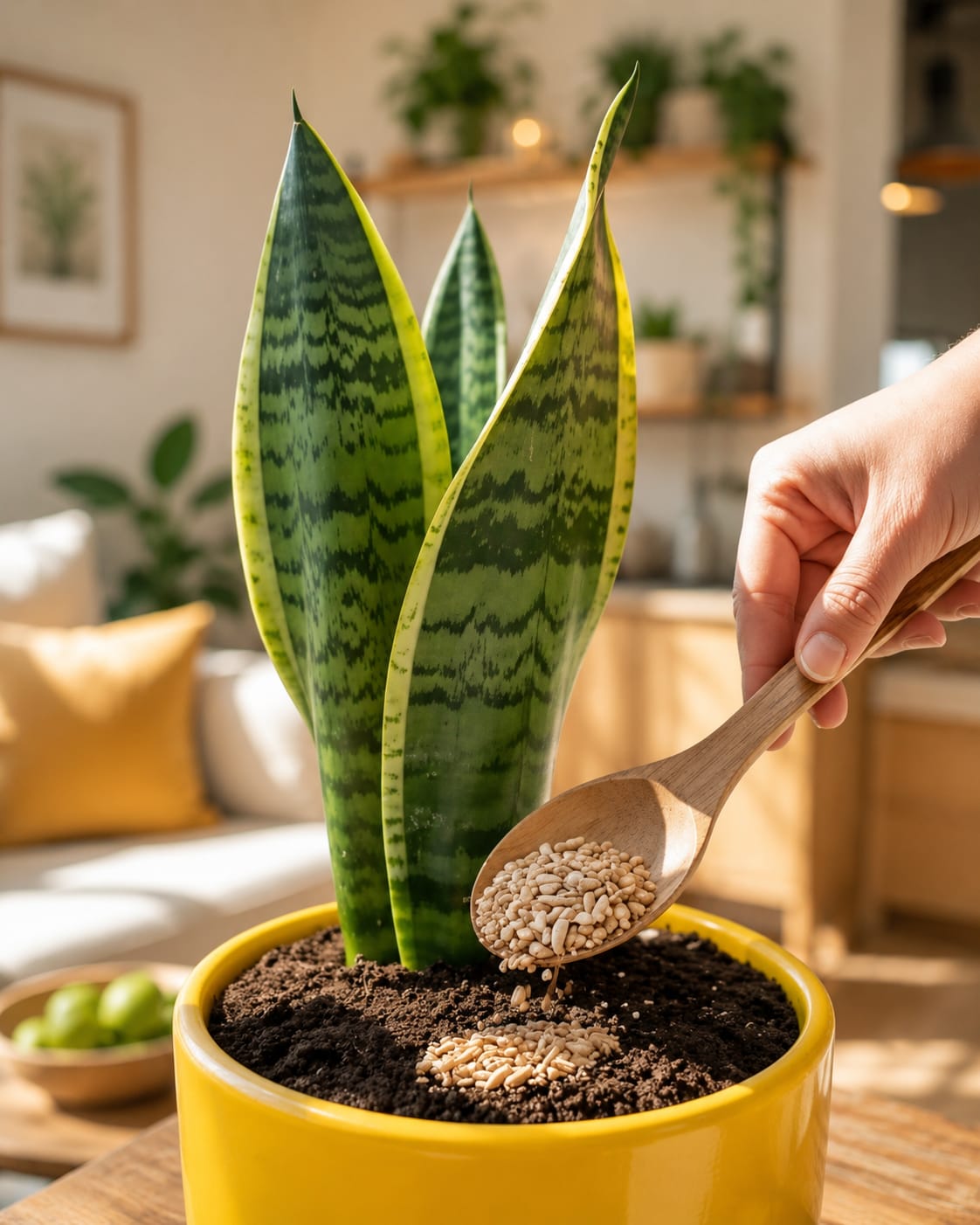
In the living room, a snake plant can sit beside a sofa, near a window, on a side table, or in a plant corner. Its upright leaves add structure, while a colorful pot adds personality. The soil surface should stay tidy and not overloaded with visible products.
In the bedroom, snake plant creates a calm and minimal accent. Fertilizer pellets should be used lightly, if at all, because bedroom plants should remain odor-free and pest-free. Good light and careful watering matter more than feeding.
In a home office, snake plant works well because it looks professional and low-maintenance. It can improve a desk area or video-call background. A bright pot can add warmth to a simple workspace. Watering should be controlled to protect furniture.
On a windowsill, the plant may receive brighter light and grow more actively. This can make light feeding more useful. However, windowsill plants can also dry faster or heat up during sunny periods. Check the soil before watering and avoid direct fertilizer contact with leaf bases.
Office and Commercial Styling
Snake plants are widely used in commercial interior landscaping because they are durable, structured, and visually clean. They work well in reception areas, office corners, meeting rooms, hotel-style interiors, boutique displays, wellness spaces, and staged properties. Their upright foliage creates a polished professional look.
For commercial spaces, slow-release pellets can be convenient if one trained person applies them correctly. However, overuse can happen if multiple people care for the plant. A clear routine is important. Professional displays should rely on measured care, not guessing.
A premium commercial snake plant should have firm leaves, tidy soil, no fertilizer crust, no standing water, and a planter that matches the interior. The care routine should be invisible. The plant should look naturally strong, not overtreated.
Product and Tool Guide
Helpful materials for snake plant care include a pot with drainage holes, cactus and succulent mix, perlite, pumice, a narrow-spout watering can, room-temperature water, clean scissors, a soft cloth, and a mild cactus or succulent fertilizer for active growth. A decorative planter can improve styling when drainage is managed correctly.
If white pellets are used, helpful materials include the labeled pellet product, a measuring spoon, and fresh potting mix if repotting is needed. The pellets should be used according to their purpose. Fertilizer pellets feed. Perlite and pumice improve drainage. Unknown pellets should be avoided.
The plant does not need complicated tricks. It needs bright indirect light, dry-friendly soil, drainage, careful watering, and light feeding only when appropriate. These basics create stronger results than heavy pellet use.
Care Timeline After Adding Pellets
During the first 24 hours, check that the pellets are not touching the leaf bases or crown. If they are fertilizer pellets, make sure the amount is light. Do not water unless the soil is already dry enough. Keep the plant in bright indirect light.
During the first week, watch for signs of moisture problems, fertilizer burn, or pest activity. Do not add more pellets. If the plant looks healthy, continue normal care and wait for the soil to dry before watering. Snake plants respond slowly, so patience is important.
After two to four weeks, the plant should remain firm and stable. Do not expect instant new leaves. After one to two months during active growth, better light and light feeding may support new growth if the rhizomes are healthy. Long-term success depends on consistency.
Professional Styling Note
In high-end indoor horticulture, snake plant is valued because it offers bold architectural foliage with very little visual clutter. It works beautifully in modern apartments, bedrooms, offices, entryways, commercial plant displays, luxury home staging, and polished property presentation. Its strong shape makes it one of the easiest plants to style professionally.
However, the premium look depends on restraint. White pellets should not cover the soil in a messy pile, touch the crown, or create fertilizer crust. A refined plant display should look clean, intentional, and healthy. Any feeding or soil-support method should be controlled and nearly invisible.
A beautiful snake plant display depends on firm leaves, healthy rhizomes, bright indirect light, fast-draining soil, drainage holes, and careful watering. Small white pellets can support the plant only when they are identified and used properly. Simple proper care creates a stronger decorative result than overfeeding or adding unknown products.
Final Thoughts
Small white pellets can be useful around a snake plant only when they are clearly identified and applied correctly. If they are slow-release fertilizer pellets, they should be used lightly and only when the plant is healthy and actively growing. If they are perlite or pumice, they can help improve drainage and root airflow. If they are unknown pellets, they should not be used at all.
The real foundation of snake plant care is bright indirect light, fast-draining cactus or succulent mix, a pot with drainage holes, room-temperature water, long dry-down periods, and restrained feeding. Pellets should never replace proper soil, watering, or drainage. They should stay away from the crown and should not be used as a quick fix for root problems.
With clean care and the right presentation, snake plant can remain a beautiful accent for living rooms, bedrooms, home offices, windowsills, modern apartments, commercial interior landscaping, luxury home staging, colorful planters, and polished property presentation. Healthy rhizomes, firm upright leaves, tidy soil, and controlled feeding will always create a stronger display than heavy pellet use or unknown plant-care shortcuts.