Best Watering Routine for Phalaenopsis Orchids – When to Water
Watering is the heart of orchid care. Most Phalaenopsis orchids should be watered when the roots turn silvery and the bark is nearly dry. If the roots are still bright green and the pot feels heavy, wait. This orchid watering guide for beginners will prevent common problems.
Basic Watering Steps
- Take the orchid to a sink.
- Run room-temperature water through the bark.
- Avoid pouring water into the crown.
- Let the pot drain completely.
- Return it to its bright location.
- Never let it sit in water.
Many indoor orchids need watering about once every 7 to 10 days, but this depends on light, temperature, humidity, pot size, and potting mix. Do not water by calendar alone.
Why You Should Keep Water Out of the Crown – Preventing Crown Rot
The crown is the center where the leaves meet. If water sits there, especially in cool rooms, crown rot can happen. Crown rot can kill a Phalaenopsis orchid quickly. This orchid crown rot prevention tip is essential.
When using any liquid, including lemon water, pour through the bark and keep the crown dry. If water accidentally gets into the crown, blot it with a paper towel.
Best Light for Blooming Orchids – Optimal Placement for Flowers
Phalaenopsis orchids bloom best in bright indirect light. They do not need harsh direct sun, but they do need enough brightness to build energy. Providing optimal light for orchid blooming is essential.
Good locations include:
- East-facing window
- Bright north-facing window
- A few feet from a south-facing window
- Filtered west-facing light
- Under a grow light
If leaves are very dark green and the plant never blooms, it may need more light. If leaves turn yellow-green or develop burned patches, it may be getting too much direct sun.
How to Encourage Orchid Reblooming – Proven Techniques
Lemon slices will not make an orchid rebloom. Reblooming depends mostly on light, root health, plant maturity, and seasonal temperature changes. For guaranteed orchid reblooming tips, focus on the basics.
To encourage reblooming:
- Give bright indirect light
- Keep roots healthy
- Water correctly
- Feed lightly during active growth
- Allow a slight nighttime temperature drop for several weeks
- Do not overpot
- Do not cut healthy green flower spikes too soon if you want side blooms
Some Phalaenopsis orchids rebloom from old spikes, while others prefer to grow a new spike after resting.
What to Do After Orchid Flowers Fade – Post-Bloom Care
After blooms fade, the orchid enters a recovery and growth phase. This phase is important. The plant needs to rebuild energy before flowering again. This orchid care after blooming guide will help.
- Remove fallen flowers.
- Check the flower spike.
- If the spike is brown and dry, cut it near the base.
- If it is green, you may cut above a node or leave it.
- Continue watering correctly.
- Feed lightly during active leaf and root growth.
- Keep the plant in bright indirect light.
This is also a good time to inspect whether the bark needs repotting.
Can Lemon Help With Mineral Buildup? – Limited Use
A very weak lemon-water rinse may help with light mineral residue, but it should not be overused. Hard water minerals can build up on orchid bark, roots, and pots. This can stress roots over time. For natural orchid mineral buildup remover, use diluted lemon very sparingly.
Better long-term solutions include:
- Using rainwater when possible
- Using filtered water
- Flushing the pot with plain water monthly
- Using fertilizer weakly
- Repotting when bark breaks down
Lemon water should be occasional, not the main solution.
Can Lemon Prevent Pests? – Not Reliable
Lemon scent may discourage some pests temporarily, but it is not a reliable pest treatment. It will not cure mealybugs, scale, spider mites, thrips, or fungus gnats. In fact, lemon slices left too long can attract pests as they decay. For natural orchid pest control, use proven methods.
If your orchid has pests, use proper pest control. Remove visible pests with a cotton swab dipped in alcohol, isolate the plant, and repeat treatment as needed. Avoid getting alcohol on delicate flowers.
Can Lemon Slices Attract Bugs? – Yes, If Left Too Long
Yes. Fresh lemon smells clean at first, but once it begins to break down, it can attract fruit flies, fungus gnats, ants, or other insects. This is why lemon slices should never be left in the pot for long.
Use lemon slices briefly and remove them completely.
Can Lemon Cause Mold? – Yes, With Prolonged Contact
Yes. Lemon pulp and juice can encourage mold if left in a moist orchid pot. Orchid bark already holds moisture in small spaces. Adding decaying fruit can create fungal growth.
If you see mold after using lemon, remove the lemon immediately, take out any affected bark pieces, improve airflow, and stop using fruit slices.
Should You Put Lemon Peels in Orchid Bark? – No
No. Lemon peels contain citrus oils and break down slowly. They can become moldy or irritating to roots. Do not bury lemon peel in orchid bark. If you want a fresh scent, place lemon peel near the pot on a small dish for a short time, not inside the pot.
Should You Spray Lemon Water on Orchid Leaves? – No, Soil Only
No. Lemon water can leave spots or damage leaf tissue if too strong. It may also make leaves sticky or sensitive to light. To clean orchid leaves, use plain water and a soft cloth.
If leaves are dusty, wipe them gently. Avoid commercial leaf shine products because they can clog leaf pores and make leaves look unnatural.
Should You Put Lemon on Orchid Flowers? – Never
No. Orchid flowers are delicate. Lemon juice can stain, damage, or shorten the life of blooms. Keep lemon away from petals and buds.
Why Orchid Buds Drop – Common Causes of Bud Blast
If your orchid has buds that yellow, shrivel, or fall before opening, this is called bud blast. Lemon will not fix it. Bud blast usually comes from stress. This why orchid buds fall off guide will help you diagnose.
Common causes include:
- Sudden temperature changes
- Cold drafts
- Dry air
- Underwatering
- Overwatering
- Low light
- Moving the plant during bud development
- Ethylene gas from ripening fruit
Interestingly, keeping fruit near orchids can sometimes be a problem because ripening fruit releases ethylene gas. Lemon slices are less likely to be a major issue than ripening bananas or apples, but leaving fruit near blooms for long periods is still not ideal.
How to Keep Orchid Blooms Fresh Longer – Flower Care Tips
To make flowers last:
- Keep the plant in bright indirect light
- Avoid direct hot sun on blooms
- Keep away from heaters and cold drafts
- Water consistently but do not overwater
- Maintain moderate humidity
- Do not spray flowers
- Keep fruit bowls away from blooming orchids
Stable conditions help flowers last much longer than any lemon trick.
Best Fertilizer for Phalaenopsis Orchids – Gentle Feeding Routine
Orchids benefit from weak, regular feeding during growth. A balanced orchid fertilizer diluted to quarter or half strength is usually better than homemade acidic tricks. The best fertilizer for orchids is used sparingly.
A simple routine is:
- Fertilize weakly every 2 to 4 weeks during active growth
- Use plain water between feedings
- Flush the pot monthly to reduce buildup
- Reduce feeding in winter or when growth slows
- Do not fertilize dry roots with strong solution
If you use lemon water, do not use fertilizer at the same time. Too many treatments can stress roots.
Natural Alternatives to Lemon for Orchid Freshness – Safer Options
If your goal is freshness, there are safer options than placing fruit in the pot. This natural orchid care guide offers gentle alternatives.
- Flush the pot with plain water
- Repot into fresh bark
- Improve airflow
- Remove dead roots and old debris
- Use clean rainwater or filtered water
- Keep the saucer dry
- Clean the outside of the pot
These methods address the actual cause of stale smells instead of masking them.
How to Use Lemon as a Display Trick Without Risking Roots – Safe Decoration
If you want the pretty look of lemon around orchids for a photo or decorative display, keep the lemon outside the root zone. This safe orchid decoration with lemon guide will help.
Safe display ideas include:
- Place lemon slices on a small dish beside the orchid
- Put lemon wedges around the saucer for a short photo session
- Use a glass pitcher of lemon water nearby as decoration
- Remove all lemon pieces after the photo
- Never bury slices in bark
This gives the fresh visual effect without exposing roots to decaying fruit.
What to Do If You Already Left Lemon in the Orchid Pot – Emergency Fix
If lemon slices have been sitting in the pot for days, remove them immediately. Check the bark around the slices. If it is wet, slimy, moldy, or sour-smelling, remove those bark pieces too. This how to fix orchid pot after lemon overuse guide will help.
Then:
- Flush the pot with plain room-temperature water.
- Let it drain completely.
- Improve airflow.
- Watch for gnats or mold.
- Repot if the potting mix smells sour.
If roots near the lemon look brown, mushy, or damaged, repotting may be necessary.
Signs the Lemon Trick Is Not Safe for Your Orchid – Troubleshooting
Stop using lemon immediately if you notice:
- Soft or mushy roots
- Sour smell from the pot
- Mold on bark
- Fungus gnats
- Sudden leaf yellowing
- Bud drop after treatment
- Flower spotting
- Sticky residue
- Bark staying wet too long
Return to plain water and basic orchid care.
Signs Your Orchid Is Healthy – Positive Indicators
A healthy Phalaenopsis orchid usually shows:
- Firm green leaves
- Plump roots
- Green roots after watering
- Silvery roots when dry
- No sour smell
- Steady root growth
- New leaves over time
- Blooms that last for weeks or months
If your orchid already looks healthy, do not overcomplicate care. Simple consistency is better than too many tricks.
Common Mistakes With Lemon and Orchids – What to Avoid
Mistake 1: Using Straight Lemon Juice
Straight lemon juice is too strong for orchid roots. Always dilute heavily, or avoid it completely.
Mistake 2: Leaving Lemon Slices in the Pot
Lemon slices rot. Use them briefly and remove them.
Mistake 3: Spraying Lemon Water on Leaves
This can cause spotting or stress. Use plain water for leaf cleaning.
Mistake 4: Treating Lemon as Fertilizer
Lemon is not orchid food. Use proper orchid fertilizer weakly during growth.
Mistake 5: Using Lemon on Sick Roots
Rotten or weak roots need cleaning and repotting, not acidity.
Mistake 6: Adding Sugar
Never add sugar to orchid water. Sugar can feed microbes and attract pests.
Mistake 7: Using Bottled Lemon Juice With Additives
Bottled lemon juice may contain preservatives. Fresh lemon diluted heavily is safer if you use lemon at all.
A Safe Orchid Care Routine With Optional Lemon – Complete Plan
Here is a balanced routine for a Phalaenopsis orchid. This complete orchid care guide will keep your plant thriving.
- Keep the orchid in bright indirect light.
- Water when roots turn silvery and bark is nearly dry.
- Let water drain completely.
- Keep water out of the crown.
- Feed weakly during active growth.
- Flush with plain water monthly.
- Repot when bark breaks down.
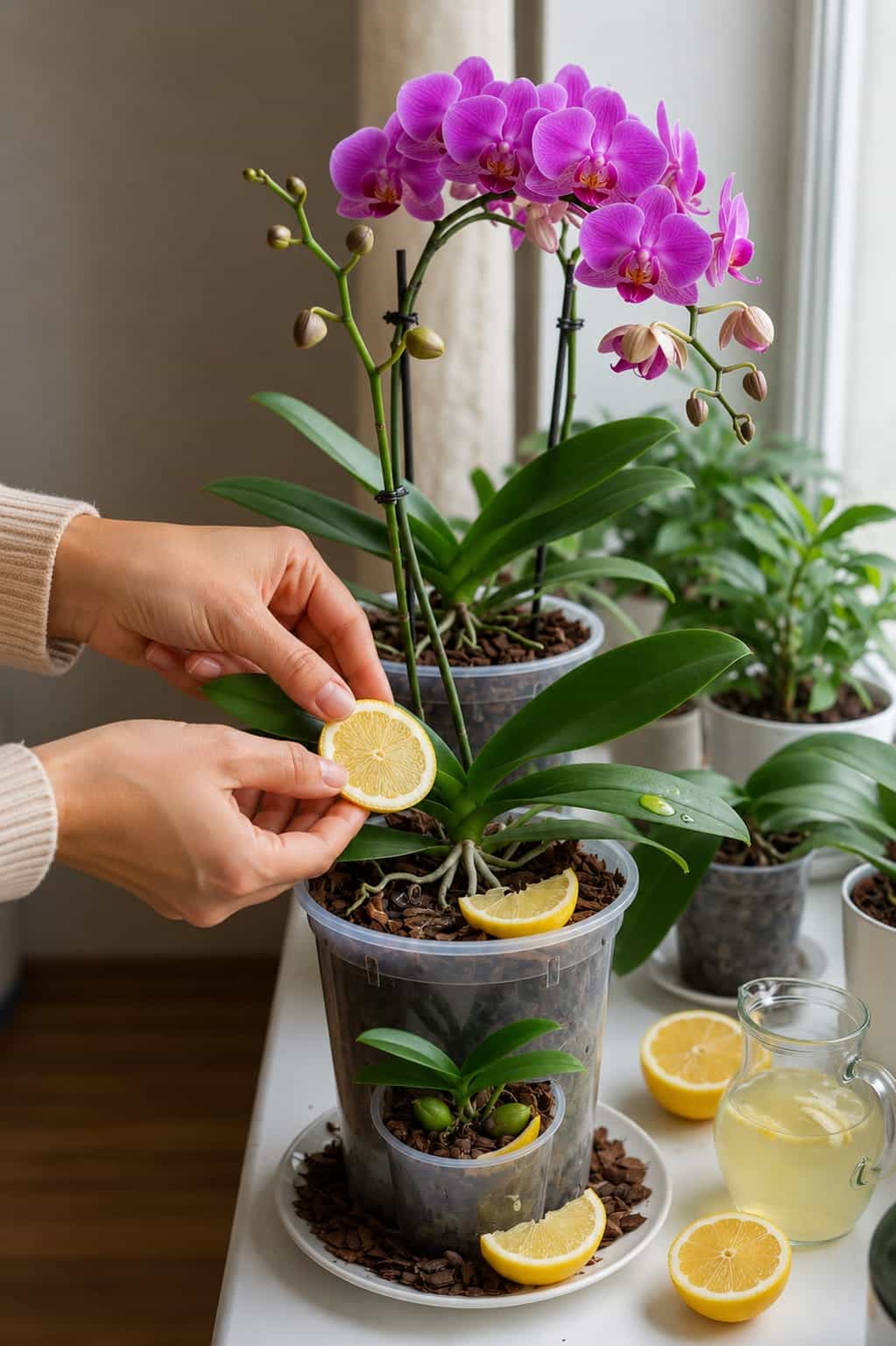
- Use lemon slices only briefly for freshness, then remove.
- Use diluted lemon water only rarely for mineral buildup.
- Watch roots carefully.
This routine keeps the orchid safe while allowing a gentle natural trick when appropriate.
Quick Lemon Slice Method Card – Step-by-Step Summary
Best for: temporary freshness and display.
- Cut one thin lemon slice.
- Remove seeds.
- Place on top of bark near the pot edge.
- Keep away from roots, crown, and leaf bases.
- Leave for 30 minutes to 2 hours.
- Remove completely.
- Do not repeat often.
Quick Diluted Lemon Water Card – Homemade Rinse
Best for: occasional light mineral buildup support.
- Mix 3 to 5 drops fresh lemon juice into 4 cups water.
- Use room-temperature water.
- Pour gently through the bark.
- Keep away from the crown and flowers.
- Drain fully.
- Use rarely, no more than once every 2 to 3 months.
Short Caption for This Trick
“To use lemon safely with orchids, never pour straight lemon juice onto the roots. For a freshening trick, place one thin lemon slice on top of the bark near the pot edge for 30 minutes to 2 hours, then remove it completely before it rots. For a very mild rinse, mix only 3 to 5 drops of fresh lemon juice into 4 cups of water, pour gently through the bark, and let the pot drain fully. Use rarely, and avoid lemon completely if the orchid has root rot, sour bark, mold, or weak roots – this natural orchid care trick freshens the potting mix without damaging delicate roots.”
Frequently Asked Questions – Lemon for Orchids Q&A
Can I put lemon slices in my orchid pot?
You can place a lemon slice on the surface briefly, but do not leave it there. Remove it after 30 minutes to 2 hours. Never bury lemon slices in orchid bark.
Is lemon juice good for orchids?
Straight lemon juice is too strong and can damage orchid roots. Extremely diluted lemon water may be used rarely, but most orchids do not need it.
Can lemon make orchids bloom?
No. Lemon does not make orchids bloom. Blooms depend on light, root health, watering, temperature changes, and plant maturity.
Can lemon freshen orchid bark?
It may temporarily freshen the surface smell, but sour or stale bark usually means the orchid needs flushing or repotting.
How long can I leave lemon on orchid bark?
Only 30 minutes to 2 hours. Remove it before it softens, leaks, or begins to decay.
Can lemon slices attract bugs?
Yes. If left too long, lemon can attract fruit flies, gnats, ants, or mold. Always remove it quickly.
Can I spray lemon water on orchid leaves?
No. Lemon water can spot or stress leaves. Clean orchid leaves with plain water and a soft cloth.
Can I use bottled lemon juice?
Fresh lemon is better if you use lemon at all. Bottled lemon juice may contain preservatives or be too concentrated.
What should I do if my orchid pot smells sour?
Remove old debris, flush with plain water, and check the bark. If the smell continues, repot into fresh orchid mix.
What is better than lemon for orchid health?
Bright indirect light, proper watering, fresh orchid bark, good drainage, and weak orchid fertilizer are much more important than lemon.
Final Thoughts – The Best Natural Orchid Potting Mix Freshener
The lemon slice orchid trick looks fresh, bright, and natural, especially when paired with blooming pink orchids on a sunny windowsill. It can be useful as a short-term surface freshener or decorative trick, and an extremely diluted lemon-water rinse may occasionally help with mild mineral buildup. But lemon must be used with caution. Orchids are not ordinary soil plants. Their roots need air, clean bark, gentle moisture, and stable conditions. This natural orchid care method is best used as an occasional supplement, not a primary treatment.
Never pour strong lemon juice on orchid roots. Never bury lemon slices in the pot. Never leave citrus pieces in the bark for days. Never use lemon as a replacement for fertilizer or proper care. If you choose to use it, keep it brief, weak, and rare. Following this complete orchid care guide will keep your plant thriving for years.
The real secret to a thriving orchid is not lemon. It is understanding the plant’s rhythm. Phalaenopsis orchids want bright indirect light, airy bark, careful watering, good drainage, and time to rest after blooming. They need healthy roots more than clever tricks. They need clean conditions more than kitchen scraps. They need consistency more than excitement. These professional indoor plant care secrets will help you succeed.
Smart homeowners use lemon thoughtfully. They may place a slice near the pot for a short freshening effect, then remove it. They may use a few drops in a large amount of water only when mineral buildup is an issue. But they do not rely on lemon to create flowers or save a sick orchid.
If your orchid is already blooming, enjoy it. Keep the roots healthy, the bark fresh, and the watering routine steady. If the flowers fade, do not panic. That is part of the orchid cycle. With patience and proper care, new roots, new leaves, and eventually new flower spikes can appear again. Lemon may add a little freshness to the routine, but healthy roots and balanced care are what truly keep orchids beautiful year after year. Start your orchid care journey today with the right fundamentals.