Why Oncidium Pseudobulbs Wrinkle – Common Causes and Fixes
Wrinkled pseudobulbs are common on Dancing Lady orchids. A little wrinkling on older bulbs is normal. Severe wrinkling may mean the plant is not getting enough water, the roots are damaged, or the air is too dry. This how to fix wrinkled Oncidium pseudobulbs guide will help.
If the newest pseudobulbs are wrinkling badly, inspect the roots and watering routine. A tonic will not fix damaged roots. The plant may need repotting or more consistent moisture.
Best Potting Mix for Dancing Lady Orchids – Airy Bark Blend
Dancing Lady orchids need a mix that holds some moisture but still allows air. Many do well in fine to medium orchid bark mixed with perlite, charcoal, or a small amount of sphagnum moss. Choosing the best potting mix for Oncidium orchids is half the battle.
Simple Oncidium Mix
- Medium or fine orchid bark
- Perlite for drainage
- A small amount of sphagnum moss for moisture
- Optional charcoal
If your home is very dry, a little moss may help. If you tend to overwater, use more bark and less moss.
When to Repot a Dancing Lady Orchid – Signs of Old Mix
Repot when the potting mix breaks down, smells sour, stays wet too long, or when the plant has outgrown the pot. Many orchids need repotting every 1 to 2 years depending on the mix. This when to repot Oncidium orchids guide helps you decide.
The best time to repot is when new growth is starting and new roots are beginning to appear. This allows the plant to establish quickly in fresh medium.
How to Repot Safely – Gentle Oncidium Transplanting
- Remove the orchid from its pot carefully.
- Shake away old bark or moss.
- Trim dead, mushy, or hollow roots with clean scissors.
- Choose a pot with drainage.
- Place the oldest pseudobulbs toward the back of the pot.
- Leave room for new growth to move forward.
- Fill with fresh orchid mix.
- Water lightly after repotting if roots are healthy.
- Keep in bright indirect light.
Do not use homemade tonic immediately after heavy root trimming. Give the plant time to settle.
Should You Fertilize While the Orchid Is Blooming? – Use Caution
During bloom, the plant is displaying energy it already stored in its pseudobulbs. You can continue very light feeding if the plant is healthy, but do not overdo it. Heavy fertilizer or strong homemade tonic during bloom can stress roots.
Plain water and stable conditions are often best while flowers are open.
Best Fertilizer Routine for Oncidium Orchids – Gentle Feeding Schedule
A balanced orchid fertilizer diluted to quarter or half strength is usually more predictable than homemade tonic. Use it during active growth, especially when new leaves and roots are forming. The best fertilizer for Oncidium orchids is used sparingly.
A simple feeding routine is:
- Feed weakly every 2 to 4 weeks during active growth
- Flush with plain water between feedings
- Reduce feeding in winter or during slow growth
- Avoid feeding dry roots with strong fertilizer
- Never combine strong fertilizer and homemade tonic at the same time
Can the Tea Tonic Replace Orchid Fertilizer? – No, Use as Supplement
No. A homemade tea tonic does not provide a complete, reliable nutrient balance. It may offer trace support, but it cannot replace a proper orchid fertilizer over the long term.
Think of it as an occasional supplement or soil refresh, not the main food source.
How to Avoid Salt and Residue Buildup – Soil Flushing Tips
Orchid roots can be sensitive to buildup from fertilizer, minerals, and homemade liquids. To prevent buildup, flush the pot with plain water occasionally. Let water run through the mix and drain fully. This helps wash away excess salts and residues. This how to flush orchid potting mix method is simple.
If you use tap water with many minerals, consider rainwater, filtered water, or distilled water mixed with fertilizer as needed.
What If the Pot Smells Sour After Using Tonic? – Emergency Fix
A sour smell means something is wrong. The tonic may have been too strong, the mix may be old, or the pot may be staying too wet. Stop using homemade liquids immediately.
Let the pot dry slightly, improve airflow, and inspect the potting medium. If the smell continues, repot into fresh orchid mix.
What If Fungus Gnats Appear? – Natural Pest Control
Fungus gnats are a sign of moist organic material. Homemade tonics can attract them if used too often or if solids remain in the pot. This natural fungus gnat control for orchids guide will help.
To reduce gnats:
- Stop homemade tonics
- Remove decaying material
- Let the top layer dry slightly between waterings
- Use yellow sticky traps
- Repot if the medium is decomposed
- Improve airflow
Can You Spray the Tonic on Orchid Leaves? – No, Soil Only
No. Do not spray homemade tea tonic on orchid leaves or flowers. It can leave residue, spot blooms, attract pests, and encourage fungal issues. Apply it only to the potting medium and let it drain.
Can You Pour It on the Flowers? – No, Avoid Blooms
No. Keep the tonic away from the flowers. Orchid blooms are delicate, and residue can shorten their display. Water the roots, not the flowers.
Why the Flowers May Drop Early – Common Causes
If your Dancing Lady orchid drops flowers quickly, the cause may be stress rather than lack of tonic. This why Oncidium orchid flowers drop guide will help you diagnose.
Common causes include:
- Sudden temperature changes
- Cold drafts
- Hot dry air
- Underwatering during bloom
- Overwatering and root stress
- Low humidity
- Moving the plant too often
- Natural end of bloom cycle
Keep conditions stable while the orchid is blooming.
How to Make Blooms Last Longer – Tips for Extended Flowering
To help flowers last, give the orchid bright indirect light, steady moisture, and moderate humidity. Keep it away from heaters, air conditioners, fruit bowls, and harsh direct sun. Do not spray the flowers. Do not overfeed during bloom. This how to make Oncidium blooms last longer guide will help.
When a flower spike finishes, cut it near the base if it dries completely.
Why New Growth Is More Important Than Old Blooms – Future Flowers
With Oncidium orchids, future flowers come from healthy new growth. Each new pseudobulb matures, stores energy, and may produce a flower spike when conditions are right. That means your care after blooming is extremely important. This how to get Oncidium orchids to rebloom guide focuses on new growth.
If you want more flowers next season, focus on growing strong new pseudobulbs now.
How to Support New Pseudobulbs – Active Growth Care
To support new growth:
- Provide bright indirect light
- Water consistently
- Do not let new growth dry severely
- Feed lightly during active growth
- Maintain moderate humidity
- Repot if the medium is old
- Avoid strong homemade liquids
A mild tea tonic may support this process, but correct care is the foundation.
Common Mistakes With Homemade Orchid Tonics – What to Avoid
Using the Tonic Too Strong
Orchid roots are sensitive. Strong organic liquid can burn roots or sour the medium. Always dilute.
Using It Too Often
More is not better. Once every 4 to 6 weeks is enough if you use it at all.
Leaving Solids in the Pot
Banana pieces, compost particles, tea leaves, or kitchen scraps can rot. Strain thoroughly.
Using It on Sick Roots
Rotten roots need cleaning and repotting, not tonic.
Pouring It Into the Crown
Keep liquids out of tight leaf bases and crowns to reduce rot risk.
Using Sweetened Drinks
Never use sweet tea, juice, soda, or sugary liquids on orchids.
Signs Your Orchid Likes the Routine – Positive Indicators
If your care routine is working, you may notice:
- Firm pseudobulbs
- New root tips
- Healthy green leaves
- New shoots emerging
- Potting mix drying at a steady pace
- No sour smell
- No gnats
- Long-lasting flowers
The best results usually appear in new growth, not old leaves or old bulbs.
Signs You Should Stop the Tonic – Troubleshooting
Stop immediately if you notice:
- Sour odor
- Fuzzy mold on the bark
- Fungus gnats
- Sticky residue
- Yellowing after use
- Mushy roots
- Pot staying wet too long
- Flower drop after stress
Return to plain water and inspect the roots if symptoms continue.
Quick Recipe Card – Gentle Orchid Tea Tonic for Oncidium
Gentle Orchid Tea Tonic
- 1 teaspoon worm castings or finished compost
- 4 cups room-temperature water
Steps:
- Mix in a clean jar.
- Let sit for 2 to 4 hours.
- Strain very well.
- Dilute with equal parts plain water.
- Pour through the orchid mix only when the plant needs watering.
- Let drain completely.
- Use no more than once every 4 to 6 weeks during active growth.
Short Caption for This Trick
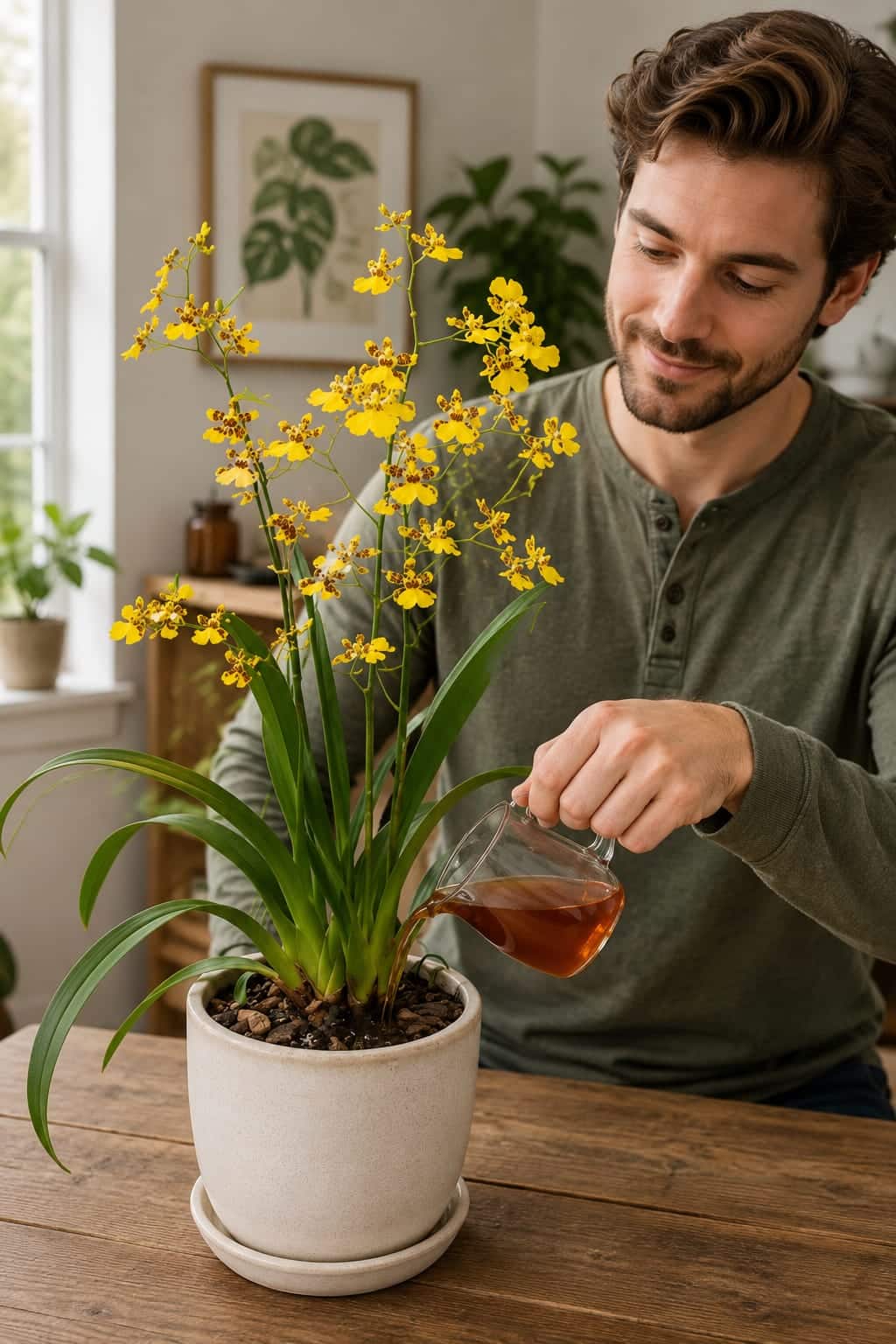
“To use a brown tea tonic safely on a Dancing Lady orchid, make it very weak. Soak 1 teaspoon of worm castings or finished compost in 4 cups of water for 2 to 4 hours, strain completely, dilute with equal parts plain water, and pour it through the orchid bark only when the plant is ready for watering. Let the pot drain fully and use this tonic no more than once every 4 to 6 weeks during active growth. Never use strong, sweet, smelly, or unstrained kitchen liquids on orchid roots – this natural Oncidium orchid booster supports stronger roots, brighter leaves, and longer-lasting blooms.”
Frequently Asked Questions – Oncidium Orchid Tea Tonic Q&A
Can I pour tea on my Dancing Lady orchid?
You can use very weak, unsweetened, cooled tea occasionally, but it should be heavily diluted and used rarely. Do not use sweetened or flavored tea.
Is brown kitchen tonic good for orchids?
It can be used cautiously as a mild supplement, but it is not a complete fertilizer. It must be fresh, strained, diluted, and applied only to healthy orchids in airy potting mix.
How often should I use this tonic?
No more than once every 4 to 6 weeks during active growth. Use plain water between applications.
Can this tonic make my orchid bloom?
Not by itself. Dancing Lady orchids bloom when they have enough light, healthy roots, mature pseudobulbs, and proper care.
Can I use banana peel water on orchids?
Yes, but only if it is mild, strained, diluted, and used rarely. Never put banana peel pieces in the orchid pot.
Why are my Oncidium pseudobulbs wrinkled?
Wrinkling may mean dehydration, root damage, or normal aging of older bulbs. If new bulbs wrinkle badly, check roots and watering.
Should I fertilize while the orchid is blooming?
Use very light feeding if the plant is healthy, but avoid strong fertilizer or strong tonics during bloom. Stable moisture and light matter more.
What is the best light for Dancing Lady orchids?
Bright indirect light is best. They often need more light than many common indoor orchids, but harsh direct sun can scorch leaves.
What should I do if the pot smells bad after tonic?
Stop using the tonic, let the pot dry slightly, improve airflow, and consider repotting if the smell continues.
Can I spray the tonic on orchid flowers?
No. Keep homemade tonics off the flowers and leaves. Apply only to the potting medium.
Final Thoughts – The Best Natural Oncidium Orchid Bloom Booster
A blooming Dancing Lady orchid is a beautiful reward for patient care. Its tall sprays of yellow flowers make it look as if the whole plant is celebrating. A gentle brown tea tonic can be part of that care routine, but it should never be treated as a miracle. The tonic may support roots and growth when used correctly, but the real reason an orchid thrives is much simpler: bright indirect light, healthy roots, airy potting mix, correct watering, steady humidity, and light feeding during active growth. This natural Oncidium orchid care method is best used as an occasional supplement, not a primary treatment.
If you want to try this trick, keep it mild. Make a weak tea from worm castings or finished compost. Strain it completely. Dilute it. Pour it only through the potting mix when the orchid is already due for watering. Let it drain fully. Use it rarely. Watch for odor, mold, gnats, or root stress. If any problem appears, stop immediately and return to plain water. Following this complete Oncidium orchid care guide will keep your plant thriving.
Smart homeowners do not pour random kitchen liquids into orchid pots and hope for flowers. They use gentle natural methods only when they understand the plant’s needs. Dancing Lady orchids are generous bloomers when their new growths mature well. Support those new growths, protect the roots, and avoid heavy-handed treatments. These professional orchid care secrets will help you succeed.
With the right balance, your orchid can continue building strength after each bloom cycle. New roots can explore fresh bark, pseudobulbs can plump, leaves can stretch toward the light, and future flower spikes can rise again. The brown tea tonic may be a small boost, but the real magic is consistent care. Give your Dancing Lady orchid the conditions it loves, and it can reward you with graceful yellow flowers that make your home feel bright, warm, and full of life. Start your Oncidium orchid journey today with the right fundamentals.