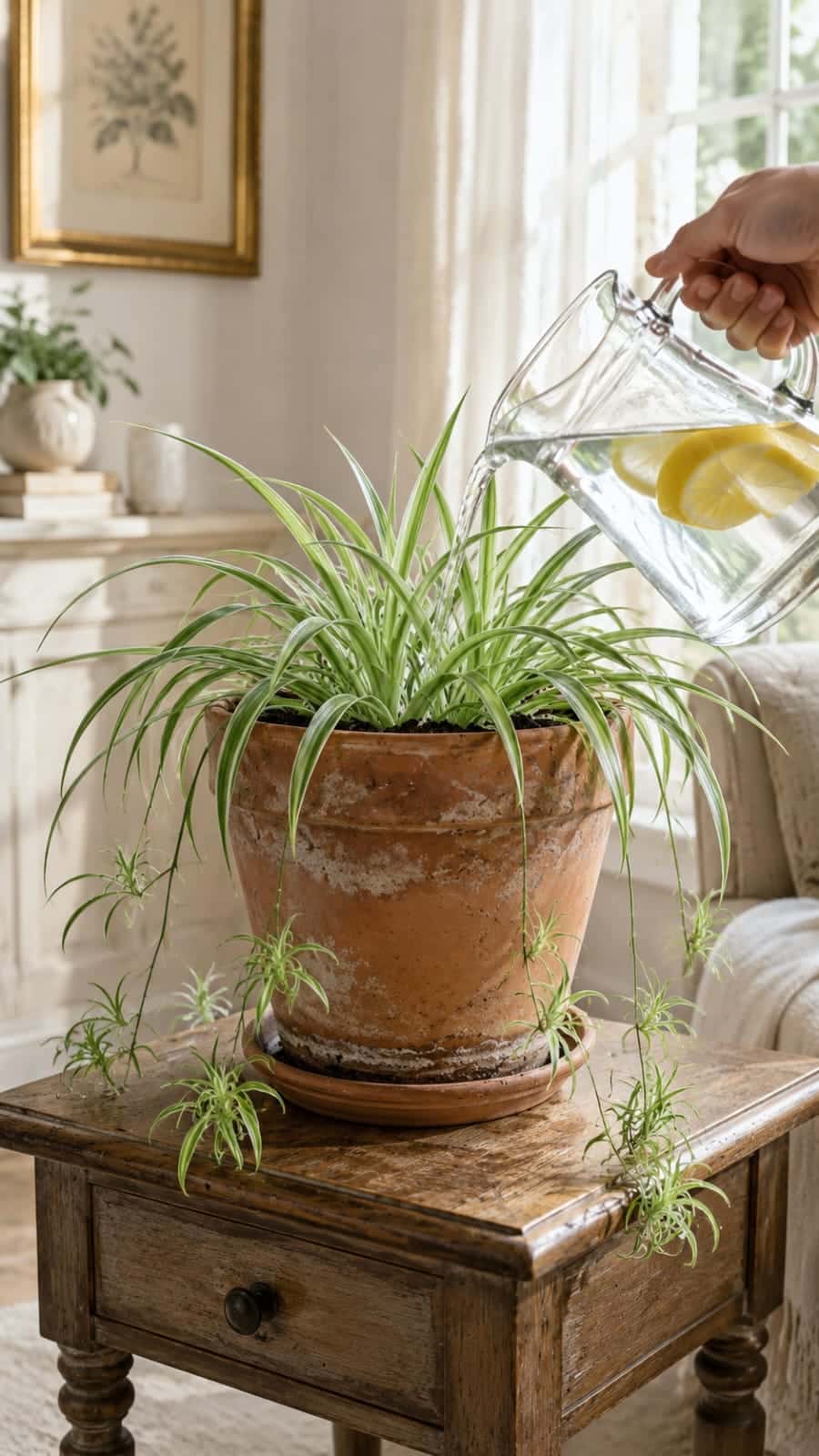
How to Propagate Spider Plant Babies
Spider plant babies are easy to propagate. You can root them while attached to the mother plant or cut them off first.
Water Propagation
- Choose a baby with tiny root nubs.
- Cut it from the runner.
- Place the base in a small jar of water.
- Keep the leaves above water.
- Change the water every few days.
- Plant in soil once roots are about 1 inch long.
Soil Propagation
- Fill a small pot with light potting mix.
- Place the baby plant on the soil.
- Press the root nubs lightly into the mix.
- Keep slightly moist until rooted.
- Cut from the mother plant after it roots if still attached.
Propagation is one of the easiest ways to keep spider plants looking abundant throughout your home.
Best Soil Mix for Spider Plants
Spider plants are not difficult, but they appreciate a loose potting mix.
Simple Spider Plant Mix
- 2 parts indoor potting mix
- 1 part perlite
- Optional: 1 part fine orchid bark for extra airiness
This mix holds enough moisture for healthy growth but drains well enough to prevent soggy roots.
How to Water Spider Plants Properly
Good watering matters more than lemon water. A spider plant can survive many conditions, but it looks best when watering is consistent.
Watering Steps
- Touch the top inch of soil.
- If it feels dry, water deeply.
- Pour water slowly around the soil.
- Let water drain out of the bottom.
- Empty the saucer.
- Wait until the soil begins to dry before watering again.
Do not water a spider plant a little bit every day. Deep watering followed by partial drying is better.
Can You Use Lemon Water on Spiderettes?
It is better to avoid lemon water on newly rooted spiderettes. Baby plants have small, tender root systems. Use plain water until they are established. Once the plant is mature, you can consider a very mild lemon rinse if needed, but it is rarely necessary.
Can Lemon Water Remove Pests?
No, lemon water is not a reliable pest treatment. It may smell fresh, but it should not be used as a pesticide. If your spider plant has pests such as spider mites, aphids, or fungus gnats, identify the pest and treat it properly.
For many minor pest issues, wiping leaves, improving airflow, allowing soil to dry correctly, and using insecticidal soap according to label directions may be more effective than lemon water.
Can You Spray Lemon Water on Spider Plant Leaves?
It is better not to spray lemon water on spider plant leaves. Lemon juice can make leaves more sensitive, especially near bright light. It may also leave residue or cause spotting if too strong.
If you want to clean spider plant leaves, use plain water and a soft cloth. For dusty leaves, a gentle shower with plain water works well. Let the plant dry in indirect light.
Can Lemon Water Change Soil pH?
Yes, lemon water can temporarily make the soil more acidic, especially if it is strong. This is why it must be very weak and rare. Potted plants have limited soil volume, so repeated acidic treatments can build up stress over time.
If you suspect your soil pH is a problem, it is better to use a proper soil test rather than guessing with lemon water.
Should You Use Lemon Water With Fertilizer?
No. Do not combine lemon water with fertilizer. Use them separately. Fertilizer already adds salts to the soil, and lemon water may affect how the root zone behaves. Keep treatments simple.
If you fertilize your spider plant, wait at least two weeks before using any lemon water rinse, and use only a weak dose of fertilizer during active growth.
How to Flush a Spider Plant Pot
If your spider plant has brown tips from mineral buildup, flushing may help more than lemon water.
How to Flush
- Take the plant to a sink or bathtub.
- Slowly pour plain room-temperature water through the soil.
- Let it run out the drainage hole.
- Repeat for a few minutes.
- Allow the pot to drain fully.
- Do not fertilize immediately afterward.
Flushing helps wash away excess salts. Do this occasionally, not constantly.
How to Clean the Outside of a Terracotta Pot
The pot in the image has a beautiful aged look. But if you want to clean white mineral marks, do it separately from plant watering.
Simple Cleaning Method
- Remove the plant if possible, or protect the soil.
- Wipe the outside of the pot with a damp cloth.
- Use a soft brush for crusty areas.
- For empty pots only, use a diluted vinegar-water scrub.
- Rinse well and dry before reuse.
Do not pour cleaning vinegar into the plant soil. Pot cleaning and plant watering are separate tasks.
Signs Your Spider Plant Likes Its Care
A healthy spider plant will show steady, fresh growth. It may not change overnight, but over time you should see clear signs of good care.
Healthy signs include:
- Firm arching leaves
- Bright white or cream variegation
- New leaves from the center
- Trailing runners
- Baby plantlets
- Minimal browning
- Roots not sitting in soggy soil
If the plant is full and producing babies like the one in the image, it is already doing many things right.
Signs Something Is Wrong
Watch for warning signs:
- Constantly wet soil
- Rotten smell
- Mushy crown
- Leaves collapsing at the base
- Severe brown tips
- Pale weak growth
- No growth for months in good light
- Gnats around the pot
If these appear, stop all homemade treatments and focus on correcting the cause.
How to Revive a Weak Spider Plant
If your spider plant is weak, do not begin with lemon water. Start with the basics.
Step 1: Remove Dead Leaves
Trim brown or dead leaves at the base with clean scissors.
Step 2: Check the Soil
If the soil is soggy or smells bad, repot the plant.
Step 3: Inspect the Roots
Healthy roots are usually pale, firm, and thick. Rotten roots are brown, mushy, and smelly.
Step 4: Repot If Needed
Use fresh well-draining mix and a pot with drainage holes.
Step 5: Move to Bright Indirect Light
Give the plant enough light to recover without burning it.
Step 6: Water Correctly
Water deeply only when the top soil begins to dry.
Step 7: Wait Before Feeding
Do not fertilize or use lemon water immediately after repotting. Let the plant stabilize first.
Quick Lemon Water Recipe Card
Very Mild Lemon Water for Spider Plants
Ingredients
- 1 liter room-temperature water
- 1 thin lemon slice
Steps
- Add the lemon slice to the water.
- Let it infuse for 10 to 20 minutes.
- Remove the lemon slice.
- Make sure the water is only faintly lemon-scented.
- Use only when the spider plant is due for watering.
- Pour onto the soil, not the leaves.
- Let the pot drain fully.
- Use no more than once every 6 to 8 weeks.
Short Caption for This Trick
Smart homeowners are using very mild lemon water as an occasional freshening rinse for spider plants, but the safe method is gentle. Add one thin lemon slice to a liter of water for 10 to 20 minutes, remove the slice, and use the faintly infused water only when the plant is already due for watering. Pour it onto the soil, not the leaves, and let the pot drain fully. Do not use strong lemon juice, do not leave lemon slices in the pot, and do not repeat often. A fuller spider plant comes from bright indirect light, proper watering, good drainage, and regular care.
Frequently Asked Questions
Is lemon water good for spider plants?
Very mild lemon water can be used rarely as a freshening rinse, but spider plants do not need it regularly. Strong lemon water can stress roots.
How often should I use lemon water on a spider plant?
No more than once every 6 to 8 weeks, and only if the plant is healthy and due for watering. Plain water should be used most of the time.
Can I squeeze lemon juice directly into the pot?
No. Straight lemon juice is too acidic and can damage roots. Use only a very weak infusion.
Can I leave lemon slices on the soil?
No. Lemon slices can rot, attract pests, and create mold. Remove slices before watering.
Can lemon water fix brown tips?
No. Brown tips are usually caused by water quality, underwatering, low humidity, fertilizer buildup, or light stress. Use filtered water and improve care.
Can I spray lemon water on spider plant leaves?
It is better not to. Lemon water can cause spotting or sensitivity. Use plain water to clean leaves.
Why is my spider plant not producing babies?
It may be too young, receiving too little light, overfertilized, or not mature enough. Bright indirect light and a slightly snug pot can help.
Do spider plants like terracotta pots?
Yes. Terracotta helps soil dry more evenly and can reduce overwatering risk, but it may dry faster than plastic.
What water is best for spider plants?
Filtered water, rainwater, or low-mineral water is often best, especially if your spider plant gets brown tips from tap water.
What is the best way to make spider plants fuller?
Give bright indirect light, water correctly, remove dead leaves, rotate the pot, use well-draining soil, and propagate babies back into the mother pot if you want a denser look.
Final Thoughts
The lemon water spider plant trick looks beautiful, fresh, and simple. A glass pitcher with lemon slices beside a lush spider plant creates the feeling of clean, natural indoor care. Used carefully, a very mild lemon infusion can be an occasional freshening rinse. But the real secret is not the lemon. The real secret is good plant care.
Spider plants become full and decorative when they receive bright indirect light, proper watering, good drainage, and enough time to mature. They produce babies when they are healthy and established. They stay attractive when old leaves are trimmed, brown tips are managed, and the pot is allowed to drain properly.
Use lemon water only if you keep it extremely weak. One thin slice in a large pitcher is enough. Remove the slice before watering. Pour only onto the soil. Do not spray the leaves. Do not use strong juice. Do not repeat often. And never use lemon water to hide a bigger problem like soggy soil, root rot, or poor light.
When used with care, this trick can become a small part of a calm indoor plant routine. But your spider plant’s beauty will always depend on the basics: light, water, drainage, clean leaves, and patience. Give it those, and it will reward you with fresh striped leaves, trailing plantlets, and the graceful overflowing shape that makes spider plants one of the most loved houseplants in the world.