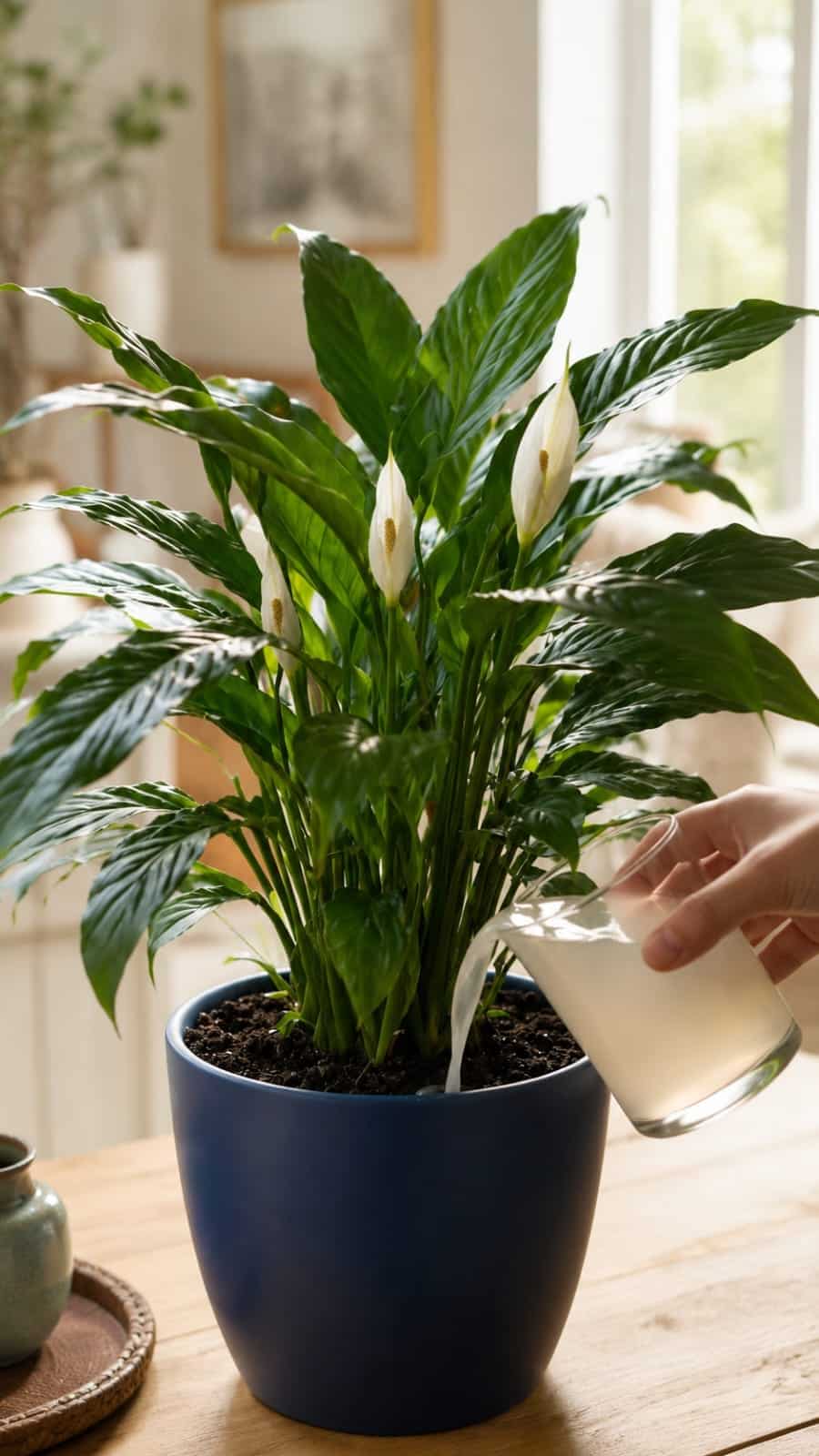
Best Watering Routine for Peace Lilies
Peace lilies like consistent moisture, but the pot should never remain waterlogged. The best routine is to water when the top inch of soil begins to dry.
Watering Steps
- Touch the top inch of soil.
- If it feels slightly dry, water thoroughly.
- Pour water evenly around the soil.
- Let excess drain out.
- Empty the saucer.
- Wait until the top begins to dry again.
If your peace lily droops dramatically, water it soon, but do not let it collapse repeatedly. Frequent severe wilting stresses the plant.
Why Drainage Matters
The dark blue pot in the image is beautiful, but what matters most is whether it has drainage. A decorative pot without drainage can hide water at the bottom, causing roots to rot.
If using a decorative outer pot, keep the peace lily in a plastic nursery pot with drainage holes inside it. Remove the inner pot for watering, let it drain, then place it back.
Best Soil for Peace Lilies
Peace lilies need soil that holds some moisture but still drains well. Heavy, dense soil can stay wet too long. A loose indoor potting mix is better.
Simple Peace Lily Soil Mix
- 2 parts quality indoor potting mix
- 1 part perlite
- 1 part fine orchid bark or coco chips
This mix holds moisture while allowing air to reach the roots.
Signs Your Peace Lily Likes the Tonic
If the plant responds well, you may notice steady healthy growth over time. Do not expect instant changes overnight.
Good signs include:
- Leaves remain firm
- No sour smell appears
- No mold forms on soil
- New leaves continue growing
- Flowers remain fresh
- Soil dries normally
Signs You Should Stop Using It
Stop immediately if you notice:
- Sour smell from the pot
- White mold on soil
- Fungus gnats
- Yellowing leaves after use
- Soil staying wet too long
- Soft stems near the base
- Drooping that does not improve
If these signs appear, allow the soil to dry slightly and return to plain water. If the pot smells rotten, check the roots.
How to Fix a Weak Peace Lily
If your peace lily is weak, do not start with a tonic. Start with basic recovery.
Step 1: Check Soil Moisture
If the soil is bone dry, water thoroughly. If it is wet and the plant is drooping, root stress may be the issue.
Step 2: Check Drainage
Make sure the pot has drainage holes and that the plant is not sitting in water.
Step 3: Remove Yellow Leaves
Trim yellow leaves at the base using clean scissors. This improves appearance and reduces decay.
Step 4: Move to Bright Indirect Light
A weak peace lily often improves when moved to better light, as long as it is not harsh direct sun.
Step 5: Repot if Soil Smells Bad
If the soil smells sour or rotten, repot into fresh airy mix and remove damaged roots.
Can This Tonic Replace Fertilizer?
No. Diluted rice water or milk water is not a complete fertilizer. Peace lilies benefit from a balanced houseplant fertilizer during active growth, usually at half strength. Use fertilizer sparingly, because too much can burn roots or create brown leaf tips.
A simple routine:
- Plain water most of the time
- Half-strength fertilizer once every 4 to 6 weeks during growth
- Optional mild rice-water tonic in a different month
- No heavy feeding in winter
Do not use fertilizer and homemade tonic at the same time.
Short Caption for This Trick
Smart homeowners are using a very diluted milky rice-water tonic on peace lilies as an occasional soil refresh, but the safe method is gentle. Mix 1 tablespoon of fresh rice water into 1 cup of plain water, pour a small amount only when the plant is due for watering, and let the pot drain completely. Never pour straight milk into peace lily soil, because it can sour, attract gnats, and create mold. Glossy leaves and white blooms come from bright indirect light, steady watering, good drainage, and clean roots.
Frequently Asked Questions
What is the milky liquid being poured on the peace lily?
It can be interpreted as diluted rice water or a very weak milk-water tonic. Rice water is the safer option for indoor use.
Can I pour milk on a peace lily?
Straight milk is not recommended. It can spoil in the soil and attract pests. If used at all, it should be only a few drops diluted in plenty of water.
Is rice water good for peace lilies?
Fresh diluted rice water can be used occasionally, but it should not replace proper fertilizer or correct watering.
How often should I use this tonic?
Use it no more than once every 4 to 6 weeks during active growth. Skip it in winter if the plant is not actively growing.
Can this tonic make my peace lily bloom?
Not by itself. Peace lilies bloom best with bright indirect light, proper watering, and light feeding during active growth.
Why are my peace lily leaves brown at the tips?
Brown tips can come from inconsistent watering, low humidity, fertilizer buildup, poor water quality, or root stress.
Should I pour the tonic on the leaves?
No. Pour it only onto the soil. Wipe leaves with plain water if they are dusty.
What should I do if the soil smells sour?
Stop using homemade liquids, check drainage, let the plant dry slightly, and repot if the soil is rotten or compacted.
Final Thoughts
The milky tonic trick looks gentle and beautiful, especially when used on a lush peace lily in a bright room. But peace lilies need balance. They enjoy moisture, yet they dislike soggy soil. They appreciate nutrients, yet they can suffer from too much organic liquid. They tolerate lower light, yet they bloom better near bright indirect light.
If you want to try this trick, keep it weak and rare. Use diluted rice water rather than straight milk. Apply it only when the plant is due for watering. Pour gently onto the soil, not over the leaves or flowers. Let the pot drain fully. Watch for any signs of mold, gnats, or sour smell.
The real secret to a beautiful peace lily is not a single homemade tonic. It is steady care: bright filtered light, clean leaves, airy soil, proper drainage, and watering at the right time. When those basics are right, a peace lily can stay glossy, full, and graceful indoors, with white blooms that make the whole room feel fresher.