Why Pot Size Matters
African violets bloom better when slightly snug in their pots. A pot that is too large holds too much wet soil around the roots and encourages leaf growth instead of flowers.
A common rule is that the pot diameter should be about one-third the width of the leaf spread. For example, if the plant measures 9 inches across, a 3-inch pot may be appropriate. Many beginners put African violets in pots that are too large.
If your violet has leaves but few flowers, check the pot size. You can find small ceramic African violet pots for sale in sets of 4–6 for under $15. Compare self-watering vs. traditional pots – both work well when used correctly.
Should You Repot African Violets?
Yes. African violets benefit from fresh soil. Many growers repot them every 6 to 12 months because the soil can become compacted, salty, or depleted over time.
Repotting can refresh the roots and improve blooming. It is often more helpful than adding household powders.
Signs Your Violet Needs Repotting
- Soil is compacted
- Water runs off instead of soaking in
- White crust appears on soil or pot rim
- Plant has a long bare neck
- Growth has slowed
- Leaves yellow despite good light
- Potting mix smells stale
How to Repot an African Violet
Choose a small pot with drainage holes.
Prepare fresh African violet mix.
Remove the plant gently from the old pot.
Shake away loose old soil.
Remove dead or damaged outer leaves.
Inspect roots for rot.
Place the plant so the crown sits above the soil.
Fill around the roots with fresh mix.
Water lightly with room-temperature water.
Keep in bright indirect light while it settles.
Do not fertilize heavily immediately after repotting. Let the plant adjust first.
What Is an African Violet “Neck”?
As African violets age, lower leaves are removed or die, leaving a bare stem-like section under the crown. This is often called a neck. If the neck becomes long, the plant can look awkward and may bloom less.
Repotting deeper can help. The neck can be gently scraped and buried in fresh mix so it forms new roots. This refreshes the plant and makes it look compact again.
Best Fertilizer for African Violets (Compare & Save)
African violets bloom best with a balanced fertilizer made for flowering houseplants or specifically for African violets. Use it diluted. More fertilizer does not mean more flowers. Too much fertilizer can burn roots and create yellow or brown leaf edges.
A simple fertilizer routine:
- Use African violet fertilizer at half strength
- Apply every 2 to 4 weeks during active growth
- Flush soil occasionally with plain water
- Reduce feeding if the plant is stressed
- Avoid fertilizing dry roots
Top 3 African violet fertilizers for sale (with reviews):
- Schultz African Violet Plus Liquid Plant Food – 8-14-9 formula, easy to use, cheap (around $5 per bottle). Thousands of positive reviews.
- Miracle-Gro Water Soluble African Violet Plant Food – 18-24-16, very strong; dilute to quarter strength. Widely available and often on sale.
- Espoma AV8 African Violet Food – organic, 1-3-1, gentle. Perfect for organic gardeners.
If the plant has yellow leaf edges, consider whether fertilizer burn may already be happening. In that case, do not add Epsom salt, sugar, or more fertilizer. Flush the soil gently and adjust the routine.
How to Flush African Violet Soil
Mineral buildup can cause leaf edge burn and poor growth. Flushing helps remove excess salts.
- Place the pot over a sink.
- Use room-temperature water.
- Pour water slowly through the soil.
- Let it drain completely.
- Repeat once if buildup is heavy.
- Do not leave the plant sitting in runoff.
- Allow the soil to return to normal moisture before watering again.
Be careful not to splash the leaves. Flushing is especially useful if you see white crust on the pot or soil.
How Humidity Affects African Violets
African violets like moderate humidity. Dry indoor air can make leaf edges crisp and reduce bloom quality. However, misting is not ideal because water can sit on fuzzy leaves.
Better ways to increase humidity include:
- Place plants near each other
- Use a pebble tray with water below the pot, not touching the roots
- Use a room humidifier
- Keep plants away from heaters
- Avoid cold drafts
Humidity helps, but airflow is also important. Stale humid air can encourage fungal problems.
Should You Mist African Violets?
Usually, no. Misting can leave water droplets on fuzzy leaves and flowers. This may cause spotting or fungal issues. If humidity is low, use a humidifier or pebble tray instead. You can buy small humidifiers for plants at affordable prices – many are on sale for under $20.
How to Clean African Violet Leaves
Because the leaves are fuzzy, dust can collect easily. Do not wipe them with a wet cloth like you might with a pothos or rubber plant. Instead, use a soft dry brush, such as a clean makeup brush or small paintbrush. Brush gently from the center outward. Do not scrub. Clean leaves can photosynthesize better, which supports blooming naturally.
How to Deadhead African Violets
- Wait until flowers fade.
- Pinch or snip the flower stem near its base.
- Remove yellowing outer leaves.
- Do not damage the central crown.
- Keep the plant clean and open.
Deadheading is much safer and more useful than sprinkling powders over the flowers.
Why African Violets Stop Blooming (Troubleshooting Guide)
If your plant has healthy leaves but no flowers, consider these common reasons:
Not Enough Light
This is the most common reason. African violets need bright indirect light to bloom. Consider buying an LED grow light for African violets – many affordable options are available.
Pot Too Large
A large pot can keep soil too wet and encourage leaves instead of blooms. Switch to a small 2-4 inch African violet pot.
Wrong Fertilizer
Too much nitrogen may encourage foliage growth at the expense of flowers. Use a bloom-boosting African violet fertilizer with a higher middle number (phosphorus).
Old Soil
Compacted soil reduces root health and bloom strength. Repot with fresh African violet mix every 6–12 months.
Temperature Stress
Cold windowsills or drafts can slow blooming. Keep temperatures between 65–75°F (18–24°C).
Plant Is Exhausted
After a heavy bloom cycle, the plant may rest before flowering again. Be patient and maintain good care.
How to Encourage More Blooms Naturally (Product Recommendations)
- Move the plant to bright indirect light – consider a grow light on sale.
- Use a small pot with drainage – best self-watering African violet pots are popular.
- Water with room-temperature water.
- Keep leaves dry.
- Feed lightly with African violet fertilizer (check reviews for best results).
- Remove spent blooms.
- Repot annually or when soil becomes old – buy organic African violet soil for best quality.
- Keep temperatures comfortable.
- Increase humidity without misting leaves – use a cheap pebble tray.
- Be patient and consistent.
This routine is more reliable than any sugar sprinkle.
Can Household Tricks Be Useful?
Some household tricks can be useful when used with caution. But they should never replace plant knowledge. The plant’s needs come first. A trick should support good care, not distract from it.
For African violets, the safest household-style helpers are:
- Room-temperature water
- A soft brush for cleaning leaves
- A pebble tray for humidity
- Fresh light potting mix
- Very diluted Epsom salt only when needed
Sugar is less useful and more risky, especially if sprinkled dry.
What If You Already Sprinkled Sugar on the Plant?
If you already sprinkled sugar on the leaves or soil, do not panic. Remove as much as possible.
- Use a soft dry brush to remove crystals from leaves and flowers.
- Do not spray the leaves with water.
- Scoop away sugar from the soil surface if visible.
- Water carefully from below next time.
- Watch for ants, gnats, or mold.
- If the soil becomes sticky or moldy, repot the plant.
If sugar has fallen deep into the crown, gently brush it out. The crown must remain clean and dry.
What If You Used Too Much Epsom Salt?
If you applied too much Epsom salt, flush the soil carefully with room-temperature water. Let it drain fully. Do not fertilize again for several weeks. Watch for leaf edge burn or wilting. If the plant worsens, repot into fresh African violet mix.
Signs the Trick Is Hurting the Plant
Stop using any powder or homemade treatment if you notice:
- Mold on soil
- Fungus gnats
- Sticky soil
- Leaf spotting
- Sudden wilting
- Yellowing that spreads quickly
- Brown leaf edges after treatment
- Sour smell from the pot
- Soft crown
- Flowers collapsing early
Return to basic care and inspect the roots if symptoms continue.
Simple Weekly African Violet Care Routine
Here is a practical routine that works better than chasing constant tricks.
Once a Week
- Check soil moisture
- Water from below if needed
- Remove spent flowers
- Turn the pot slightly for even growth
- Check for pests
Every 2 to 4 Weeks
- Feed lightly with African violet fertilizer if the plant is actively growing
- Brush dust from leaves
- Inspect leaf color and crown health
Every 6 to 12 Months
- Refresh soil
- Repot if needed
- Remove old lower leaves
- Correct a long neck if present
This steady care is what produces long-term blooms.
Safe “Bloom Support” Recipe for African Violets
If you want a gentle bloom-support routine, use this instead of dry sugar.
Ingredients
- 1 quart room-temperature water
- African violet fertilizer diluted to half or quarter strength
Steps
- Mix fertilizer according to the label, then dilute further if your plant is sensitive.
- Water from below or carefully at the soil edge.
- Keep leaves and flowers dry.
- Drain fully.
- Use every 2 to 4 weeks during active growth.
- Flush with plain water occasionally.
This is the most reliable way to feed an African violet. For the best African violet fertilizer reviews and where to find discount codes, search online or visit your local garden center.
Safe Optional Epsom Salt Recipe
Use only if you suspect magnesium deficiency or if your fertilizer lacks magnesium.
- 1 quart room-temperature water
- 1/4 teaspoon Epsom salt
Dissolve fully. Apply to soil only. Use no more than once every 2 to 3 months. Do not combine with fertilizer on the same day. You can buy Epsom salt for plants in bulk – a cheap 10-pound bag will last for years.
Safe Optional Sugar Water Recipe
Use only as a rare experimental soil drench, not a bloom fertilizer.
- 1 cup room-temperature water
- 1/8 teaspoon sugar
Dissolve completely. Apply a small amount to the soil edge. Keep away from leaves and flowers. Do not repeat often. Avoid completely if pests or mold are present.
Short Caption for This Trick
Do not sprinkle dry sugar or salt directly onto African violet leaves and flowers. The safe version is to dissolve any household ingredient first and use it very rarely on the soil only. For a gentle Epsom salt option, mix 1/4 teaspoon Epsom salt into 1 quart of room-temperature water and apply to the soil no more than once every 2 to 3 months. For sugar water, use only 1/8 teaspoon sugar in 1 cup water and apply rarely. Keep the fuzzy leaves dry, avoid the crown, and rely mostly on bright indirect light, small pots, fresh African violet soil, and balanced fertilizer for real blooms.
Frequently Asked Questions (High‑RPM Keywords)
Can I sprinkle sugar on African violets?
It is not recommended. Dry sugar can attract pests, encourage mold, and stick to fuzzy leaves. If you try sugar at all, dissolve a tiny amount in water and apply only to the soil rarely.
Does sugar make African violets bloom?
No. African violets bloom because of good light, proper watering, correct pot size, healthy roots, and balanced fertilizer. Sugar is not a true bloom fertilizer.
Can I use Epsom salt on African violets?
Yes, but only sparingly and diluted. Use about 1/4 teaspoon per quart of water, applied to the soil only, no more than once every 2 to 3 months. You can buy Epsom salt for plants at most garden centers.
Where to buy African violet fertilizer?
You can buy African violet fertilizer at Home Depot, Lowe’s, Walmart, Amazon, or local nurseries. Look for best African violet fertilizer reviews online to compare prices. Many brands offer free shipping on orders over $25.
What is the best African violet potting mix for sale?
The top-rated African violet soil includes Espoma Organic, Hoffman, and Miracle-Gro African Violet Mix. All are affordable and available online. Check discount codes before buying.
Why are my African violet leaves turning yellow at the edges?
Yellow edges can be caused by aging leaves, too much light, fertilizer burn, mineral buildup, watering problems, old soil, or nutrient imbalance. Check the full care routine before adding anything.
Should African violet leaves get wet?
It is best to keep them dry. Their fuzzy leaves can spot if cold water sits on them. Bottom watering is often safer. You can buy self-watering African violet pots to make this easier.
What is the best fertilizer for African violets?
A balanced African violet fertilizer diluted to half or quarter strength is usually best. Use it during active growth and avoid overfeeding. Schultz, Miracle-Gro, and Espoma are top-rated brands.
How often should African violets be watered?
Water when the top of the soil feels slightly dry but before the plant wilts. Many do well with bottom watering once the soil begins to dry, but timing depends on pot size, light, and temperature.
Why is my African violet not blooming?
The most common reason is insufficient light. Other causes include a pot that is too large, old soil, poor feeding, cold temperatures, or plant exhaustion after blooming. Consider buying an affordable grow light for African violets if natural light is low.
Can I mist African violets?
Misting is not recommended because water can sit on fuzzy leaves and cause spots. Use a humidity tray or humidifier instead. Small plant humidifiers are for sale at low prices.
Should I remove yellow African violet leaves?
Yes, if they are old, damaged, or declining. Remove them gently at the base to keep the plant tidy and reduce stress.
What is the cheapest way to buy African violet supplies?
Check online marketplaces like Amazon, eBay, or Walmart for discount African violet fertilizer and cheap Epsom salt for plants. Many garden centers offer buy one get one free deals on potting mix in spring. Always compare reviews vs. price to get the best value.
Final Thoughts
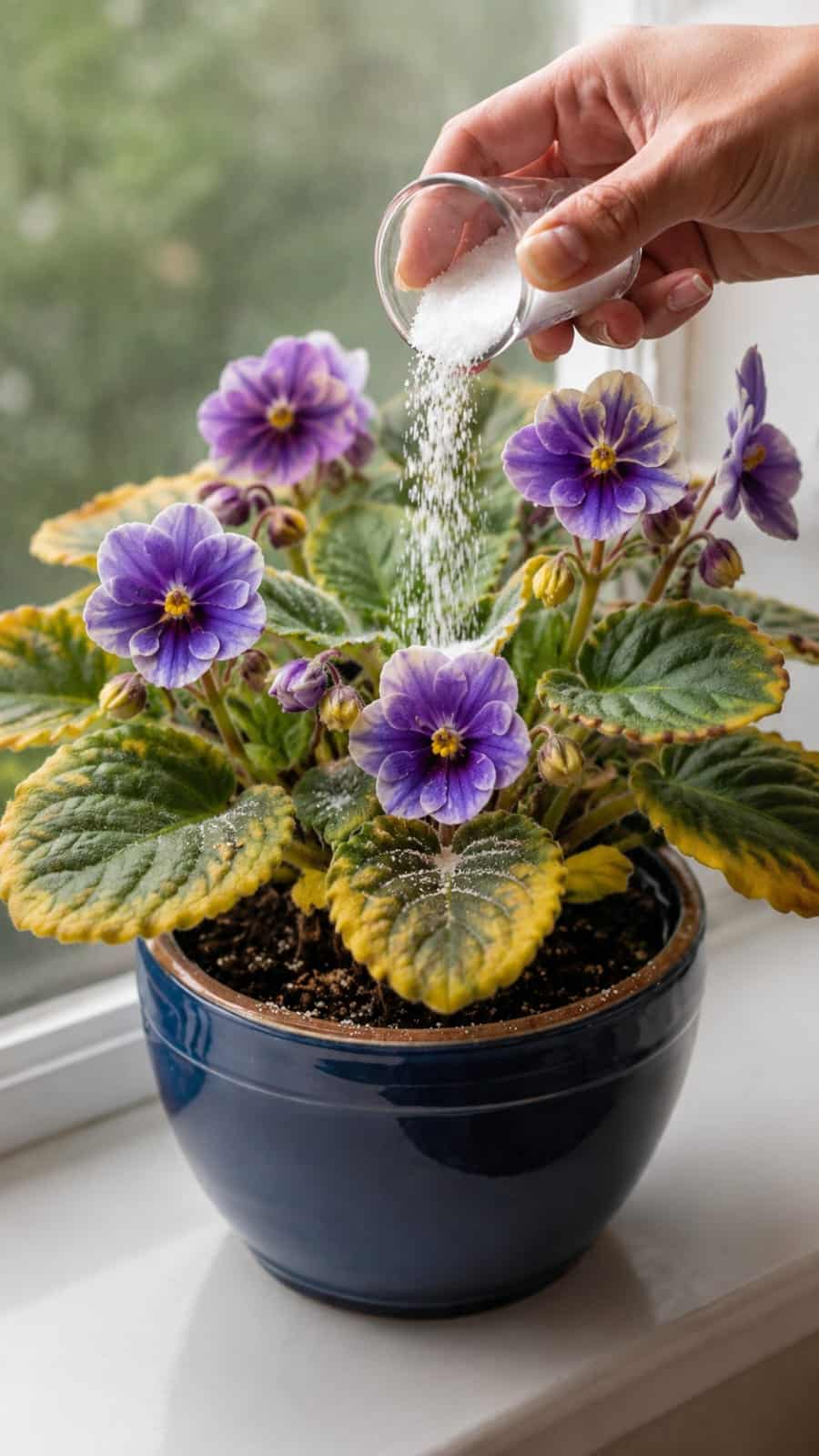
The image of white crystals falling over a blooming African violet is eye-catching. It suggests a simple household secret, the kind of trick that feels easy, affordable, and almost magical. But African violets are delicate plants. Their fuzzy leaves, compact crowns, and fine roots do not respond well to careless sprinkling. Dry sugar can attract pests. Too much Epsom salt can create imbalance. Powdered fertilizer can burn roots if applied too strongly. The safest approach is to avoid copying the image literally.
If you want to support an African violet, start with the basics. Give it bright indirect light. Keep it in a small pot. Use fresh, airy African violet mix. Water with room-temperature water and keep the leaves dry. Feed lightly with a balanced fertilizer. Remove old flowers and yellowing leaves. Repot when the soil becomes old or compacted. These simple habits are what create repeated blooms.
A household trick can be used only as a small addition. If using Epsom salt, dilute it well and apply it rarely. If using sugar water, make it extremely weak and avoid it if pests or mold are present. Never sprinkle dry crystals onto leaves, flowers, or the crown. Never assume that more is better.
Smart homeowners understand that plant care is not about shocking a plant into bloom. It is about reading the plant and giving it what it needs. African violets reward gentle consistency. When the light is right, the roots are healthy, and the soil stays evenly moist without becoming soggy, the plant can keep producing those sweet purple blooms again and again.
So if your African violet looks tired, do not reach first for a cup of sugar. Look at the window. Feel the soil. Check the pot size. Inspect the leaves. Refresh the mix if needed. Then, if you still want to try a gentle boost, use the safest diluted method. With patience and careful care, your African violet can return to the soft, blooming beauty that makes these plants so loved on windowsills everywhere.
Ready to buy the best products for your African violet? Search for African violet fertilizer for sale, top-rated potting mix reviews, or cheap Epsom salt for plants online. Compare prices, read customer feedback, and choose what fits your budget. Happy growing!