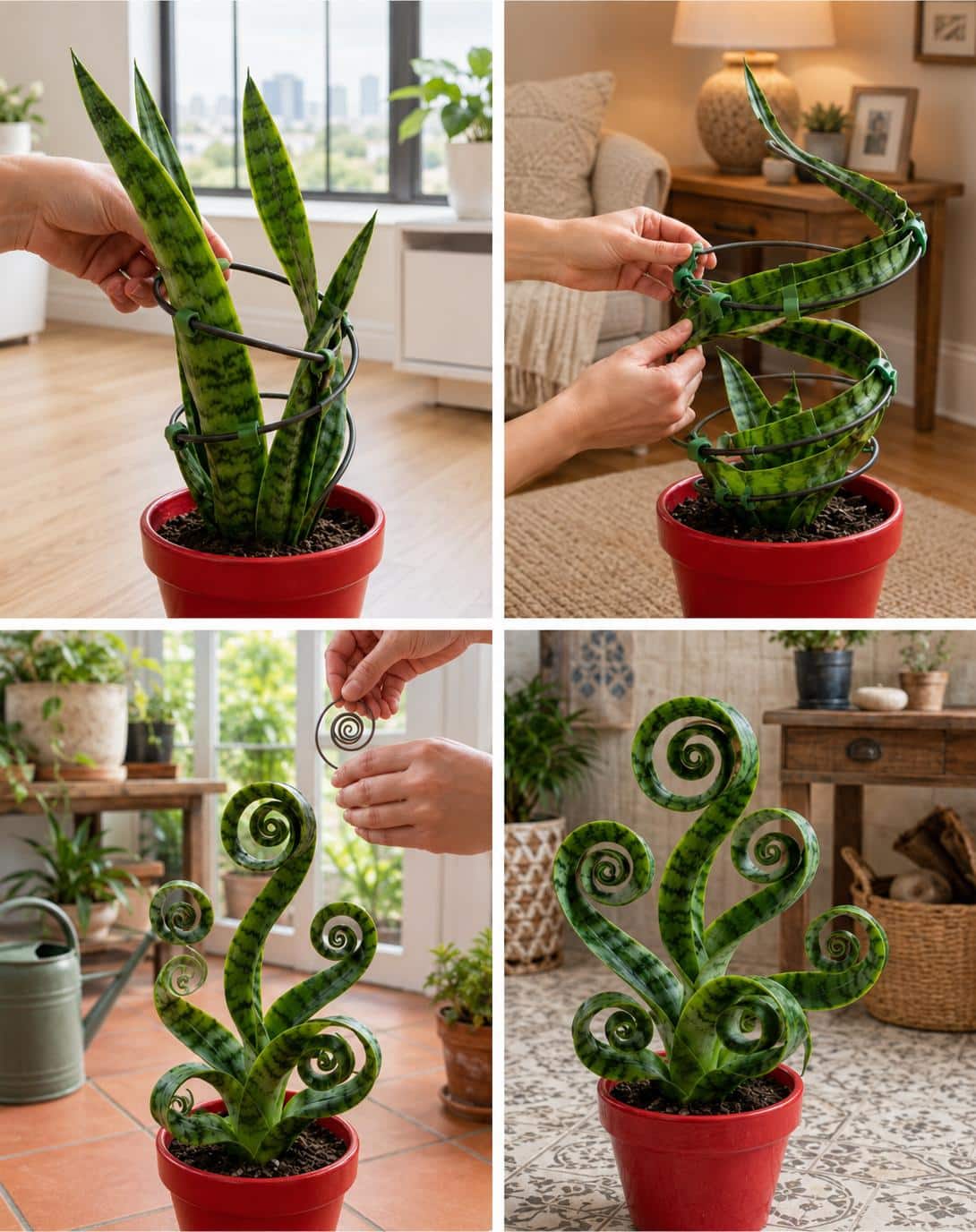
How to Make the Display Look More Decorative
The spiral training is only part of the design. The pot, placement, and surrounding decor also matter.
Choose a Bold Pot
The red pot in the image makes the green leaves stand out. A bold pot works well because the plant itself has a strong graphic shape.
Good pot colors include:
- Red for a bold artistic look
- Matte black for modern drama
- White for clean minimal decor
- Terracotta for warm natural style
- Blue for a fresh contemporary look
- Gold or brass for luxury styling
Use a Simple Background
A spiral snake plant is visually busy. Place it against a simple background so the curls can be seen clearly. A plain wall, wood cabinet, light window area, or neutral shelf works well.
Raise It on a Stand
A plant stand makes the sculptural shape more noticeable. The viewer can see the curves from the side and above.
Pair With Softer Plants
Because the trained snake plant has strong shape, pair it with softer plants like pothos, ferns, spider plants, or peace lilies. This contrast makes the display more balanced.
Best Rooms for a Spiral Snake Plant
Living Room
A trained spiral snake plant can become a conversation piece beside a sofa, near a window, or on a plant stand. It works especially well in rooms with neutral furniture because the plant adds personality.
Entryway
Place it on a console or stand near the entrance. It immediately gives the home a creative, styled feeling.
Home Office
The sculptural look can make a workspace feel more inspiring. Keep it near bright indirect light.
Sunroom
A sunroom gives enough light for strong growth. Just protect the plant from extreme direct sun and heat.
Bedroom
A smaller trained snake plant can look elegant on a dresser or plant stand. Choose a simple pot for a calmer effect.
Common Mistakes to Avoid
Mistake 1: Bending Too Fast
This is the biggest mistake. Snake plant leaves can snap if bent sharply. Always train gradually.
Mistake 2: Using Hard Wire Against the Leaf
Bare wire can cut into the leaf. Use soft padded ties.
Mistake 3: Training Old Leaves
Old leaves are often too stiff. Younger leaves are safer.
Mistake 4: Overwatering After Training
Some people water more because they think the plant is stressed. But overwatering can cause rot. Keep watering controlled.
Mistake 5: Letting Water Sit in Curled Leaves
Curled leaves can hold water. Keep them dry to prevent spotting and rot.
Mistake 6: Training a Weak Plant
Only shape a plant that is healthy and firm. A weak plant needs recovery, not styling.
What If a Leaf Cracks?
If a leaf cracks slightly, stop training that leaf. Remove the tie and let the leaf rest. A small crack will not heal perfectly, but the leaf may remain alive if the damage is minor.
If the leaf is badly split, mushy, or collapsing, remove it at the base with clean scissors. Do not leave rotting tissue attached to the plant.
What If a Leaf Refuses to Curl?
Do not force it. Some snake plant leaves are simply too stiff. You can still create a decorative look by using a spiral-shaped support around the plant rather than curling the leaves themselves.
Another option is to train only the naturally flexible leaves and leave the stiffer leaves upright. This creates a mixed sculptural effect that may look more natural.
Can You Use Heat or Steam to Bend Leaves?
No. Do not use heat, steam, hot water, hair dryers, or any forced softening method on snake plant leaves. Heat can damage plant tissue and cause soft spots, burns, or rot. The only safe method is gradual gentle training.
Can You Braid Snake Plant Leaves?
Braiding is not recommended for most snake plants. The leaves are too thick and stiff. Braiding can crack them at the base. If you want a braided look, choose plants with flexible stems, not snake plants.
Can You Train Snake Plant Pups?
Young pups are often more flexible than mature leaves, but they are also delicate. Wait until the pup has several leaves and is growing strongly. Then use a very gentle guide if needed.
Never pull a young pup hard because it may detach from the rhizome or weaken at the base.
How to Encourage New Leaves for Future Training
If you want more leaves to shape, focus on healthy growth.
- Give bright indirect light
- Use a snug pot
- Water only when dry
- Feed lightly in warm months
- Keep the plant warm
- Do not disturb the roots too often
New pups usually appear from underground rhizomes. Once they mature, you can decide whether to leave them upright or gently guide them.
How to Keep the Leaves Shiny and Clean
Trained snake plant leaves are decorative, so dust becomes more noticeable. Wipe the leaves with a soft damp cloth every few weeks. Support the leaf while wiping so you do not pull it out of shape.
Avoid commercial leaf shine products. They can leave residue and make the plant look artificial. Clean water is enough.
Should You Mist a Spiral-Trained Snake Plant?
No. Misting is not needed and may be risky because curled leaves can trap water. Snake plants prefer dry leaves and good airflow. If the leaves are dusty, wipe them gently instead of spraying.
How to Water Without Ruining the Shape
Water slowly at the soil line. Use a narrow-spout watering can if possible. Avoid splashing the leaves. If water gets into a curl, blot it with a soft cloth.
After watering, make sure the pot drains fully. Do not leave the pot sitting in water.
Decor Caption for This Trick
To create a sculptural snake plant display, gently guide young flexible leaves around a soft circular support frame over several weeks. Use padded plant ties, never force stiff leaves, and keep the curves gradual. This turns a simple snake plant into a dramatic indoor decor piece, but the plant must stay healthy with bright indirect light, fast-draining soil, careful watering, and dry leaves. The secret is patience, not pressure.
Quick Care Card
Best plant: Healthy snake plant with young flexible leaves.
Best time: Spring or summer during active growth.
Training method: Soft ties and gradual support frame shaping.
Light: Bright indirect light.
Water: Only when soil is dry.
Soil: Cactus mix with perlite, pumice, or bark.
Warning: Never force mature stiff leaves into tight curls.
Frequently Asked Questions
Can you really curl snake plant leaves?
You can gently guide some young flexible leaves into curves, but mature snake plant leaves are stiff and can crack. The process must be slow and gentle.
How long does it take to train the leaves?
Light curves may take a few weeks. A stronger decorative spiral effect can take several months and may require ongoing support.
Will the leaves stay curled forever?
Not always. Some leaves may hold part of the shape, while others may need support to stay curved.
Does this hurt the plant?
It can hurt the plant if done too forcefully. When done gently with soft ties and healthy leaves, it can be safe, but there is always some risk.
What should I use to hold the leaves?
Use soft plant ties, padded clips, or flexible rubber-coated supports. Avoid bare wire, tight string, or zip ties.
Can I train a weak snake plant?
No. A weak, yellowing, mushy, or stressed plant should not be trained. Restore its health first.
Should I water more after shaping?
No. Continue watering only when the soil is dry. Overwatering can weaken the plant.
Can I mist the curled leaves?
No. Curled leaves can trap water, which may cause spots or rot. Wipe leaves with a damp cloth instead.
What if a leaf cracks?
Release the tie and stop training that leaf. If the damage is severe or the leaf becomes mushy, remove it at the base.
What is the easiest way to get the spiral look?
The easiest safe method is to use a decorative spiral support and gently guide only the most flexible leaves, rather than forcing every leaf into a tight curl.
Final Thoughts
A spiral-trained snake plant is a bold and creative way to turn a familiar houseplant into a sculptural decor piece. The look is dramatic, playful, and luxurious because it changes the plant’s natural vertical lines into graceful curves. In the right pot and room, it can become a true conversation starter.
But this is a styling technique that requires patience. Snake plant leaves are thick and firm. They cannot be twisted like vines or bent like soft stems. If you force them, they can crack, bruise, or rot. The smart method is slow training with soft supports, gentle curves, and careful observation.
Start with a healthy plant. Choose younger flexible leaves. Use padded ties. Train gradually over weeks. Keep the plant in bright indirect light. Water only when the soil is dry. Keep moisture out of curled leaves. Rotate the pot so the display grows evenly. If a leaf resists, respect the plant and leave it upright.
The most beautiful version of this trick is not about forcing perfection. It is about working with the plant’s natural strength and adding a little artistic guidance. With patience and gentle handling, a simple snake plant can become a unique living sculpture that makes your indoor decor feel more stylish, personal, and memorable.