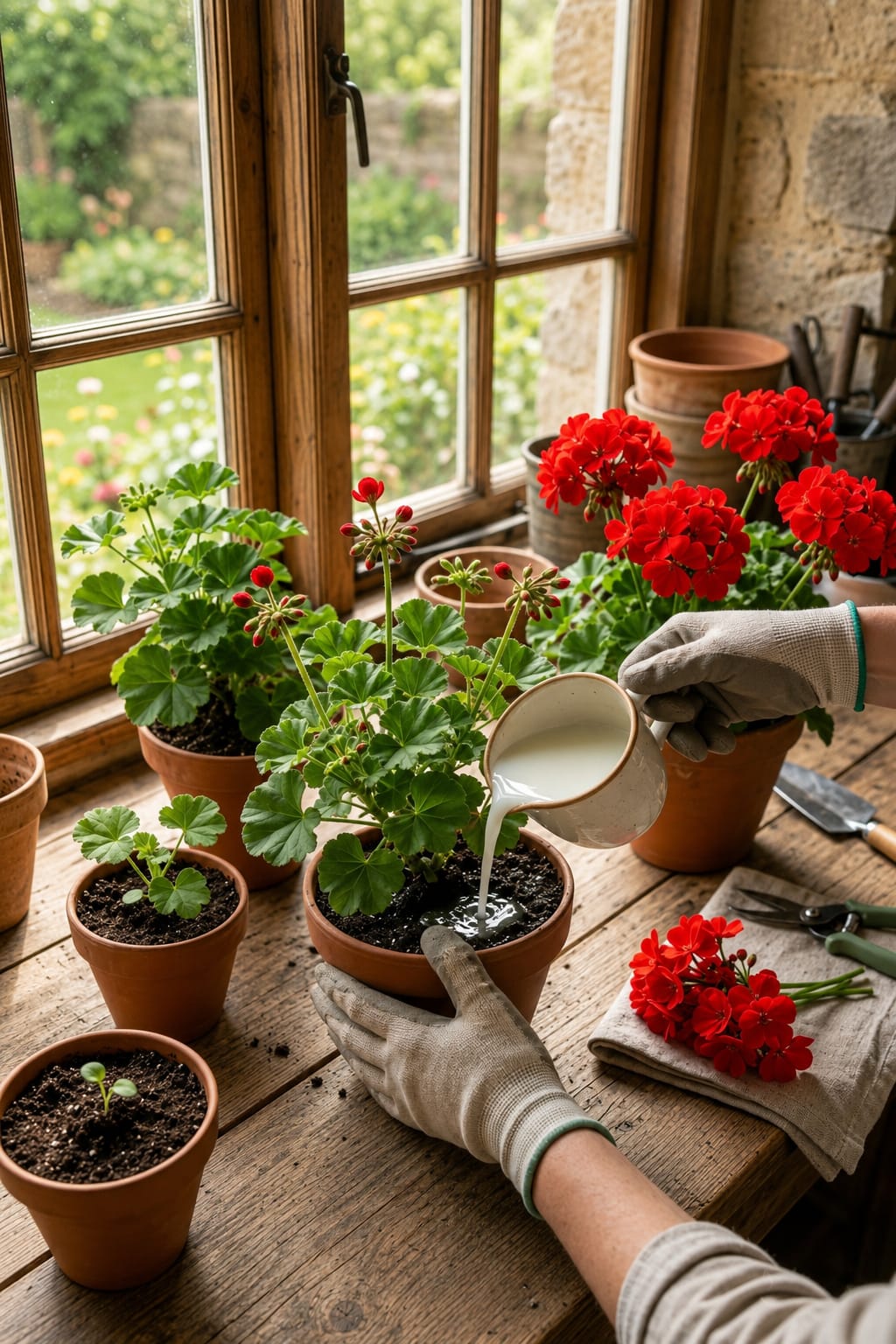
Geraniums are among the most beloved flowering plants for homeowners who want bright color, rounded green leaves, strong stems, and a cheerful display that works beautifully on windowsills, patios, balconies, porches, terraces, garden tables, cottage-style corners, rustic indoor plant benches, and sunny container gardens. Their red, pink, white, salmon, purple, and coral flower clusters can make even a simple terracotta pot look full of life. A healthy geranium has a clean, upright shape, firm stems, fresh leaves, and repeated blooms that bring color to both indoor and outdoor spaces.
Many gardeners become curious when they see a light white liquid being poured around the base of geraniums. The method is often described as a simple homemade root tonic for stronger plants, more buds, cleaner growth, and brighter flowers. The white liquid may be diluted milk water, rice water, yeast water, a weak liquid fertilizer solution, or another homemade mixture. It may look gentle and natural, but geraniums still need careful care. Their roots dislike soggy soil, and their leaves prefer good airflow. A white liquid can only be helpful when it is fresh, diluted, applied lightly, and used on a plant that is already growing in the right conditions.
The safest way to understand this method is to treat it as an optional support step, not a miracle bloom trick. Geraniums do not bloom heavily because of one dramatic pour. They perform best when they receive bright light, a draining pot, airy soil, careful watering, regular grooming, and balanced feeding during the growing season. If the plant is sitting in compacted soil, too much shade, a pot without drainage, or constantly wet conditions, a homemade liquid will not fix the real problem. In some cases, it can create odor, mold, fungus gnats, or root stress.
Understanding Geranium Growth
Most garden geraniums grown in containers are Pelargoniums. They are often called geraniums in everyday gardening, and they are popular because they are tough, colorful, and excellent for container displays. Their thick stems and slightly fleshy leaves help them tolerate some dryness, which makes them easier than many delicate flowering plants. However, they still need the right balance of water, light, and nutrients to keep producing flowers.
Geraniums bloom best when they receive plenty of light. A plant grown in shade may produce leaves but fewer flower clusters. A plant given too much water may develop weak stems, yellow leaves, or root rot. A plant that is never fed may slow down after the first flush of blooms. This is why the root tonic should never be viewed alone. It is only one possible addition to a much larger care routine.
When geraniums are healthy, their leaves are firm and green, their stems hold themselves upright, and new flower buds form regularly. When something is wrong, the plant may become leggy, pale, yellow, soft, or slow to bloom. Those signs usually point to light, watering, soil, or feeding issues. A white liquid should not be added until those basics are checked.
What the White Liquid Might Be
The white liquid may be diluted milk water. Some gardeners use milk water because milk contains calcium and small amounts of nutrients. However, milk is organic and can sour quickly in potting soil. Straight milk should never be poured into geranium pots. It can smell bad, attract pests, encourage mold, and leave residue on the soil surface. If milk water is tested at all, it should be heavily diluted until it is only faintly cloudy and used very rarely.
The liquid may also be rice water. Rice water is made by rinsing or soaking plain rice. It may contain trace minerals and starches, but it is not a complete fertilizer. Fresh diluted rice water may be tolerated by some plants, but thick or fermented rice water can create sour soil and fungus gnats. Geraniums prefer clean, well-drained conditions, so repeated rice water is not ideal.
The white liquid may also be a weak fertilizer solution. Some fertilizers look cloudy when mixed with water. A properly diluted flowering plant fertilizer is usually more predictable than kitchen liquids because it provides known nutrients. Geraniums can benefit from balanced feeding during active growth, but the fertilizer must be used carefully. Too much can cause salt buildup and weak growth.
What This Method Can Actually Do
A light white root tonic may provide mild support only when the geranium is already healthy and ready for watering. If the liquid is a weak fertilizer, it may help provide nutrients for leaves, stems, and flowers. If it is a diluted homemade mixture, it may offer small traces of organic material, but the effect is unpredictable. It cannot force instant flowers, repair root rot, or make a shaded plant bloom heavily.
Many visible improvements after using a tonic come from the full routine around it. The gardener may also be pruning old stems, deadheading flowers, improving light, refreshing soil, and watering more carefully. These actions are often more important than the liquid itself. Geraniums respond strongly to sunlight, airflow, and regular grooming.
If a geranium already has buds and healthy leaves, a mild feeding routine may support continued blooming. If the plant is weak, yellowing, or sitting in wet soil, adding more liquid can worsen the issue. Always match the treatment to the plant’s condition.
Best Light for Geranium Blooms
Light is one of the biggest secrets behind colorful geranium blooms. Most geraniums need several hours of bright light each day to flower well. Outdoors, they usually grow best in full sun or bright partial sun, depending on climate. In very hot areas, afternoon shade may protect them from heat stress. Indoors, they need the brightest window available, usually a south or west-facing window, or a strong grow light.
If a geranium has green leaves but few blooms, it may not be getting enough light. A white tonic will not solve that. Move the plant gradually into brighter conditions. Sudden harsh sun can burn leaves if the plant was grown in shade, so increase light slowly over several days.
Good light also helps the soil dry properly. A geranium in bright light uses water faster and grows more strongly. A geranium in shade stays damp longer and is more likely to develop weak growth. Light, watering, and feeding are connected.
Watering Geraniums Correctly
Geraniums prefer a wet-and-dry rhythm. The soil should not stay constantly wet. Water when the top layer has dried and the pot feels lighter, then water deeply until excess drains out. After watering, empty the saucer so the roots do not sit in standing water.
If using a white tonic, treat it as a watering. Do not pour it into soil that is already wet. This is a common mistake. Extra liquid added to damp soil can reduce oxygen around the roots and create rot. Geranium roots need moisture, but they also need air.
Water should be directed to the soil, not poured over the leaves and flowers. Wet foliage can encourage disease, especially if the plant is crowded or indoors with poor airflow. A clean root-zone application is safer than soaking the entire plant.
Best Soil for Geraniums
Geraniums need a potting mix that drains well but still holds enough moisture for steady growth. A quality container mix with added perlite or coarse material works well. Heavy garden soil can become compacted in pots and should be avoided. The roots need air pockets to stay healthy.
If the soil is old, dense, or sour-smelling, a white tonic should not be added. Repotting into fresh mix will help more. Old soil can hold salts from previous fertilizer and may not drain properly. Refreshing the soil gives the roots a better environment and supports stronger blooming.
Terracotta pots are excellent for geraniums because they breathe and help soil dry more evenly. Plastic and glazed pots can also work, but they hold moisture longer. The pot must have drainage holes. A beautiful pot without drainage is risky for geraniums, especially when homemade liquids are used.
Feeding Geraniums Safely
Geraniums bloom better when fed lightly and regularly during active growth. A balanced fertilizer or a flowering plant fertilizer can support strong leaves and repeated flower clusters. The key is moderation. Too much fertilizer, especially too much nitrogen, can create lots of leaves and fewer flowers.
A diluted fertilizer solution is often safer than a strong dose. If the white liquid is actually fertilizer, follow the label carefully and avoid applying it too frequently. Fertilizer should be used only when the plant is actively growing and receiving enough light.
Do not feed stressed geraniums. If the plant has root rot, wet soil, yellow leaves from overwatering, or pest problems, fix those issues first. Fertilizer and homemade tonics are not medicine for damaged roots.
Risks of Milk Water on Geraniums
Milk water can create problems if it is too strong or used too often. Milk contains fats, proteins, and sugars that can spoil in potting soil. Spoiled milk in a container may smell unpleasant and attract insects. It may also encourage mold on the soil surface. This is especially undesirable in indoor or windowsill displays.
If milk water is used, it should be very diluted and applied only occasionally. The pot should drain freely, and the plant should be in bright light with good airflow. If any sour smell, mold, or gnats appear, stop using it immediately. Remove any residue from the soil surface and return to plain water.
For most gardeners, a weak flowering plant fertilizer is cleaner and more reliable than milk water. Natural ingredients can still spoil. A plant-care method should support the plant without making the pot smell or look dirty.
Risks of Rice Water on Geraniums
Rice water is often promoted as gentle, but it can leave starch residue. In outdoor soil, this may break down more easily. In a small pot, repeated starch can feed microbes and attract fungus gnats if the soil stays moist. Thick rice water or fermented rice water is more risky than fresh diluted rice water.
Rice water should be strained well and used only when the plant is ready for watering. It should not contain rice grains. It should not smell sour. If the mixture has fermented strongly, it is better discarded than poured into a decorative pot.
Rice water is not a complete fertilizer. It does not provide a reliable balance of nutrients for heavy blooming. Geraniums that flower repeatedly usually need more predictable feeding than rice water can provide.
Grooming for More Flowers
Deadheading is one of the most important habits for geraniums. When flower clusters fade, remove them by pinching or cutting the flower stem back near its base. This keeps the plant tidy and encourages energy to move into new growth and buds instead of old seed production.
Old yellow leaves should also be removed. Leaves resting on wet soil can encourage disease. A clean plant with open airflow is less likely to develop fungal problems. Grooming also improves the decorative look, especially when geraniums are placed on rustic tables, windowsills, or patio stands.
If the plant becomes leggy, trim it back lightly to encourage branching. Geraniums can become fuller when pruned correctly. A compact plant with many side branches usually produces a better bloom display than one tall weak stem.
Airflow and Disease Prevention
Geraniums appreciate airflow. Crowded plants with wet leaves are more likely to develop fungal issues. This matters even more if any homemade liquid is used. Organic residue plus damp foliage can create problems. Keep leaves dry and allow space between pots.
Indoors, place geraniums where air moves gently but avoid cold drafts. Outdoors, avoid packing pots tightly together. On a balcony or patio, airflow is usually better, but plants still need enough spacing to dry after watering or rain.
If leaves develop spots, mold, or gray fuzzy growth, remove affected leaves and reduce overhead moisture. Improve airflow and avoid spraying homemade liquids on foliage. Prevention is easier than treatment.
When White Liquid Should Be Avoided
Do not use a white tonic if the geranium is sitting in wet soil, has yellowing lower leaves, smells sour, has fungus gnats, shows mold, or has soft blackened stems. These are signs that the plant may already be too wet or unhealthy. Extra liquid can make the issue worse.
Avoid homemade liquids during cold, dark, or slow-growth periods. Geraniums use less water and fewer nutrients when conditions are cool and dim. A pot that dries slowly is not a good place for milk water or rice water.
Never use spoiled milk, sweetened milk, flavored milk, salty water, oily kitchen liquids, fermented leftovers, or unknown mixtures. These can harm roots and attract pests. Only fresh, clean, diluted, plant-safe liquids should be considered.
How to Encourage Fuller Geranium Plants
Fuller geraniums come from good light, regular pinching, and healthy roots. When young stems are pinched, the plant produces side shoots. More side shoots mean more places for flower clusters to form. This is one reason gardeners often prune geraniums rather than letting them grow tall and thin.
Strong roots support strong stems. Use a draining pot and avoid overwatering. A geranium that is slightly dry between waterings often stays healthier than one kept constantly wet. Healthy roots can absorb nutrients and support repeated blooms.
Balanced feeding during the growing season helps maintain energy. A weak, regular fertilizer routine is more reliable than occasional strong homemade treatments. Geraniums reward steady care.
Repotting Geraniums
Repotting may help if the plant is root-bound, the soil is old, or the pot no longer drains well. Choose a pot only slightly larger than the current root ball. A pot that is too large can hold too much moisture. Fresh potting mix gives roots better airflow and nutrients.
When repotting, remove old loose soil gently and inspect the roots. Healthy roots should be firm and light-colored. Rotten roots may be dark, soft, or unpleasant-smelling. Trim damaged roots with clean tools if needed.
After repotting, water lightly and let the plant settle. Avoid heavy feeding or homemade tonics immediately. Once new growth begins, resume gentle care. A freshly repotted geranium usually benefits from stability more than extra treatments.
Indoor Geranium Care
Geraniums can grow indoors if they receive strong light. A bright window is essential. Without enough light, they become leggy and stop blooming. Indoor geraniums should be watered carefully because indoor soil dries more slowly than outdoor soil.
A white tonic indoors should be used with extra caution. Any sour smell, residue, or fungus gnats will be more noticeable inside the home. If the plant is part of a decorative display, clean care is more important than experimental treatments.
Indoor geraniums look beautiful in terracotta pots near wooden windows, cottage-style shelves, rustic benches, and bright sunrooms. Keep the plant groomed, remove faded blooms, and rotate it for even growth.
Outdoor and Balcony Geranium Care
Geraniums are excellent balcony and patio plants. They enjoy bright light, warm air, and containers with good drainage. On hot balconies, they may need more frequent watering, but the soil should still drain freely. In rainy climates, protect them from constant wet conditions.
Outdoor geraniums may tolerate occasional mild homemade treatments better than indoor plants because airflow is stronger. Still, avoid applying white liquids during hot midday sun. Apply near the soil in the cooler part of the day and keep the leaves and blooms as dry as possible.
For the best balcony display, group geraniums with plants that have similar sun and water needs. Red geraniums in terracotta pots create a classic Mediterranean or cottage-garden look. Pink and white varieties can soften a balcony corner, while deep red blooms create a bold focal point.
Continue to Page 2
Continue to page 2 for more details about this article and the key points many readers miss on the first page.